

TL;DR:
- Uncoated paper packaging is natural, textured, highly recyclable, and supports an authentic eco-brand image.
- It absorbs ink, feels tactile, and is ideal for dry, low-moisture products like baked goods and produce.
- Choosing uncoated paper demonstrates genuine sustainability, building consumer trust and meeting regulatory demands.
Sustainable packaging has become a crowded conversation, and too many brands assume that any paper bag or box automatically earns an eco-friendly badge. That assumption is costing them real customer trust. Uncoated paper packaging is a distinct category with specific material properties, branding advantages, and sustainability credentials that set it apart from coated alternatives. For retail and foodservice operators who want packaging that communicates authenticity without shouting it, understanding uncoated paper is not optional. It is strategic. This guide covers what uncoated paper packaging actually is, how it performs, where it excels, and how to apply it effectively for your brand.
Table of Contents
- What is uncoated paper packaging?
- Key properties and mechanics of uncoated paper
- Uncoated vs coated paper: What’s the difference?
- Where uncoated paper packaging shines: Best uses and market growth
- Design and customization: Uncoated paper’s edge for eco-branding
- Why eco-authenticity in packaging matters more than ever
- Start your eco-branding journey with custom uncoated paper packaging
- Frequently asked questions
Key Takeaways
| Point | Details |
|---|---|
| Natural, eco-authentic appeal | Uncoated paper packaging delivers a tactile, organic look that aligns with modern eco branding. |
| Best for dry goods and produce | It’s ideal for bags, cartons, and foodservice packaging not exposed to excess moisture or grease. |
| Highly customizable surface | Printing on uncoated paper produces premium, muted visuals that stand out to eco-conscious customers. |
| Sustainability driving growth | Food-grade uncoated packaging is outpacing other segments thanks to recycling, compostability, and brand preference. |
What is uncoated paper packaging?
Uncoated paper packaging is paperboard or paper without surface coatings like clay or polymers, retaining a natural, porous, textured surface. No barrier chemicals. No glossy film. Just the raw paper itself, processed from wood pulp and left with its natural character intact. That matters more than it sounds.
When paper goes through a coating process, manufacturers apply a layer of clay, latex, or synthetic polymer to smooth and seal the surface. The result is a shinier, more moisture-resistant material that produces sharper photographic prints. Uncoated paper skips that step entirely, which means the surface breathes, absorbs ink differently, and feels fundamentally different in a customer’s hands.
Made from wood pulp, often kraft or recycled fibers, uncoated paper comes in several practical forms. Smurfit Westrock’s KraftPak line is one well-known example built for foodservice applications. Unbleached kraft gives packaging its signature brown tone. Recycled fiber grades bring post-consumer content into the mix. Both paths lead to a product that feels honest rather than manufactured.
For retail and foodservice brands, the uncoated surface supports sustainable packaging in retail in a very practical way. The absence of synthetic coatings means the packaging is easier to recycle, more likely to be compostable, and simpler to process at material recovery facilities. There is no chemical barrier to worry about separating.
Here are the common material types you will encounter in uncoated paper packaging:
- Unbleached kraft: Natural brown, strong, commonly used for grocery and retail carry bags
- Bleached kraft: White or off-white surface, cleaner look while still uncoated
- Recycled fiber board: Made from post-consumer or post-industrial content, used for folding cartons
- Bistro and food-grade uncoated: Higher opacity for foodservice printing, suited for carry-out bags
- SBS (solid bleached sulfate) uncoated grades: Premium white board, used in folding cartons for dry goods
Each grade serves a different operational context. Knowing which one fits your product type and brand aesthetic is the first real decision you will make.
Key properties and mechanics of uncoated paper
Uncoated paper’s properties are not limitations. They are features, if you know how to use them. The porous surface absorbs ink and moisture at a higher rate, creates a softer print result, feels textured to the touch, and offers lower ink holdout compared to coated alternatives. That last point means ink spreads slightly more into the paper fibers rather than sitting cleanly on top.
In print terms, this creates what printers call dot gain, where ink dots spread wider than intended. For uncoated paper, dot gain typically runs between 22% and 32%. That sounds like a flaw, but for brands seeking earthy, muted, organic aesthetics, it is actually ideal. The slight softening of edges produces a look that feels handcrafted and real rather than digitally perfected.
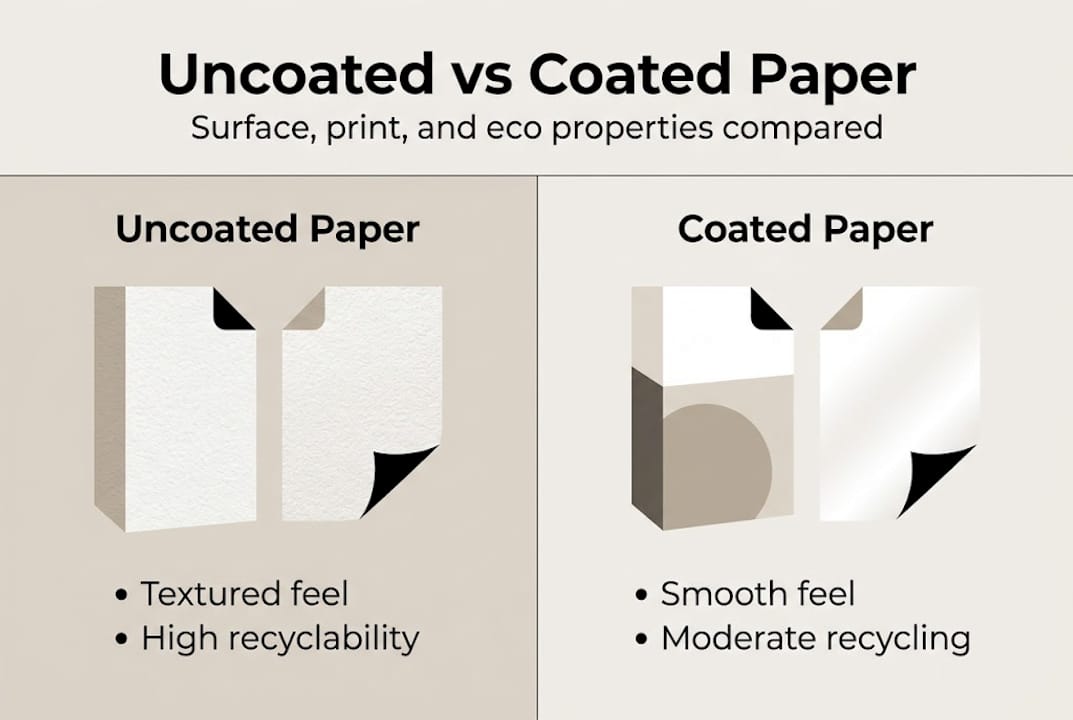
Texture is another underestimated asset. Design tips for sustainability consistently highlight that tactile packaging triggers stronger emotional responses. Customers who physically feel a rough, natural surface associate it with quality, care, and environmental responsibility. A glossy bag communicates efficiency. An uncoated bag communicates intention.
Uncoated paper is also uniquely writable. Ballpoint pens, stamps, and markers all work directly on the surface without smearing or rejecting ink. For foodservice operators running loyalty programs, personalization campaigns, or handwritten order labels, this is a functional advantage that coated packaging simply cannot match.
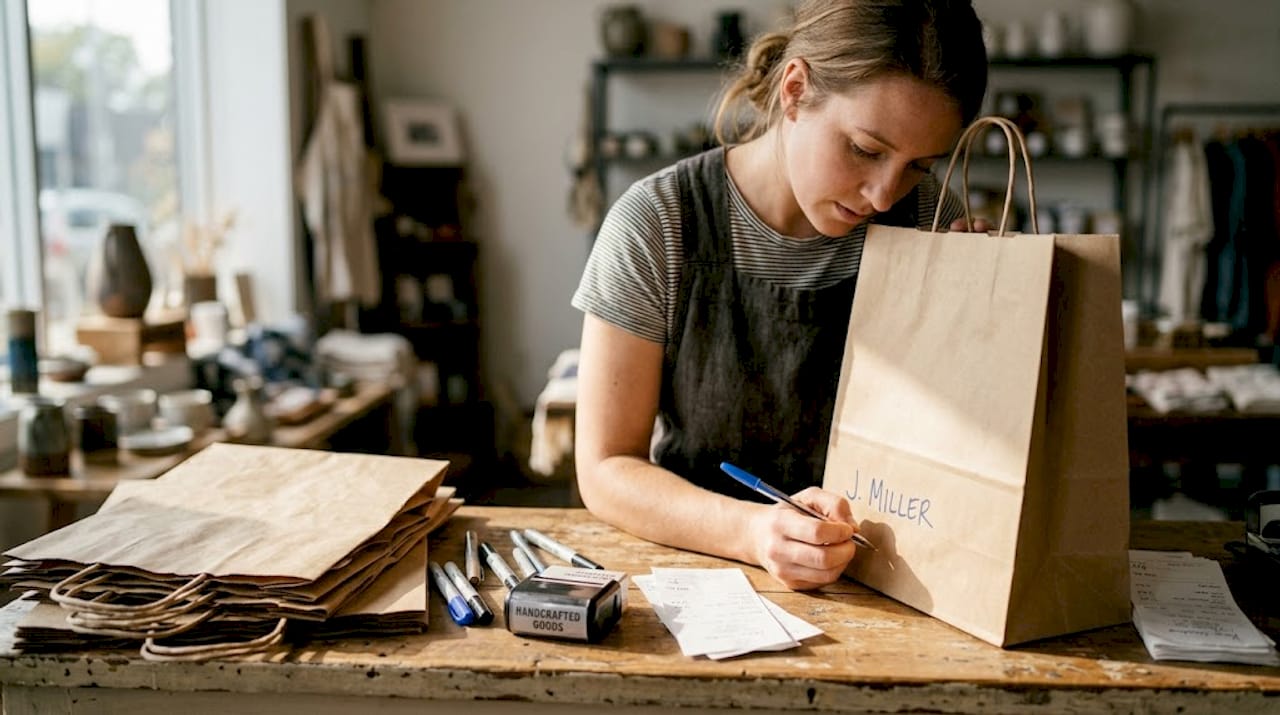
Here is a quick comparison of key properties:
| Property | Uncoated paper | Coated paper |
|---|---|---|
| Surface feel | Textured, rough | Smooth, slick |
| Print result | Soft, organic, muted | Sharp, vibrant, photographic |
| Ink absorption | High | Low |
| Moisture resistance | Low | Higher |
| Recyclability | Excellent | Moderate to low |
| Writability | Yes | Limited |
| Eco perception | High | Lower |
Pro Tip: When briefing your printer for uncoated paper runs, ask for flexo or digital setups optimized for uncoated stocks. Reduce ink density in your files by roughly 15% compared to coated print specs. Muted, earthy color palettes outperform high-saturation designs on this surface every time.
Uncoated vs coated paper: What’s the difference?
The core tradeoff is this: coated paper delivers sharper prints and better moisture resistance but scores lower on sustainability and authenticity, while uncoated paper prioritizes recyclability, natural aesthetics, and eco-credibility at some cost to print vibrancy. Neither is universally better. The right choice depends on what your product and brand actually need.
For foodservice operators packaging dry goods, baked items, or produce, uncoated paper is almost always the stronger call. For brands carrying wet, oily, or refrigerated products, coated or barrier-lined options become necessary. Choosing the wrong substrate leads to either soggy packaging or an eco story that does not hold up under scrutiny.
Brands that prioritize authentic sustainability choose packaging materials that perform honestly, not just packaging that looks eco-friendly on a shelf.
From a retail branding perspective, uncoated paper also has a measurable perception advantage. Consumers consistently rate natural, tactile packaging as more trustworthy and authentic compared to glossy alternatives. That is not a small distinction when your packaging is competing for attention in a retail environment.
Key differences at a glance:
- Recyclability: Uncoated paper is compatible with standard recycling streams; coated paper often requires special processing
- Compostability: Uncoated paper without additives can be composted; coated versions typically cannot
- Print vibrancy: Coated paper wins for photographic or high-detail designs; uncoated excels for organic, bold, simple graphics
- Cost: Uncoated grades are often lower cost per unit and carry lower processing costs
- Consumer perception: Uncoated packaging signals sustainability and authenticity more credibly
| Factor | Uncoated | Coated |
|---|---|---|
| Recyclability | High | Moderate |
| Compostability | Yes (no additives) | Rarely |
| Print quality | Organic, muted | Sharp, vibrant |
| Moisture resistance | Low | Higher |
| Eco perception | Strong | Weaker |
| Unit cost | Lower | Higher |
Where uncoated paper packaging shines: Best uses and market growth
The applications where uncoated paper packaging performs best share one characteristic: the product inside is dry, low-moisture, and does not require a grease or liquid barrier. Think carry-out bags for a bakery, folding cartons for specialty dry goods, produce bags at a farmers market, or branded retail shopping bags.
Uncoated packaging is sustainable and recyclable, free from synthetic additives, and appeals directly to eco-conscious consumers in foodservice carry-out, dry and prepared food, produce, and bakery applications. Suppliers like Sonoco, Smurfit Westrock, and Domtar each offer specific uncoated grades tuned to different operational demands, from high-volume commodity runs to premium specialty board.
The market momentum behind this category is real. Operating rates sit at around 80 to 83% across North American mills as of early 2026, and the food-grade kraft segment is growing at a 6% compound annual growth rate. That growth is driven by regulatory pressure, retailer sustainability mandates, and consumer preference shifts that show no sign of reversing.
For a deeper picture of packaging market growth and what it means for your sourcing decisions, the data tells a clear story: uncoated paper is expanding, not shrinking.
Here is how to select the right uncoated grade and supplier for your operation:
- Define your product requirements. Dry goods need only basic kraft or recycled board. Anything with moisture needs additional lining or a barrier-compatible uncoated grade.
- Set your print priority. Bold logo-forward designs translate well. Photo-heavy artwork does not. Adjust your brand assets before briefing suppliers.
- Audit supplier certifications. Look for FSC certification, recycled content documentation, and water-based ink compatibility.
- Request samples before committing. Test actual print output on your chosen uncoated grade before finalizing specs.
- Evaluate lead times. Domestic North American suppliers offer faster turnaround than overseas sources, which matters when your packaging needs shift seasonally.
For brands building long-term retail branding with paper bags, partnering with a supplier who understands uncoated paper’s specific performance parameters saves time, money, and reprints.
Design and customization: Uncoated paper’s edge for eco-branding
The design possibilities on uncoated paper are more interesting than most brands realize. The surface does not fight simple, bold design work. It enhances it. Clean logos, two-color block designs, hand-drawn illustration styles, and simple typographic layouts all read exceptionally well on kraft or natural uncoated board.
Uncoated paper accepts flexo, offset, and digital printing, and muted or organic print palettes suit premium and eco-focused brands particularly well. The tactile texture adds a layer of luxury without requiring expensive finishes like embossing or foil stamping. The material itself does the work.
For eco-friendly packaging design decisions, consider these practical guidelines:
- Choose earth tones and muted palettes. Colors like forest green, terracotta, slate blue, and warm cream read better on uncoated kraft than neon or highly saturated hues.
- Keep your logo bold and simple. Intricate line work can soften and lose detail. Strong, clean marks perform best.
- Use negative space. Let the natural paper color work as a design element rather than printing a full background.
- Avoid designs built for coated stocks. Gradient-heavy artwork, photographic images, and fine-detail patterns will not translate cleanly.
- Test texture as part of your brand story. Some brands add a light deboss or kraft texture stamp to amplify the handmade feel.
Pro Tip: Partner with a printer or packaging supplier who regularly runs eco-branding projects on uncoated stocks. They will already know the ink adjustments, file settings, and color approval process that prevent costly reprints. This is not a job for a generalist printer used to coated commercial runs.
For brands wanting to understand how custom packaging for branding builds customer loyalty over time, the design of your uncoated bag or box is one of the most visible and durable signals you send.
Why eco-authenticity in packaging matters more than ever
Here is the uncomfortable truth: most brands are playing eco-theater. They choose packaging with a recycling symbol on it, call it sustainable, and move on. Consumers are catching up fast, and regulatory frameworks are catching up faster.
Extended Producer Responsibility laws are reshaping how brands think about packaging end-of-life across North America. Experts tracking EPR and greenwashing trends point to a clear consumer shift toward natural, authentic packaging materials as trust in broad eco-claims erodes. A recycling logo on a plastic-lined bag no longer convinces anyone.
Uncoated paper packaging is not just marketing. You can feel it. You can tear it. You can put it in a compost bin and watch it disappear. That transparency is what actually builds brand trust in 2026, not a sustainability statement buried in a website footer.
The brands winning this space are not the ones spending more on sustainability communications. They are the ones choosing materials that prove their values without explanation. Tactile, compostable, domestically produced uncoated paper is one of the clearest signals you can send. For domestic packaging for authentic branding, sourcing from North American manufacturers also reduces transportation emissions and tightens your supply chain story. Both matter to the customers who are actually paying attention.
Start your eco-branding journey with custom uncoated paper packaging
If the properties and benefits of uncoated paper packaging align with where your brand is heading, the next practical step is finding a manufacturing partner who can deliver on all of it, not just the paper type.
Gather Packaging produces custom kraft paper bags from our Toronto facility, using FSC-certified materials, water-based inks, and recycled fiber options that match what authentic eco-branding actually requires. Our 8-color flexo printing capabilities are optimized for the organic palettes and bold logo work that uncoated stocks demand. From design assistance and prototyping to quality assurance and logistics, we handle the full process. Explore our eco-friendly paper packaging options to see how North American-made uncoated solutions can elevate your retail or foodservice brand.
Frequently asked questions
What is the main benefit of uncoated paper packaging for retail brands?
Uncoated packaging is preferred for its high recyclability and natural, authentic appearance that resonates strongly with eco-conscious shoppers. It also costs less to process and dispose of compared to coated alternatives.
Can uncoated paper packaging be used for wet or greasy foods?
Uncoated paper is best for dry or minimally moist products. It absorbs moisture and grease readily, so wet or oily foods require a lined or barrier-treated version of the substrate.
How customizable is uncoated paper packaging for brand needs?
It accepts flexo, offset, and digital printing and performs especially well with organic, tactile visuals that premium eco brands rely on for shelf distinction.
Is uncoated paper packaging compostable and recyclable everywhere in North America?
Uncoated paper is generally compostable and MRF-compatible when free from synthetic additives or plastic liners, making it one of the most broadly accepted sustainable packaging options across North American waste systems.
Share:
Top Qualities of Durable Paper Bags for Retail & Foodservice
Shopping bag lamination: benefits, materials & sustainability