

Many brand owners view packaging as purely functional, something to protect products from point A to point B. This narrow perspective misses the strategic power packaging holds. Custom packaging transforms how consumers perceive your brand, signals your environmental values, and directly influences purchasing decisions. For retail and foodservice brands competing in North America’s sustainability-focused market, understanding custom packaging options, benefits, and implementation strategies is essential. This guide breaks down what custom packaging truly means, explores sustainable material choices, addresses common challenges, and provides actionable steps to leverage packaging as a branding and environmental asset.
Table of Contents
- Key takeaways
- What is custom packaging? An in-depth explanation
- The sustainability advantage: materials and environmental impact
- Challenges and considerations in custom packaging for foodservice and retail brands
- How to approach custom packaging effectively: a practical guide for brand owners
- Explore sustainable custom packaging solutions with Gather Packaging
- Frequently asked questions about custom packaging
Key Takeaways
| Point | Details |
|---|---|
| Brand differentiation | Custom packaging creates instant brand differentiation through design and materials that communicate quality before a consumer touches the product. |
| Regulatory compliance | Regulatory compliance for food contact materials and allergen labeling must be verified during design and testing. |
| Prototyping and testing | CAD modeling and physical prototypes help optimize size, fit, and functionality before production, reducing returns and waste. |
| Sustainable material options | Using FSC certified paper, PCR content, and mono material designs improves recyclability and aligns with sustainability goals. |
| Low minimum orders | Low minimums enable small brands to access custom packaging solutions without a large upfront investment. |
What is custom packaging? An in-depth explanation
Custom packaging refers to packaging solutions designed specifically for your brand’s products, values, and operational needs. Unlike generic stock packaging that offers one-size-fits-all dimensions and plain designs, custom packaging tailors every element to your specifications.
The development process involves several sophisticated methodologies. Brands work with manufacturers using CAD modeling to create precise specifications, followed by physical prototypes to test functionality before full production. Engineering for sustainability includes lifecycle analysis to assess environmental impact, right-sizing calculations to minimize dimensional weight shipping penalties, and compliance verification for food safety standards like FDA 21 CFR. These technical approaches ensure packaging meets both regulatory requirements and sustainability certifications such as FSC standards.
Custom packaging serves multiple critical functions beyond simple containment:
- Protection that matches your specific product dimensions and fragility requirements
- Brand differentiation through colors, graphics, and structural design elements
- Regulatory compliance for food contact materials and allergen labeling
- Sustainability messaging through certified materials and recyclability features
- Cost optimization by eliminating excess material and reducing shipping weights
The contrast with stock packaging becomes clear when examining brand impact. Stock options offer quick availability and lower initial costs but provide zero differentiation in crowded retail environments. Your brand becomes invisible on shelves filled with identical brown boxes or clear bags. Custom solutions create instant recognition and communicate quality before customers even touch your product.
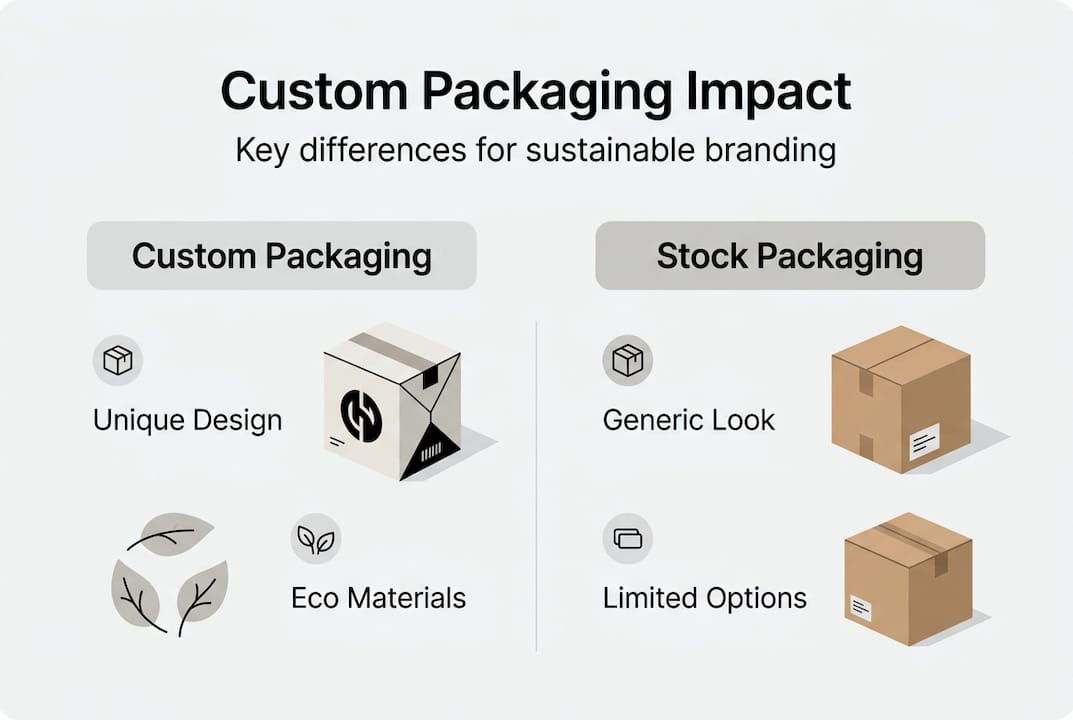
For brands prioritizing sustainability, custom packaging allows integration of eco-friendly materials from the design phase. You can specify FSC-certified paper, incorporate post-consumer recycled content, and design retail packaging that minimizes waste throughout the supply chain. This alignment between packaging choices and brand values resonates powerfully with today’s environmentally conscious consumers who increasingly make purchasing decisions based on sustainability credentials.
The sustainability advantage: materials and environmental impact
Sustainable packaging materials have evolved dramatically, offering brand owners diverse options that balance environmental responsibility with functional performance. The most established choice remains FSC-certified cardboard and paper, which guarantees responsible forest management. Post-consumer recycled (PCR) content incorporates previously used materials back into packaging, reducing virgin resource extraction. Molded pulp provides excellent cushioning for fragile items while remaining fully compostable. Compostable films break down in industrial composting facilities, though infrastructure limitations affect their practical recyclability. Plant-based polymers derived from corn or sugarcane offer renewable alternatives to petroleum-based plastics.
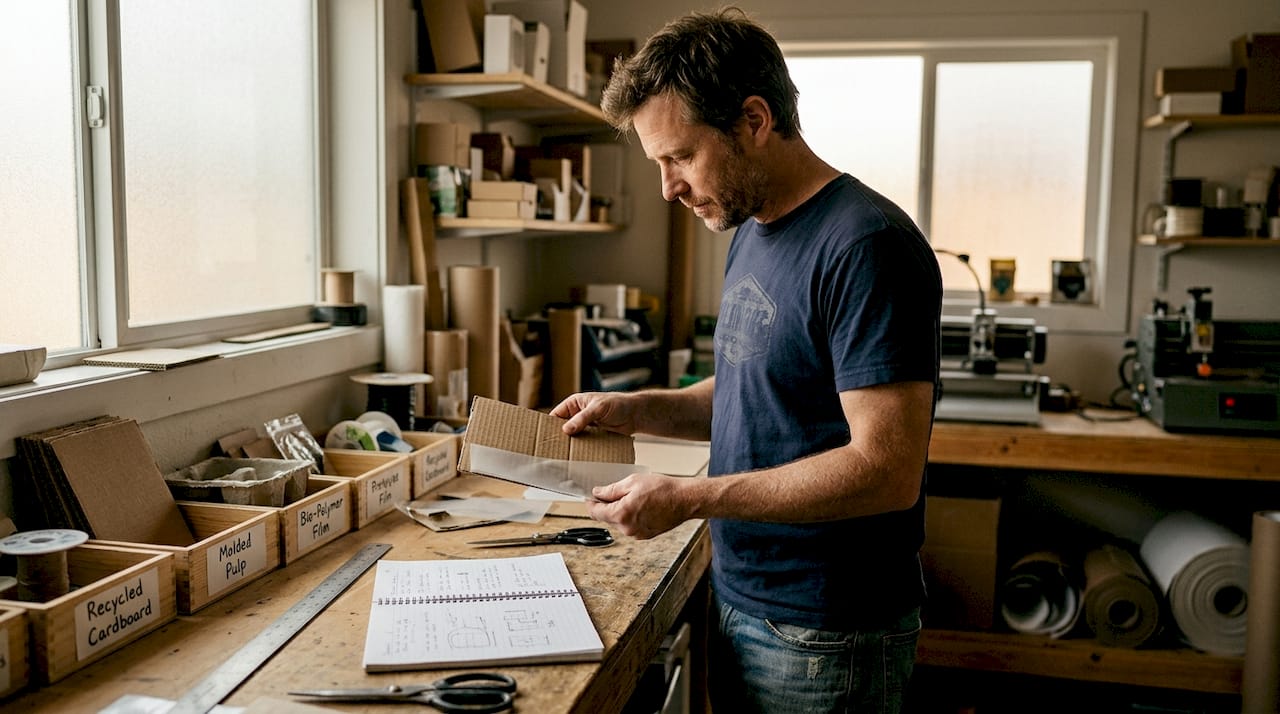
A significant trend reshaping packaging design involves mono-material construction. Traditional packaging often combines multiple material types, like plastic windows in cardboard boxes, which complicates recycling and typically sends products to landfills. Engineering for sustainability increasingly focuses on single-material designs that streamline end-of-life processing and dramatically improve actual recycling rates rather than theoretical recyclability.
The financial equation for sustainable packaging requires nuanced understanding. Initial material costs typically run 8-20% higher than conventional options, which causes some brands to hesitate. However, this narrow view ignores substantial offsetting factors. Lighter sustainable materials reduce shipping costs through lower dimensional weight calculations. Optimized sizing cuts material usage and freight expenses. Sustainable packaging costs and ROI analysis shows these operational savings often exceed the material premium within 12-18 months, delivering positive return on investment before considering revenue impacts.
Consumer response provides the compelling financial argument. Research consistently demonstrates that sustainability credentials influence purchasing decisions, with studies showing sales increases of approximately 28% when brands authentically communicate environmental commitments through packaging choices. Customer loyalty strengthens as values alignment deepens the brand relationship beyond transactional interactions.
| Material Type | Environmental Benefit | Functional Consideration | Cost Impact |
|---|---|---|---|
| FSC-certified paper | Responsible forestry, renewable | Excellent printability, moderate strength | +10-15% vs conventional |
| Recycled PCR content | Diverts waste, reduces virgin materials | Slightly lower strength at high percentages | +8-12% vs virgin |
| Molded pulp | Compostable, protective cushioning | Limited design flexibility | +15-20% vs foam |
| Compostable films | Biodegradable in facilities | Requires specific disposal infrastructure | +20-30% vs plastic |
| Plant-based polymers | Renewable feedstock | Performance varies by formulation | +15-25% vs petroleum |
Pro Tip: Balance sustainability goals with practical protection requirements. Choosing the greenest material means nothing if products arrive damaged, creating waste far exceeding any packaging environmental benefit. Test prototypes rigorously under actual shipping conditions before committing to production quantities. Your sustainability practices should encompass the entire product lifecycle, not just the packaging material itself.
Challenges and considerations in custom packaging for foodservice and retail brands
Brand owners face distinct hurdles when implementing custom packaging, particularly in foodservice applications where regulatory compliance intersects with functional performance demands. Understanding these challenges upfront prevents costly mistakes and product failures.
Compliance requirements top the priority list for any food-contact packaging. FDA regulations under 21 CFR specify which materials safely contact different food types. Allergen labeling must meet strict visibility and content standards. Nutritional information requires specific formatting. Packaging design challenges food startups face include navigating these regulations without dedicated compliance teams, often leading to expensive redesigns or regulatory violations that damage brand reputation.
Functional performance creates another layer of complexity. Foodservice packaging must resist grease migration that causes unsightly staining and structural weakening. Moisture barriers prevent sogginess in hot food containers while maintaining breathability for items like baked goods. Structural integrity during transit protects products through multiple handling points, temperature variations, and stacking pressure. Inadequate testing of these performance factors results in collapsed boxes, leaked contents, and damaged products that generate customer complaints and returns.
Sizing accuracy dramatically impacts both customer satisfaction and operational costs. Oversized packaging wastes material and increases dimensional weight shipping charges, which calculate costs based on package volume rather than actual weight. Undersized packaging fails to protect products adequately. Poor packaging fit drives returns reduced 40-50% when brands optimize dimensions and protection levels. Every return costs you the original shipping, return shipping, product replacement, and customer goodwill, making proper sizing a critical financial consideration.
Cost pressures and minimum order quantities create barriers for emerging brands. Custom packaging traditionally required orders of 5,000-10,000 units, tying up capital and warehouse space. Many startups cannot accurately forecast demand at these volumes, creating inventory risk. Modern manufacturers increasingly offer lower MOQs of 500-1,000 units, but these come with higher per-unit costs that squeeze already tight margins.
| Factor | Stock Packaging | Custom Packaging |
|---|---|---|
| Initial cost | Low, immediate availability | Higher upfront, requires lead time |
| Brand differentiation | None, generic appearance | Strong, unique visual identity |
| Sizing optimization | Standard dimensions, often oversized | Precise fit, minimized material waste |
| Sustainability options | Limited, typically conventional materials | Full control over eco-friendly specifications |
| Minimum order quantity | Single units available | 500-5,000+ units typical |
| Compliance customization | Generic, may not meet specific requirements | Tailored to exact regulatory needs |
Pro Tip: Start with low MOQ prototype runs to validate your packaging design before scaling to larger production quantities. This approach lets you test real-world performance, gather customer feedback, and refine specifications without massive capital commitment. Partnering with manufacturers experienced in food-safe packaging ensures compliance from the first production run. Consider how retail packaging design waste reduction strategies can simultaneously improve sustainability and reduce costs.
How to approach custom packaging effectively: a practical guide for brand owners
Implementing custom packaging successfully requires systematic planning and execution. Follow this proven framework to maximize results while minimizing risks and costs.
-
Conduct comprehensive packaging audits to establish your baseline. Document current packaging dimensions, weights, material costs, and damage rates. Identify waste sources like excessive void fill, oversized boxes, or non-recyclable components. Calculate total packaging costs including materials, labor, storage, and shipping. This data-driven foundation reveals optimization opportunities and provides metrics to measure improvement.
-
Develop physical prototypes before committing to production quantities. Work with manufacturers to create samples that test critical performance factors under real conditions. Ship prototypes through your actual distribution channels to identify weakness points. Conduct drop tests, compression tests, and moisture exposure appropriate to your product category. Gather feedback from internal teams and select customers on functionality and brand perception.
-
Choose sustainable materials aligned with your brand values and budget realities. Prioritize FSC-certified papers and boards as the foundation. Specify post-consumer recycled content percentages that balance cost and performance. Evaluate water-based inks and adhesives that eliminate toxic chemicals. Secure relevant certifications that communicate credibility to environmentally conscious consumers. Packaging design challenges food startups overcome often involve finding this sweet spot between sustainability ambitions and financial constraints.
-
Order low minimum quantities initially to validate market response before scaling. Starting with 500-1,000 units allows real-world testing without excessive inventory risk. Monitor customer feedback, return rates, and damage claims closely during this validation phase. Adjust specifications based on actual performance data rather than assumptions. This iterative approach costs more per unit initially but dramatically reduces the risk of large-scale failures.
-
Ensure comprehensive compliance with applicable regulations before production. For foodservice applications, verify FDA food contact compliance for all materials. Confirm allergen labeling meets visibility and content requirements. Review extended producer responsibility (EPR) regulations in your operating jurisdictions, as these increasingly hold brands accountable for packaging end-of-life management. Document compliance through certificates of conformity and material safety data sheets.
-
Design for functional excellence alongside brand appeal. Specify grease-resistant coatings or materials for food applications. Ensure stackability for efficient storage and display. Incorporate structural features like reinforced corners or double-wall construction where protection demands justify the cost. Balance these functional requirements with brand elements like custom printing, embossing, or window cutouts that enhance shelf presence.
The financial analysis should weigh upfront costs against long-term value creation. Sustainable packaging costs and ROI calculations demonstrate that custom solutions deliver superior returns through stronger branding, increased customer loyalty, and operational efficiencies that offset higher initial material expenses. Stock packaging appears cheaper on purchase orders but fails to build brand equity or optimize logistics costs.
Pro Tip: Partner with manufacturers who deeply understand North American regulatory landscapes and sustainability standards. Domestic production in Canada or the United States provides advantages beyond faster shipping. Local manufacturers navigate FDA compliance, understand regional recycling infrastructure, and stay current on evolving EPR regulations. This expertise prevents costly compliance failures and ensures your packaging strategy aligns with both current requirements and emerging trends. Explore how marketing strategy with packaging integration amplifies brand impact, and consider the benefits Canadian packaging manufacturers offer for North American brands prioritizing sustainability and regulatory compliance.
Explore sustainable custom packaging solutions with Gather Packaging
Transforming packaging insights into tangible solutions requires partnering with manufacturers who share your commitment to quality and sustainability. Gather Packaging specializes in custom kraft paper bags manufactured domestically in Toronto, Canada, combining over a century of industry experience with cutting-edge sustainable practices.
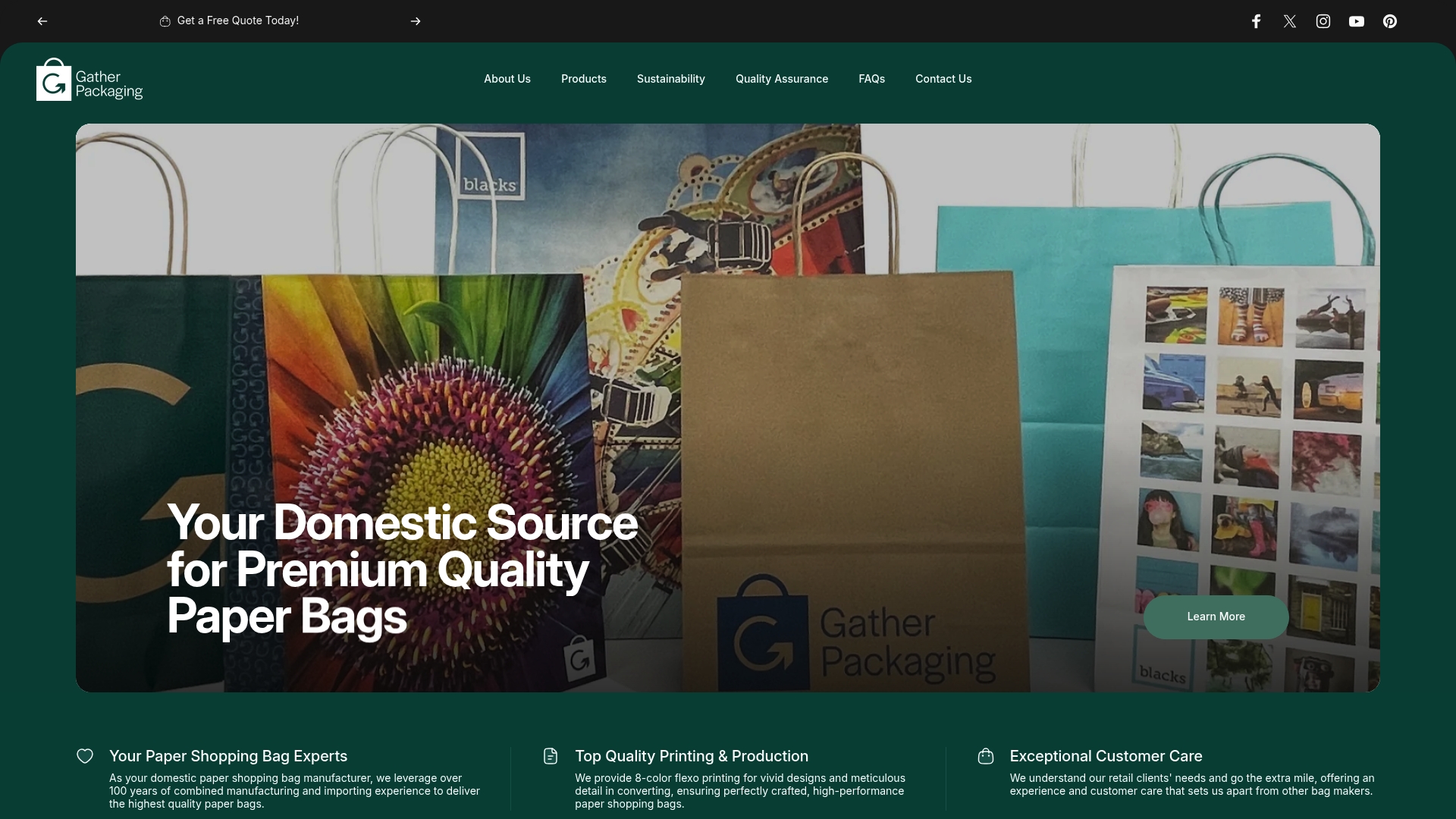
Their comprehensive product line serves retail and foodservice brands seeking eco-friendly alternatives without compromising functionality or visual appeal. As a domestic paper shopping bags manufacturer, Gather Packaging offers FSC-certified materials, recycled content options, and water-based inks that align with stringent environmental standards. Their eco and environmentally friendly paper bags provide the sustainable credentials today’s consumers expect while delivering the durability and brand presence your products deserve.
Beyond manufacturing, Gather Packaging provides end-to-end support including design assistance, prototyping, quality assurance, and logistics coordination. This comprehensive approach helps brand owners navigate the complexities of custom packaging implementation, from initial concept through final delivery. Their custom kraft paper bags showcase the versatility of paper-based solutions for diverse applications, with customizable sizes, styles, and vibrant 8-color flexo printing capabilities that bring your brand vision to life.
Gather Packaging’s domestic production model delivers faster turnarounds, lower shipping costs, and reduced environmental impact compared to overseas alternatives, making sustainable custom packaging accessible for brands of all sizes committed to quality and environmental responsibility.
Frequently asked questions about custom packaging
What materials are considered sustainable for custom packaging?
Sustainable materials include FSC-certified paper and cardboard from responsibly managed forests, post-consumer recycled content that diverts waste from landfills, molded pulp for protective applications, and plant-based polymers from renewable sources. The most recyclable options use mono-material construction that simplifies end-of-life processing. Review detailed material comparisons in our sustainable packaging guide to identify the best fit for your specific product requirements and environmental goals.
How do I ensure my packaging complies with food safety regulations?
Verify all materials meet FDA 21 CFR standards for food contact applications specific to your product type. Include required allergen warnings with proper visibility and formatting. Work with manufacturers who provide certificates of conformity and material safety documentation. Conduct migration testing if your products involve high fat content, acidity, or heat that could cause chemical transfer. Our food-safe packaging guide walks through compliance requirements in detail.
What are the advantages of custom packaging over stock options?
Custom packaging creates immediate brand recognition through unique design elements that differentiate your products on crowded shelves. Right-sized dimensions reduce material waste and shipping costs while improving product protection. You control sustainability specifications to align packaging with brand values. Custom solutions allow integration of compliance requirements like allergen labeling directly into the design. While initial costs run higher, the branding value and operational efficiencies typically deliver positive ROI within 12-18 months.
How can small brands manage costs with custom packaging?
Start with low minimum order quantities of 500-1,000 units to validate designs before scaling to larger production runs. Focus initial customization on high-impact elements like printing rather than complex structural modifications. Consider standard base sizes with custom printing to balance differentiation and cost. Optimize packaging dimensions to reduce dimensional weight shipping charges, which often offsets material cost increases. Partner with domestic manufacturers who offer shorter lead times and lower shipping costs than overseas alternatives.
What role does packaging play in customer loyalty and sales?
Packaging creates the critical first physical touchpoint with your brand, shaping perception before customers experience the product itself. Sustainable packaging signals shared values with environmentally conscious consumers, strengthening emotional connection beyond functional benefits. Quality packaging reduces damage and returns, improving customer satisfaction and repeat purchase rates. Studies show authentic sustainability commitments communicated through packaging can increase sales by approximately 28% while building long-term loyalty that reduces customer acquisition costs over time.
Share:
Custom bag printing options for sustainable branding
Why packaging compliance matters for retail professionals