
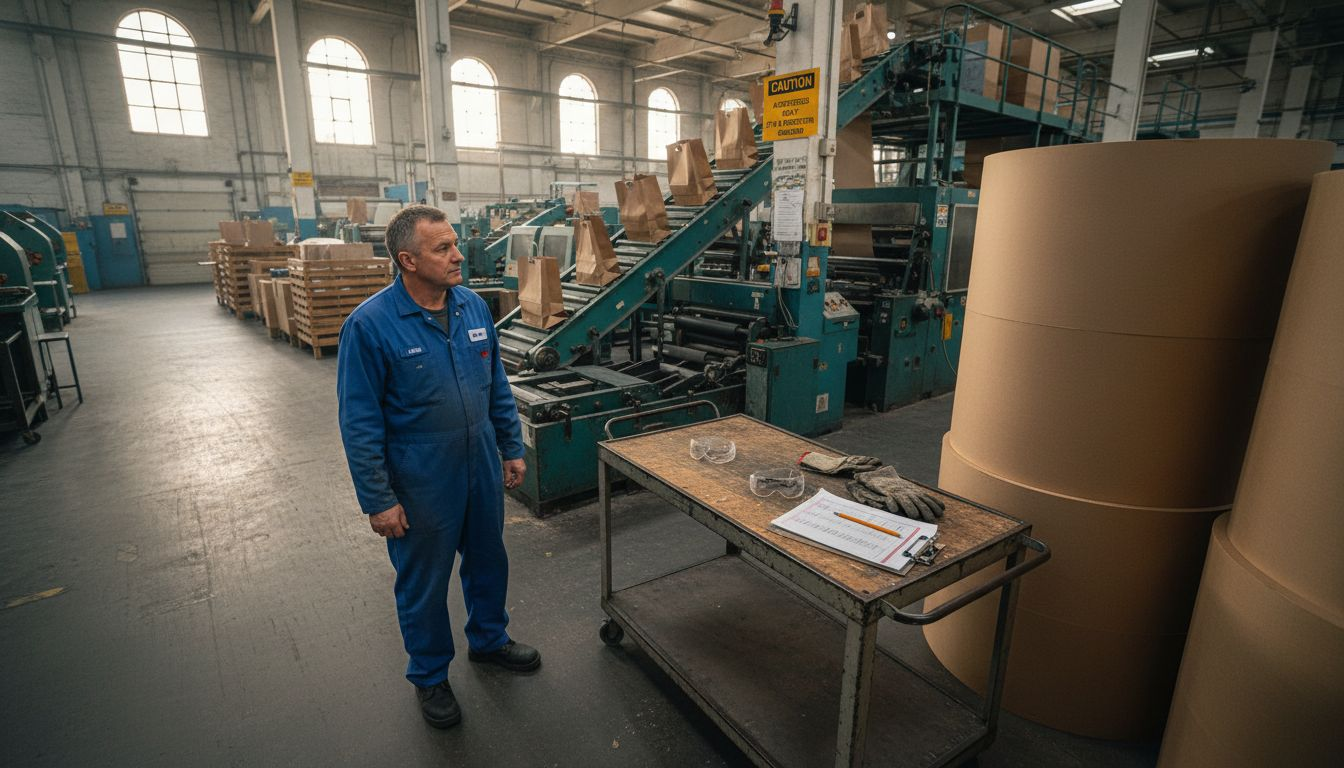
Selecting the right packaging partner shapes your brand’s sustainability credentials, operational efficiency, and bottom line. Canadian packaging manufacturers combine certified eco-friendly materials with remarkably short lead times, advanced customization technology, and rigorous quality standards. This article explores why North American retail and foodservice brands increasingly prefer domestic production for paper packaging solutions in 2026.
Table of Contents
- Introduction To Canadian Packaging Manufacturers
- Sustainability Certifications And Standards
- Customization Capabilities And Technology
- Supply Chain And Domestic Production Benefits
- Quality Assurance Practices In Canadian Manufacturing
- Common Misconceptions About Cost And Quality
- Practical Application: Choosing The Right Canadian Manufacturer
- Conclusion And Next Steps
- Explore Gather Packaging’s Canadian-Made Paper Bags
Key takeaways
| Point | Details |
|---|---|
| Canadian manufacturers offer certified sustainable, locally produced paper packaging | FSC® certification and recycled content verify environmental responsibility |
| Shorter lead times and supply chains improve reliability and decrease carbon footprint | Domestic production cuts delivery times by 30-50% compared to imports |
| Advanced customization technologies support tailored branding and function | 8-color flexographic printing enables vibrant, complex designs on various bag styles |
| Quality assurance standards ensure consistent packaging excellence | ISO 9001 certification and prototyping protocols minimize defects |
| Choosing Canadian manufacturers can reduce total costs despite misconceptions | Total landed cost analysis often reveals 15% savings over imported alternatives |
Introduction to Canadian packaging manufacturers
Canadian packaging manufacturers are companies that produce paper-based packaging domestically within Canada, serving North American markets with sustainable, customizable solutions. These producers specialize in kraft bags, shopping bags, compostable bags, and specialty paper packaging designed for retail, foodservice, apparel, and other commercial applications.
Local manufacturing delivers tangible benefits that resonate across your supply chain. Faster turnaround times mean you respond quickly to market demands without carrying excessive inventory. Direct supply chain control reduces the risk of delays caused by international shipping disruptions, customs complications, or geopolitical uncertainty. Supporting local production strengthens regional economies by creating jobs and fostering innovation in sustainable materials.
The relevance for North American retail and foodservice sectors grows as consumer expectations evolve. Shoppers increasingly scrutinize packaging choices and reward brands demonstrating genuine environmental commitment. Canadian made paper bags align perfectly with this shift, offering verifiable sustainability credentials alongside functional performance.
Common paper packaging types available from Canadian manufacturers include:
- Kraft paper shopping bags in multiple sizes and handle configurations
- Tamper-resistant bags with security features for sensitive products
- Compostable and biodegradable bags certified for commercial composting
- Custom printed bags with full-color branding capabilities
- Specialty bags designed for specific industries like foodservice or pharmaceuticals
Understanding how to design retail packaging helps you maximize the value of working with a responsive local partner. Canadian manufacturers typically offer design assistance, prototyping services, and technical consultation to optimize both aesthetics and function.
Sustainability certifications and standards
Sustainability certifications provide objective proof that your packaging choices meet rigorous environmental standards. FSC® (Forest Stewardship Council) certification verifies that paper materials originate from responsibly managed forests where harvesting practices protect biodiversity, water resources, and indigenous rights. This certification carries significant weight with environmentally conscious consumers who research brand practices before purchasing.
Recycled content and biodegradable paper materials further reduce environmental impact by diverting waste from landfills and supporting circular economy principles. Many Canadian manufacturers incorporate post-consumer recycled fibers into their paper stock, maintaining strength and appearance while lowering virgin material consumption. Biodegradable options break down naturally without leaving harmful residues, addressing concerns about packaging pollution.
Water-based inks represent another crucial component of sustainable packaging production. Unlike solvent-based alternatives, these inks minimize volatile organic compound (VOC) emissions that contribute to air pollution and health hazards. The shift to water-based printing technologies demonstrates manufacturer commitment to reducing environmental footprint across every production stage.
Consumer demand drives the business case for certified sustainable packaging. More than 65% of consumers are willing to pay a premium for eco-friendly packaging, according to Nielsen research. This willingness translates directly into competitive advantage for brands that prioritize sustainability.
“Packaging sustainability is no longer optional. It’s a fundamental expectation that shapes purchase decisions and brand loyalty across demographics.”
Eco-certifications strengthen brand reputation by providing transparent, third-party verification of environmental claims. They also help you navigate compliance requirements as regulations tighten around packaging waste and recycled content mandates. Exploring sustainability practices reveals how Canadian manufacturers integrate these standards throughout their operations.
The environmental advantages extend beyond materials to manufacturing processes. Understanding why paper bags beat plastic emissions in 2026 clarifies the broader carbon impact of packaging choices. Even sustainable gift wrapping applications benefit from the same eco-friendly production principles used in commercial packaging.
Key sustainability features to verify:
- FSC® certification with chain of custody documentation
- Percentage of post-consumer recycled content
- Biodegradability certifications (ASTM D6400 or equivalent)
- Water-based ink usage and VOC reduction targets
- Carbon footprint measurement and reduction initiatives
Customization capabilities and technology
Advanced printing technology transforms packaging from functional necessity into powerful branding tool. Eight-color flexographic printing enables complex, vibrant designs that capture attention and communicate brand identity effectively. This capability supports gradient effects, detailed imagery, and precise color matching that rival offset printing quality while maintaining cost efficiency for medium to large production runs.

Canadian manufacturers offer diverse bag styles tailored to specific functional requirements and industry standards. Turn top bags provide easy access for quick-service environments. Tamper-resistant designs with security features protect pharmaceutical products, cannabis goods, and high-value retail items. Gusseted bags expand to accommodate bulky or irregularly shaped contents while maintaining structural integrity.
Customization empowers brand differentiation in crowded markets. Your packaging becomes a silent salesperson, conveying quality, values, and personality before customers even open the product. Tailored solutions also address compliance requirements specific to your industry, whether that involves child-resistant features, allergen warnings, or nutritional information placement.
Prototyping and sampling processes reduce risk by allowing you to evaluate designs before committing to full production runs. Most Canadian manufacturers provide physical samples showing actual paper stock, print quality, and construction techniques. This hands-on review catches potential issues early and ensures final products meet your exact specifications.
Exploring custom printed eco-friendly kraft paper bags reveals the breadth of possibilities available. The advantages of made in Canada production become apparent when you need rapid iteration on designs or quick response to seasonal opportunities.
Pro Tip: Request printed samples on your actual chosen paper stock rather than just digital proofs. Ink saturation, color accuracy, and texture vary significantly across different paper weights and finishes, so physical samples prevent costly surprises.
Popular customization options include:
- Full CMYK process printing plus spot colors for brand consistency
- Custom sizing from small gift bags to large shopping totes
- Handle variations: twisted paper, flat paper, ribbon, or die-cut
- Window cutouts with biodegradable film for product visibility
- Embossing or debossing for premium tactile experience
- Custom closures including adhesive strips, fold-over tops, or zip seals
Specialty applications like custom kraft paper bags demonstrate how manufacturers adapt standard formats to unique brand requirements. The paper bags made in Canada category encompasses this full spectrum of customization possibilities.
Supply chain and domestic production benefits
Domestic production fundamentally transforms your supply chain dynamics by eliminating the complexity and delays inherent in international logistics. Canadian manufacturers typically deliver finished products 30 to 50 percent faster than Asian imports, allowing you to respond quickly to market trends, seasonal demands, and unexpected opportunities. This agility translates into lower inventory carrying costs and reduced risk of stockouts during peak periods.
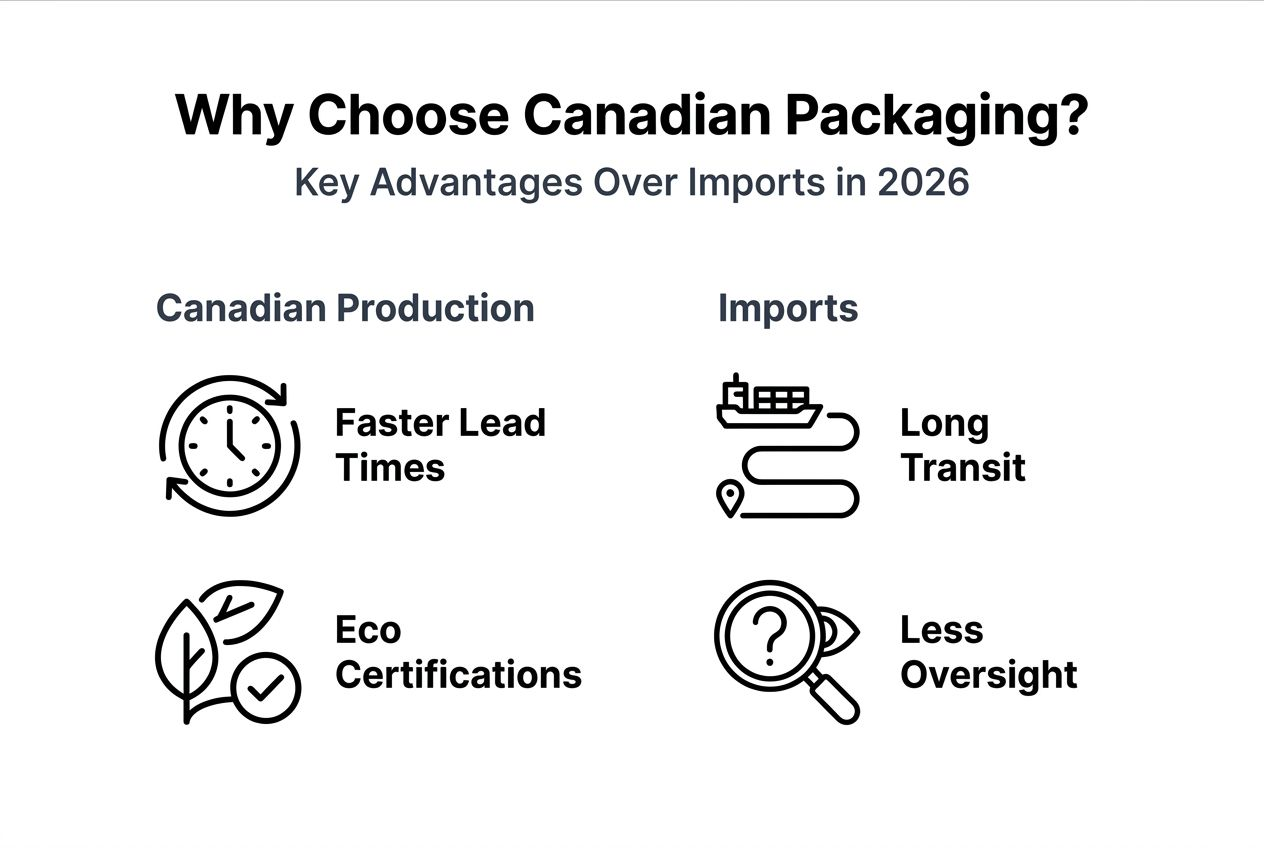
Carbon footprint reduction represents a quantifiable environmental advantage of local sourcing. Shorter transportation distances directly decrease greenhouse gas emissions associated with product delivery. Studies consistently show that domestic sourcing reduces carbon footprint by 25 to 40 percent compared to transoceanic shipping, even accounting for differences in manufacturing energy sources.
| Metric | Canadian Manufacturer | Asian Import |
|---|---|---|
| Average lead time | 3-5 weeks | 8-12 weeks |
| Supply chain complexity | Single logistics partner | Multiple intermediaries |
| Carbon footprint per unit | Baseline | 25-40% higher |
| Minimum order quantity | Flexible, often lower | High, less flexible |
| Communication ease | Same time zone, language | Time difference, translation |
Supporting local jobs and economic growth creates positive ripple effects throughout communities. Manufacturing jobs generate secondary employment in transportation, materials supply, maintenance, and professional services. This economic multiplier strengthens regional resilience and sustainability beyond just environmental metrics.
Communication becomes dramatically simpler when working with domestic partners. Same time zone operations mean questions get answered during your business day rather than waiting overnight for responses. Cultural and language alignment reduces misunderstandings that can derail projects or compromise quality.
Pro Tip: Even with shorter Canadian lead times, plan seasonal orders 8 to 10 weeks ahead to secure production capacity during high-demand periods like holidays. Domestic manufacturers may be faster, but popular time slots still fill quickly.
Operational advantages of choosing a domestic paper shopping bags manufacturer extend beyond speed:
- Easier quality inspections and facility visits without international travel
- Simplified customs and tariff management
- Reduced currency exchange risk
- Greater flexibility for order modifications mid-production
- Lower minimum order quantities due to reduced shipping economics
Quality assurance practices in Canadian manufacturing
Rigorous quality assurance frameworks distinguish professional manufacturers from basic converters. ISO 9001 certification indicates that a company maintains documented quality management systems covering everything from raw material inspection through final product testing. This international standard requires continuous improvement processes, corrective action procedures, and regular third-party audits.
Prototyping and pre-production sampling serve as critical checkpoints before committing resources to full production runs. Initial samples verify that materials, construction methods, and printing techniques meet specifications. This iterative process catches design flaws, color mismatches, or structural weaknesses when corrections cost least.
Continuous monitoring throughout production maintains consistency across large order quantities. Quality control personnel perform regular inspections at defined intervals, checking dimensions, print registration, seal integrity, and other critical parameters. Statistical process control techniques identify trends before they result in defective products reaching customers.
Strict production standards encompass raw material specifications, environmental controls, equipment maintenance schedules, and operator training requirements. These protocols minimize variation and ensure that bag number 10,000 performs identically to bag number 1. Consistent quality protects your brand reputation and reduces customer complaints.
Quality benefits of made in Canada manufacturing include:
- Transparent facility access for customer audits
- Traceable raw material sourcing with certification documentation
- Skilled workforce with specialized training
- Modern equipment maintained to manufacturer specifications
- Responsive quality issue resolution without international coordination delays
The combination of systematic quality management and domestic accessibility gives you confidence that packaging will perform as expected. Manufacturing defects disrupt operations, damage products, and frustrate customers, making quality assurance one of the most valuable yet often underestimated aspects of supplier selection.
Common misconceptions about cost and quality
Myths about Canadian packaging manufacturing persist despite evidence contradicting them. The most common misconception holds that domestic production always costs more than imports. This oversimplification ignores total landed cost analysis that accounts for shipping, tariffs, inventory carrying costs, quality issues, and stockout risks.
Comprehensive cost comparison reveals surprising economics. While per-unit manufacturing costs may appear higher for Canadian production, international shipping adds 20 to 30 percent to product cost depending on volume and routing. Tariffs and customs fees contribute another 5 to 10 percent. Longer lead times force you to carry larger safety stock, tying up working capital and warehouse space.
Total cost analysis frequently shows 10 to 15 percent savings for Canadian sourcing when all factors receive proper weighting. Quality issues compound these savings since defect rates typically run lower with domestic partners you can easily audit and collaborate with.
- Misconception: Canadian manufacturers cannot match Asian production quality. Reality: ISO 9001 certification and modern equipment deliver comparable or superior quality with better oversight.
- Misconception: Domestic production always costs significantly more per unit. Reality: Total landed cost including shipping, tariffs, and inventory often favors Canadian sources.
- Misconception: Import lead times are acceptable for most applications. Reality: 8 to 12 week lead times reduce flexibility and increase inventory costs substantially.
- Misconception: Consumers won’t pay more for sustainable packaging. Reality: 65% of consumers are willing to pay a premium for eco-friendly packaging.
- Misconception: Customization options are limited with domestic manufacturers. Reality: Advanced technology like 8-color flexographic printing rivals or exceeds import capabilities.
Consumer preferences increasingly validate the business case for sustainable packaging. Research from Nielsen on consumer preference demonstrates that environmental considerations influence purchasing decisions across demographics and product categories.
“The sustainability premium is real and growing. Brands that dismissed eco-friendly packaging as a cost burden now recognize it as a competitive differentiator that commands higher margins.”
Quality parity exists across well-managed facilities regardless of location. The critical variables are management systems, equipment investment, and workforce training rather than geography. Canadian manufacturers maintaining modern equipment and rigorous quality protocols produce packaging that meets or exceeds specifications consistently.
Practical application: choosing the right Canadian manufacturer
Selecting the optimal packaging partner requires systematic evaluation across multiple dimensions. Follow this structured approach to make informed decisions aligned with your operational and brand requirements.
- Verify sustainability certifications by requesting current FSC® documentation and recycled content verification. Ask for third-party audit reports rather than just marketing claims.
- Evaluate lead times and supply chain reliability through references from similar customers. Request case studies showing performance during high-demand periods.
- Assess customization breadth by reviewing sample portfolios and discussing technical capabilities. Confirm they can execute your design requirements within quality standards.
- Conduct thorough total cost analysis including shipping, tariffs, inventory carrying costs, and quality issue expenses. Model scenarios for different order quantities and frequencies.
- Request prototypes showing actual production materials and techniques. Physical samples reveal details that renderings and proofs cannot capture.
- Review ISO certification documentation and quality management procedures. Ask about defect rates, corrective action processes, and continuous improvement initiatives.
Key trade-offs require careful consideration based on your specific priorities. Faster lead times may command premium pricing but reduce inventory costs and improve market responsiveness. Extensive customization capabilities enable stronger brand differentiation yet require longer design cycles and potentially higher setup costs. Sustainability certifications add credibility but may limit material choices.
Exploring Canadian made paper shopping bags offerings from multiple manufacturers helps you understand market positioning and capability ranges. Compare custom printed eco-friendly kraft paper bags specifications to identify which features matter most for your application.
Critical questions for procurement teams:
- What is your typical lead time by order size and complexity?
- Can you provide customer references in our industry?
- What sustainability certifications do you maintain with documentation?
- How do you handle quality issues or production delays?
- What is your minimum order quantity and pricing structure?
- Do you offer design assistance and prototyping services?
- What customization options are available within our budget?
- How do you manage capacity during peak seasonal demand?
Documenting evaluation criteria and manufacturer responses creates an objective comparison framework. Weight factors according to your priorities, whether that emphasizes cost optimization, sustainability credentials, customization flexibility, or supply chain resilience.
Conclusion and next steps
Canadian packaging manufacturers deliver compelling advantages for North American retail and foodservice brands seeking sustainable, reliable, and customizable paper packaging solutions in 2026. Certified eco-friendly materials address consumer environmental expectations while shorter lead times enhance operational agility. Advanced customization technologies enable distinctive branding, and rigorous quality assurance protects your reputation.
The total cost equation often favors domestic sourcing when you account for shipping, inventory, and quality factors rather than just per-unit manufacturing expense. Supporting local production strengthens regional economies and reduces carbon footprint significantly compared to transoceanic imports.
Your next steps involve applying the evaluation framework outlined here to assess potential partners systematically. Request certifications, samples, and references to verify capabilities. Calculate total landed costs across realistic scenarios. Visit facilities when possible to observe quality systems firsthand.
The packaging choices you make in 2026 shape brand perception, operational efficiency, and environmental impact for years ahead. Engage with vetted Canadian manufacturers to explore solutions that align with both your immediate needs and long-term sustainability goals.
Explore Gather Packaging’s Canadian-made paper bags
Gather Packaging exemplifies the strengths of Canadian manufacturing discussed throughout this article. Our Toronto facility produces FSC-certified, recycled, and compostable paper bags with over a century of combined expertise ensuring quality and reliability.
We offer extensive customization through 8-color flexographic printing technology and diverse bag styles including turn top, tamper-resistant, and specialty formats. Our domestic production delivers the faster lead times and lower carbon footprint that modern brands demand. Supporting eco-friendly paper bags manufactured in Canada strengthens your sustainability story while maintaining operational flexibility. Explore our Canadian made paper shopping bags and custom printed kraft paper bags to find solutions matching your specific requirements.
FAQ
What sustainability certifications should I look for in Canadian packaging?
Prioritize FSC® certification and verified post-consumer recycled content to confirm responsible forestry and circular economy practices. Biodegradable material certifications like ASTM D6400 and water-based ink usage provide additional environmental benefits that resonate with conscious consumers. Review sustainability certifications documentation directly from manufacturers.
How do Canadian packaging manufacturers reduce lead times compared to imports?
Proximity to North American markets cuts lead times by 30 to 50 percent through shorter transportation distances and simplified logistics. Reduced customs processing and same-timezone communication eliminate delays common with international suppliers. Working with a domestic paper shopping bags manufacturer streamlines every stage from ordering through delivery.
What customization options are typically available from Canadian packaging suppliers?
Eight-color flexographic printing delivers vibrant, detailed graphics rivaling offset quality for distinctive branding. Bag style variety includes tamper-resistant security features, gusseted expansion, custom sizing, and multiple handle configurations. Explore custom printed kraft paper bags to see the full range of possibilities.
Are Canadian packaging manufacturers more expensive than foreign imports?
Initial per-unit costs may appear higher, but total landed cost analysis including shipping, tariffs, and inventory typically reveals 10 to 15 percent savings. Consumer research shows that more than 65% are willing to pay a premium for eco-friendly packaging, making sustainability investments financially viable. Review comprehensive consumer preference research to understand market dynamics.
Share:
Choose the right paper bags for retail & foodservice in 2026
What is food-safe packaging: a 2026 guide for businesses