
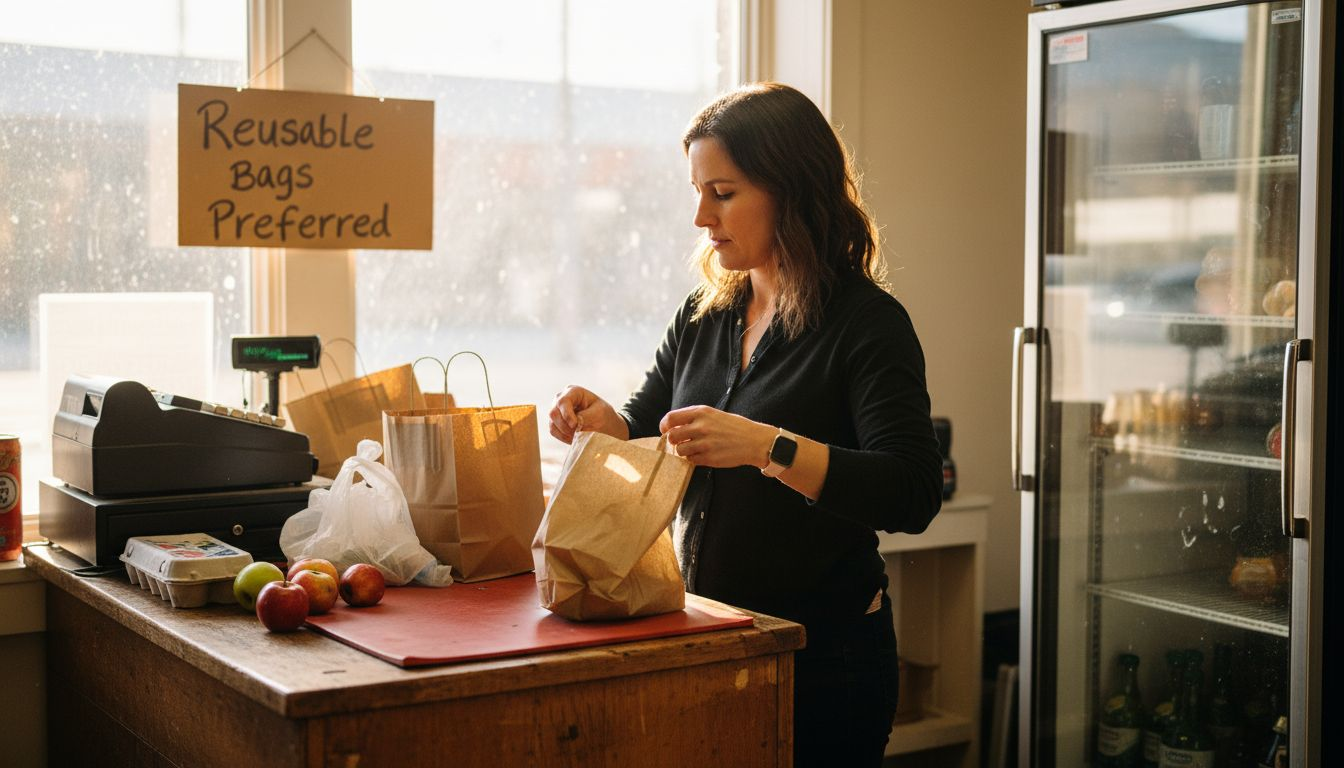
Paper bags biodegrade in weeks while plastic persists for over 450 years, yet fewer than 65% of consumers realize that paper bag production emits more CO2 upfront. This paradox highlights the complexity brands face when choosing sustainable packaging. As plastic bag bans expand across North America and consumer preference shifts toward renewable materials, understanding the full lifecycle trade-offs becomes critical for retail and foodservice operators seeking both compliance and brand value.
Table of Contents
- Environmental Lifecycle Comparison: Paper Vs. Plastic Bags
- Production Realities: Resource Use, Costs, And Logistics
- Common Misconceptions And Nuanced Perspectives
- Regulatory Trends And Consumer Preferences Shaping Packaging Choices
- Choosing Paper Bags: Practical Recommendations And Innovations
- Conclusion: Balancing Sustainability, Cost, And Brand Value
- Explore Custom Eco-Friendly Paper Bags From Gather Packaging
Key takeaways
| Point | Details |
|---|---|
| Biodegradability advantage | Paper bags biodegrade naturally within months, while plastic can persist for centuries and fragment into microplastics. |
| Lifecycle emissions | Paper bag production uses more energy and water but offers 61% lower net greenhouse gases over full lifecycle. |
| Reuse imperative | Reusing paper bags multiple times is crucial to offset their higher production impact compared to plastic. |
| Regulatory pressure | Plastic bag bans across North America and the EU favor paper alternatives for compliance. |
| Consumer trust | Consumers increasingly prefer paper packaging, enhancing brand trust and loyalty. |
Environmental lifecycle comparison: paper vs. plastic bags
The sustainability debate between paper and plastic bags hinges on understanding complete cradle-to-grave impacts. Paper bags are made from renewable wood fibers, while plastic bags derive from fossil fuels. This fundamental difference shapes their environmental profiles in distinct ways.
Paper bags biodegrade naturally within weeks to months under composting conditions, reducing long-term pollution risks compared to plastic bags which persist for centuries and fragment into microplastics. Plastic debris accumulates in oceans and soil, harming wildlife and entering food chains. Paper’s biological breakdown eliminates this persistent pollution threat entirely.
Recycling rates tell another part of the story. Global recycling rates for paper packaging range from 65% to 80%, significantly outperforming plastic’s 9 to 41% rates. Paper’s higher recyclability supports circular economy models where materials return to production cycles rather than landfills.
Carbon footprint calculations reveal nuance. Paper bag production emits more CO2 per unit than plastic bags at 5.52kg CO2e versus 1.58kg, but paper’s biogenic carbon uptake and renewable sourcing can reduce net greenhouse gas emissions by 61% in full lifecycle analyses. Trees absorb atmospheric carbon during growth, offsetting production emissions when forests are sustainably managed.
| Factor | Paper Bags | Plastic Bags |
|---|---|---|
| Biodegradability | Weeks to months | 450+ years |
| Recycling rate | 65 to 80% | 9 to 41% |
| Production CO2 | 5.52kg CO2e | 1.58kg CO2e |
| Net lifecycle emissions | 61% lower | Baseline |
| Microplastic risk | None | High |
Key environmental trade-offs include:
- Paper bags eliminate persistent pollution but require more upfront production energy
- Renewable sourcing supports forest regeneration when certified sustainable
- Higher recycling infrastructure exists for paper in most municipalities
- Plastic’s lighter weight reduces transport emissions but creates long-term waste
- Compostable paper bags return nutrients to soil, closing biological loops
“The shift from plastic to paper represents more than material substitution. It reflects a systems-level rethinking of how packaging interacts with natural cycles and municipal waste infrastructure.”
For brands evaluating eco-friendly paper bags, understanding these lifecycle distinctions helps align packaging choices with genuine sustainability goals rather than surface-level green marketing. The data reveals that paper’s environmental advantage emerges most clearly at end of life, where biodegradability and recycling create pathways unavailable to conventional plastic.
Production realities: resource use, costs, and logistics
Beyond environmental benefits, production economics and operational logistics shape packaging decisions. Paper bags cost about 5 to 7 times more than plastic bags and require significantly more water and energy to produce. This cost differential impacts budgets across retail and foodservice operations, requiring careful financial planning.
Water consumption during paper pulping and manufacturing exceeds plastic production by substantial margins. Energy demands for transforming wood fiber into finished bags add to operational footprints. Yet these production impacts must be weighed against end-of-life benefits and regulatory compliance value.
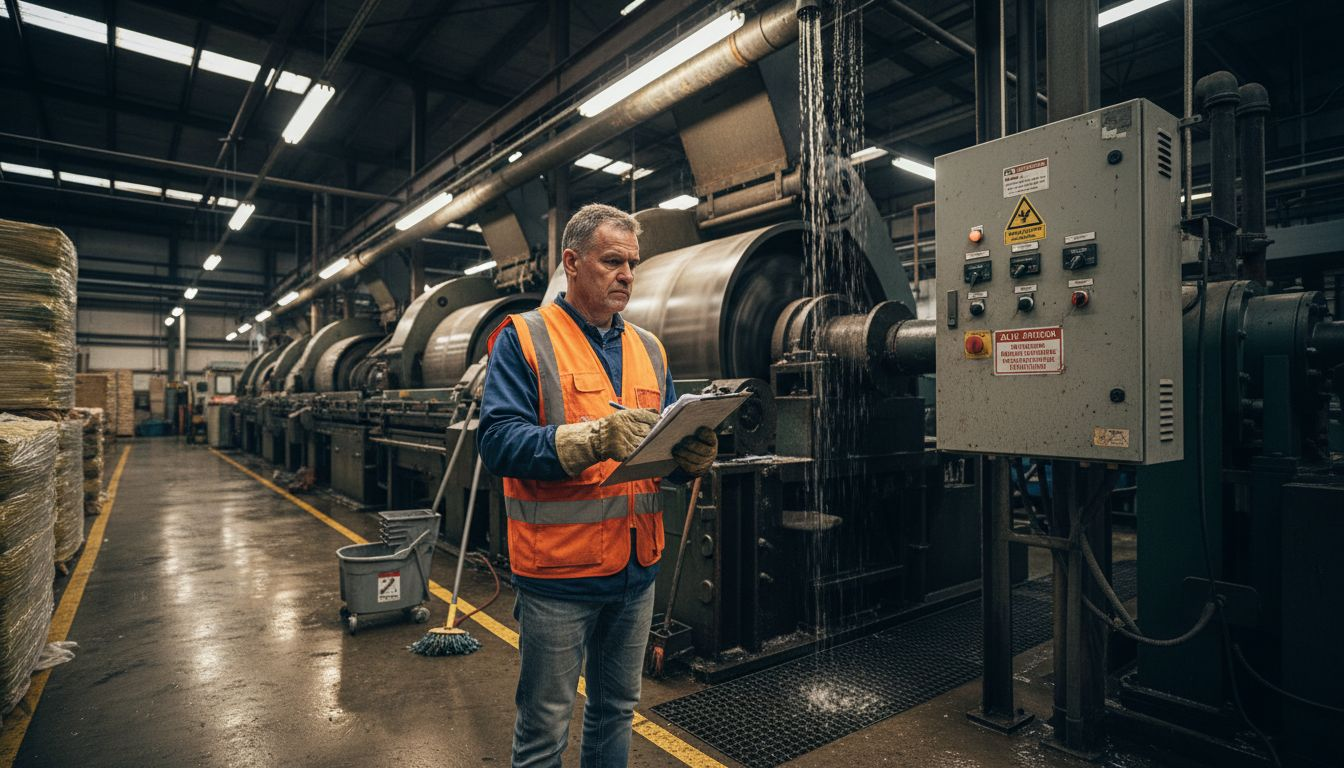
Logistics present another consideration. Heavier paper bags increase logistics footprint, adding up to 30% in transport emissions compared to plastic. Shipping weight affects fuel consumption, delivery costs, and carbon accounting. Brands optimizing supply chains must factor these transport realities into total sustainability assessments.
Main production and logistics challenges:
- Higher per-unit material and manufacturing costs strain budgets
- Increased water usage during pulping requires sustainable sourcing practices
- Greater shipping weight raises transport emissions and freight expenses
- Longer production timelines compared to plastic bag manufacturing
- Storage space requirements due to bulkier packaging dimensions
Financial and operational factors to consider:
- Unit cost premiums require value justification through brand positioning
- Volume commitments with manufacturers can reduce per-bag pricing
- Domestic production from suppliers like those offering custom kraft paper bags shortens lead times
- Inventory management adjusts for larger storage footprints
- Customer willingness to pay premium prices for sustainable packaging
Pro Tip: Consolidate shipments and optimize order quantities to offset paper bag weight impacts. Bulk ordering reduces per-unit transport emissions while negotiating better pricing with manufacturers.
The production and cost comparison reveals that financial investment in paper bags delivers returns through regulatory compliance, brand differentiation, and customer loyalty. While upfront costs exceed plastic alternatives, strategic positioning transforms this premium into competitive advantage. Brands communicating sustainability commitments effectively convert packaging investments into market value.
For operators managing tight margins, phased adoption strategies help balance costs with sustainability goals. Starting with high-visibility customer touchpoints or premium product lines allows testing market response before full-scale conversion. This measured approach mitigates financial risk while building organizational capability in sustainable packaging management.
Common misconceptions and nuanced perspectives
Popular narratives around paper versus plastic bags often oversimplify complex environmental relationships. Clearing misconceptions helps brands make informed decisions grounded in evidence rather than assumptions.
The belief that paper bags are automatically superior ignores critical reuse factors. Paper bags must be reused multiple times, ranging from 3 to 43 times, to offset their higher production impacts compared to plastic bags. Single-use paper offers minimal advantage and may perform worse across certain impact categories. Customer education about reuse becomes essential to realizing environmental benefits.
Plastic recycling rates remain disappointingly low despite widespread collection programs. Contamination, sorting challenges, and limited end markets constrain actual recycling. Worse, plastic bags create persistent microplastic pollution that paper entirely avoids. This end-of-life reality tips scales toward paper despite production trade-offs.
Paper bag production results in more air and water pollution, countering the perception that they are inherently eco-friendly without reuse. Manufacturing releases particulates and chemicals requiring treatment. Brands committed to genuine sustainability acknowledge these impacts while emphasizing superior end-of-life outcomes and renewable sourcing.
Clearing common myths:
- Myth: Paper bags are always better for the environment. Reality: Benefits depend heavily on reuse rates and disposal pathways.
- Myth: Plastic recycling solves the pollution problem. Reality: Low recycling rates and microplastic persistence undermine this assumption.
- Myth: Paper production has no environmental downsides. Reality: Higher water and air pollution during manufacturing require mitigation.
- Myth: Switching to paper eliminates all packaging concerns. Reality: Holistic approaches including reduction and reuse remain essential.
- Myth: Consumers automatically understand paper bag benefits. Reality: Education about reuse and disposal maximizes environmental gains.
Pro Tip: Print reuse encouragement directly on bags with messages like “Reuse me 10 times to maximize sustainability.” This simple addition guides customer behavior toward practices that validate your environmental investment.
Brands offering sustainable paper bag certifications demonstrate commitment beyond material substitution. FSC® certification ensures responsible forest management. Transparent communication about both production impacts and end-of-life benefits builds authentic trust with environmentally conscious customers.
The myth busting paper bag impacts conversation reveals that sustainability requires systems thinking. No single material solves all challenges. Paper bags represent significant progress when paired with reuse encouragement, proper disposal infrastructure, and certified sustainable sourcing. This nuanced understanding separates genuine environmental leadership from superficial greenwashing.
Regulatory trends and consumer preferences shaping packaging choices
Legal frameworks and market demand increasingly favor paper bags over plastic alternatives. Understanding these forces helps brands align packaging strategies with compliance requirements and customer expectations.
As of 2024, 12 US states banned single-use plastic bags, with the EU aiming to eliminate certain plastics by 2030, pushing brands to adopt paper bags. These regulations eliminate plastic options in major markets, making paper the default compliant choice. Penalties for non-compliance range from fines to sales restrictions, creating strong incentives for proactive transitions.
Beyond legal mandates, consumer preference accelerates the shift. 55% of US consumers prefer brands that eliminate plastic packaging, up from 49% in 2021, linking paper packaging to higher product trust. This growing sentiment translates into purchasing decisions, with customers willing to pay modest premiums for sustainable packaging.
Key regulatory and market drivers:
- Statewide plastic bag bans create patchwork compliance requirements across North America
- Municipal ordinances add local restrictions beyond state regulations
- Extended producer responsibility laws shift end-of-life costs to manufacturers
- EU’s Single-Use Plastics Directive establishes aggressive phase-out timelines
- Retail chains independently ban plastic bags ahead of legal requirements
- Consumer surveys consistently rank sustainable packaging as top purchase influencer
- Social media amplifies brand criticism for excessive plastic use
For operators serving multiple jurisdictions, paper bags simplify compliance by meeting restrictive standards everywhere. Rather than managing different packaging for different locations, unified paper bag programs reduce complexity and ensure consistent brand presentation.
Canadian-made paper bags offer additional advantages for North American brands. Domestic manufacturing supports local economies, shortens supply chains, and facilitates quality control. Sourcing from suppliers emphasizing paper bags compliance and preference aligns operational decisions with both regulatory requirements and market positioning.
The regulatory plastic bag bans landscape continues evolving rapidly. Staying ahead of these changes through proactive paper adoption protects against sudden compliance scrambles. Early movers also gain first-mover advantage in communicating sustainability leadership to customers.
Consumer preference for paper packaging reflects broader environmental awareness growth. Younger demographics especially prioritize sustainability in brand choices. Paper bags become visible symbols of environmental commitment that customers notice and appreciate at every transaction.
Choosing paper bags: practical recommendations and innovations
Translating environmental insights into procurement decisions requires specific selection criteria and usage strategies. Smart paper bag choices maximize sustainability benefits while supporting brand objectives.
Prioritize FSC®-certified bags made from responsibly sourced wood fiber. This certification guarantees forests are managed for long-term ecological health, biodiversity protection, and community benefit. Certification transforms abstract sustainability claims into verifiable practices that withstand scrutiny.
Select water-based inks for printing to maintain compostability. Conventional petroleum-based inks interfere with biodegradation and recycling processes. Water-based alternatives preserve paper’s environmental advantages throughout its lifecycle while delivering vibrant, durable graphics.
Leverage customization to enhance brand appeal and customer connection. Custom printed kraft paper bags transform functional packaging into marketing assets. Strategic design communicates brand values, creates memorable unboxing experiences, and encourages reuse through attractive aesthetics.
Educate customers about reuse to meet environmental thresholds. Simple messaging like “Built to reuse” or reuse counters printed on bags guide behavior. Durability engineering ensures bags withstand multiple uses, making reuse practical rather than aspirational.
Provide clear disposal instructions to ensure proper recycling or composting. Not all customers understand regional waste systems. Printed guidance like “Recyclable in your blue bin” or “Compost me” removes confusion and improves end-of-life outcomes.
Selection and usage best practices:
- Verify FSC® certification through supplier documentation and chain-of-custody tracking
- Specify minimum recycled content percentages to boost circular material flows
- Choose appropriate bag weights balancing durability with material efficiency
- Design handles and closures for repeated use without failure
- Test bags with typical loads to confirm performance across use cases
- Integrate sustainability messaging into graphic design authentically
- Partner with local composting facilities to verify bag compatibility
- Train staff to communicate paper bag benefits during customer interactions
Pro Tip: Partner with domestic manufacturers offering FSC®-certified paper bags for superior quality assurance and supply chain transparency. Local production enables facility visits, faster iteration on custom designs, and reliable delivery timelines.
Innovations in paper bag manufacturing continue expanding possibilities. Reinforced bottoms and handles increase load capacity. Moisture-resistant coatings extend usability for foodservice applications. Biodegradable window panels allow product visibility while maintaining compostability. These advances make paper bags suitable for applications previously dominated by plastic.
For foodservice operators, grease-resistant paper bags protect against oil penetration without sacrificing biodegradability. Restaurant and takeout applications benefit from bags that maintain integrity during transport while composting cleanly after use.
Conclusion: balancing sustainability, cost, and brand value
Paper bags deliver superior end-of-life environmental benefits despite higher production costs and resource use. The 61% reduction in net lifecycle greenhouse gas emissions, combined with complete biodegradability and higher recycling rates, positions paper as the sustainable choice for brands committed to genuine environmental progress.
Reusing paper bags transforms their environmental profile from mixed to clearly positive. Encouraging customers to reuse bags through durable design and explicit messaging maximizes return on sustainability investment. This behavioral component matters as much as material selection.
Aligning packaging choices with plastic bans and consumer trends boosts brand reputation while ensuring regulatory compliance. Paper bags meet legal requirements across jurisdictions, simplify operations, and resonate with environmentally conscious customers who increasingly make purchase decisions based on sustainability credentials.
Paper bags present opportunities for customization and eco-friendly innovation that strengthen brand identity. Custom graphics, sustainable sourcing transparency, and thoughtful design elevate packaging from commodity to strategic brand asset.
Strategic recommendations for brand owners:
- Invest in FSC®-certified paper bags to ensure verifiable sustainable sourcing
- Design for reuse through durability engineering and customer education
- Leverage custom printing to communicate brand values and sustainability commitments
- Factor lifecycle benefits into cost justifications beyond simple per-unit comparisons
- Partner with domestic manufacturers for supply chain reliability and quality control
- Stay informed on evolving regulations to maintain compliance across markets
- Measure and communicate environmental impact reductions to customers transparently
The paper versus plastic decision involves trade-offs requiring honest assessment. Paper bags demand higher upfront investment in materials, production energy, and logistics. These costs buy tangible benefits including regulatory compliance, customer preference alignment, and elimination of persistent pollution.
Brands viewing packaging as strategic investment rather than commodity expense find paper bags deliver measurable returns through differentiation, customer loyalty, and future-proofing against regulatory change. The sustainability premium becomes competitive advantage when communicated effectively and embedded in authentic brand narratives.
Explore custom eco-friendly paper bags from Gather Packaging
Transitioning to sustainable paper packaging becomes straightforward with the right manufacturing partner. Gather Packaging specializes in FSC®-certified, eco-friendly paper bags designed specifically for retail and foodservice applications.
Custom printing options help brands build customer trust with sustainable messaging that reinforces environmental commitments at every transaction. Eight-color flexo printing delivers vibrant graphics that transform bags into walking advertisements for your brand values.
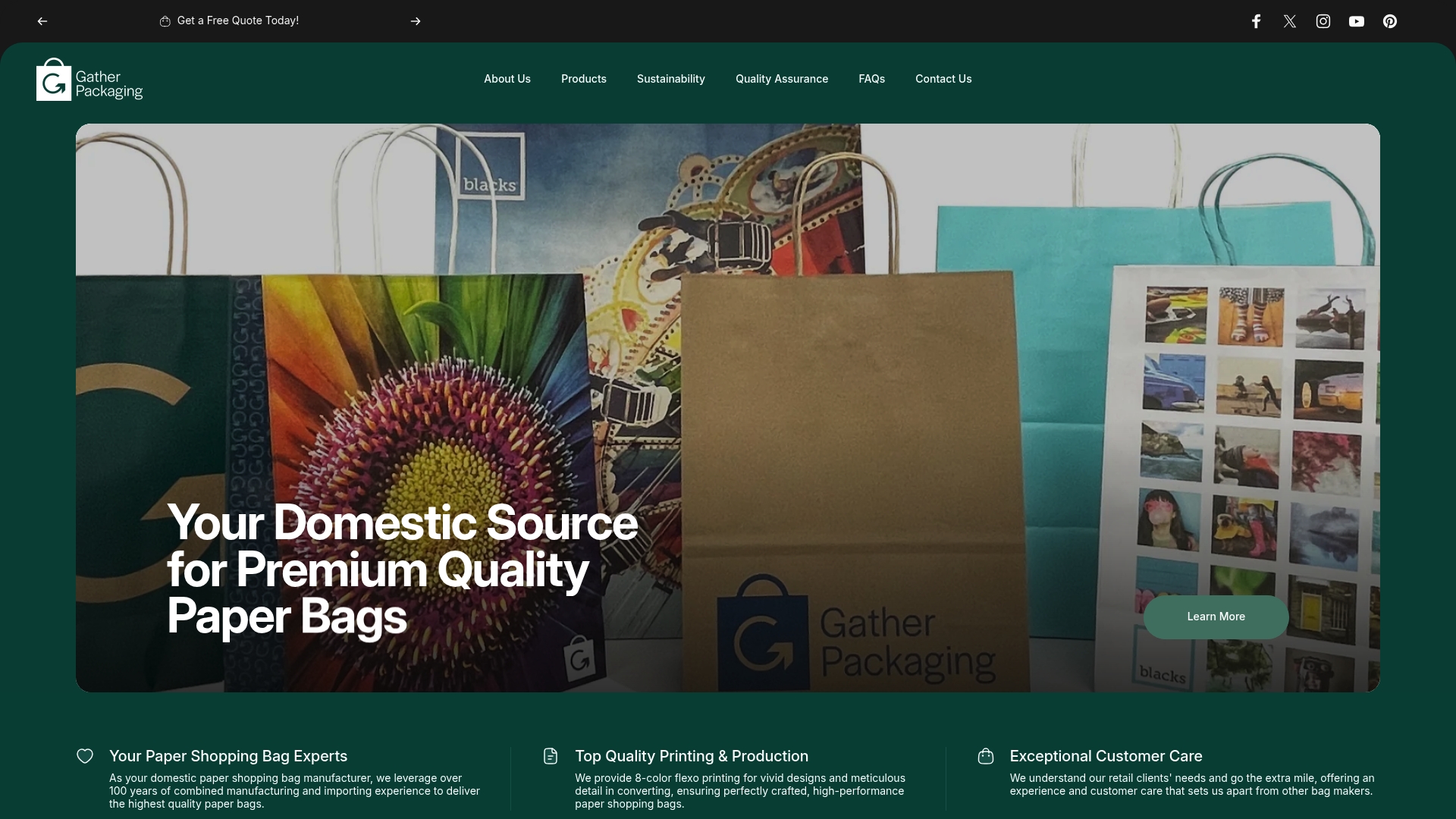
Domestic manufacturing in Toronto ensures quality control and supports local supply chains, reducing logistics footprint while providing reliable delivery timelines. Over a century of combined experience means proven processes that deliver consistent results.
Explore custom printed kraft paper bags designed to your specifications, or learn more about sustainably sourced paper bags that meet FSC® standards. Your packaging choice makes a visible statement about brand priorities.
Frequently asked questions
Why are paper bags considered more sustainable than plastic?
Paper bags come from renewable wood fiber resources that regenerate through responsible forestry, while plastic depends on finite fossil fuels. Paper biodegrades naturally within months, eliminating the persistent pollution and microplastic fragmentation that plague plastic bags for centuries. Higher recycling rates for paper, ranging from 65% to 80% versus plastic’s 9% to 41%, create circular material flows that keep resources in productive use rather than landfills or oceans.
How many times should a paper bag be reused to be more eco-friendly than plastic?
A paper bag must be reused 3 to 43 times to neutralize its higher production environmental impact compared to plastic bags. The specific threshold depends on which environmental impact category you measure, with energy use, water consumption, and emissions showing different crossover points. Encouraging customers to reuse bags through durable construction and clear messaging helps achieve these thresholds in real-world use.
Are paper bags more expensive than plastic bags for retailers?
Paper bags typically cost about 5 to 7 times more per unit than plastic bags due to higher material and manufacturing expenses. However, this cost differential should be balanced against sustainability goals, regulatory compliance benefits, and customer expectations. Many brands successfully position the premium as investment in environmental responsibility that resonates with target customers, often recouping costs through enhanced brand loyalty and willingness to pay.
What regulations are driving the shift from plastic to paper bags?
12 US states have banned single-use plastic bags as of 2024, with the EU planning to phase out certain plastics by 2030. These regulations create legal requirements that make paper bags the compliant default choice in major markets. Municipal ordinances add local restrictions beyond state laws, creating patchwork requirements that paper bags satisfy uniformly, simplifying multi-jurisdiction operations for national and regional brands.
Recommended
- Compostable, Recycled, Eco & Environmentally Friendly Paper Bags | Gather Packaging – Gatherpackaging
- Canadian-Made Paper Bags | Gather Packaging – Gatherpackaging
- Paper Bags Made in Canada | Gather Packaging – Gatherpackaging
- Custom Printed Eco-Friendly Kraft Paper Bags | Gather Packaging – Gatherpackaging
Share:
How to design retail packaging: cut 30% waste & boost sales