

Selecting the right custom bag printing option can feel overwhelming when you’re trying to balance vibrant branding with genuine sustainability commitments. Retail and foodservice businesses face pressure to stand out on shelves while meeting customer expectations for eco-conscious packaging. The printing method you choose affects not just visual appeal but also environmental impact, cost efficiency, and long-term brand reputation. This guide walks you through the essential criteria, popular printing technologies, material considerations, and practical decision frameworks to help you confidently choose custom bag printing that aligns with your business values and operational needs.
Table of Contents
- Key takeaways
- Evaluating key criteria for custom bag printing
- Common custom bag printing methods
- Comparing printing methods and material finishes
- Choosing the right printing option for your business needs
- Explore eco-friendly custom bag solutions at Gather Packaging
- FAQ
Key Takeaways
| Point | Details |
|---|---|
| Flexo for volume | Flexographic printing is ideal for very large runs because setup costs are spread over thousands of units and colors stay accurate across many bags. |
| Digital for testing runs | Digital printing eliminates plates and enables testing multiple designs with lower risk and cost, making it suitable for seasonal campaigns or limited editions. |
| Lamination trade offs | Lamination adds strength and moisture resistance but can hinder recycling, so test grease resistance and end of life impact. |
| Material and method impact | The bag material choice and print method together influence sustainability, brand perception, and overall cost. |
Evaluating key criteria for custom bag printing
Before diving into specific printing technologies, you need to identify what matters most for your business. Sustainability encompasses multiple dimensions: recyclability of finished bags, compostability of materials, and the environmental footprint of inks and production processes. Sustainable paper bags require careful attention to each component in the supply chain.
Durability protects your products during transport and handling while reflecting your brand’s quality standards. Bags that tear easily create negative customer experiences and waste. Lamination can enhance strength and moisture resistance, but it introduces trade-offs you’ll need to evaluate based on your specific use case.
Branding clarity depends heavily on your chosen print method, available color options, and design precision. Vibrant, accurate colors strengthen brand recognition and shelf appeal. Design retail packaging tips can help you maximize visual impact within technical constraints.
Cost effectiveness varies dramatically across print technologies and order volumes. Flexographic printing suits high-volume retail branding because setup costs distribute across thousands of units. Digital printing works better for smaller runs where setup represents a larger percentage of total cost.
Production volume fundamentally shapes your technology choice. Large retailers ordering 10,000+ bags benefit from flexo’s economies of scale. Boutique shops testing seasonal designs need digital’s flexibility. Understanding your typical order size prevents overcommitting to inappropriate technology.
Pro Tip: List your top three priorities (sustainability, cost, branding complexity) and use them as filters when evaluating printing options. This focused approach prevents decision paralysis and keeps you aligned with core business values.
Common custom bag printing methods
Flexographic printing dominates the custom bag industry for good reason. This method uses flexible printing plates and fast-drying inks to produce consistent, high-quality results across massive production runs. Retail chains and foodservice operators appreciate flexo’s ability to maintain color accuracy across thousands of bags while keeping per-unit costs low. The technology handles complex designs with multiple colors efficiently once plates are created.
Digital printing revolutionizes how businesses approach custom printed kraft paper bags for smaller orders. This method eliminates traditional plates entirely, printing directly from digital files. You can test multiple designs without expensive setup changes. Digital printing allows testing sustainable designs with minimal financial risk, making it ideal for seasonal campaigns or limited edition releases.
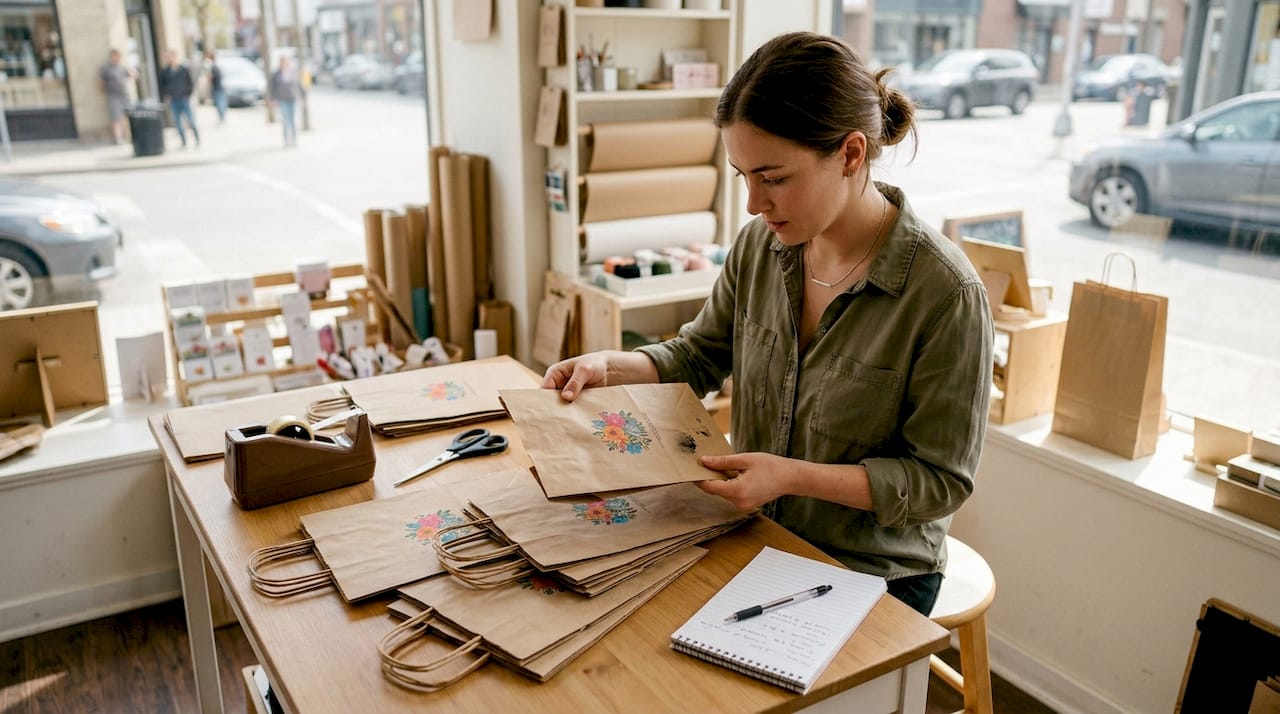
Screen printing offers vibrant, heavy ink coverage that creates tactile, premium-feeling designs. This method works well for bold graphics with solid color blocks. However, screen printing sees less use in sustainable bag production because it typically requires more ink and generates more waste than flexo or digital alternatives. Setup time increases with each additional color, making it less practical for complex multi-color designs.
Each method impacts sustainability differently. Flexo uses water-based inks and generates minimal waste once production begins, though plate creation has environmental costs. Digital printing produces virtually no setup waste and allows precise ink application. Screen printing often requires solvent-based inks and creates more material waste during setup and production.
Pro Tip: Order digital samples of your design in different colorways before committing to large flexo runs. This testing phase helps you identify potential issues with color matching or design clarity while minimizing waste and financial exposure.
Comparing printing methods and material finishes
Understanding how different technologies stack up helps you make informed decisions. Each method brings distinct advantages depending on your specific requirements and constraints.
| Printing method | Cost per unit | Best order size | Sustainability impact | Print quality | Setup time |
|---|---|---|---|---|---|
| Flexographic | Low (high volume) | 5,000+ units | Moderate (water-based inks) | Excellent consistency | 2-3 days |
| Digital | Moderate | 100-5,000 units | Low waste, minimal setup | High detail capability | Same day |
| Screen | High (low volume) | 500-2,000 units | Higher waste generation | Bold, tactile finish | 3-5 days |
Lamination adds a protective layer that significantly enhances bag performance in demanding environments. Foodservice businesses particularly value how lamination creates barriers against grease, moisture, and general wear. The finish gives bags a premium look and feel that elevates brand perception. Customers notice the difference in hand, associating the enhanced quality with your overall brand standards.
However, lamination may reduce recyclability depending on the specific materials and adhesives used. Some recycling facilities struggle to separate laminated layers from paper fibers. This trade-off requires careful consideration based on your sustainability commitments and customer expectations.
Best practices for lamination decisions include:
- Conduct grease resistance testing with your actual products to determine if lamination is necessary
- Request recyclability certifications from manufacturers for laminated materials
- Consider biodegradable lamination alternatives that maintain performance while improving end-of-life outcomes
- Test bags in real-world conditions before large production runs
- Communicate lamination benefits and disposal instructions clearly to customers
The paper bag material guide explores how base materials interact with different finishes. Heavier kraft paper may not need lamination for many applications, while lighter weights benefit more from protective coatings. Matching material weight to finish type optimizes both performance and sustainability.
Choosing the right printing option for your business needs
Navigating these options becomes straightforward when you follow a systematic decision process. Breaking down the choice into sequential steps prevents overwhelm and ensures you consider all critical factors.
-
Assess your typical order volume honestly. If you regularly need 5,000+ bags with consistent branding, flexographic printing delivers optimal value. Smaller, variable orders benefit from digital flexibility.
-
Define your sustainability priorities explicitly. Choose compostable base materials when possible. Evaluate whether lamination aligns with your environmental goals or if uncoated bags meet performance requirements. Test different material and finish combinations to find the sweet spot.
-
Match branding complexity to printing capabilities. Intricate designs with gradients and fine details shine with digital printing. Bold logos and simple graphics work beautifully with flexo at lower costs. Screen printing suits designs emphasizing texture and heavy ink coverage.
-
Calculate total cost of ownership beyond per-unit pricing. Factor in setup fees, minimum order quantities, storage costs for large runs, and potential waste from overordering. Digital printing often wins for businesses with unpredictable demand despite higher per-unit costs.
-
Partner with manufacturers experienced in eco-friendly production. Made in Canada packaging offers shorter supply chains, faster turnaround, and easier communication for design iterations. Domestic production reduces transportation emissions while supporting local economies.
Consider your growth trajectory when selecting printing technology. A boutique starting with digital can transition to flexo as volume increases. Building relationships with manufacturers offering both technologies provides flexibility as your business evolves. The paper bag design guide helps you create designs that work across multiple printing methods, protecting your investment as you scale.
Pro Tip: Order 100-200 digitally printed prototype bags to test customer response and identify any functional issues before committing to 5,000+ unit flexo runs. This approach minimizes waste while gathering valuable market feedback on design, durability, and messaging.
Explore eco-friendly custom bag solutions at Gather Packaging
Finding a manufacturing partner that truly understands the balance between sustainability, branding, and operational efficiency makes all the difference. Gather Packaging specializes in eco-friendly paper bags designed specifically for retail and foodservice businesses navigating these exact challenges.
Their Toronto-based production facility offers both digital and flexographic printing capabilities, giving you flexibility as your needs evolve. Whether you’re testing a new design concept with a small digital run or scaling up with cost-efficient flexo production, you work with the same team throughout your journey. This continuity ensures consistent quality and eliminates the coordination headaches of managing multiple vendors.
Explore custom printed kraft paper bags made from FSC-certified and recycled materials that align with your environmental commitments. Their eight-color flexo printing delivers vibrant, accurate branding that strengthens shelf presence and customer recognition. Canadian made paper bags mean faster turnaround times, lower transportation emissions, and direct communication with production teams when you need design adjustments or technical guidance. Their experts help you navigate material selection, finish options, and printing methods to create bags that perform beautifully while supporting your sustainability story.
FAQ
What is the most eco-friendly printing method for custom bags?
Digital printing produces less waste and works perfectly for small batches, making it the most eco-friendly option for testing sustainable designs. It eliminates plate production and allows precise ink application without setup waste. Flexographic printing becomes more sustainable at high volumes because the setup impact distributes across thousands of units, and modern flexo uses water-based inks with minimal environmental footprint.
How does lamination affect the recyclability of custom paper bags?
Lamination enhances durability and grease resistance but may complicate recycling depending on adhesive types and facility capabilities. Some recycling systems struggle to separate laminated layers from paper fibers. Conduct grease resistance testing to determine if your products truly need lamination, and request recyclability certifications from manufacturers. Biodegradable lamination alternatives offer improved end-of-life performance while maintaining protective benefits.
Which printing method is best for small custom bag orders?
Digital printing dominates small order production because it eliminates expensive plate setup and allows design changes between runs. You can order as few as 100 bags economically, perfect for testing seasonal designs or limited editions. Digital printing offers flexibility that flexographic methods cannot match at low volumes. The technology delivers excellent detail and color accuracy without the minimum order quantities that make flexo impractical for small businesses or prototype testing.
Can I use the same design across different printing methods?
Most designs translate well between printing methods with minor adjustments. Digital printing handles fine details and gradients better than flexo, while flexo excels at bold, solid colors across large runs. Work with designers familiar with both technologies to create artwork that maintains impact regardless of production method. This flexibility protects your brand investment as order volumes change. Testing designs digitally before flexo production helps identify potential translation issues early.
How do I balance cost and sustainability in custom bag printing?
Start by defining non-negotiable sustainability requirements, then optimize cost within those boundaries. Choose recycled or FSC-certified base materials as your foundation. Digital printing minimizes waste for small orders despite higher per-unit costs. Flexo delivers cost efficiency at scale while using water-based inks. Avoid lamination unless grease resistance testing proves it necessary. Partner with domestic manufacturers to reduce transportation emissions and support faster iteration cycles that prevent overordering and waste.
Share:
What is serrated top in paper bags? A 2026 retail guide
What is custom packaging? A guide to sustainable branding