

TL;DR:
- Paper packaging includes corrugated boxes, folding cartons, and food-safe wraps each serving distinct operational needs.
- Lifecycle assessment shows paper reduces global warming potential more than plastic, but specific impacts vary.
- Customizable paper packaging enhances brand identity, messaging, and compliance in retail and foodservice sectors.
Not all eco-friendly packaging is created equal, and the wholesale market makes that clear fast. Paper packaging plays a central role in North American wholesale for retail and foodservice, yet many buyers still choose materials based on perception rather than performance data. The result is missed savings, compliance gaps, and branding that falls flat. This guide breaks down how paper packaging actually functions across wholesale operations, what the life cycle data really says, and how your business can use smarter sourcing decisions to drive measurable gains in efficiency, sustainability, and brand equity.
Table of Contents
- How paper packaging shapes wholesale operations
- Sustainability and life cycle impact: Paper vs. alternatives
- How paper packaging enhances brand and compliance
- How to maximize efficiency and eco-impact with smart paper packaging
- A fresh perspective: Where most businesses miss the real impact
- How Gather Packaging helps you lead with smarter paper packaging
- Frequently asked questions
Key Takeaways
| Point | Details |
|---|---|
| Paper packaging dominates wholesale | Corrugated boxes and folding cartons are essential for North American retail and foodservice logistics. |
| Sustainability is nuanced | LCAs show paper wins in recycling and climate but not always in every impact category. |
| Branding and compliance boost | Customizable paper packaging supports both eco-branding and meeting evolving regulatory standards. |
| Efficiency and eco-impact go hand in hand | Smart sourcing and design can cut costs, emissions, and improve operations together. |
| Data-driven choices win | Using LCA and supplier credentials, not just perception, leads to real sustainability and business value. |
How paper packaging shapes wholesale operations
Let’s dig into how paper packaging actually functions as the backbone of modern wholesale operations.
When most buyers think about paper packaging, they picture a simple brown bag. The reality is far more layered. Three main formats drive wholesale volume: corrugated boxes, folding cartons, and food-safe wraps. Each serves a distinct role, and choosing the wrong one for your application creates real operational friction.
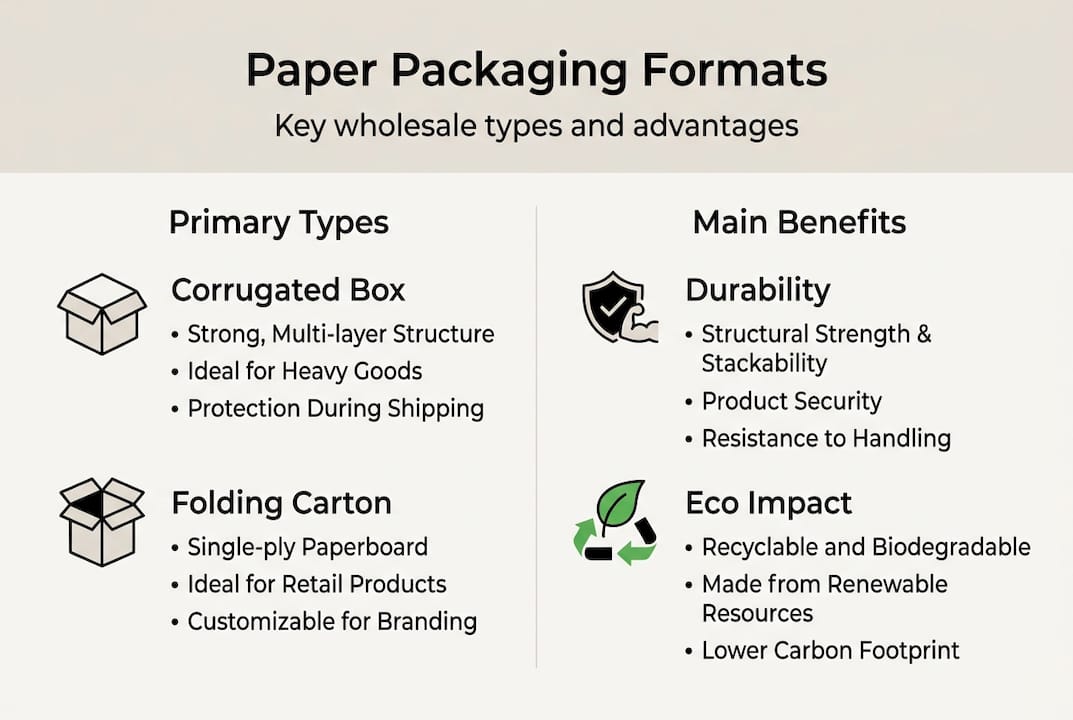
Corrugated boxes handle the heavy lifting in logistics. They protect products during transit, stack efficiently on pallets, and are easy to label for inventory systems. Folding cartons shine at retail, where shelf presence and print quality matter. Food-safe wraps are the workhorse of foodservice, keeping products compliant and fresh from prep to customer.
| Format | Primary use | Wholesale market value |
|---|---|---|
| Corrugated boxes | Shipping, logistics, e-commerce | $70 billion |
| Folding cartons | Retail shelf, consumer goods | $40 billion |
| Food-safe wraps | Foodservice, deli, bakery | Growing segment |
Corrugated boxes form a $70B market, folding cartons $40B, together dominating e-commerce and foodservice wholesale. Those numbers reflect real operational demand, not trend chasing.
E-commerce is pushing paper packaging innovation faster than almost any other sector. Brands need packaging that ships safely, looks good on arrival, and communicates sustainability without adding bulk. Foodservice operators face similar pressure: speed, compliance, and presentation all in one format.
For wholesale buyers, the operational advantages of paper packaging are concrete:
- Stackability and standardization reduce warehouse footprint and picking errors
- Print-ready surfaces allow branding without secondary labeling steps
- Recyclability simplifies end-of-life logistics and supports retailer sustainability programs
- Supplier flexibility is higher for paper than for many specialty plastics
- Regulatory alignment is easier since paper formats are broadly accepted under current and emerging packaging rules
If you are still in the process of selecting wholesale paper bags for your operation, understanding these format distinctions is the foundation for every other decision.
Sustainability and life cycle impact: Paper vs. alternatives
Knowing the types and applications is step one, but the next challenge is navigating sustainability claims and environmental trade-offs.
The recycling numbers alone tell part of the story. Paper packaging achieves recycling rates around 83% in the EU, with North American rates tracking in a similar direction. Plastic sits closer to 40%. But recycling rate is just one metric, and relying on it alone leads to oversimplified sourcing decisions.
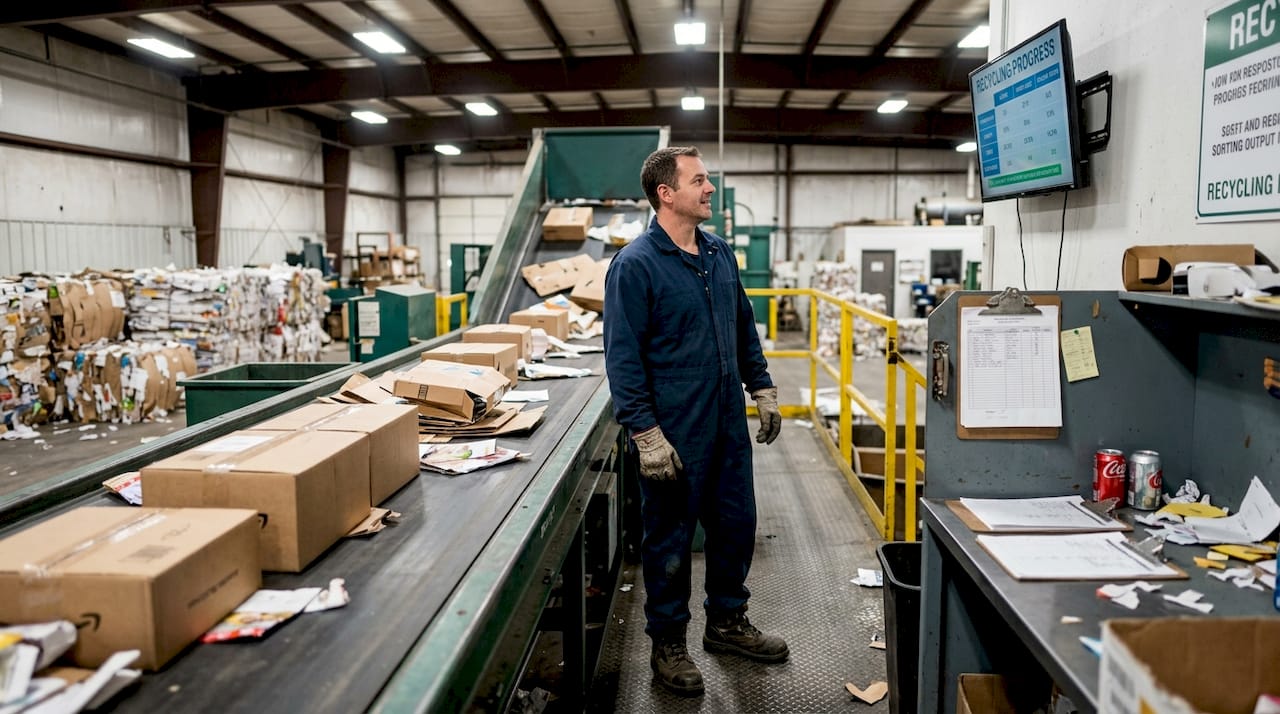
Life cycle assessment, or LCA, is the tool that gives you the full picture. LCA measures environmental impact across a product’s entire life: raw material extraction, manufacturing, transport, use, and end-of-life. LCA studies show paper packaging lowers global warming potential by 69 to 110% compared to reusable plastic containers (RPCs) in certain product categories. That is a significant gap.
| Impact category | Paper packaging | Plastic alternatives |
|---|---|---|
| Global warming potential | Lower by 69-110% (vs. RPCs) | Higher in most categories |
| Recycling rate | ~83% (EU), similar in NA | ~40% |
| End-of-life options | Recyclable, compostable, biodegradable | Limited |
| Energy use | Higher in production | Lower in production |
| Water use | Varies by process | Varies by process |
Here is where it gets nuanced. No universal green winner exists across all impact categories. Paper can use more energy in production than some plastics. Water consumption varies widely by mill and process. Recent LCA research reinforces that results depend heavily on the specific product, use case, and regional infrastructure.
How to interpret LCA results for your business:
- Identify your priority impact category. Is it carbon emissions, water, or waste? Your answer changes which material performs best.
- Match the packaging to the product’s use pattern. A single-use foodservice wrap has a different LCA profile than a retail bag used multiple times.
- Factor in your local recycling infrastructure. A recyclable material is only as good as the system that processes it.
- Ask suppliers for third-party verified LCA data, not just marketing claims.
Pro Tip: Avoid defaulting to paper just because it feels greener. Let your specific product use, end-of-life options, and verified LCA data guide the decision. That is how you make a claim that holds up to scrutiny.
For a deeper look at how paper stacks up on emissions specifically, the comparison of paper vs. plastic emissions is worth reviewing. And if you want a broader framework, understanding sustainable packaging gives you the vocabulary to evaluate any supplier’s claims.
How paper packaging enhances brand and compliance
With sustainability top of mind, the next layer is leveraging packaging for business value through branding and compliance.
Customizable paper packaging is one of the most underused tools in retail and foodservice branding. When a customer picks up a bag with clean typography, your brand colors, and a short sustainability message, that moment builds trust. It signals that your business pays attention to detail and cares about more than just moving product.
Paper packaging helps build eco-brand image and meets rising consumer and regulatory expectations. Businesses that treat packaging as a brand touchpoint consistently outperform those that treat it as a cost line.
Here is how leading retail and foodservice brands use paper packaging for brand impact:
- Logo and color printing on bags and cartons creates consistent visual identity across locations
- Material storytelling such as FSC® certification marks or recycled content callouts signals transparency
- Bag design and handle style communicates price point and brand personality before the product is even seen
- Seasonal or limited-run designs create urgency and collectibility without changing core packaging infrastructure
- Compliance messaging printed directly on packaging reduces the need for separate inserts
In foodservice, food-safe and compliant wraps are no longer optional. Regulators and retailers are tightening requirements around food contact materials, and paper formats are well positioned to meet those standards.
3.8% CAGR projected growth for North American paper packaging reflects rising business and regulatory demand, not just consumer preference.
Pro Tip: Audit your current packaging against local and industry compliance requirements at least once a year. Regulations around food contact materials, recyclability claims, and labeling are evolving quickly. Staying ahead protects your brand and your supply chain.
For businesses building a sustainable retail identity, the strategies behind sustainable retail branding are directly applicable. And if compliance is a current pain point, reviewing packaging compliance tips will help you prioritize the right updates.
How to maximize efficiency and eco-impact with smart paper packaging
Brand and compliance are key drivers, but practical efficiency is where packaging can truly transform your operations.
Paper packaging boosts efficiency through standardization and customization, reduces Scope 3 emissions, and offers LCA-based selection advantages that compound over time. Here is how to put that into practice.
Steps to improve operational efficiency through paper packaging:
- Standardize your size range. Fewer SKUs mean simpler inventory, faster picking, and better volume pricing from suppliers.
- Right-size packaging to your product. Oversized bags waste material and cost money. A tight fit also looks more professional.
- Train staff on proper storage and handling. Paper packaging is sensitive to moisture. Simple storage protocols protect your investment.
- Source recycled content where possible. Post-consumer recycled paper often costs less than virgin fiber and supports your sustainability reporting.
- Consolidate suppliers. Working with fewer, certified suppliers simplifies quality assurance and gives you more negotiating leverage.
Eco-impact upgrades worth prioritizing:
- Switch to FSC®-certified paper to ensure responsible forestry sourcing
- Add recycling or composting instructions directly to packaging to improve end-of-life rates
- Choose water-based inks over solvent-based options to reduce VOC emissions
- Opt for biodegradable coatings where food contact is required
- Track packaging-related emissions as part of your Scope 3 reporting
Pro Tip: When evaluating suppliers, ask for third-party LCA data and certifications like FSC® or SFI. A supplier who cannot provide documentation is a liability, not a partner. Smart sourcing protects your brand’s sustainability claims from greenwashing accusations.
For businesses exploring longer-term options, reusable paper packaging tips offer a path to even greater efficiency gains. And if you want to connect packaging decisions to sales outcomes, the principles behind retail packaging design are directly relevant.
A fresh perspective: Where most businesses miss the real impact
All the practical tips matter, but let’s step back and consider what actually moves the needle.
Conventional wisdom says switch to paper and you’ve done your part for the environment. That is only half the story, and in some cases, it creates a false sense of progress. We have seen businesses make the switch to paper, market it heavily, and then discover their actual LCA profile barely changed because they ignored production energy, transport distance, and end-of-life infrastructure.
Real impact comes from integrating LCA data, operational needs, and branding strategy into a single packaging decision framework. Not three separate conversations. One.
Businesses should rely on LCA metrics, not just green claims, for packaging choices. That is not a nice-to-have. It is the difference between genuine sustainability and expensive optics.
The businesses that win on packaging are the ones treating it as a strategic asset, not a procurement checkbox. If you want to go further, sustainable design strategies show how design decisions at the sourcing stage create compounding benefits across your entire operation.
How Gather Packaging helps you lead with smarter paper packaging
Ready to put these strategies into action? Here is how Gather Packaging helps you succeed.
Gather Packaging brings over a century of combined manufacturing and importing experience to every order, with domestic production in Toronto that means faster turnaround and lower logistics costs for North American buyers.
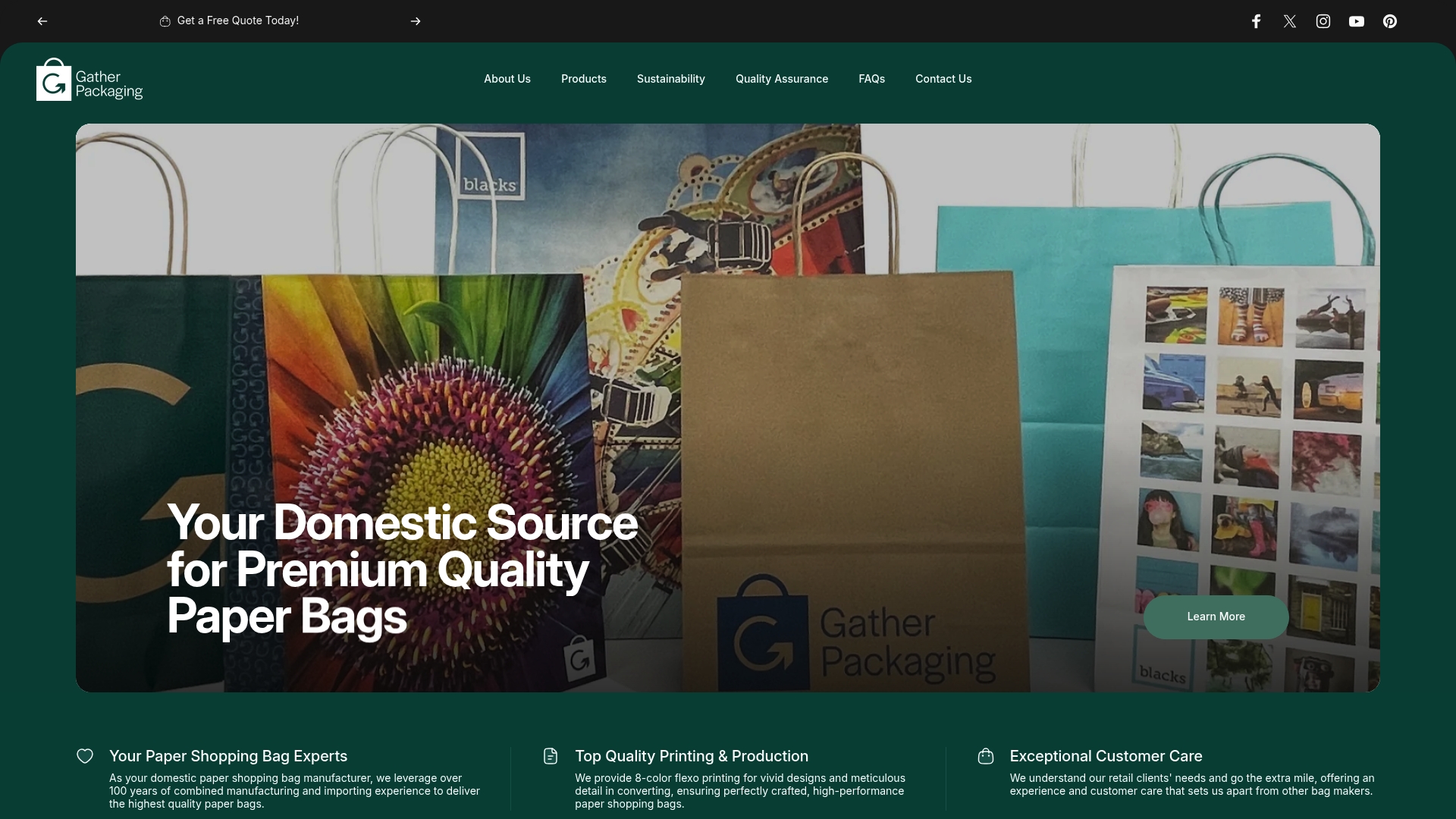
Our eco-friendly paper bags are made with FSC®-certified materials, recycled content, and water-based inks, giving you verified sustainability credentials your customers and compliance teams will respect. Whether you need custom kraft paper bags with full 8-color flexo printing or reliable Canadian made paper bags built for consistent wholesale volume, we have the formats, certifications, and design support to make packaging a real competitive advantage for your brand.
Frequently asked questions
What types of paper packaging are used most in wholesale?
Corrugated boxes, folding cartons, and food-contact safe wraps are the most common paper packaging types in wholesale, each serving distinct roles in logistics, retail, and foodservice operations. Paper packaging plays a central role in North American wholesale across both retail and foodservice channels.
Is paper packaging always better for the environment than plastic?
Not always. Paper often outperforms plastic in recycling rates and global warming potential, but the outcome depends on the specific product category and its full lifecycle. No universal green winner exists across all environmental impact categories.
How does paper packaging support brand image in retail and foodservice?
Customizable paper packaging lets you print your logo, sustainability messaging, and brand colors directly on the bag or carton, creating a consistent identity at every customer touchpoint. Paper packaging helps build eco-brand image and meets rising consumer and regulatory expectations.
What is the market outlook for paper packaging in North American wholesale?
North American paper packaging is projected to grow at a steady 3.8% CAGR, driven by e-commerce expansion, tightening regulation, and sustained consumer preference for sustainable materials.
Share:
Packaging compliance explained: stay legal, lead in sustainability
Automated Bag Manufacturing: The Smart Solution for Sustainable Packaging