

TL;DR:
- Packaging compliance involves adherence to safety, environmental, and labeling regulations across North America.
- Non-compliance can lead to recalls, fines, delistings, and reputational damage, especially with evolving laws like EPR and PFAS bans.
- Proactive design, proper certifications, and working with knowledgeable suppliers help ensure ongoing compliance and sustainability goals.
Packaging compliance sounds straightforward until a recall notice lands on your desk. Many retail and foodservice professionals assume it’s just about printing the right label, but the reality covers food safety certifications, material restrictions, chemical bans, and a fast-growing web of environmental laws across every state and province. Miss one requirement and you’re looking at fines, product pulls, or losing shelf space entirely. This article breaks down exactly what packaging compliance means in North America, which rules apply to your operation, and how choosing the right packaging materials can keep you ahead of both regulators and competitors.
Table of Contents
- What is packaging compliance?
- Key North American packaging rules and penalties
- How packaging compliance works: Steps and typical process
- Eco-friendly options and certifications: Finding compliant solutions
- Navigating exemptions, edge cases, and multi-jurisdiction issues
- A surprise for pros: Why packaging compliance drives innovation (and headaches)
- How Gather Packaging helps you stay compliant and sustainable
- Frequently asked questions
Key Takeaways
| Point | Details |
|---|---|
| Covers safety and eco-impact | Packaging compliance involves meeting both safety and environmental requirements set by government agencies. |
| Rules vary by location | Federal, state, and provincial laws differ, so understanding the current rules for each market is crucial. |
| Penalties can be severe | Non-compliance can result in costly fines, legal trouble, and lost market access. |
| Eco-friendly choices require proof | Sustainable packaging must pass third-party tests and display valid certifications to meet compliance. |
| Stay updated for success | Ongoing changes mean regular review of compliance strategies is essential for retail and foodservice businesses. |
What is packaging compliance?
Packaging compliance refers to adherence to federal, state, and provincial regulations governing food packaging safety, labeling, material restrictions, and end-of-life management in North America. That’s a broad mandate, and it’s intentional. Regulators treat packaging as a direct interface between your product and the consumer, which means every layer of the supply chain carries responsibility.
At the federal level, the U.S. Food and Drug Administration (FDA) sets the baseline for food-contact materials and labeling. FDA regulations cover everything from approved inks and adhesives to required nutritional disclosures and allergen statements. Health Canada mirrors many of these requirements for Canadian operations, with its own set of approved substances and labeling rules under the Food and Drugs Act.
Beyond safety, compliance now includes sustainability obligations. Understanding packaging compliance importance is critical because the risks are real and growing. Non-compliance can trigger:
- Product recalls and market withdrawal
- Fines from state, provincial, or federal agencies
- Retailer delisting or contract termination
- Reputational damage with increasingly eco-aware consumers
Environmental regulations are evolving fastest. Extended Producer Responsibility (EPR) laws, PFAS chemical bans, and recycled content mandates are reshaping what materials you can legally use. Staying current with a packaging standards guide is no longer optional for any serious operation. As one industry principle puts it:
Compliance is not a destination. It’s an ongoing process that evolves with science, policy, and consumer expectations.
For foodservice and retail professionals, this means building compliance into your sourcing and design workflow from day one, not as an afterthought.
Key North American packaging rules and penalties
Knowing what compliance means is the foundation. Knowing the specific rules and what violations cost is what actually changes behavior.
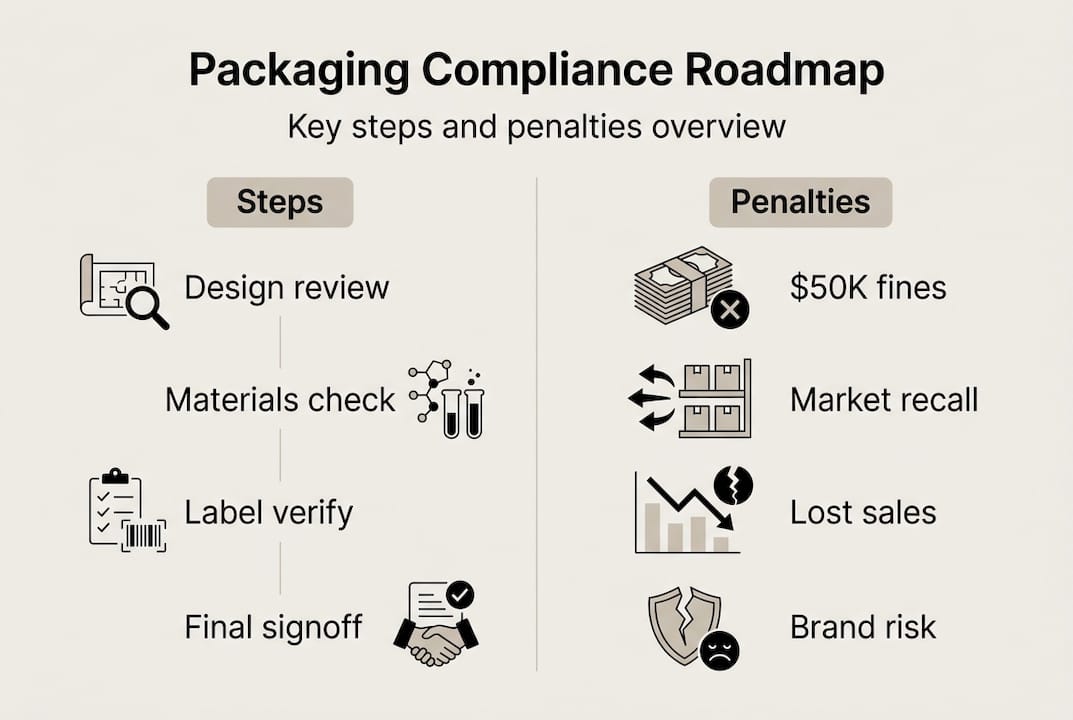
EPR laws are now the most significant shift in North American packaging regulation. EPR penalties can reach $50,000 per day for non-compliance, with registration deadlines already active in states like Oregon and Colorado. More than seven U.S. states have passed EPR packaging laws, and all Canadian provinces either have active programs or are implementing them now.
Here’s a snapshot of where key rules stand in 2026:
| Regulation | U.S. Status | Canada Status |
|---|---|---|
| EPR packaging laws | 7+ states active | All provinces covered |
| PFAS ban in packaging | 12+ states enacted | Federal ban effective 2026 |
| Recycled content mandates | CA, WA, others | Province-specific |
| FDA food contact rules | Federal baseline | Health Canada parallel |
PFAS bans are accelerating fast. PFAS (per- and polyfluoroalkyl substances) are synthetic chemicals once common in grease-resistant food packaging. Canada’s federal prohibition takes effect in 2026, and the FDA has been running a voluntary phase-out with industry. Selling PFAS-containing packaging in a banned jurisdiction is an immediate compliance failure.
The steps to stay on the right side of these rules include:
- Identify which states and provinces you sell into
- Check EPR registration requirements for each jurisdiction
- Audit your current packaging for PFAS and restricted materials
- Confirm food safety compliance for all food-contact materials
- Review FDA labeling guidance for required disclosures
Pro Tip: If you sell in three or more states, consider working with a compliance consultant who specializes in multi-jurisdiction EPR. The fee is almost always less than a single violation penalty.
Understanding sustainable packaging rules alongside safety rules is now essential because regulators are linking the two in new legislation.
How packaging compliance works: Steps and typical process
The compliance process can feel overwhelming, but it follows a logical sequence once you map it out.
Registration with Producer Responsibility Organizations (PROs) like the Circular Action Alliance is the starting point for EPR compliance. PROs collect fees, manage recycling targets, and report to regulators on your behalf. You register, report your packaging data, and pay eco-modulated fees based on material type and recyclability.
Here’s the typical compliance workflow:
- Audit your packaging portfolio. Catalog every packaging type by material, weight, and whether it contains recycled content. This data feeds directly into EPR reporting.
- Register with applicable PROs. Deadlines vary by state and province. Missing a registration window can mean retroactive fees.
- Gather material certifications. For food-contact packaging, you need FDA Letters of No Objection (LNOs) or equivalent Health Canada approvals. For eco-claims, you need third-party certification.
- Submit annual reports. Most EPR programs require annual data submissions covering packaging volumes placed on the market.
- Pay eco-modulated fees. Fees are lower for packaging that is easier to recycle or contains higher recycled content, which is a direct financial incentive to go greener.
- Update documentation as rules change. Set a calendar reminder to review your compliance status every six months.
The packaging design workflow you use matters here. Designing for compliance from the start is far cheaper than retrofitting packaging after a regulation passes.
Pro Tip: Keep a shared compliance folder with all certifications, LNOs, and EPR registration confirmations. Auditors and retail partners increasingly request these documents before onboarding new suppliers.
Reviewing compliance steps periodically ensures you’re not caught off guard by new deadlines.
Eco-friendly options and certifications: Finding compliant solutions
Sustainable packaging and compliant packaging are not the same thing, but the best solutions are both. Understanding the difference protects you from greenwashing liability while helping you meet EPR targets.
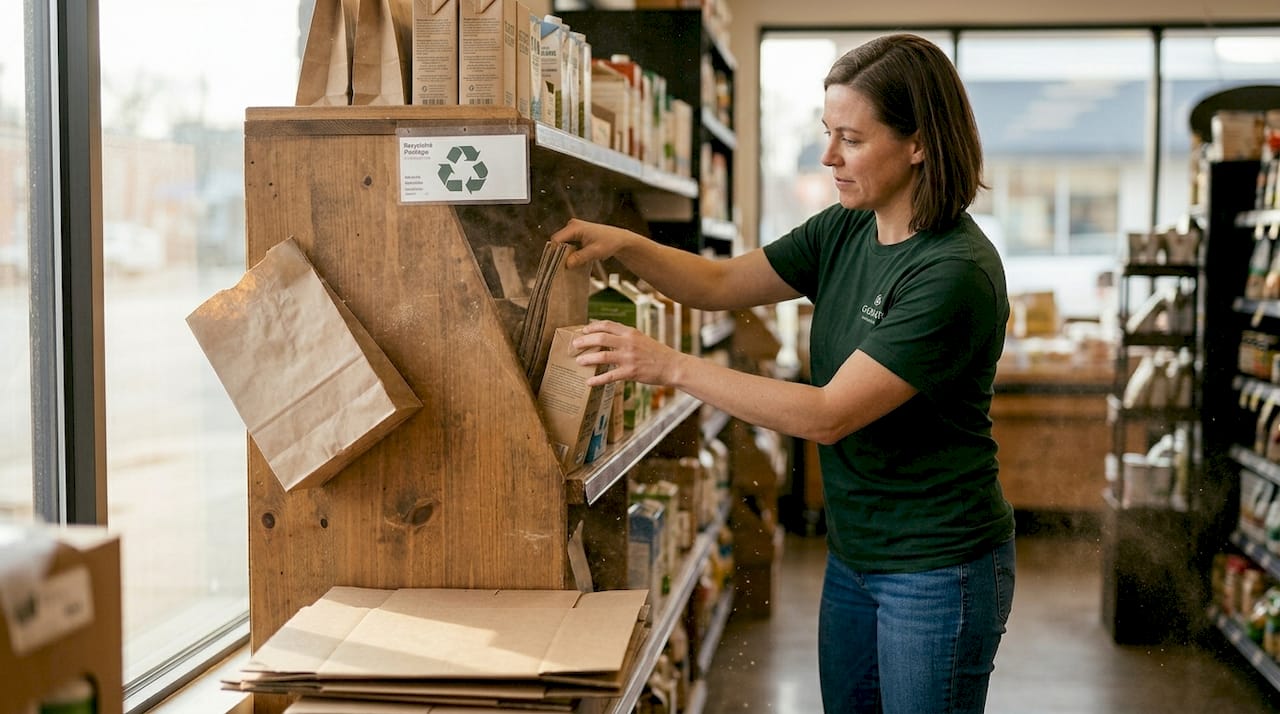
Eco-friendly packaging options include recyclable materials, compostable formats, and packaging with post-consumer recycled (PCR) content. Each comes with its own certification and testing requirements.
| Option | Key standard | Certification body |
|---|---|---|
| Recyclable packaging | How2Recycle label | Sustainable Packaging Coalition |
| Compostable packaging | ASTM D6400 / EN 13432 | BPI, TUV Austria |
| PCR content claims | FTC Green Guides | Self-declared with documentation |
| Food-safe materials | FDA LNO / Health Canada | Regulatory approval |
FDA and ASTM requirements for eco-friendly packaging are stricter than many brands realize. A bag labeled “compostable” must meet ASTM D6400 or EN 13432 testing to back that claim legally. Without proper testing, you’re exposed to FTC enforcement under the Green Guides.
Key certifications to look for when sourcing packaging:
- How2Recycle: Verifies recyclability claims and provides consumer-facing labeling
- BPI Certification: Confirms industrial compostability to ASTM D6400
- FSC® Certification: Ensures paper comes from responsibly managed forests
- ECOVA: Covers broader sustainability performance metrics
73% of global consumers say they would change their purchasing habits to reduce environmental impact, which means your eco-certifications are both a compliance tool and a marketing asset.
Exploring eco-friendly paper bags with proper certifications gives you a clear path to meeting both regulatory and consumer demands. For a deeper look at how certifications connect to brand value, the green packaging value discussion is worth your time. Reviewing a sustainable packaging certification guide can also help you match the right standard to your specific product category.
Navigating exemptions, edge cases, and multi-jurisdiction issues
Not every business faces the same compliance burden. Exemptions exist, but they’re narrower than most people assume.
Common exemptions under North American EPR programs include B2B transport packaging, medical and infant product packaging, nonprofit organizations, and businesses below certain revenue or volume thresholds. If you qualify, you may be able to reduce or eliminate EPR registration fees, but you still need documentation to prove eligibility.
The producer hierarchy determines who holds compliance responsibility when multiple parties are involved:
- Brand owner: Primary responsible party in most jurisdictions
- Importer: Takes on responsibility when the brand owner is outside the jurisdiction
- Retailer or distributor: May become responsible if no brand owner or importer is registered
- Franchisor vs. franchisee: Liability varies by jurisdiction and contract terms
For franchises and distributors, this is where things get complicated. A franchisee selling products in Oregon may be treated as the producer if the franchisor hasn’t registered. Always clarify liability in supplier contracts.
Cross-border supply chains create the most edge cases. Selling into both U.S. and Canadian markets means managing two parallel regulatory frameworks with different timelines, fee structures, and material standards. Working with Canadian packaging advantages can simplify this by sourcing from manufacturers already familiar with both systems.
Pro Tip: Review your supplier contracts annually to confirm who carries compliance risk for each packaging component. Ambiguous contracts are a leading cause of unexpected liability during audits.
For a detailed breakdown of producer responsibility allocation, producer responsibility resources can help clarify your specific situation.
A surprise for pros: Why packaging compliance drives innovation (and headaches)
Here’s the part most compliance articles skip: the rules are actually forcing better packaging.
When EPR fees are higher for hard-to-recycle materials, brands have a direct financial reason to redesign. When PFAS bans eliminate grease-resistant coatings, engineers find plant-based alternatives that perform just as well. Compliance pressure is doing what voluntary sustainability pledges rarely accomplished: it’s making material innovation economically necessary.
But we’d be dishonest if we didn’t acknowledge the burden. Smaller retail and foodservice operators often lack the internal resources to track multi-state EPR deadlines, manage PRO registrations, and maintain certification documentation simultaneously. The compliance load is real, and it falls harder on businesses without dedicated legal or sustainability teams.
The businesses winning right now are those treating compliance as a design brief, not a legal obligation. They’re asking “what packaging can we use that meets every current rule and the next round of rules?” rather than scrambling to retrofit after each new law passes. That proactive mindset, combined with suppliers who understand green packaging and innovation, is what separates brands that lead from brands that react.
How Gather Packaging helps you stay compliant and sustainable
Navigating packaging compliance across North America is complex, but your packaging supplier shouldn’t add to that complexity.
Gather Packaging manufactures sustainable paper bags using FSC®-certified materials, recycled content, and water-based inks, giving you a clear documentation trail for eco-certifications and EPR reporting. Our kraft paper bags are designed to meet current PFAS-free requirements and support your recyclability claims with verifiable material data. Because we produce domestically in Toronto, our made in Canada paper bags come with faster turnaround and direct access to our compliance and design team. Whether you need certification documentation, material specs, or custom sizing that fits your product category, we make the compliance side of packaging straightforward.
Frequently asked questions
What documents do I need for packaging compliance?
You’ll need FDA Letters of No Objection for food-contact materials, third-party eco-certifications, and records of EPR registrations and fee payments for every active jurisdiction. Keep these in a centralized file that can be shared quickly with auditors or retail partners.
Are there packaging compliance exemptions for small businesses?
Exemptions may apply for B2B packaging, medical or infant products, nonprofits, and businesses under specific revenue or volume thresholds. You still need documentation proving your exemption status, so don’t skip the paperwork.
What is PFAS and why is it banned in packaging?
PFAS are synthetic “forever chemicals” once used in grease-resistant food packaging. They’re banned because PFAS health risks from packaging exposure include serious long-term health and environmental consequences, with restrictions now active across 12+ U.S. states and federally in Canada.
How can I ensure my packaging is truly recyclable or compostable?
Third-party certifications like How2Recycle and BPI, backed by proper ASTM testing, are the only reliable way to verify eco-claims and protect yourself from FTC enforcement under the Green Guides.
Share:
How to order custom bags for retail & foodservice branding
Paper packaging in wholesale: 3.8% CAGR growth explained