

Switching from plastic bags to paper or compostable alternatives feels like an obvious win. But many retail and foodservice business owners discover, often after spending real money, that the swap didn’t deliver the environmental results they expected. Green packaging is not a single material or a label on a supplier’s website. It’s a set of evidence-backed decisions that consider the full life of a package, from raw material extraction to end-of-life disposal. This guide breaks down what green packaging actually means, how to spot the real thing, and how to put it to work for your brand in a way that holds up to scrutiny.
Table of Contents
- Defining green packaging: Beyond the buzzword
- Core principles of green packaging: What truly makes it green?
- Comparing green packaging solutions: What works best for your business?
- Implementing green packaging: From decision to real-world results
- Industry truths: Why ‘going green’ isn’t as simple as it seems
- Find your green packaging solution with Gather Packaging
- Frequently asked questions
Key Takeaways
| Point | Details |
|---|---|
| Green packaging defined | True green packaging measures its impact over the whole product life cycle and is more than just avoiding plastic. |
| Evidence matters | Rely on LCA data and credible certifications to back up environmental claims and avoid greenwashing. |
| Fit for your business | Choose packaging that aligns with both your operation’s needs and local disposal infrastructure for real results. |
| Regulations are evolving | Stay informed on new rules like EPR and material bans to keep your packaging compliant and effective. |
Defining green packaging: Beyond the buzzword
Green packaging is often treated as a synonym for “not plastic,” but that framing misses most of the picture. A paper bag shipped halfway around the world with heavy chemical dyes can carry a larger carbon footprint than a locally produced, recycled-content plastic alternative. The material is just one variable in a much larger equation.
The most rigorous way to evaluate packaging is through a Life Cycle Assessment (LCA). An LCA measures environmental impact at every stage: raw material extraction, manufacturing, transportation, use, and end-of-life. It accounts for carbon emissions, water use, energy consumption, and waste generation. Without LCA data, a “green” claim is essentially marketing.
Two other frameworks matter here:
- Circular economy principles: Packaging designed for reuse, recycling, or composting within a closed-loop system, rather than a linear take-make-dispose model.
- Safe and Sustainable by Design (SSbD): A newer approach that builds environmental and human safety considerations into the design phase, not as an afterthought.
Certifications provide a third layer of verification. Standards like ASTM D6400 (for compostability in industrial facilities) and EN 13432 (the European equivalent) set measurable thresholds that packaging must meet. FSC® certification confirms that paper materials come from responsibly managed forests. These aren’t just badges. They represent third-party verification of specific claims.
“Key methodologies include life cycle assessment (LCA), circular economy principles, Safe and Sustainable by Design (SSbD), and industry certifications.”
Understanding these frameworks helps you ask the right questions before committing to a supplier. If a vendor can’t explain their LCA methodology or point to a recognized certification, treat that as a red flag. Explore sustainable packaging basics to build a stronger foundation before evaluating specific materials.
The difference between authentic green packaging and a marketing claim often comes down to documentation. Real sustainability is verifiable. Greenwashing is not.
Core principles of green packaging: What truly makes it green?
Understanding the definition is the foundation; now, let’s break down what actually makes packaging green in practice.
One principle that gets overlooked is functional sustainability. This asks a simple but powerful question: does this packaging actually reduce waste? For foodservice operators, a package that keeps food fresh longer and prevents spoilage may deliver more environmental value than a compostable container that breaks down beautifully in an industrial facility your city doesn’t have. Reducing product waste is often the highest-impact lever available.

Infrastructure compatibility is equally critical. Compostable packaging only works as intended if local collection and processing infrastructure exists. In many North American cities, industrial composting facilities are limited or unavailable to consumers. A compostable bag that ends up in a landfill does not biodegrade the way its label implies. Matching your packaging choice to what your customers can actually do with it after use is not optional. It’s the difference between real impact and a feel-good story.
| Packaging type | Composting compatible | Recycling compatible | Reuse potential |
|---|---|---|---|
| FSC-certified paper bag | Yes (where facilities exist) | Yes (most municipalities) | Moderate |
| Bioplastic (PLA) | Yes (industrial only) | No (contaminates streams) | Low |
| Reusable fabric bag | No | Limited | High |
| Recyclable plastic | No | Yes (curbside) | Low |
| Recycled-content paperboard | Yes (where facilities exist) | Yes | Low |
For North American retail and foodservice owners, LCA-backed solutions that match local infrastructure consistently outperform options chosen purely for their material composition.
Pro Tip: Before finalizing any supplier, ask specifically for LCA documentation. If they can’t provide it, request third-party certification data at minimum. Vague sustainability language without supporting data is a warning sign.
Greenwashing is a real risk, and regulations are tightening. Extended Producer Responsibility (EPR) laws, now active in several Canadian provinces and U.S. states, are shifting financial responsibility for packaging end-of-life to producers. Staying ahead of these rules means auditing your packaging claims now, not after a compliance issue surfaces. Learning how to cut waste in packaging design and understanding food-safe packaging standards are practical next steps.
Comparing green packaging solutions: What works best for your business?
With the principles clear, let’s see how common green packaging solutions stack up, so you can make informed choices.
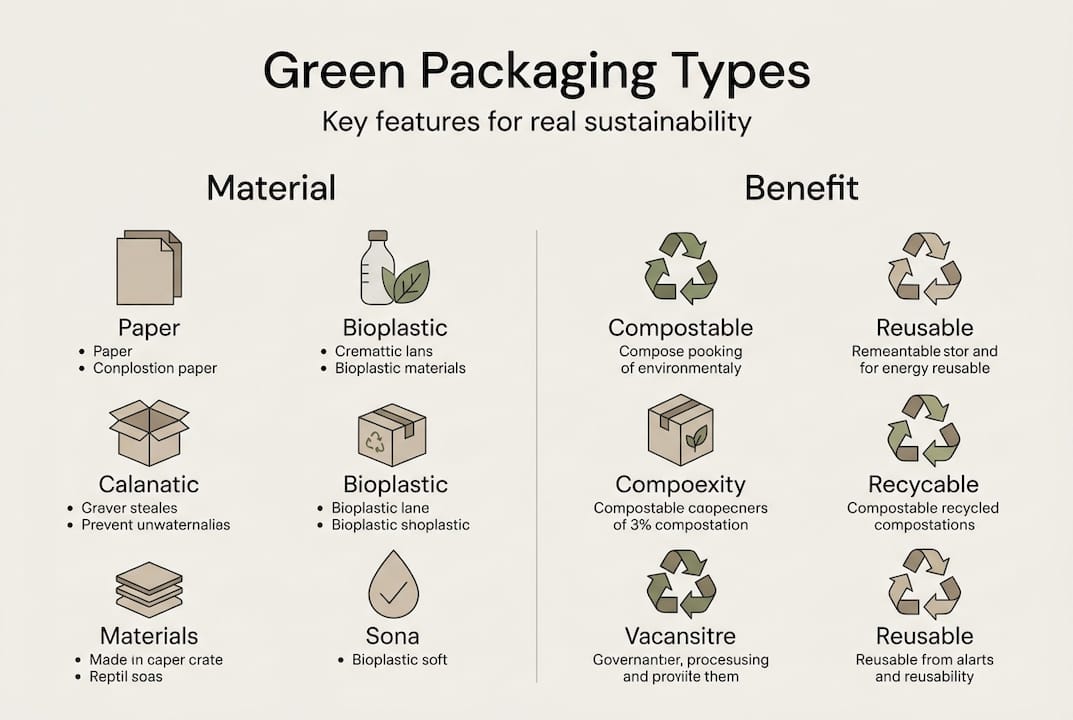
A common mistake is assuming that any alternative to conventional plastic automatically reduces environmental impact. Some alternatives, including reusable plastic crates, carry high transport emissions that can offset their material advantages depending on supply chain distance. Every option involves trade-offs.
| Packaging option | Relative cost | Emission profile | Consumer preference |
|---|---|---|---|
| Recycled-content paper bag | Low to moderate | Low (domestic sourcing) | High |
| Bioplastic (PLA) container | Moderate to high | Moderate | Mixed |
| Reusable container program | High upfront | Variable (transport-dependent) | Growing |
| Recyclable plastic packaging | Low | Moderate | Declining |
Here’s a practical process for identifying the best fit for your operations:
- Audit your product type: Dry goods, fresh food, and apparel have different protection requirements. Start there.
- Map your local infrastructure: Contact your municipality or waste hauler to confirm what materials are accepted for composting and recycling.
- Review applicable regulations: Check current EPR requirements and any PFAS or single-use plastic bans in your jurisdiction.
- Request supplier documentation: Ask for LCA data, certifications, and material origin information before comparing prices.
- Calculate total cost: Factor in shipping distance, packaging failure rates, and potential regulatory compliance costs, not just unit price.
Consumer preferences matter, but they don’t always align with regulatory requirements. Customers may favor compostable packaging, but if your city lacks industrial composting, you’re creating a gap between expectation and reality. The smartest brands find the overlap between what customers want, what regulations require, and what local infrastructure supports.
Exploring custom sustainable packaging options and understanding reusable paper packaging can help you identify solutions that work within your specific operational context.
Implementing green packaging: From decision to real-world results
Knowing how to compare your options sets you up for success. Now let’s put green packaging into action for your business.
The first step is auditing your current packaging against verifiable standards. This means going beyond a supplier’s marketing sheet. Ask for third-party certification documents, material safety data, and evidence of compliance with current EPR regulations. Auditing claims is not optional in a regulatory environment that is tightening year over year.
When vetting suppliers, ask these specific questions:
- Do you have current LCA documentation for this product?
- Which certifications apply: FSC, ASTM D6400, or others?
- What percentage of recycled or post-consumer content is included?
- Where is the material sourced and manufactured?
- How do you handle EPR compliance reporting?
Pro Tip: Don’t roll out a new packaging line across your entire operation at once. Pilot it with one product or one location first. Gather real customer feedback and track return rates, complaints, and any functional issues before scaling.
A practical example: a mid-size foodservice operator switched to FSC-certified paper bags for takeout orders, piloted in two locations. Customer response was positive, return rates stayed flat, and the operator was able to use the change in their marketing with sustainable packaging strategy, which drove measurable repeat business. The pilot approach meant they caught a minor sizing issue before it became a costly full-rollout problem.
Regulations are moving fast. PFAS bans are expanding across North American jurisdictions, and EPR programs are adding new material categories regularly. Staying current means scheduling a quarterly review of your packaging compliance, not treating it as a one-time decision. Partnering with suppliers who offer eco-friendly paper bags and stay current on regulatory requirements reduces that burden significantly.
Industry truths: Why ‘going green’ isn’t as simple as it seems
Before you move forward, it’s worth considering what experienced operators have learned the hard way.
Most businesses underestimate how complex green packaging decisions actually are. The instinct is to find a single solution, swap it in, and call it done. But what works in Vancouver may fail in a mid-size U.S. city without composting infrastructure. What performs well for dry retail goods can be a disaster for fresh food. There is no universal answer.
Functional sustainability matters more than optics. Reducing actual food waste or product damage often delivers more measurable environmental value than switching to a material that photographs well in a brand campaign. We’ve seen more progress from businesses who focus on genuine value, not just what sounds green.
Regulations and consumer expectations will keep shifting. The brands that build agility into their packaging strategy, rather than locking into a single solution, are the ones that stay ahead. Explore packaging innovation insights to understand where the industry is heading and how to position your brand accordingly.
Perfection is not the goal. Progress, backed by real data and honest evaluation, is.
Find your green packaging solution with Gather Packaging
Ready to put green packaging principles into practice? Here’s how Gather Packaging can help.
Gather Packaging works with retail and foodservice brands across North America to source and produce packaging that meets real sustainability standards, not just marketing ones. From FSC-certified paper bags to custom-printed, water-based ink options manufactured in Toronto, every product is built with verifiable environmental credentials.
Whether you need sustainable packaging solutions for a foodservice rollout, custom eco-friendly packaging designed around your brand, or the assurance of made-in-Canada packaging with shorter supply chains and lower transport emissions, Gather Packaging offers direct consultation to match your product, region, and compliance requirements. Reach out to start the conversation.
Frequently asked questions
What is green packaging in simple terms?
Green packaging means using materials and processes designed to reduce total environmental impact across the product’s entire life cycle. Full life cycle impact, from raw material to disposal, is the standard measure.
How do I know if packaging is truly green or just marketing?
Look for credible certifications like ASTM D6400 and demand suppliers provide third-party LCA data to verify eco claims. Key certifications for compostability include ASTM D6400 and EN 13432, and auditing is essential.
Does compostable packaging always reduce my business’s footprint?
Only if local infrastructure supports composting; otherwise, it may end up in a landfill. LCA-backed solutions must match local infrastructure to deliver real impact.
What regulations affect green packaging choices in North America?
Extended Producer Responsibility (EPR), PFAS bans, and recycling and composting standards all apply and are evolving quickly. EPR and PFAS bans are key drivers of compliance and packaging choice across North American jurisdictions.
Share:
How to build an eco-friendly custom packaging workflow
Why domestic packaging manufacturers boost branding in 2026