

Retail and foodservice brands face a critical challenge when designing paper bags that balance durability, sustainability, and brand expression. With North American plastic bag bans accelerating and consumers demanding eco-friendly packaging, selecting the right materials, coatings, and design features has never been more complex. You need bags strong enough for heavy products, sustainable enough to meet environmental standards, and distinctive enough to elevate your brand. This article delivers expert-backed paper bag design tips that address material selection, eco-friendly innovations, and creative branding strategies to help you stand out responsibly while meeting practical packaging needs.
Table of Contents
- Key takeaways
- Key criteria for effective paper bag design
- Innovative paper bag materials and coatings
- Design innovations to enhance branding and sustainability
- Comparing paper bag types for retail and foodservice needs
- Explore custom sustainable paper bags for your brand
- FAQ
Key Takeaways
| Point | Details |
|---|---|
| Material choice matters | Material choice directly affects load capacity and durability for heavy retail items. |
| Certifications build trust | FSC certification confirms responsible forest management and compostability claims validate end of life. |
| Coatings improve moisture resistance | Moisture barriers and grease resistant coatings prevent bag failure when carrying liquids or oils. |
| Eco inks boost recyclability | Soy and vegetable based inks with water based adhesives improve recyclability while maintaining bold branding. |
Key criteria for effective paper bag design
Selecting the right paper bag design starts with understanding core performance criteria. Material choice directly impacts load capacity and durability. Virgin kraft offers higher tensile and tear strength, making it ideal for heavier retail products like bottles, books, or packaged goods. Recycled kraft works well for lighter items but requires verification through industry standards like ISO 2758 burst testing and ISO 1924 tensile strength measurements to ensure adequate performance.
Moisture and grease resistance become critical when choosing the right paper bags for foodservice applications. Uncoated recycled paper weakens quickly when exposed to liquids or oils, compromising bag integrity during transport. Coatings and reinforcements solve this problem while maintaining sustainability goals. You should evaluate whether your products require moisture barriers, grease resistance, or both before finalizing material specifications.
Certification validation strengthens your sustainability messaging and builds customer trust. FSC certification confirms responsible forest management practices, while compostability certifications verify end-of-life disposal claims. These credentials matter increasingly to North American consumers who scrutinize environmental promises. Your design should balance three pillars: structural durability for product protection, minimal environmental impact through material choices, and distinctive brand aesthetics that drive purchase decisions.
Pro Tip: Request sample bags in your target weight range and conduct real-world load testing with your actual products before committing to large production runs. This simple step prevents costly redesigns and customer complaints.
Essential design criteria checklist:
- Verify material tensile strength matches product weight requirements
- Confirm moisture and grease resistance levels for intended use
- Validate third-party sustainability certifications before making claims
- Test handle strength with loaded bags to prevent breakage
- Assess printing quality on your chosen paper grade
Innovative paper bag materials and coatings
Modern materials and coatings transform paper bags from basic carriers into high-performance, eco-friendly packaging solutions. Soy and vegetable-based inks combined with water-based adhesives dramatically improve recyclability compared to petroleum-based alternatives. These bio-based options maintain vibrant color reproduction while breaking down naturally during recycling or composting processes. You gain environmental benefits without sacrificing visual impact or brand recognition.
Plastic laminates destroy compostability and complicate recycling streams. Avoid them entirely if you want to maintain genuine sustainability credentials. Instead, explore aqueous coatings or bio-based barriers that provide moisture resistance while preserving the bag’s ability to decompose naturally. Grease-resistant coatings prove essential for foodservice applications where oils and liquids contact the bag interior. These specialized treatments prevent structural weakening and maintain professional appearance throughout the customer journey.
Balancing durability requirements with environmental goals requires strategic material selection. Virgin kraft delivers maximum strength but uses more natural resources. Recycled content reduces environmental impact but may require thickness increases to match virgin performance. Your choice depends on product weight, handling conditions, and brand positioning. Eco-friendly paper bags can meet demanding performance standards when you match material properties to specific use cases.
Material innovation comparison:
| Material type | Recyclability | Strength | Best application |
|---|---|---|---|
| Virgin kraft with soy ink | Excellent | Highest | Premium retail, heavy items |
| Recycled kraft with water-based adhesive | Excellent | Moderate | Lightweight retail, apparel |
| Coated foodservice grade | Good | High | Restaurant takeout, bakery |
| FSC-certified with bio-coating | Excellent | High | Eco-conscious brands |
Pro Tip: Specify a minimum 30% post-consumer recycled content to satisfy most corporate sustainability requirements while maintaining adequate strength for typical retail applications. This sweet spot balances environmental impact with functional performance.
Design innovations to enhance branding and sustainability
Creative design approaches simultaneously reduce environmental impact and strengthen brand identity. Custom sizes and die-cut shapes minimize material waste by eliminating excess paper around your products. Right-sizing bags also reduces shipping costs through better pallet utilization and lower dimensional weight charges. A bag that perfectly fits your product uses less material, costs less to transport, and presents a more premium unboxing experience.

Eco-messaging printed directly on bags transforms packaging into marketing assets that build consumer trust. Clear statements about recycled content, FSC certification, or composability educate customers and reinforce your environmental commitment. This messaging works especially well when paired with distinctive visual designs that make your bags instantly recognizable. You create walking advertisements that communicate both brand personality and sustainability values.
Structural integrity testing must accompany aesthetic innovation. Beautiful designs fail if bags tear during use or handles separate under normal loads. Prototype testing with actual products under realistic conditions prevents embarrassing failures and costly recalls. Retail packaging design tips emphasize this balance between form and function throughout the development process.
Innovation impact comparison:
| Design approach | Material savings | Brand impact | Implementation complexity |
|---|---|---|---|
| Standard stock size | Baseline | Low | Simple |
| Custom-sized bag | 15-25% reduction | Medium | Moderate |
| Die-cut with eco-messaging | 20-30% reduction | High | Advanced |
| Fully custom shape and print | 25-35% reduction | Very high | Complex |
Pro Tip: Start with custom sizing before investing in complex die-cuts. You capture most material savings and cost benefits while minimizing design complexity and tooling expenses.
Design innovation benefits:
- Custom dimensions reduce material waste by 15 to 35 percent
- Eco-messaging increases brand recall and customer loyalty
- Distinctive shapes create memorable unboxing experiences
- Right-sized bags lower shipping costs through better density
- Coordinated design systems strengthen multi-product brand families
Comparing paper bag types for retail and foodservice needs
Understanding paper bag categories helps you select the optimal solution for specific applications. Virgin kraft bags deliver superior tensile and tear strength, making them ideal for premium retail products, wine bottles, gift items, and heavier merchandise. The clean, consistent appearance accepts high-quality printing while the robust structure handles demanding loads without reinforcement. You pay a premium for this performance, but the professional presentation and reliability justify costs for upscale brands.
Recycled kraft bags offer excellent value for lightweight retail applications including apparel, books, and packaged goods under five pounds. The slightly textured appearance communicates environmental responsibility while the lower cost supports high-volume operations. These bags work perfectly when sustainability messaging matters more than pristine aesthetics. Cost-conscious retailers appreciate the balance between eco-credentials and budget constraints.
Coated foodservice paper bags solve the unique challenges restaurants and food retailers face with grease, moisture, and temperature variations. Specialized interior coatings prevent oil migration and maintain structural integrity with hot or wet contents. These bags cost more than standard kraft but eliminate the need for double-bagging or plastic liners. The North America paper bags market reached $2 billion in 2024, growing at 4.25% annually as plastic bans and eco-demand accelerate adoption across foodservice sectors.
Paper bag type comparison:
| Bag type | Strength rating | Eco-friendliness | Cost level | Primary applications |
|---|---|---|---|---|
| Virgin kraft | Highest | Good | Higher | Premium retail, wine, gifts |
| Recycled kraft | Moderate | Excellent | Lower | Apparel, books, lightweight items |
| Coated foodservice | High | Good | Highest | Restaurant takeout, bakery, deli |
| FSC-certified virgin | Highest | Excellent | Higher | Eco-conscious premium brands |
Custom kraft paper bags from specialized manufacturers offer the flexibility to blend these characteristics based on your specific requirements. You can specify recycled content percentages, coating types, handle styles, and printing options to create the perfect balance for your brand and products.
Market-driven selection factors:
- Plastic bag bans in major North American cities drive paper adoption
- Consumer preference for sustainable packaging influences purchase decisions
- Foodservice delivery growth increases demand for grease-resistant options
- Premium retail segments prioritize virgin kraft for brand positioning
- Cost-sensitive operations favor recycled content for volume applications
Explore custom sustainable paper bags for your brand
Applying these paper bag design tips becomes straightforward when you partner with manufacturers who specialize in eco-friendly solutions. Gather Packaging offers an extensive range of custom eco-friendly paper bags that meet top sustainability standards for compostability and recyclability. Their FSC-certified materials, water-based inks, and biodegradable options align perfectly with the design principles covered throughout this article. You gain access to professional design assistance, prototyping services, and quality assurance that streamline the path from concept to finished product.
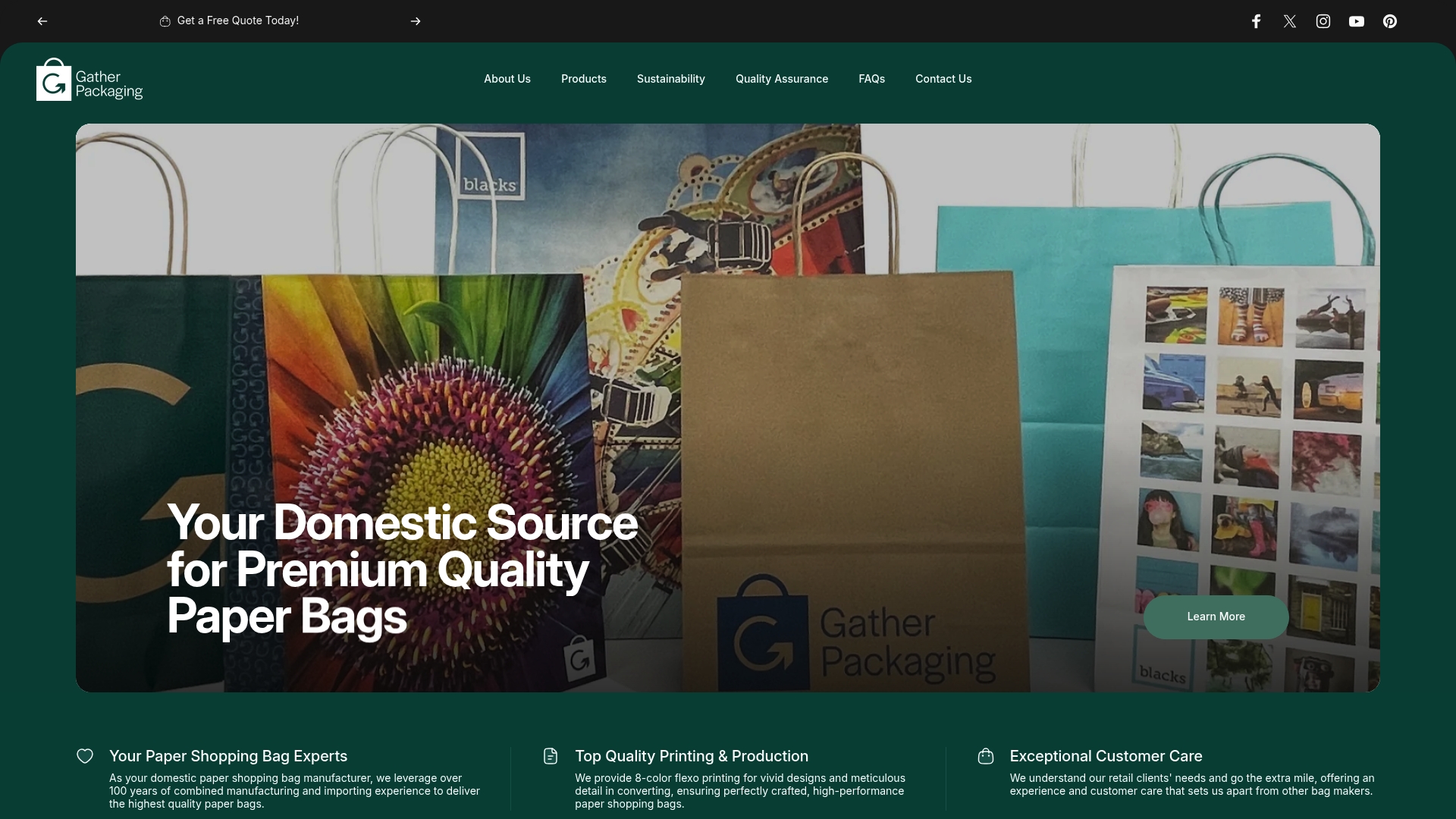
Manufactured in Toronto, Canada, their Canadian made paper bags support local businesses while ensuring quick turnaround times and responsive customer service. The domestic production model reduces shipping distances and carbon footprint compared to overseas alternatives. Eight-color flexo printing capabilities deliver vibrant brand expression on sustainable substrates. Their sustainable packaging solutions help you navigate North American eco-packaging regulations while building consumer trust through verified environmental credentials.
Pro Tip: Leverage custom printing to add your brand’s specific eco-messaging and unique designs that differentiate your packaging at point of sale. Clear sustainability statements printed directly on bags educate customers and reinforce your environmental commitment with every purchase.
FAQ
What are the best paper bag materials for durability?
Virgin kraft paper delivers the highest tensile and tear strength, making it ideal for heavy retail products and premium applications. Recycled kraft suits lighter loads under five pounds when verified through ISO burst and tensile testing. Always match material grade to your specific product weight and handling requirements for optimal performance.
How can I make my paper bags more eco-friendly?
Use soy-based or vegetable-based inks combined with water-based adhesives to enhance recyclability. Choose recycled content or FSC-certified paper to verify sustainable sourcing. Avoid plastic lamination entirely to maintain full compostability. Incorporate clear eco-messaging on the bag exterior to educate consumers and build trust in your environmental commitment.
What design features improve paper bag functionality for foodservice?
Apply grease-resistant interior coatings to protect bags from oil migration and structural weakening. Use reinforced handles or rope handles for heavy or greasy items that stress standard attachments. Select moisture-resistant paper grades to prevent bag failure with wet contents. Balance durability enhancements with compostability requirements to maintain end-of-life sustainability.
How do custom bag sizes reduce costs and waste?
Right-sized bags eliminate excess material around products, reducing paper consumption by 15 to 35 percent depending on optimization level. Custom dimensions improve pallet utilization and lower dimensional shipping weights, cutting transportation costs. Perfectly fitted bags also enhance perceived value through premium presentation while minimizing environmental impact.
What certifications should I look for in sustainable paper bags?
FSC certification confirms responsible forest management and chain of custody tracking throughout production. Look for compostability certifications like BPI or CMA that verify biodegradation claims. Recycled content certifications document post-consumer material percentages. These third-party validations strengthen sustainability messaging and protect against greenwashing accusations while building consumer confidence.
Share:
Why packaging compliance matters for retail professionals
What is packaging for apparel: sustainable solutions guide