

Many apparel brands underestimate how much packaging influences product presentation, sustainability, and customer perception. Poor packaging choices can lead to damaged garments, excessive waste, and a disconnect between brand values and consumer expectations. Effective apparel packaging balances protecting garments during transit, reducing environmental impact, and enhancing your brand’s visual identity. This guide covers the main apparel packaging methods, sustainable material options, and customization strategies to help you make informed decisions that protect your products while aligning with modern consumer preferences for eco-friendly solutions.
Table of Contents
- Key takeaways
- Understanding apparel packaging methods
- Choosing sustainable packaging materials
- Balancing protection, customization, and compliance in packaging
- Practical tips to optimize your apparel packaging strategy
- Elevate your apparel packaging with Gather Packaging
- Frequently asked questions
Key Takeaways
| Point | Details |
|---|---|
| Packaging by garment type | Packaging methods should be chosen to protect garments, present brands well, and support sustainability based on the garment type. |
| Sustainable materials | Using recycled paper, biodegradable plastics, and other sustainable options supports brand image and consumer preference. |
| Right sizing | Choosing appropriately sized packaging reduces waste, guards products, and lowers shipping costs and emissions. |
| Pre production testing | Pre production testing helps catch damage and presentation issues before large scale production. |
Understanding apparel packaging methods
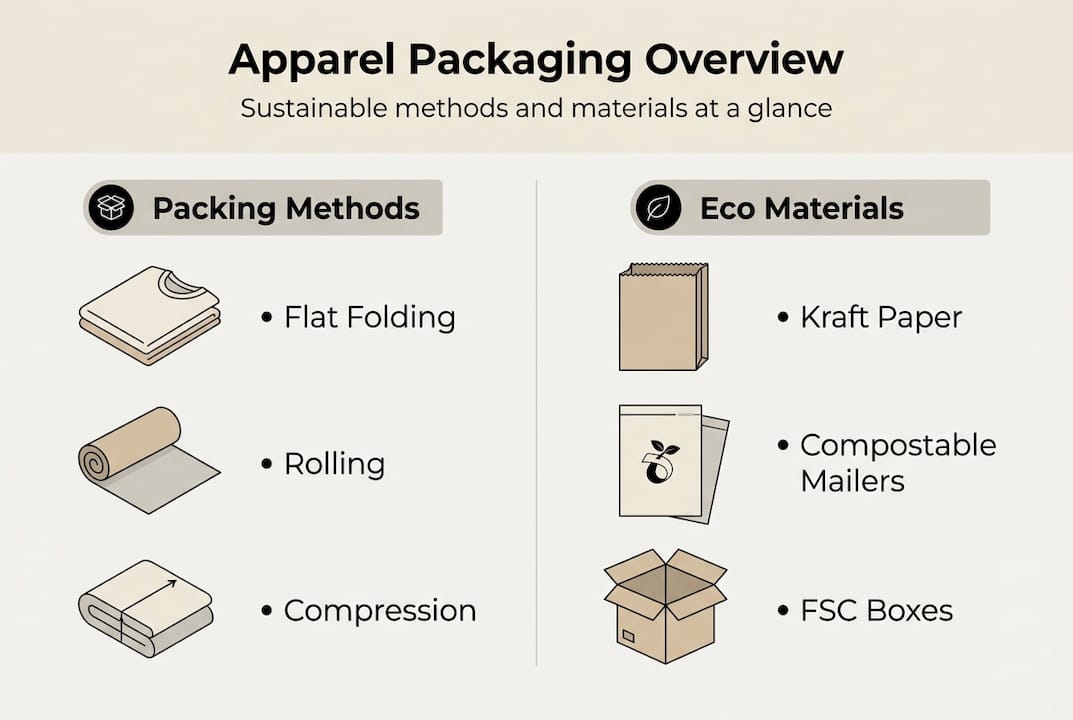
Apparel packaging involves garment packing methods like flat folding for wovens and structured items, rolling for knits to minimize wrinkles, and compression for bulky non-structured items to maximize shipping density. Each method offers distinct advantages depending on your garment type, brand positioning, and operational constraints.
Flat folding works best for woven shirts, structured jackets, and dress pants. This method delivers high presentation quality, making garments look crisp and ready to wear when customers open the package. The downside is moderate labor intensity, as each fold requires careful attention to maintain consistent appearance. Retailers targeting premium segments often prefer flat folding because it communicates quality and attention to detail.
Rolling suits knit garments like t-shirts, sweaters, and activewear. This technique reduces wrinkles better than folding and requires less labor time per unit. Rolling also allows tighter packing in shipping containers, which can lower freight costs. The method works particularly well for casual brands where a slightly relaxed presentation aligns with brand identity.
Compression maximizes shipping density for bulky items like hoodies and winter coats. By vacuum-sealing or tightly compressing garments, you can fit more units per carton and reduce transportation emissions. However, compression carries risks. Delicate trims, heat transfers, and embellishments can suffer permanent damage under pressure. Certain fabrics lose their shape or develop creases that won’t release. Always test compression on sample garments before committing to full production runs.
Choosing the right packing method requires balancing fabric characteristics with cost and sustainable packaging goals. Wovens with structured silhouettes demand flat folding to maintain their intended shape. Knits with natural stretch tolerate rolling without damage. Bulky items benefit from compression only when fabric memory and construction can withstand the pressure.
Pro Tip: Pre-production testing prevents costly mistakes. Pack sample garments using your intended method, ship them under typical conditions, then inspect for damage or presentation issues. This small investment catches problems before they affect thousands of units.
Common packing methods by garment type:
- Woven shirts and blouses: flat folding with tissue paper
- Knit t-shirts and polos: rolling in biodegradable polybags
- Structured jackets and blazers: flat folding on hangers or in boxes
- Activewear and athleisure: rolling or light compression
- Winter coats and heavy outerwear: compression with careful testing
- Delicate dresses and formal wear: flat folding with protective layers
| Method | Best for | Presentation quality | Labor intensity | Density |
|---|---|---|---|---|
| Flat folding | Wovens, structured garments | High | Moderate | Low |
| Rolling | Knits, casual wear | Moderate | Low | Moderate |
| Compression | Bulky non-delicate items | Low to moderate | Low | High |
Choosing sustainable packaging materials
Sustainable materials include bio-based, biodegradable plastics, recycled paper, plant-based composites, compostable mailers, kraft paper mailers, and FSC-certified boxes. These options reduce environmental impact while meeting consumer expectations for responsible business practices.
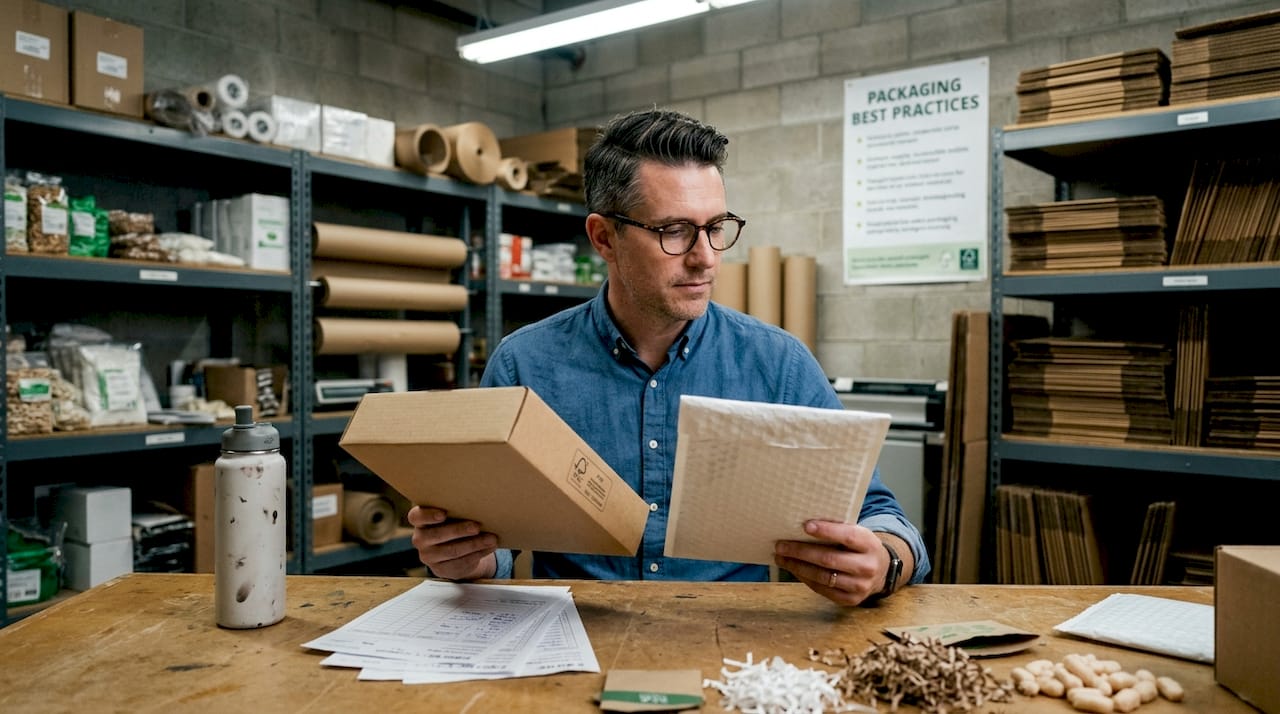
Biodegradable plastics break down naturally under specific conditions, offering an alternative to traditional petroleum-based polybags. These materials work well for moisture protection but require proper disposal infrastructure to realize their environmental benefits. Without access to industrial composting facilities, biodegradable plastics may not decompose as intended.
Recycled paper and kraft paper mailers provide excellent sustainability credentials with widespread recycling infrastructure. Environmentally friendly paper bags appeal to eco-conscious consumers and communicate brand values immediately upon delivery. Kraft paper offers natural aesthetic appeal that aligns with organic, artisanal, and sustainable brand positioning. The material costs slightly more than conventional options but delivers marketing value that justifies the premium.
Compostable mailers typically cost between $0.25 and $0.60 per unit depending on size and order volume. This price point sits above standard polybags but below rigid boxes, making compostable options accessible for mid-market brands. The marketing appeal to eco-conscious customers often outweighs the incremental cost, especially when brands communicate their sustainability story effectively.
FSC-certified boxes add credibility by ensuring materials come from responsibly managed forests. This certification matters to consumers who research brand claims and expect verifiable proof of environmental commitments. FSC logos on packaging signal that your brand takes sustainability seriously beyond marketing rhetoric.
Consumer preferences strongly favor sustainable packaging. Research shows 67% of consumers consider sustainable packaging important, with 60% willing to pay more for products using eco-friendly materials. This data reveals a significant market opportunity for brands that invest in sustainable packaging solutions. Younger demographics particularly value environmental responsibility, making sustainable packaging essential for brands targeting millennial and Gen Z consumers.
Pro Tip: Prioritize right-size lightweight packaging to cut emissions and costs simultaneously. Oversized boxes waste material, increase shipping weight, and communicate carelessness. Properly sized packaging reduces dimensional weight charges while maintaining product protection and brand image.
Sustainable material comparison:
| Material | Cost per unit | Sustainability rating | Typical use | Consumer appeal |
|---|---|---|---|---|
| Biodegradable plastic | $0.15 - $0.35 | Moderate | Moisture protection | Moderate |
| Recycled kraft paper | $0.20 - $0.45 | High | Mailers, bags | High |
| Compostable mailers | $0.25 - $0.60 | Very high | Lightweight shipping | Very high |
| FSC-certified boxes | $0.40 - $0.90 | High | Structured protection | High |
| Plant-based composites | $0.30 - $0.70 | Very high | Specialty applications | High |
Key benefits of sustainable packaging materials:
- Reduces carbon footprint through renewable or recycled content
- Meets consumer demand for environmental responsibility
- Differentiates brand in competitive markets
- Supports circular economy principles
- Often qualifies for sustainability certifications and marketing claims
- Beats plastic in lifecycle emissions when properly sourced
Balancing protection, customization, and compliance in packaging
Customization options range from recycled kraft paper with simple branding to premium textured finishes that elevate unboxing experiences. Your choice should reflect brand positioning while ensuring adequate product protection and regulatory compliance.
Recycled kraft paper with custom printing offers an affordable entry point for sustainable branding. Water-based inks add color and logos without compromising recyclability. This approach works well for brands emphasizing natural, authentic, or artisanal positioning. Premium textured finishes like embossing, foil stamping, or soft-touch coatings create luxury experiences that justify higher product price points.
Clear packaging labels and suffocation warnings are mandatory for polybags to comply with shipping regulations. Compliance includes suffocation warnings on polybags and carton markings for purchase order, style, and barcode to avoid shipment rejection. Missing or incorrect labels cause delays at distribution centers, resulting in chargebacks and damaged retailer relationships.
Steps for integrating packaging customization with protection:
- Test packaging designs during pre-production with actual garment samples
- Verify all compliance requirements for your target markets and retail partners
- Select suppliers with proven quality control and sustainability certifications
- Include detailed packing instructions in your tech pack specifications
- Conduct regular audits of packaging quality throughout production runs
- Gather customer feedback on unboxing experience to refine future designs
Compression risks permanent creases and damage to delicate trims and heat transfers. Specify your packing method in pre-production tech packs to avoid damage that leads to returns and negative reviews. Different fabric types respond differently to compression. Natural fibers like cotton and linen generally recover well from compression, while synthetics and blends may retain creases permanently.
Pro Tip: Always include packing instructions in your tech pack to avoid costly shipment rejections or product damage. Manufacturers need explicit guidance on folding techniques, protective materials, and quality checkpoints. Clear instructions prevent misunderstandings that result in damaged goods or presentation issues.
Packaging engineering decisions directly impact fabric memory and overall garment condition. A well-designed packaging strategy protects your product investment while creating positive first impressions that drive repeat purchases and brand loyalty.
| Approach | Garment suitability | Brand impact | Protection level | Customization potential |
|---|---|---|---|---|
| Compression | Bulky knits, non-delicate | Moderate | Moderate | Low |
| Flat fold | Wovens, structured | High | High | High |
| Rolling | Casual knits | Moderate | Moderate | Moderate |
Customization options to consider:
- Custom printed kraft paper bags with brand colors and logos
- Tissue paper inserts with care instructions or brand story
- Branded stickers or tape that doubles as security seal
- Thank you cards printed on recycled paper stock
- QR codes linking to styling videos or sustainability information
- Reusable packaging that customers can repurpose
Effective clothing brand packaging balances these elements to create cohesive brand experiences. Every touchpoint matters, from the outer shipping box to inner protective layers. Consistency across all packaging elements reinforces brand identity and builds customer trust. Designing retail packaging to cut waste while boosting sales requires strategic thinking about materials, sizing, and customer experience.
Practical tips to optimize your apparel packaging strategy
Use bags over boxes when possible to lower weight and emissions without sacrificing protection. Flexible packaging conforms to product shape, eliminating wasted space that rigid boxes create. This approach reduces dimensional weight charges that carriers assess based on package size rather than actual weight. For most apparel items, properly designed bags provide adequate protection while cutting material costs by 30 to 50 percent compared to boxes.
Automate packing processes to reduce labor costs by up to 50 percent. Automated folding machines, bagging systems, and labeling equipment speed production while improving consistency. The initial equipment investment pays back quickly through labor savings and reduced error rates. Small to medium brands can start with semi-automated solutions that assist workers rather than replacing them entirely.
Consider circular packaging models but remain mindful of cost and regulatory variations for small and medium enterprises. Returnable packaging programs work well for high-value items or subscription models where customers regularly receive shipments. However, reverse logistics add complexity and cost that may outweigh benefits for single-purchase transactions. Evaluate your business model carefully before committing to circular systems.
Right-sizing and lightweight materials reduce costs and emissions while maintaining protection and aesthetic appeal. Minimize empty space in packaging to reduce shipping emissions and material use, aiming for 30 to 40 percent empty space ratio. This range provides adequate cushioning without excessive void fill. Properly sized packaging also stacks more efficiently in warehouses and delivery vehicles, improving logistics throughout the supply chain.
Create memorable unboxing experiences with sustainable and customizable packaging to boost customer loyalty. The unboxing moment represents a critical brand touchpoint where customers form lasting impressions. Thoughtful details like branded tissue paper, personalized notes, or creative folding techniques transform routine deliveries into shareable social media moments. Many customers photograph and post unboxing experiences, providing free marketing when packaging design merits attention.
Pro Tip: Regularly test new packaging designs in sample runs to detect issues early and avoid costly returns. Order small quantities of new packaging options and use them for a subset of shipments. Monitor customer feedback, return rates, and product condition to identify problems before scaling up. This iterative approach minimizes risk while allowing continuous improvement.
Actionable optimization strategies:
- Conduct packaging audits quarterly to identify waste reduction opportunities
- Track packaging costs as percentage of product value to benchmark efficiency
- Survey customers about packaging preferences and sustainability expectations
- Partner with logistics providers who offer carbon-neutral shipping options
- Source packaging materials from suppliers with transparent sustainability practices
- Train warehouse staff on proper packing techniques to reduce damage rates
- Implement quality checkpoints before items leave your facility
- Consider reusable paper packaging for appropriate product categories
Successful apparel brands view packaging as an extension of product quality rather than an afterthought. Every element from material selection to unboxing experience communicates brand values and influences customer perception. Strategic packaging decisions reduce costs, minimize environmental impact, and create differentiation in crowded markets. The brands that thrive invest in packaging solutions that align with their positioning while meeting practical requirements for protection and compliance.
Elevate your apparel packaging with Gather Packaging
You now understand the methods, materials, and strategies that make apparel packaging effective. Gather Packaging translates this knowledge into customizable, sustainable solutions tailored specifically for apparel brands.
Our custom printed eco-friendly kraft paper bags provide the perfect balance of sustainability and brand expression. Choose from compostable and recycled materials that align with consumer expectations while protecting your garments during transit. With domestic manufacturing in Toronto, we deliver quick turnaround times and lower costs compared to overseas suppliers. Our custom kraft paper bag manufacturing capabilities include vibrant 8-color flexo printing to bring your brand vision to life. Partner with a manufacturer committed to quality, sustainability, and your success.
Frequently asked questions
What types of apparel benefit most from rolling packaging?
Knitwear benefits most since rolling reduces creases compared to folding. T-shirts, sweaters, and activewear made from jersey, fleece, or other knit fabrics recover quickly from rolling without permanent wrinkles. This method is usually quicker and less labor intensive than flat folding. Rolling is less suited for structured garments like dress shirts or blazers that need crisp lines and formal presentation.
How can sustainable packaging impact customer perception?
Sustainable packaging enhances brand image and demonstrates environmental commitment that resonates with modern consumers. Research shows 67% of consumers consider sustainable packaging important, with 60% willing to pay more for products using eco-friendly materials. Many customers actively prefer brands using responsible packaging and share positive unboxing experiences on social media. This preference is particularly strong among younger demographics who prioritize sustainability in purchasing decisions.
What are key compliance considerations for apparel packaging?
Mandatory suffocation warnings must appear on polybags to meet safety regulations. Carton labels with purchase order number, style information, and barcode prevent shipment delays or rejections at distribution centers. Missing or incorrect compliance elements result in chargebacks from retailers and damage business relationships. Always verify current requirements for your specific markets and retail partners, as regulations vary by region and continue evolving.
How does right-sizing packaging reduce costs?
Right-sizing eliminates wasted space that increases dimensional weight charges from carriers. Shipping costs are calculated based on either actual weight or dimensional weight, whichever is greater. Oversized packaging triggers higher dimensional weight charges even when products are lightweight. Properly sized packaging also reduces material costs, improves warehouse efficiency, and lowers transportation emissions. Aim for 30 to 40 percent empty space to balance protection with cost efficiency.
Share:
Paper bag design tips to boost sustainability and brand
Top tamper resistant bag features for secure packaging