

When a customer opens a delivery bag and can’t tell if someone else already did, your brand takes the hit. Tamper resistant bags are no longer optional for foodservice operators and retailers who care about product safety, liability, and customer trust. The challenge is finding packaging that locks down security without sacrificing your sustainability goals or brand presentation. This article breaks down the features that matter most, the materials worth considering, and a clear framework for choosing the right bag for your operation.
Table of Contents
- Key criteria for choosing tamper resistant bags
- Feature spotlight: Pre-sealed zippers and tear notches
- Eco-friendly materials: Kraft paper and recycled film
- Multi-level and specialized tamper evidence
- Design elements for practical use cases
- Side-by-side comparison of tamper resistant bag features
- How to select the right tamper resistant bag for your business
- Secure, sustainable bags for North American businesses
- Frequently asked questions
Key Takeaways
| Point | Details |
|---|---|
| Prioritize layered security | Combine zippers, tear notches, and numbered seals to deter and reveal tampering. |
| Go green confidently | Kraft paper and recyclable thin films provide robust tamper resistance while supporting brand sustainability. |
| Choose features for your use | Select steam vents, gussets, or writable panels based on delivery, retail, or compliance operational demands. |
| Verify standards compliance | Always confirm products meet ASTM F2029 and EPR regulations for your market. |
| Partner with a trusted supplier | Work with specialists who understand both security engineering and North American packaging laws. |
Key criteria for choosing tamper resistant bags
Before comparing features, you need a clear picture of what your operation actually demands. A bakery doing local delivery has different needs than an e-commerce apparel brand shipping coast to coast.
Start by mapping your product type and the risks it faces in transit. Food products need moisture resistance and tamper evidence. High-value retail items may need sequential numbering. Documents and pharmaceuticals often require regulatory compliance with specific security standards.
Here are the core criteria to evaluate:
- Product type: Food, retail goods, documents, or specialty items each carry different risk profiles
- Transit and storage conditions: Temperature swings, humidity, and handling frequency all affect bag performance
- Tamper visibility: Can a customer or inspector immediately see if the bag has been opened?
- Sustainability requirements: Extended Producer Responsibility (EPR) laws are tightening across North America, so recyclability and post-consumer content matter
- Brand presentation: Security features should not make your packaging look industrial or cheap
Multi-layer security combining a seal and a tear strip addresses edge cases and meets ASTM F2029 standards for tamper-evident packaging integrity.
For businesses navigating compliance, ASTM compliance tips can help you align your packaging choices with current North American standards without overcomplicating your supply chain.
Feature spotlight: Pre-sealed zippers and tear notches
Pre-sealed zippers and tear notches are the two most widely used tamper evidence features, and for good reason. They are visible, intuitive, and difficult to reverse without obvious signs of interference.
A pre-sealed zipper sits above the loading area of the bag. Once sealed, it cannot be re-closed to its original state after opening, which means any unauthorized access is immediately obvious. Tear notches work differently: they create a defined break point that, once used, leaves a permanent visual signal that the bag has been opened.
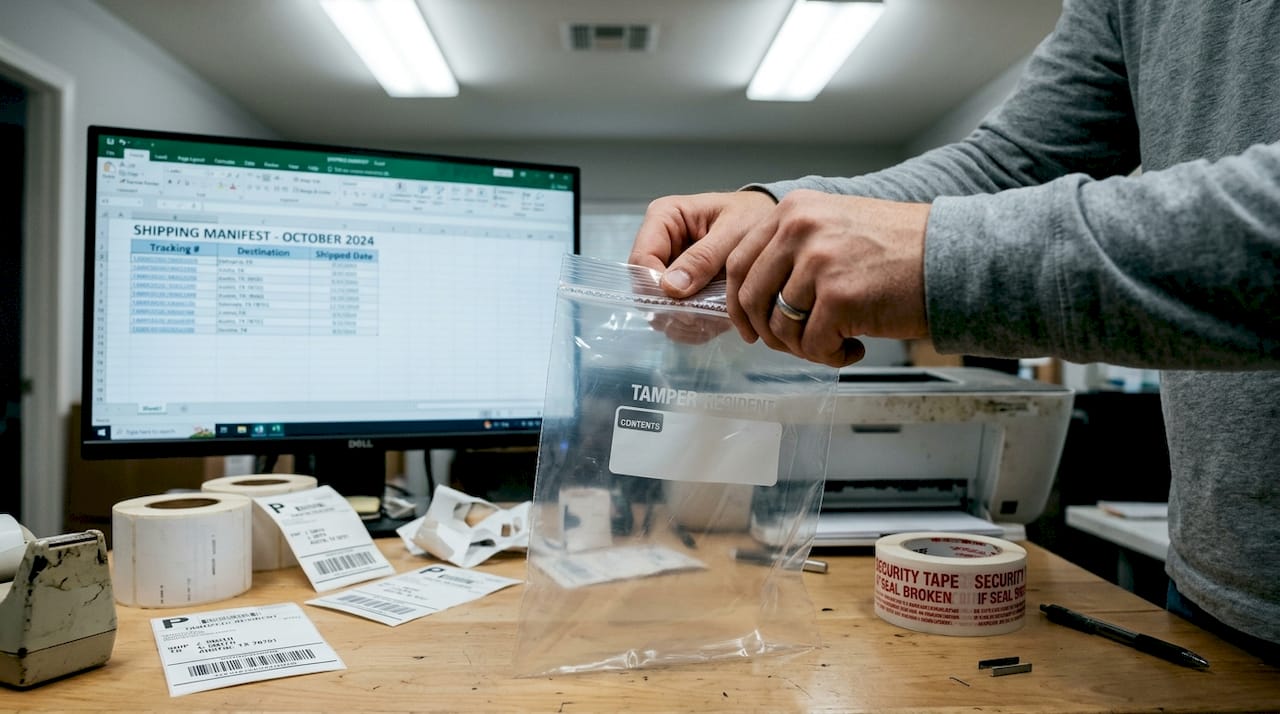
Pre-sealed zippers, tear notches, and multi-material options increase security across a wide range of product types and delivery scenarios.
Common material options for these bags include:
- Clear film: Allows product visibility while maintaining tamper evidence
- Kraft paper with film lining: Combines eco-friendly aesthetics with functional security
- Static-shielding materials: Used for electronics or sensitive components
- Gold or specialty films: Adds a premium look for high-end retail applications
When choosing between custom zipper bags and other closure types, think about how often staff will be sealing bags and whether the closure needs to be one-handed. For a deeper look at closure options, choosing bag closures covers the tradeoffs in practical detail.
Pro Tip: Test your chosen closure under real conditions before ordering in bulk. A zipper that works perfectly at room temperature may fail in a hot delivery environment.
Eco-friendly materials: Kraft paper and recycled film
Security is crucial, but sustainability can be just as important for your operations and image. Customers notice, regulators are watching, and your packaging choices now affect your brand’s long-term reputation.
Kraft paper bags made with 40% post-consumer content are recyclable and increasingly available with tamper-evident features built in. Thinner yet stronger films reduce the total amount of plastic used per bag without compromising puncture resistance or seal integrity.
Key eco claims to look for when sourcing:
- Post-consumer recycled (PCR) content: Reduces virgin material use and supports circular economy goals
- FSC-certified paper: Confirms responsible forest sourcing
- Compostable options: Useful for foodservice operators in municipalities with organic waste programs
- Water-based inks: Safer for recycling streams and lower in volatile organic compounds
- Recyclability labeling: Helps customers dispose of bags correctly, which matters for EPR compliance
Stat to know: Thinner high-strength films can reduce plastic use per bag by up to 30% compared to standard gauge options, lowering both material cost and environmental footprint.
Explore sustainable bag materials to see how FSC certification and recycled content work together in practice. If kraft paper is a fit for your brand, kraft paper options show what’s available with tamper-evident features included.
Pro Tip: Check your local EPR regulations before finalizing material choices. Some jurisdictions now require minimum recycled content or ban certain film types entirely.
Multi-level and specialized tamper evidence
With bag materials and closures covered, consider advanced features for extra security or compliance. Not every business needs ultra-high security, but knowing what’s available helps you make a smarter call.
Security levels are typically categorized as Secure, Premium, and Ultra. Each step up adds features that make unauthorized access harder and easier to detect. Multi-level evidence bags with numbering, writable surfaces, and unique films address specialized use cases like wet evidence or chain-of-custody documentation.
Here is a breakdown of advanced features:
- Sequential numbering: Each bag has a unique number, making substitution or counterfeiting traceable
- Writable panels: Staff can log contents, date, and handler information directly on the bag
- Breathable film: Allows moisture to escape without compromising the seal, critical for biological or wet samples
- Void labels: Leave a permanent “OPENED” mark on the bag surface when the seal is broken
| Security level | Key features | Best for |
|---|---|---|
| Secure | Self-seal adhesive, tear notch | Standard retail and foodservice |
| Premium | Sequential numbering, void label | High-value goods, e-commerce |
| Ultra | Breathable film, writable panel, multi-layer seal | Compliance, chain-of-custody, specialty |
For businesses focused on sustainable branding, it is worth noting that even ultra-level security bags can be produced with recycled content and eco-friendly inks.
Design elements for practical use cases
The right security means little if the bag doesn’t perform in real-world business scenarios. A bag that tips over in a delivery vehicle or traps steam and ruins the food inside is a liability, not an asset.
Gussets are one of the most underrated design features. A gusseted base allows the bag to stand upright, which matters for food delivery, retail display, and organized storage. It also increases fill volume without increasing the bag’s footprint.
Design features that improve real-world performance:
- Steam vents: Perforations or micro-holes that release heat from hot food without breaking the tamper seal
- Reinforced handles: Stitched or twisted paper handles that hold weight without tearing during transit
- Easy-open tabs: Allow customers to open bags cleanly without tools, improving the unboxing experience
- No-contact delivery seals: Strong adhesive closures that confirm the bag was sealed by the sender and not touched since
Delivery bags must handle steam, stand upright with gussets, and enable no-contact delivery confirmation to meet modern foodservice expectations.
For a step-by-step look at how design choices affect performance, bag design for delivery walks through the decisions that matter most for foodservice and e-commerce operators.
Pro Tip: If you run a hot food delivery operation, always request a steam vent test before committing to a bag style. Trapped steam softens paper and weakens adhesive seals faster than almost any other factor.
Side-by-side comparison of tamper resistant bag features
Now, let’s put these feature sets together for an at-a-glance comparison. This table is designed to help you quickly identify which features align with your priorities.
Shrink bands offer low sustainability and high waste, while breakaway seals and multi-layer features deliver stronger security with less environmental cost.
| Feature | Security level | Eco-friendliness | Ease of use | Best use case |
|---|---|---|---|---|
| Pre-sealed zipper | High | Medium | High | Retail, e-commerce |
| Tear notch | Medium | High | High | Foodservice, general retail |
| Void label | High | Medium | Medium | High-value goods |
| Sequential numbering | Very high | Medium | Low | Compliance, chain-of-custody |
| Kraft paper with seal | Medium | Very high | High | Eco-focused retail and food |
| Shrink band | Medium | Low | Low | Legacy applications |
| Multi-layer seal | Very high | Medium | Medium | Premium and specialty use |
This comparison makes one thing clear: no single feature wins across every category. The best bag for your business combines two or three features that match your specific security, sustainability, and usability needs.
How to select the right tamper resistant bag for your business
Here’s how to bring all these insights together for a confident choice. This process works whether you’re sourcing for the first time or re-evaluating your current packaging.
- Define your security requirements. What level of tamper evidence do you need? Is this for food safety, brand protection, or regulatory compliance?
- Identify your sustainability targets. Do you need FSC-certified paper, PCR content, or compostable materials to meet EPR obligations or brand commitments?
- Map your use cases. Delivery, retail display, e-commerce shipping, and in-store pickup each have different performance demands.
- Compare features side-by-side. Use the table above to narrow your options before requesting samples.
- Request samples and test them. Fill the bags with your actual products, simulate transit conditions, and check seal integrity under heat, cold, and pressure.
- Verify compliance with your supplier. Testing per ASTM standards for seal strength and tamper evidence is recommended before finalizing any order.
Working with a supplier who understands North American compliance requirements saves time and prevents costly mistakes. For a broader look at how packaging decisions affect your brand and bottom line, packaging design best practices is a solid starting point.
Pro Tip: Ask your supplier for a compliance checklist specific to your province or state. EPR rules vary significantly across North America, and what’s acceptable in one market may not be in another.
Secure, sustainable bags for North American businesses
If you’re ready to move forward with tamper resistant bags that match your security, eco, and branding needs, Gather Packaging is built for exactly this. We manufacture in Toronto, Canada, which means faster turnaround, lower shipping costs, and direct access to a team that understands North American compliance requirements inside and out.
Our kraft paper tamper resistant bags combine FSC-certified materials with strong tamper-evident closures, and every bag is available with custom printing using water-based inks. If sustainability is a priority, our eco-friendly options include recycled content and biodegradable materials that meet current EPR standards. Ready to see what’s possible? Browse our full range of custom bag printing options and request a sample that fits your operation.
Frequently asked questions
What makes a bag truly tamper resistant?
A bag qualifies as tamper resistant when unauthorized opening is both difficult and immediately visible. Features like pre-sealed zippers and tear notches are the most common indicators of genuine tamper evidence.
Are eco-friendly tamper proof bags as secure as plastic?
Yes. Modern kraft paper bags with 40% post-consumer content and high-strength thin films meet or exceed the security performance of standard plastic options while reducing environmental impact.
How do I know if my bags meet compliance standards?
Look for supplier documentation confirming ASTM F2029 certification and ask for seal strength test results. This is the most reliable way to confirm North American regulatory compliance.
Which features are best for food delivery and e-commerce?
For food delivery, prioritize steam vents and gussets along with strong adhesive seals. For e-commerce, void labels and sequential numbering add an extra layer of accountability during shipping.
Can I customize tamper resistant bags with my branding?
Absolutely. Custom print options are available for both eco-friendly paper and film tamper-evident bags, letting you combine strong security features with full-color branding that reflects your identity.
Share:
What is packaging for apparel: sustainable solutions guide
How paper bags are made: 7 steps for retail & food