

TL;DR:
- Durability depends on paper weight, seam construction, handle mounting, and certifications.
- Kraft paper, reinforced handles, and water-resistant coatings ensure strong, eco-friendly bags.
- Proper testing and quality control are essential for consistent, reliable performance.
A torn handle mid-transaction. A soggy bottom that gives out before a customer reaches their car. These are the moments that cost you more than just a bag. They cost you brand credibility. If you’ve been ordering paper bags only to watch them fail under real-world conditions, you’re not alone. This guide walks you through exactly what separates a durable, eco-friendly paper bag from a liability. From paper weight and seam construction to certifications and custom printing, you’ll finish this read knowing precisely what to look for and what to avoid.
Table of Contents
- How to evaluate durability in paper bags
- Top durable paper bag materials and components
- Eco-friendly and customization qualities
- Testing, standards, and practical decision-making
- Our perspective: Why the best paper bag is more than its specs
- Find your reliable, custom paper bag solution
- Frequently asked questions
Key Takeaways
| Point | Details |
|---|---|
| Paper weight matters | Thicker, higher-weight paper adds strength and longevity to bags. |
| Handles and seams are critical | Reinforced handles and seams prevent breakage under heavy loads. |
| Eco options don’t compromise strength | Compostable and recycled paper bags now deliver durability on par with traditional types. |
| Customization is possible | Durable bags can be custom printed with your brand without sacrificing quality. |
How to evaluate durability in paper bags
Now that you recognize the importance of bag reliability, let’s break down what truly makes a paper bag durable. Not all paper bags are created equal, and the difference between a bag that lasts and one that fails often comes down to a few key technical factors most buyers never think to ask about.
Paper weight, handle construction, and adhesives all directly impact how a bag performs under load and repeated use. Paper weight is measured in grams per square meter (GSM). A higher GSM means thicker, stronger paper. For retail shopping bags, 90 to 120 GSM is common for lighter loads, while foodservice and grocery applications often demand 130 GSM or higher.
Here are the five core durability factors to evaluate before placing any order:
- Burst strength measures how much pressure the paper wall can take before puncturing. Ask suppliers for this number in kilopascals (kPa). Higher is stronger.
- Handle mounting is where most bags fail first. Look for reinforced attachment points using heat-sealed or stitched anchors rather than basic glue strips.
- Seam construction should use double-ply layering or reinforced bottom gussets to prevent splitting when weight shifts.
- Adhesive quality matters more than it sounds. Cheap adhesives fail in humid conditions, which is a serious issue for foodservice and grocery environments.
- Manufacturing certification ensures quality control is consistent batch to batch. FSC® certification and ISO-compliant production lines are reliable indicators.
“A bag that passes visual inspection can still fail in the field if its adhesives or seam reinforcement don’t meet load-bearing standards. Always ask for technical data sheets.”
Pro Tip: Before committing to a large order, request a sample run and test bags with your actual product loads. Fill them, carry them for a few minutes, and check handle pull points. This simple test reveals more than any spec sheet.
Learning how paper bags are made step by step also helps you ask smarter questions when comparing suppliers. And if environmental responsibility matters to your brand (it should), reviewing sustainable bag design tips early in the procurement process keeps eco goals aligned with performance goals from the start.
Top durable paper bag materials and components
With evaluation criteria in hand, the next step is to examine the specific materials and construction elements that separate common bags from the most durable options.
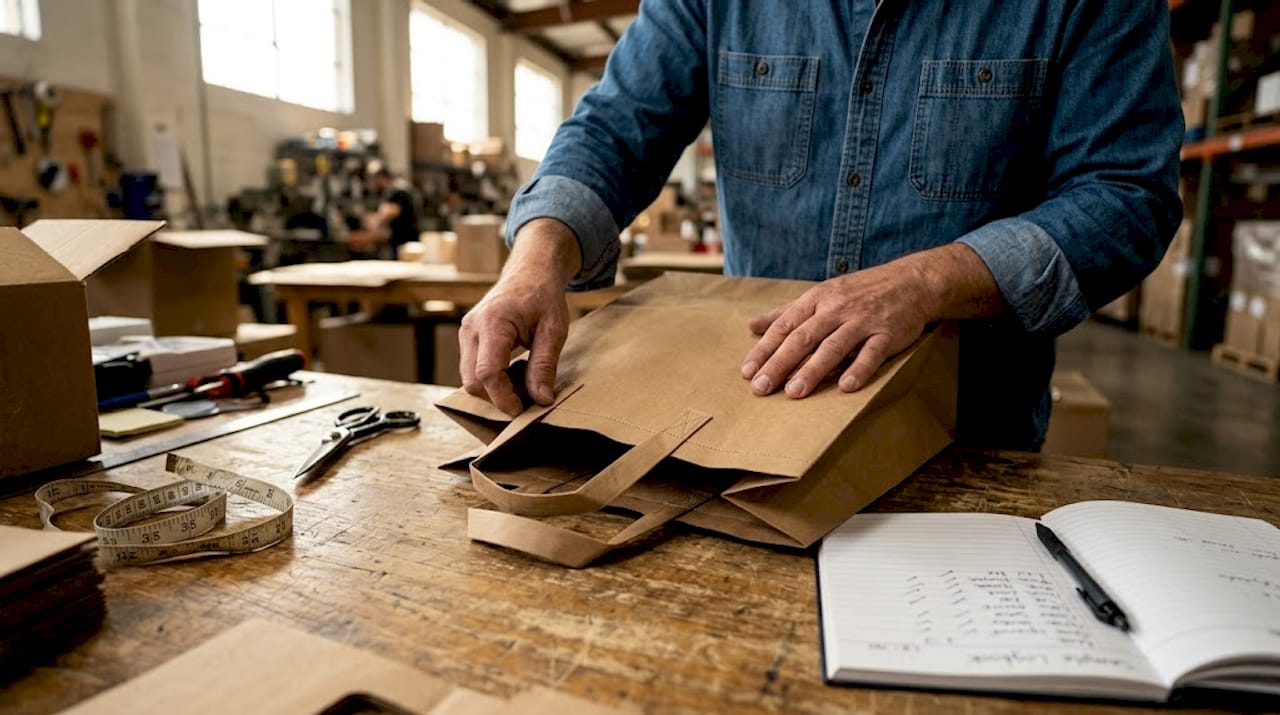
Kraft paper and reinforced handles are the backbone of high-durability retail and foodservice bags. Kraft paper is made through a chemical pulping process that preserves more of the wood fiber’s natural strength compared to bleached alternatives. This gives it a higher tensile strength and tear resistance, which is exactly what you want when a bag needs to survive the trip from store to car to kitchen.
Here’s what to look for across the main components:
- Natural kraft paper: Offers superior tensile strength and is biodegradable. Brown kraft is stronger than white kraft because bleaching slightly weakens the fiber. Both are recyclable.
- Twisted paper handles: Durable and comfortable for heavier loads. They distribute weight better across the hand and are more resistant to pulling out at the mounting point.
- Flat ribbon handles: Better for branded, premium retail bags. They look polished but are best suited for lighter loads like apparel or cosmetics.
- Die-cut handles: Integrated into the bag itself with no separate attachment. They work well for light-duty applications but are not ideal for heavy grocery or bulk foodservice loads.
- Reinforcement patches: An internal layer of paper or laminate at the handle mounting point dramatically extends bag life. This is a non-negotiable for anything over 5 lbs.
- Water and grease-resistant coatings: Essential for foodservice. These coatings prevent moisture from weakening the paper structure during transport. Look for coatings that are still recyclable or compostable to avoid sacrificing eco credentials.
- Bio-based glues and water-based inks: These support sustainability goals without compromising bond strength. Modern bio-adhesives perform as well as petroleum-based alternatives in most applications.
Pro Tip: If you’re sourcing for multiple departments (for example, both retail floor and a prepared foods counter), spec two bag types from the same supplier. A matched aesthetic with different load ratings keeps branding consistent while meeting actual performance needs.
Eco-friendly and customization qualities
Once you know what goes into a strong bag, consider how green attributes and unique branding can be combined with durability.
Modern durable paper bags can be fully compostable and recyclable without sacrificing structural integrity. The myth that eco-friendly means fragile is outdated. Advances in FSC®-certified paper sourcing, plant-based coatings, and recycled fiber blending have closed the gap entirely.
A few standout sustainable features to prioritize:
- Recycled content: Post-consumer recycled (PCR) fiber reduces raw material demand. Look for bags with at least 30% PCR content as a baseline.
- Compostable certification: Bags certified by the Biodegradable Products Institute (BPI) or equivalent meet strict breakdown standards without toxic residue.
- Water-based or soy inks: These deliver vibrant color without releasing volatile organic compounds (VOCs). They’re safer for food-adjacent packaging and easier to recycle.
- Uncoated vs. coated options: Uncoated bags are more easily recycled. Coated bags offer moisture resistance but require compostable coatings to stay eco-compliant.
Paper bags in retail also serve as a mobile branding asset. A well-designed bag gets carried through streets, offices, and transit, extending your brand’s visual reach far beyond the point of sale.
| Feature | Plain bags | Custom printed bags |
|---|---|---|
| Brand visibility | Low | High |
| Customer perception | Neutral | Premium |
| Minimum order flexibility | High | Moderate |
| Cost per unit | Lower | Slightly higher |
| Eco compliance options | Available | Available |
| Durability | Standard | Equal or better |
Custom printing with up to 8-color flexo printing lets you match your exact brand palette without compromising material integrity. Explore custom printed kraft bags to see what’s possible at scale. And when reviewing eco-friendly bag options, pay attention to whether the supplier’s certifications cover both the material and the printing process, because both matter for a fully compliant green claim.
Testing, standards, and practical decision-making
After exploring options, it’s crucial to use real-life standards and objective testing to ensure your chosen bag meets every requirement.
Burst strength and weight capacity are routinely tested in quality control to verify that bags perform as specified under load. Burst strength is tested using the Mullen Burst Test, which applies increasing hydraulic pressure to a paper sample until it ruptures. The result, expressed in kPa, gives you a reliable comparison point between suppliers.
Here’s a quick reference for typical load and strength benchmarks:
| Bag type | Recommended GSM | Typical load capacity | Burst strength target |
|---|---|---|---|
| Light retail (apparel, gifts) | 90 to 100 GSM | Up to 5 lbs | 200 to 300 kPa |
| Standard retail (grocery, home) | 110 to 120 GSM | 5 to 10 lbs | 300 to 450 kPa |
| Heavy-duty foodservice | 130 to 150 GSM | 10 to 20 lbs | 450 to 600 kPa |
Beyond burst strength, here’s a practical checklist for selecting the right bag for your operation:
- Define your load profile. Know the average weight of items going in your bags. Add 20% as a safety buffer when specifying load ratings.
- Request technical data sheets. Any reputable manufacturer will provide GSM, burst strength, and handle pull test results on request.
- Order samples before bulk. Test with real product in real conditions, including heat, humidity, and surface texture of your floors or counters.
- Verify certifications. FSC® for paper sourcing, BPI for compostability, and food-safe ink certifications if bags contact prepared food.
- Assess logistics compatibility. Bags need to stack, ship, and store efficiently. Ask about flat-pack options and case quantities.
Pro Tip: The design guide for paper bags walks through spec decisions step by step, which is especially helpful if you’re customizing for the first time. Pair it with a choosing paper bags guide to match your exact use case to the right product category.
Our perspective: Why the best paper bag is more than its specs
Spec sheets tell part of the story. They don’t tell you what happens when a supplier changes raw material sources mid-contract, or how a bag performs after sitting in a humid stockroom for six weeks, or whether the handles still feel sturdy after 30 minutes in a customer’s hand. Those outcomes come from the full system behind the bag, not just its numbers.
True durability is a product of consistent manufacturing processes, reliable material sourcing, and a supplier relationship that prioritizes quality at every stage. We’ve seen businesses choose a technically impressive bag from an unreliable supplier and end up with inconsistent batches that damaged customer trust.
Working with sustainable manufacturing innovations that use modern, automated production keeps quality variance low. It also means the eco claims on your bags are backed by real process controls, not just marketing language. When your bags consistently arrive on spec, on time, and on brand, that’s when durability really pays off for your business.
Find your reliable, custom paper bag solution
Ready to find paper bags that tick every box for your brand?
At Gather Packaging, we manufacture Canadian kraft paper bags right here in Toronto, with tight quality controls and fast North American turnaround. Whether you need heavy-duty foodservice bags, premium retail carry bags, or fully eco and compostable bags that meet the latest green standards, we have options built to perform. Our custom printed options include up to 8-color flexo printing so your brand shows up strong, every time. Request a sample or get a quote tailored to your volume and use case. Strong bags, real sustainability, made close to home.
Frequently asked questions
What type of paper is best for durable paper bags?
Kraft paper is the gold standard for durability in retail and foodservice bags because its fiber structure retains tensile strength without heavy processing. Natural brown kraft outperforms bleached alternatives in most load-bearing applications.
Can paper bags be both eco-friendly and durable?
Absolutely. Modern paper bags use recycled fiber blends, plant-based coatings, and certified compostable materials while matching or exceeding the performance of conventional options. The two goals are no longer in conflict.
How can I tell if a paper bag will handle heavy loads?
Ask your supplier for Mullen Burst Test results and handle pull-force data. Burst strength and weight capacity are standard quality benchmarks that responsible manufacturers test and document for every product line.
Are custom-printed paper bags as durable as plain ones?
Yes. Custom printed bags manufactured with water-based inks and proper flexo processes maintain full structural integrity. In many cases, the reinforced construction required for premium printing actually makes these bags stronger than standard plain alternatives.
Share:
Unlock the value of custom packaging for restaurants
Uncoated paper packaging: Eco-friendly choice for brands