

TL;DR:
- Secondary packaging is a vital, often overlooked, element that influences protection, branding, and sustainability. It offers opportunities to enhance brand perception, reduce environmental impact, and achieve operational savings through eco-friendly material choices and strategic design. Overcoming implementation challenges requires phased approaches, supplier collaboration, and a focus on value-driven customization.
Secondary packaging is one of the most undervalued tools in a brand’s arsenal. Most retail and foodservice operators focus on the product itself or the primary container, then treat everything else as an afterthought. That’s a costly mistake. 73% of North American consumers now actively prefer green packaging, and the outer layer your customers see, carry, and dispose of sends a message whether you planned it or not. This guide breaks down exactly what secondary packaging is, how to make it eco-friendly, and how to use it as a strategic advantage.
Table of Contents
- What is secondary packaging and why it matters
- Sustainability and the shift toward eco-friendly secondary packaging
- How secondary packaging elevates brand presentation and differentiation
- Challenges and solutions: Making secondary packaging sustainable at scale
- Our perspective: Getting the most from your secondary packaging investment
- Discover eco-friendly, customizable secondary packaging solutions
- Frequently asked questions
Key Takeaways
| Point | Details |
|---|---|
| Supports brand image | Secondary packaging plays a powerful role in differentiating brands on shelves with customizable, eco-friendly designs. |
| Drives sustainability | Switching to recyclable paperboard and fiber-based packaging aligns with growing consumer demand and reduces environmental impact. |
| Boosts cost savings | Foodservice and retail brands can save 12-18 percent in packaging costs over two years by prioritizing sustainable secondary options. |
| Faces real challenges | Scaling sustainable packaging requires tackling supply chain, cost, and recycling infrastructure barriers strategically. |
What is secondary packaging and why it matters
Secondary packaging is the layer that sits between your product’s primary container and the bulk shipping materials used for transport. It groups primary packages together for easier handling, display, and distribution. Think of a paper shopping bag holding multiple smaller boxes, a retail sleeve around a food container, or a branded carrier bag given to a customer at point of sale. These all qualify as secondary packaging.
This is where confusion often creeps in. Brands mix up the three layers:
- Primary packaging makes direct contact with the product. It’s a food container, a bottle, or a wrapper. Protecting the product is its one job.
- Secondary packaging groups those primary units and is typically what a customer sees or carries away from a store.
- Tertiary packaging is the bulk material used for warehousing and freight, like pallets and shrink wrap. Customers rarely see it.
| Packaging layer | Primary function | Common materials | Brand touchpoint |
|---|---|---|---|
| Primary | Product protection | Plastic, glass, foil | High (direct product) |
| Secondary | Grouping, display, carry | Paperboard, paper bags, fiber-based | Very high (customer-facing) |
| Tertiary | Shipping and storage | Corrugated pallets, stretch wrap | Low (back of house) |
Secondary packaging quietly does heavy lifting across protection, logistics, and presentation. It keeps products from shifting during transport. It creates the first tactile impression at retail. And it’s the layer most visible to your end customer during their experience.
From a sustainability standpoint, the material choices here carry real weight. Recyclable paperboard and fiber-based materials reduce plastic use and support circular economy goals, making secondary packaging one of the most actionable levers brands can pull when building a greener supply chain.
“The secondary layer is where brands either reinforce or undermine their sustainability story. Customers feel the bag, read the box, and make a judgment about your values in seconds.”
Exploring the full spectrum of types of retail packaging can help you see where your current packaging stacks up and where there’s room to improve. The same goes for getting clear on what green packaging explained means in practical terms for your business.
Sustainability and the shift toward eco-friendly secondary packaging
Understanding these basics, let’s explore why sustainability is driving massive change in how brands choose and design their secondary packaging.
The market numbers are hard to ignore. North American secondary paper packaging is growing at a 4.91% CAGR, fueled by consumer preference, tightening regulations, and the real cost savings that come with smarter material choices. That 73% consumer preference for green options isn’t a fringe trend. It’s a mainstream buying signal that retail brands and foodservice operators can’t afford to miss.
The most commonly used eco-friendly secondary packaging materials right now include:
- Recycled and recyclable paperboard: Widely available, cost-effective, and accepted by most municipal recycling programs across North America.
- FSC-certified kraft paper: Sourced from responsibly managed forests, it supports a traceable, transparent supply chain.
- Compostable fiber-based options: Ideal for foodservice applications where contamination from food residue makes traditional recycling difficult.
- Water-based ink printed paper bags: Reduce volatile organic compounds during production and remain fully recyclable at end of life.
The operational savings from making the switch are equally compelling. Foodservice operators who shift to sustainable packaging report 12-18% cost savings within two years. Those savings come from reduced material weight, lower freight costs, fewer damage claims, and the regulatory prep that avoids future penalties as packaging laws tighten across North American cities and states.
There’s also a supply chain argument. Locally sourced fiber-based materials reduce lead times, cut transportation emissions, and give you more reliable access to stock without depending on overseas suppliers.
Pro Tip: When evaluating eco materials, prioritize suppliers who can certify the origin of their fiber. Local sourcing not only lowers your carbon footprint, it also insulates your supply chain from the kinds of disruptions that have repeatedly hit overseas packaging manufacturers.
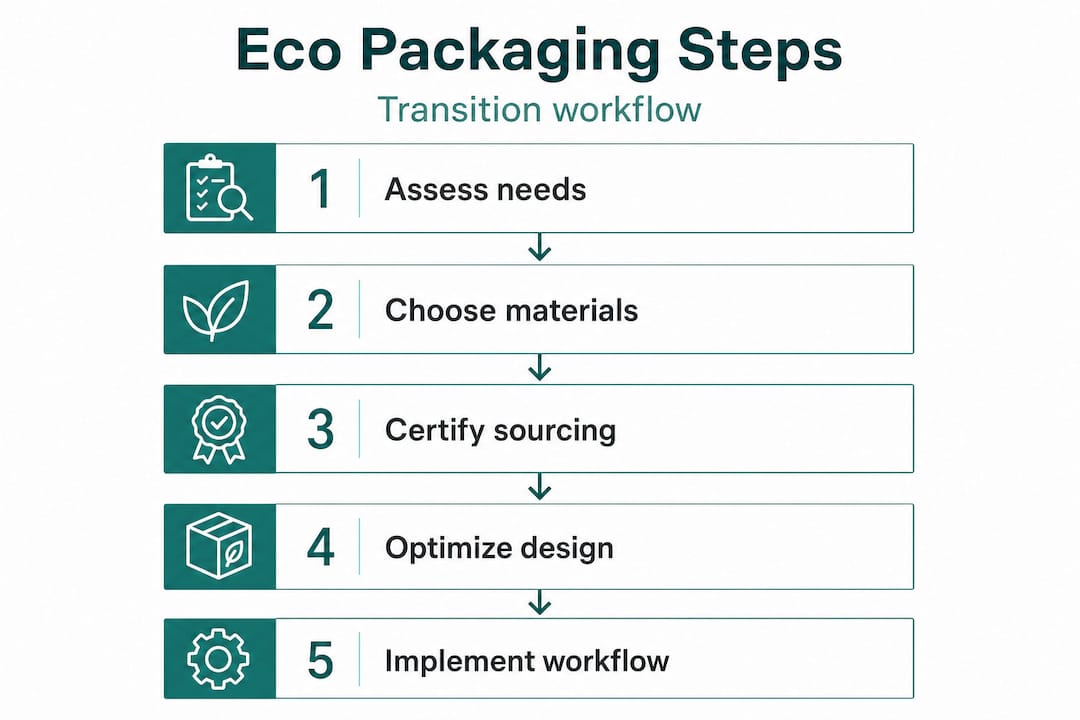
A well-designed sustainable packaging workflow makes the transition manageable rather than overwhelming. Starting with your highest-volume SKUs and replacing their secondary packaging first gives you measurable impact quickly while limiting upfront investment. You can also consult a clear sustainable packaging guide to understand what certifications and standards apply to your category. And when you’re ready to get technical, matching those choices to the right eco-friendly retail packaging specs ensures your designs actually perform as intended.
How secondary packaging elevates brand presentation and differentiation
Having covered the sustainability angle, let’s zoom in on how the secondary layer can become your brand’s silent ambassador, in-store or in the hands of your foodservice customers.
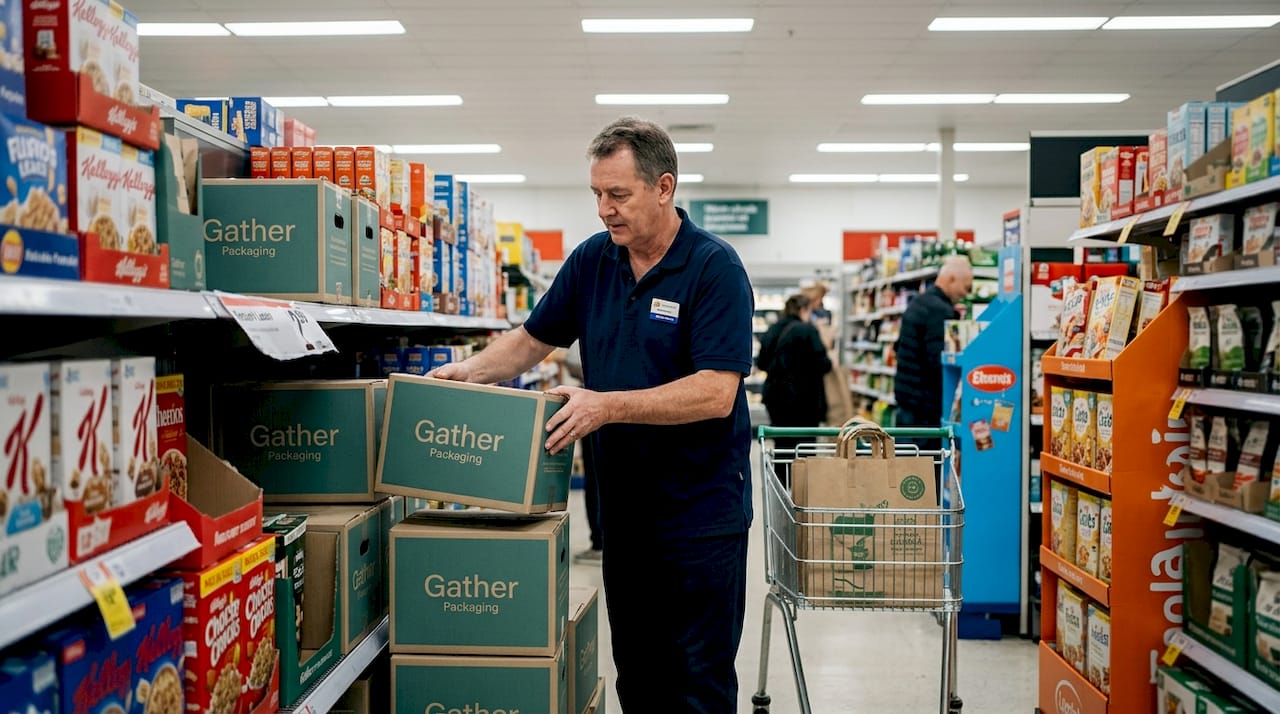
Walk down any competitive retail aisle and you’ll notice that products at the same price point feel dramatically different depending on their outer packaging. The tactile quality, the print clarity, the material weight — all of it registers instantly. Customers don’t consciously analyze it, but they absolutely act on it. A well-executed secondary package communicates quality, care, and credibility before a single word is read.
| Feature | Basic secondary packaging | Custom-branded secondary packaging |
|---|---|---|
| Material | Generic stock paperboard | FSC-certified kraft or recycled fiber |
| Visual impact | Minimal, unbranded | Full-color flexo print, consistent brand identity |
| Consumer perception | Commodity product | Premium, intentional brand |
| Sustainability messaging | None | Certifications, recycled content callouts |
| Repeat purchase signal | Weak | Strong brand recall and loyalty reinforcement |
Here’s a step-by-step approach to amplifying brand value through your secondary packaging design:
- Choose your base material strategically. Fiber-based options like kraft paper or recycled paperboard provide superior surface quality for printing and communicate sustainability without a single word on the package.
- Design with print in mind. Work with your printer to maximize color depth and registration. With modern 8-color flexo printing, the gap between premium and budget packaging has closed significantly.
- Add sustainability messaging intentionally. Call out FSC certification, recycled content percentages, or composability directly on the package. Customers notice, and 73% prefer brands that make these claims clearly and credibly.
- Test your design in context. Mock up how the secondary package looks stacked on a shelf, in a shopping bag, or being carried by a customer. The experience in motion matters as much as flat design.
For foodservice operators, the same logic applies with a slightly different focus. Reusable paper bags for delivery orders, branded kraft carriers for bulk catering pickups, and custom-printed secondary wraps for meal kits all represent moments where the customer interaction extends beyond the food itself. Building durability and print quality into these touchpoints now also prepares you for incoming packaging regulations that are steadily tightening in cities across North America.
Paper bag design tips specific to print quality and material selection can give you a clear path forward, especially if you’re moving from generic stock bags to a customized program.
Pro Tip: Fiber-based secondary packaging isn’t just better for the environment. Its natural surface texture and ink absorption characteristics produce sharper, more vibrant color reproduction than coated plastic-based alternatives, giving your brand a visual edge that’s hard to match.
Challenges and solutions: Making secondary packaging sustainable at scale
But even the best designs mean little without practical adoption. Let’s tackle the hurdles that stop many businesses from reaching their sustainability goals with secondary packaging.
The reality is that transitioning to sustainable secondary packaging involves real friction. Supply chain adjustments for reusable systems, high upfront costs for small and medium enterprises, and uneven recycling infrastructure across markets all create legitimate barriers. These challenges don’t mean the transition isn’t worth it. They mean you need a realistic plan.
“Not every enterprise or market is suited for every sustainable packaging solution. The key is tailoring your approach to your operational reality, not chasing a theoretical ideal that doesn’t survive contact with your supply chain.”
Here are the most common barriers and practical ways to address each one:
- High initial costs for small brands: Start with phased adoption. Replace your single highest-volume secondary packaging format first. The volume savings in that one SKU often fund the next transition.
- Supply chain disruption: Work with domestic manufacturers wherever possible. North American production reduces lead times and gives you more flexibility to adjust specifications without costly overseas retooling.
- Recycling infrastructure gaps: Choose materials that are accepted by the widest range of municipal programs. Standard paperboard and kraft paper have near-universal acceptance across North American recycling streams.
- Structural performance concerns: Multi-ply recycled paperboard and reinforced kraft paper constructions deliver comparable or superior strength to virgin material alternatives, particularly for bags carrying heavier loads.
- Greenwashing risk: Only print certifications and claims you can substantiate. FSC certification, recycled content percentages, and third-party verified compostability are clear standards that protect you from regulatory scrutiny.
The foodservice savings data are worth revisiting here. A 12-18% cost reduction over two years is a meaningful return on an investment that also prepares your operation for regulatory changes already enacted in California, New York, and several Canadian provinces. Waiting costs more than starting.
Designing with waste reduction in mind from the beginning of a project is far more cost-effective than retrofitting later. Learning how to design retail packaging to cut waste while maintaining sales performance is a discipline that pays dividends across your entire product line.
The balance between eco-gains and operational reality is real, and it’s something every brand navigates differently. The brands that succeed long-term are the ones that treat sustainability as an ongoing operational improvement, not a one-time decision.
Our perspective: Getting the most from your secondary packaging investment
With these practical strategies in mind, let’s step back and share some real-world lessons we’ve learned supporting North American brands on their packaging journeys.
The single most common mistake we see is treating secondary packaging as a cost center rather than a brand asset. Brands under margin pressure cut spending here first, opting for generic stock bags or plain paperboard with minimal branding. The short-term savings feel real. The long-term damage to brand equity is harder to see on a spreadsheet, but it’s just as real.
Here’s what we’ve observed consistently: brands that invest in customization with eco-materials generate outsized returns compared to those using generic packaging. Not because premium packaging magically sells products, but because it signals consistency. Customers make trust decisions fast. A bag that looks thoughtfully designed and uses materials with visible sustainability credentials communicates that the brand sweats the details. That signal extends back to the product inside.
Printability deserves more strategic attention than most brands give it. It’s not just aesthetics. High-quality print on certified eco-materials lets you communicate regulatory compliance information, recycled content percentages, and brand values in a single visual moment. It also reduces greenwashing risk. Vague claims like “eco-friendly” without supporting material data are increasingly scrutinized by regulators and consumers alike. Clear, printed certifications on well-specified materials are far more defensible.
Material optimization is another area where we consistently see brands leave value on the table. More material is not always better. A well-engineered kraft paper construction at the right basis weight can outperform heavier generic stock while using less raw material. Packaging design tips for sustainable branding consistently show that the most effective sustainable packages are engineered precisely, not overbuilt.
Pro Tip: Prioritize versatility in your secondary packaging program. A format that works for both retail display and foodservice delivery, with minor print customization between applications, dramatically reduces your SKU count and your per-unit cost while maximizing your brand presence across channels.
The brands that win on packaging aren’t the ones with the biggest budgets. They’re the ones who understand that every customer touchpoint is a vote of confidence in your brand, and they protect that touchpoint accordingly.
Discover eco-friendly, customizable secondary packaging solutions
If this article has you thinking harder about your current packaging setup, that reaction is exactly right. The gap between generic secondary packaging and a purpose-built, eco-friendly, branded solution is smaller than most brands expect, and the upside is significant.
At Gather Packaging, we manufacture sustainable, customizable paper bags and secondary packaging solutions right here in North America. Our eco and recycled options use FSC-certified materials, recycled fiber, and water-based inks to meet the sustainability standards your customers and regulators expect. Our full range of customized kraft paper bags covers retail, foodservice, apparel, and specialty applications, with vibrant 8-color flexo printing and size customization built in. And our quality-assured paper solutions mean every order meets consistent standards from design through delivery. Talk to us about your next packaging project.
Frequently asked questions
What is the main purpose of secondary packaging?
Secondary packaging groups and protects products for shipping, display, and branding, bridging primary packaging and bulk tertiary shipping materials. It uses recyclable paperboard and fiber-based materials to reduce plastic use and support circular economy goals.
Why is eco-friendly secondary packaging important for brands?
Eco-friendly secondary packaging reduces plastic use, appeals to 73% of consumers who prefer green options, and helps brands meet circular economy and cost-saving goals simultaneously.
How does secondary packaging affect retail brand image?
Customizable secondary packaging directly boosts shelf differentiation and supports sustainability claims that consumers value, strengthening both brand recall and purchase decisions at point of sale.
What challenges do brands face when transitioning to sustainable secondary packaging?
Brands face upfront costs for smaller operations, supply chain adjustments for reusable systems, and the need for reliable recycling infrastructure, all of which are manageable with a phased, strategically planned transition.
Share:
Tamper resistant packaging: A guide to safety and sustainability
Carbon neutral packaging: a practical guide for brands