

TL;DR:
- Switching to recycled content or paper bags alone does not automatically achieve a certified carbon neutral claim. True carbon neutrality requires measuring, reducing, and offsetting emissions across the entire packaging lifecycle with verified data and reputable certification. Many claims lack transparency or rely solely on offsets, risking greenwashing and damaging brand credibility.
Switching to paper bags or adding a recycled content label does not automatically make your packaging carbon neutral. A surprising number of retail and foodservice owners assume it does. Carbon neutral packaging is a specific claim with defined boundaries, measurable data requirements, and third-party verification standards. Get it right, and you build genuine credibility with customers who are paying close attention to environmental claims. Get it wrong, and you risk a greenwashing reputation that is very hard to shake. This guide walks you through what the claim really means, how it is achieved, how to spot weak certifications, and exactly how to apply it in your business.
Table of Contents
- What does carbon neutral packaging really mean?
- How is carbon neutrality achieved in packaging?
- Certifications, validity, and common pitfalls
- How businesses can apply carbon neutral packaging effectively
- Why most ‘carbon neutral’ packaging claims fall short—and what actually works
- Find sustainable, credible packaging solutions
- Frequently asked questions
Key Takeaways
| Point | Details |
|---|---|
| Defined, not vague | Carbon neutral packaging balances all emissions with verified reductions and offsets, based on standardized calculations. |
| Certification is critical | Credible neutrality requires third-party certification and transparent supply chain data. |
| Avoid greenwashing traps | Beware of weak claims—demand material reduction, lifecycle focus, and traceability. |
| Brand and environment win | Applying credible carbon neutral packaging boosts your sustainability and customer trust. |
What does carbon neutral packaging really mean?
The word “neutral” sounds simple enough. In practice, it means that the total greenhouse gas emissions generated across your packaging’s lifecycle are balanced out so that the net contribution to the atmosphere is zero. Notice the phrase “balanced out.” That is key. It does not mean zero emissions were produced. It means whatever was produced was accounted for and compensated.
To understand carbon neutral packaging, you need to know about the product carbon footprint, often abbreviated as PCF. The PCF measures the total greenhouse gas emissions linked to a specific product, expressed in CO₂ equivalents. This is different from a company-level carbon claim, which covers all operations in a business, or a feedstock-focused claim that only looks at raw material sourcing. For packaging, the PCF is the most relevant and rigorous measurement.
| Lifecycle stage | What emissions are counted | Included in PCF? |
|---|---|---|
| Raw material extraction | Forestry, mining, farming | Yes (cradle-to-gate) |
| Manufacturing | Energy use, waste, water | Yes |
| Transport to buyer | Shipping, fuel | Often yes |
| Use phase | Minimal for packaging | Varies |
| End of life | Landfill, recycling, composting | Sometimes |
A cradle-to-gate calculation covers everything from raw material extraction through manufacturing and up to the point where the product leaves the factory. Cradle-to-grave extends that to disposal. Most packaging carbon neutral claims today use the cradle-to-gate boundary, which is why standardized methodologies matter so much for making fair comparisons.
Key elements typically included in carbon neutral packaging calculations:
- Raw material sourcing and land use change
- Energy consumption in manufacturing
- Water treatment and waste processing
- Transportation of materials to the manufacturing facility
- Outbound logistics to the first buyer
- Any carbon offsets purchased to cover remaining emissions
PACT methodology v3.0 establishes product carbon footprinting and carbon-credit/PCF exchange methodologies to standardize calculation boundaries across industries and supply chains. Without that standardization, two suppliers could produce very different PCF numbers for nearly identical products and both be technically “correct.” That inconsistency is exactly why buyers need to ask for methodology details, not just final numbers.
Strategies to reduce packaging carbon footprint always start with understanding which lifecycle stage produces the most emissions. For most paper-based packaging, raw material sourcing and manufacturing dominate, which means those are the areas where reduction efforts deliver the biggest impact.
How is carbon neutrality achieved in packaging?
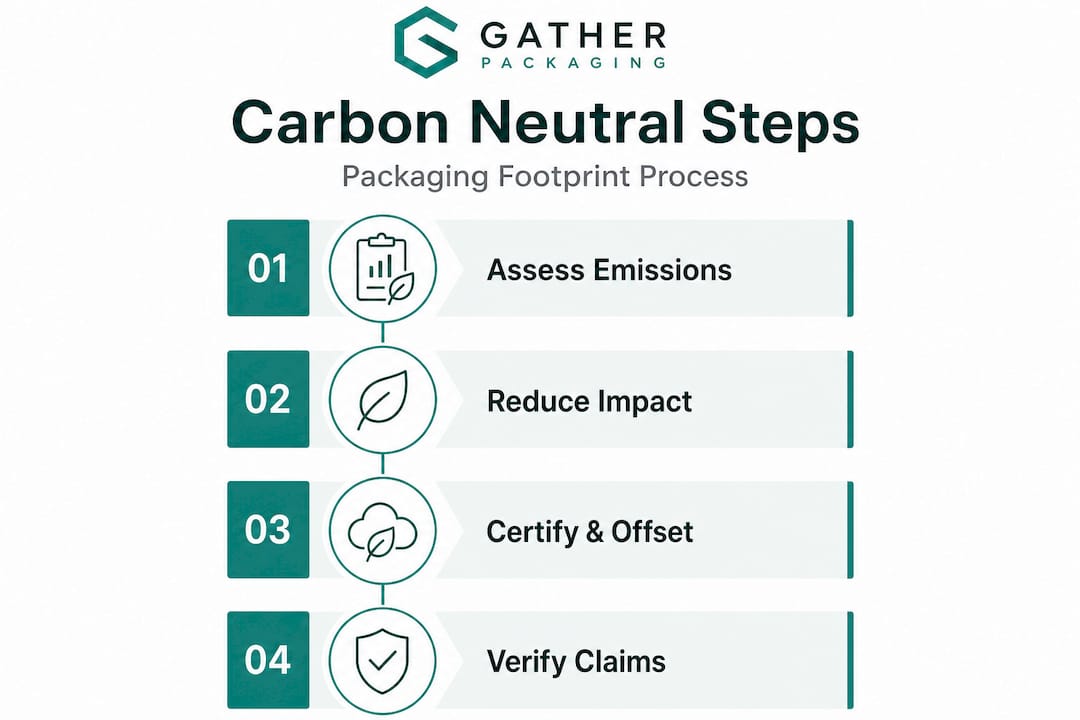
Achieving a credible carbon neutral claim is a multi-step process. It is not something you declare after switching to kraft paper. It requires measuring your emissions, actively working to reduce them, and then compensating for what remains using credible offsets. Here is what that looks like in practice.
Step-by-step path to carbon neutrality for packaging:
- Measure the PCF. Work with your supplier or a third-party consultant to calculate the product carbon footprint using a recognized methodology. This requires real data about energy sources, material inputs, and transportation distances.
- Identify hotspots. Find the lifecycle stages with the highest emissions. These are your reduction opportunities.
- Reduce where possible. Switch to lower-emission materials, improve energy efficiency in manufacturing, optimize transport routes, and reduce waste in production.
- Compensate remaining emissions. Purchase verified carbon offsets for the emissions you could not eliminate. These offsets must be certified through a recognized program and retired on your behalf.
- Verify and certify. Engage a third-party auditor to review your PCF data and offset purchases. Get certified under a recognized scheme.
- Disclose. Communicate the claim on your packaging with a clear label, a boundary statement (e.g., cradle-to-gate), and a reference to the certifying body.
Third-party certification is what separates a credible claim from marketing copy. ISCC Carbon Footprint Certification is one of the established and recognized schemes that certify or verify greenhouse gas emissions linked to a product, bringing independent scrutiny to the claim.
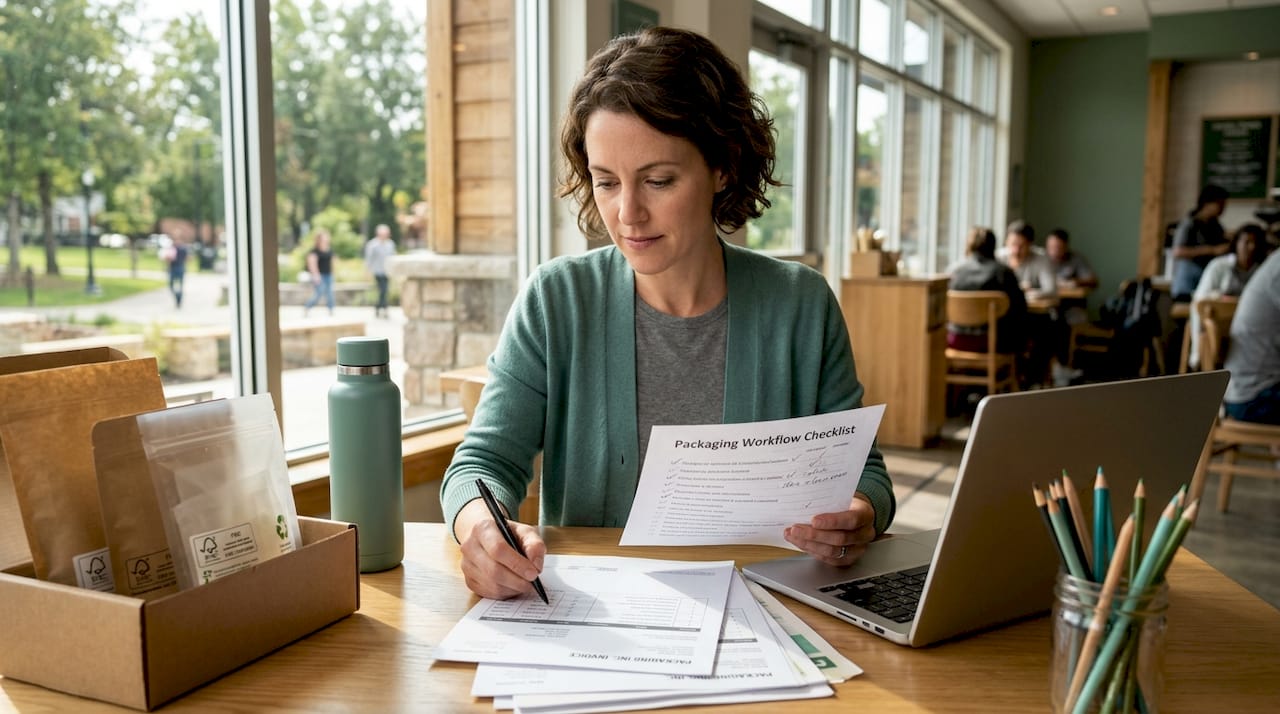
The cradle-to-gate boundary is the most commonly audited scope because it covers the emissions your supplier directly controls. But supplier data quality matters enormously. If your paper bag supplier is using estimated industry averages instead of real energy bills and material invoices, the resulting PCF number is less reliable. This is where quality assurance for sustainable packaging becomes directly tied to your carbon claims.
Pro Tip: When sourcing packaging, ask your supplier for their PCF documentation and the name of the certification body that reviewed it. If they cannot provide both, treat any carbon neutral claim with caution. A supplier with a credible claim will have a clear answer ready.
Building carbon neutrality into your procurement process from the start is far easier than retrofitting it later. A well-documented sustainable packaging workflow embeds these data requirements at the supplier selection stage, so you are not scrambling for emissions data when a customer or regulator asks.
Certifications, validity, and common pitfalls
Not all carbon neutral labels on packaging carry the same weight. Some are robust, third-party verified, and methodologically sound. Others are self-declarations with no independent review. Knowing the difference protects your brand.
Robust vs. questionable carbon neutral packaging claims:
| Claim type | What it includes | Level of credibility |
|---|---|---|
| Third-party certified PCF with offset retirement | Measured emissions, verified reductions, certified offsets | High |
| Supplier-calculated with external audit | Real data, independent review, disclosed methodology | Medium-high |
| Self-declared with no external review | Internal estimate, no verification | Low |
| “Offset-only” without reduction evidence | Emissions not reduced, simply purchased away | Very low |
Recognized certifications and standards to look for in packaging carbon neutrality claims:
- PAS 2060 (BSI specification for demonstrating carbon neutrality)
- ISCC Carbon Footprint Certification for product-level greenhouse gas verification
- GHG Protocol Product Standard for lifecycle boundary definitions
- Carbon Trust Standard for organizational and product-level claims
- FSC certification for verified sustainable raw material sourcing, which directly affects the material-related portion of the PCF
“Carbon neutral packaging claims may be linked to upstream sourcing integrity and supply-chain traceability; weaknesses can undermine credibility even if packaging-level carbon accounting is asserted.” Investigations like this one from Packnode have found carbon-neutral packaging claims connected to supply chains with rainforest clearing, demonstrating how narrow accounting boundaries can miss critical environmental harm.
Greenwashing pitfalls are very real in this category. The most common ones include:
- Relying exclusively on offsets without making any genuine emissions reductions. Carbon neutrality claims are especially vulnerable to greenwashing concerns when offsets cover emissions that were not reduced in the first place.
- Ignoring end-of-life impacts. A packaging claim that only covers manufacturing emissions but ignores whether the bag ends up in a landfill is incomplete.
- Using outdated or averaged emissions data instead of supplier-specific, real-world figures.
- No disclosure of boundaries. A claim that does not specify whether it is cradle-to-gate, cradle-to-grave, or something else gives buyers nothing to evaluate.
Exploring a solid packaging innovation guide can help you understand how material choices, structural design, and sourcing decisions all intersect with your emissions profile long before you get to the offset stage.
How businesses can apply carbon neutral packaging effectively
Understanding the theory is useful. Knowing exactly what to do Monday morning is what moves the needle. Here is how retail and foodservice owners can make carbon neutral packaging work as both an environmental commitment and a brand asset.
Steps for evaluating suppliers and maximizing the value of carbon neutral packaging:
- Request documented PCF data from every packaging supplier you consider, and ask specifically whether the calculation was reviewed by a third party.
- Prioritize suppliers who disclose their emissions boundary, their methodology, and the name of the body that certified or verified their claim.
- Verify that any offsets used are retired in a recognized registry (such as Gold Standard or Verra VCS) and assigned specifically to your order.
- Audit your own logistics and storage to understand what emissions occur after the packaging leaves your supplier.
- Build carbon labeling into your packaging design, since consumers increasingly notice and respond to it.
- Revisit your supplier’s PCF data annually, as manufacturing energy mixes and material sources change over time.
The business case for transparency here is strong. Procurement and reporting for packaging emissions are becoming more practical as regulatory scrutiny increases across North America and Europe. Brands that build these data habits now will face far less disruption when disclosure requirements become mandatory.
Pro Tip: Use carbon labeling as a competitive differentiator at the shelf or point of sale. A simple, verified carbon footprint label on your bag communicates to customers that you have done the work, not just made a promise. In categories where multiple brands offer similar products, that signal can tip a purchase decision.
Material innovation alone is not enough to validate a carbon neutral claim. Independent verification and lifecycle assessment remain essential even when companies invest in lower-carbon materials. The innovation is the starting point. The verification is what makes it credible.
A structured custom eco-friendly packaging workflow that integrates PCF data requirements, supplier certification checks, and carbon label design from day one is the most efficient way to build credibility without scrambling at the last moment.
Why most ‘carbon neutral’ packaging claims fall short—and what actually works
Here is an uncomfortable truth: the majority of carbon neutral packaging claims on the market today would not survive rigorous third-party scrutiny. Not because the brands making them are dishonest, but because the standards for what counts as a “claim” are still loosely enforced in many markets, and suppliers sometimes sell carbon neutral positioning as a feature without the underlying documentation to back it up.
What we see repeatedly in the packaging industry is a pattern where offset purchases are treated as a substitute for reduction work. A business buys paper bags, the supplier calculates a rough PCF using industry averages, purchases a batch of offsets, and calls it done. No independent audit. No methodology disclosure. No commitment to reducing those emissions over time. That approach might pass casual inspection, but it will not hold up to a journalist, a regulator, or a sophisticated customer with questions.
What actually works is the combination of genuine material choices that reduce emissions at the source, paired with transparent data that shows exactly what was measured and how, certified by someone with no financial interest in the outcome. FSC-certified paper, water-based inks, domestically manufactured bags with shorter transport distances, and recycled content are all real reduction levers. They are not window dressing. They change the PCF number before you ever get to offsets.
Business owners who ask better questions get better outcomes. When a supplier says their bags are carbon neutral, your follow-up questions should be: What is the PCF per unit? What boundary was used? Who certified it? Are the offsets retired in a registry? Those four questions will quickly reveal whether the claim is solid or thin.
Packaging design tips for sustainable branding consistently show that customers trust specificity. A bag that says “1.2 kg CO₂e per 1,000 units, certified to PAS 2060, cradle-to-gate” signals serious commitment. A bag that just says “carbon neutral” with a leaf icon signals very little. The former builds brand equity. The latter creates liability.
Our perspective is that offset-only approaches should be treated as a bridge, not a destination. Real leadership in sustainable packaging means committing to measurable reduction targets over time, reporting progress publicly, and choosing suppliers who share that commitment. The brands that will own this space over the next decade are the ones treating carbon accountability as a supply chain discipline, not a marketing decision.
Find sustainable, credible packaging solutions
Making credible carbon neutral packaging claims starts with choosing the right supplier. One who brings real data, certified materials, and transparent manufacturing practices to the table.
At Gather Packaging, we manufacture eco-friendly paper bags using FSC-certified materials, recycled content, and water-based inks from our Toronto facility, keeping transport distances short and your supply chain traceable. Our domestic paper shopping bags are designed to support real sustainability commitments, not just green aesthetics. Whether you are a retailer, foodservice operator, or specialty brand ready to build credible environmental claims into your packaging, explore our full range of custom printed kraft bags and connect with our team to get started with transparent, verifiable solutions.
Frequently asked questions
How can I tell if a carbon neutral packaging claim is credible?
Look for third-party certifications that verify product carbon footprint and demand supplier-specific emissions data rather than industry averages for full transparency.
Do I need to switch to lower-carbon materials for my packaging to qualify as carbon neutral?
Often, yes. Reduction should come before offsetting, and true neutrality also requires lifecycle assessment and credible, independently verified offsets for the remaining footprint.
Is carbon neutral packaging the same as compostable or recycled packaging?
No. The carbon neutral claim is about balancing net greenhouse gas emissions, while compostable and recycled refer to the physical properties of the material and what happens to it at end of life.
What are common pitfalls to avoid with carbon neutral packaging?
Beware of offsets replacing real reductions, lack of supply chain transparency, and carbon neutral labels that provide no methodology or certifying body reference.
How is the carbon footprint of packaging usually measured?
It is typically calculated from raw material sourcing through manufacturing to distribution using standardized PCF methodologies that set consistent boundaries so different products can be compared fairly.
Share:
Secondary packaging for sustainable brand growth
How to choose sustainable bag materials: a practical guide