

TL;DR:
- Packaging mockups are essential for aligning design, sustainability, and shelf appeal before production.
- Digital mockups enable quick iteration, while physical prototypes offer crucial sensory and structural validation.
- Mockups help verify sustainability claims and prevent costly retail failures by testing real-world performance.
Skipping a packaging mockup is a bit like printing 50,000 bags before checking the color on screen. The cost of that mistake is real. Digital workflows cut prototyping to as little as 48 to 72 hours, yet many retail and foodservice brands still treat mockups as optional. They are not. Whether you are launching a seasonal snack line or refreshing your restaurant’s takeout bags, a well-executed mockup process is the fastest way to align design, sustainability goals, and shelf appeal before a single production run begins.
Table of Contents
- Why packaging mockups matter in retail and foodservice
- Digital vs. physical mockups: Speed versus sensory fidelity
- Mockups as a sustainability and compliance tool
- Applying mockups for brand differentiation and sales impact
- What experts miss about packaging mockups
- Explore innovative packaging solutions for your brand
- Frequently asked questions
Key Takeaways
| Point | Details |
|---|---|
| Faster prototyping | Mockups cut packaging development time and costs by allowing quick iteration and avoiding waste. |
| Sensory and compliance testing | Physical prototypes ensure packaging meets sustainability, ergonomics, and regulatory standards before launch. |
| Brand differentiation | Mockups give brands a strategic edge by enabling bold customization and evidence-backed shelf appeal. |
| Balanced approach | Brands benefit most by combining digital speed with physical fidelity for final market validation. |
Why packaging mockups matter in retail and foodservice
Packaging is not just a container. For retail brands and foodservice operators, it is the first physical conversation you have with a customer. That conversation needs to be right before it scales to thousands of units. Mockups give you a controlled space to have that conversation on paper, literally, before committing to tooling, materials, or print runs.
Here is what mockups specifically allow you to do:
- Visualize custom dimensions and structural forms before cutting dies are made
- Test color accuracy across different substrates, including recycled and FSC®-certified papers
- Simulate shelf placement to evaluate visual impact at eye level and in crowded retail environments
- Validate sustainability claims by physically handling materials for recyclability and compostability cues
- Gather stakeholder feedback from buyers, operators, and retail partners before production locks in
The stakes are high. Packaging failures at the retail shelf are rarely about product quality. They are almost always about visual misalignment, structural weakness, or a sustainability claim that the packaging itself does not communicate clearly. Mockups catch these problems early.
Stat to know: Digital prototyping workflows reduce development time to 48 to 72 hours, a fraction of traditional timelines that often stretch to weeks.
For foodservice operators, the mockup process also helps confirm that bags handle real-world use cases. A takeout bag that looks great on screen but collapses under a loaded order is a brand problem, not just a packaging problem. Testing load capacity, handle durability, and grease resistance through physical mockups is part of a solid quality assurance for sustainable packaging process.
Retail brands benefit equally. When you are sourcing eco-friendly bags with 8-color flexo printing, seeing a printed mockup under store lighting is the only reliable way to confirm that your pantone colors translate correctly onto kraft or recycled stock. Building mockups into your sustainable packaging workflow is not extra work. It is insurance.
Pro Tip: Build at least two mockup rounds into your packaging timeline. The first round catches structural and material issues. The second round fine-tunes color, copy placement, and sustainability labeling before final approval.
Digital vs. physical mockups: Speed versus sensory fidelity
Not all mockups serve the same purpose. Understanding the difference between digital and physical prototypes will help you use each one at the right moment in your design process.
Digital mockups are fast, flexible, and ideal for early-stage iteration. You can generate dozens of color variations, swap structural formats, and share files with remote collaborators in hours. For brands managing multiple SKUs or seasonal packaging refreshes, digital prototypes compress what used to be a multi-week process into a single afternoon.
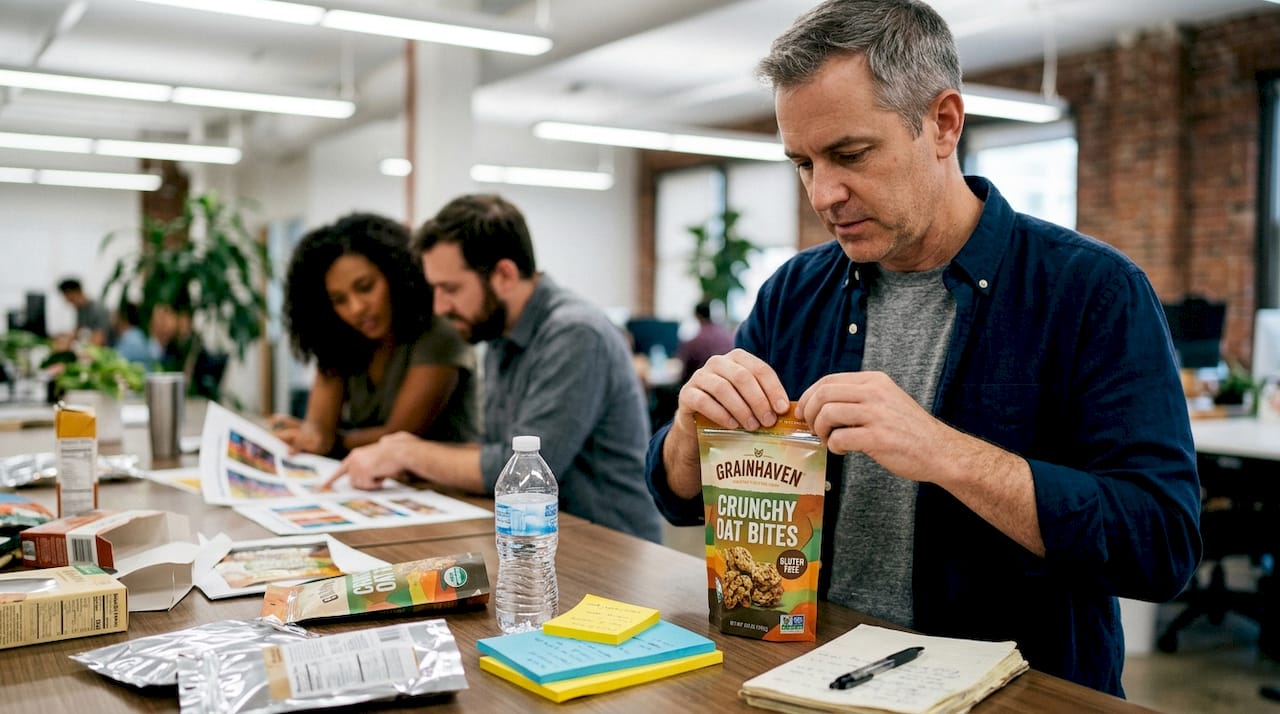
Physical mockups do something digital files cannot. They put the packaging in your hands. Physical prototypes are superior for sensory tests involving texture, weight, handle ergonomics, and the tactile cues that signal quality to a consumer. In North American retail and foodservice environments, where consumers pick up and examine products before buying, this matters enormously.
| Factor | Digital mockup | Physical mockup |
|---|---|---|
| Speed | 48 to 72 hours | 3 to 7 business days |
| Cost | Low | Moderate |
| Color accuracy | Screen-dependent | Print-verified |
| Tactile feedback | None | Full |
| Shelf simulation | Limited | Highly effective |
| Remote collaboration | Excellent | Limited |
| Sustainability testing | Visual only | Material-verified |
The best practice is not choosing one over the other. It is sequencing them correctly.
- Start with digital mockups to align on structure, branding, and color direction with your team and any retail buyers
- Narrow to two or three strong concepts before investing in physical production
- Build physical prototypes of your top candidates for shelf simulation, ergonomic review, and material testing
- Conduct in-store or in-restaurant trials where possible, placing physical mockups in actual display environments
- Finalize production specs only after physical validation confirms performance
This sequence lets you minimize packaging waste during development while still catching the sensory and structural issues that digital files miss. Skipping the physical stage is where brands get into trouble, especially when launching into competitive retail channels where shelf performance is non-negotiable.
Mockups as a sustainability and compliance tool
Sustainability is no longer a marketing differentiator. It is a baseline expectation in North American retail and foodservice. Mockups play a critical and often underappreciated role in making sure your sustainability claims are real, not just printed on the bag.
Here is where mockups directly support compliance and environmental validation:
- Material recyclability testing: Physical mockups let you confirm that adhesives, coatings, and inks do not contaminate the paper recycling stream
- Compostability verification: Brands pursuing compostable certification need to test actual material combinations, not just individual components
- Food-contact safety: Foodservice operators must confirm that inks and coatings meet food-contact regulations before production
- Eco-label accuracy: Mockups prevent brands from printing FSC® or recycled-content claims before the materials are formally verified
| Compliance area | Mockup role | Risk if skipped |
|---|---|---|
| Recyclability | Material combination testing | Contaminated recycling streams |
| Compostability | Certification pre-check | Failed third-party audits |
| Food-contact safety | Ink and coating review | Regulatory violations |
| Eco-label claims | Verification before print | Greenwashing liability |
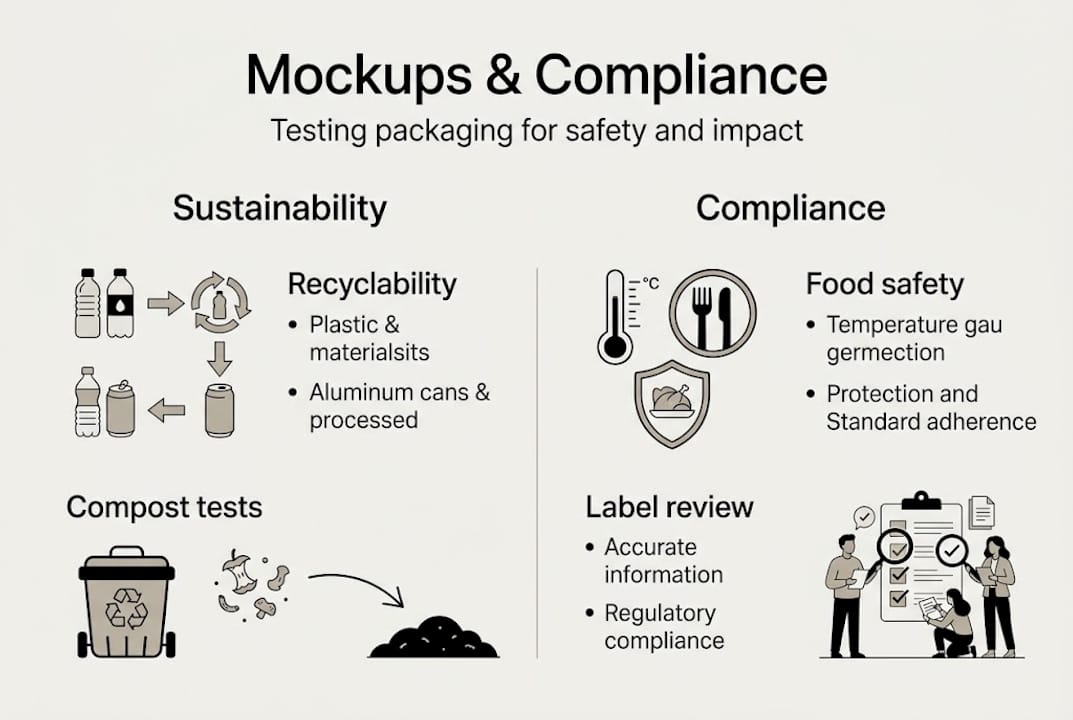
Experts note that while AI and digital tools speed up ideation significantly, physical prototypes remain essential for North American retail and foodservice brands to confirm that sustainability claims hold up in the real world. A digital render cannot tell you whether your water-based ink bonds correctly to a recycled kraft substrate under refrigeration conditions.
The compliance stakes are real. Brands that skip physical validation before mass production risk costly recalls, reformulations, and reputational damage. Understanding green packaging and sustainability at a material level is the foundation, but mockups are where that knowledge gets tested against actual production conditions.
For retail brands navigating extended producer responsibility regulations and for foodservice operators managing food-safety audits, mockups serve as documented proof that due diligence was performed. That documentation matters when buyers, certifiers, or regulators ask questions. Reviewing packaging compliance for retail requirements early in the mockup process keeps costly surprises off the table.
Applying mockups for brand differentiation and sales impact
Compliance and sustainability are the floor. Brand differentiation and sales impact are the ceiling. Mockups help you reach that ceiling faster and with less wasted spend.
For brands targeting niche or regional markets, mockups make it practical to test localized design variations without committing to full production runs. A foodservice operator with locations in both urban and suburban markets can prototype two bag designs, test them with local focus groups, and choose the stronger performer before ordering inventory. That kind of market-specific iteration used to require significant budget. Digital-first mockup workflows have changed that math.
Pro Tip: Test your mockup as an e-commerce thumbnail, not just on a physical shelf. Many retail brands now sell through online channels where the bag appears as a small image. If your design does not read clearly at thumbnail size, it will underperform in digital retail environments.
Here is how mockups directly drive sales outcomes:
- Shelf impact testing: Place physical mockups in a mock retail display to evaluate visibility, color contrast, and brand recognition from three to five feet away
- Campaign alignment: Mockups let you sync packaging visuals with seasonal campaigns before production locks in, keeping brand messaging consistent
- Consumer testing: Share physical prototypes with a small customer panel to gather tactile and visual feedback before launch
- SKU rationalization: Brands with multiple products can use mockups to create a cohesive visual family across SKUs, strengthening shelf presence
The numbers support the investment. One snack brand using a digital-first prototyping workflow achieved a 30% reduction in development time and saved $8,000 in agency fees by eliminating unnecessary revision cycles. That is money that goes directly back into marketing, product development, or sustainability upgrades.
For foodservice operators, custom packaging for restaurants starts with knowing exactly how your brand will look in a customer’s hands. Mockups make that certainty achievable before the first bag rolls off the press. Pairing that with a structured eco-friendly packaging workflow ensures your design process supports both brand goals and environmental commitments simultaneously.
What experts miss about packaging mockups
Most packaging discussions treat mockups as a speed tool. Get to market faster, reduce revision cycles, cut costs. That framing is accurate but incomplete.
The deeper value of mockups is that they force honest conversations early. When a physical prototype lands on a table and the handle tears under normal load, that is not a design failure. It is the mockup doing its job. Brands that skip physical validation because digital renders look perfect are not saving time. They are deferring problems to the worst possible moment, which is after production.
There is also a North American market reality that gets overlooked. Consumers here pick up bags, feel the weight, squeeze the handles, and make quality judgments in seconds. A bag that photographs beautifully but feels cheap in person loses the sale. Physical mockups are the only way to catch that gap before it costs you.
The most forward-thinking brands we work with treat mockups as a sustainability validator, not just a design tool. They use the 2026 sustainable packaging guide as a framework and then use physical prototypes to confirm that their material choices actually perform as intended. That combination of strategic planning and hands-on testing is what separates brands that lead on sustainability from brands that just claim it.
Explore innovative packaging solutions for your brand
Putting mockup strategies into practice requires a manufacturing partner who understands both the design process and the sustainability requirements of North American retail and foodservice markets.
At Gather Packaging, we support brands through every stage of the packaging journey, from initial concept and prototyping to final production. Our eco-friendly paper bags use FSC®-certified materials, water-based inks, and recycled content that hold up under real-world testing. Browse our full range of custom printed paper bags to see what is possible for your brand. And if domestic production speed matters to your timeline, our Canadian made shopping bags offer faster turnaround and lower logistics costs for North American brands ready to move from mockup to market.
Frequently asked questions
How do packaging mockups save time and costs for brands?
Mockups enable rapid iteration and eliminate unnecessary revision cycles, with one snack brand achieving a 30% time reduction and saving $8,000 in agency fees through a digital-first prototyping process.
When should brands use physical mockups instead of digital?
Physical mockups outperform digital for sensory evaluation, handle ergonomics, and shelf simulation, making them essential for retail and foodservice brands where consumer touch and shelf presence directly influence purchase decisions.
Can mockups be used to validate sustainability claims?
Yes. Mockups let brands physically test material combinations for recyclability, compostability, and food-contact compliance, confirming that sustainability claims hold before mass production begins.
How do packaging mockups impact shelf appeal?
Mockups allow brands to test shelf placement, color contrast, and visual hierarchy in real display environments, with shelf simulations and thumbnail reviews revealing design weaknesses that digital renders consistently miss.
Share:
Packaging Quality Assurance Checklist for Sustainable Solutions
How to Design Foodservice Bags for Eco-Friendly Branding