
TL;DR:
- Personalized bags serve as free marketing impressions carrying your brand through everyday environments.
- Effective personalization combines brand clarity, sustainable materials, quality printing, and functional features.
- Beyond aesthetics, tactile and functional quality reinforce brand trust and environmental credibility.
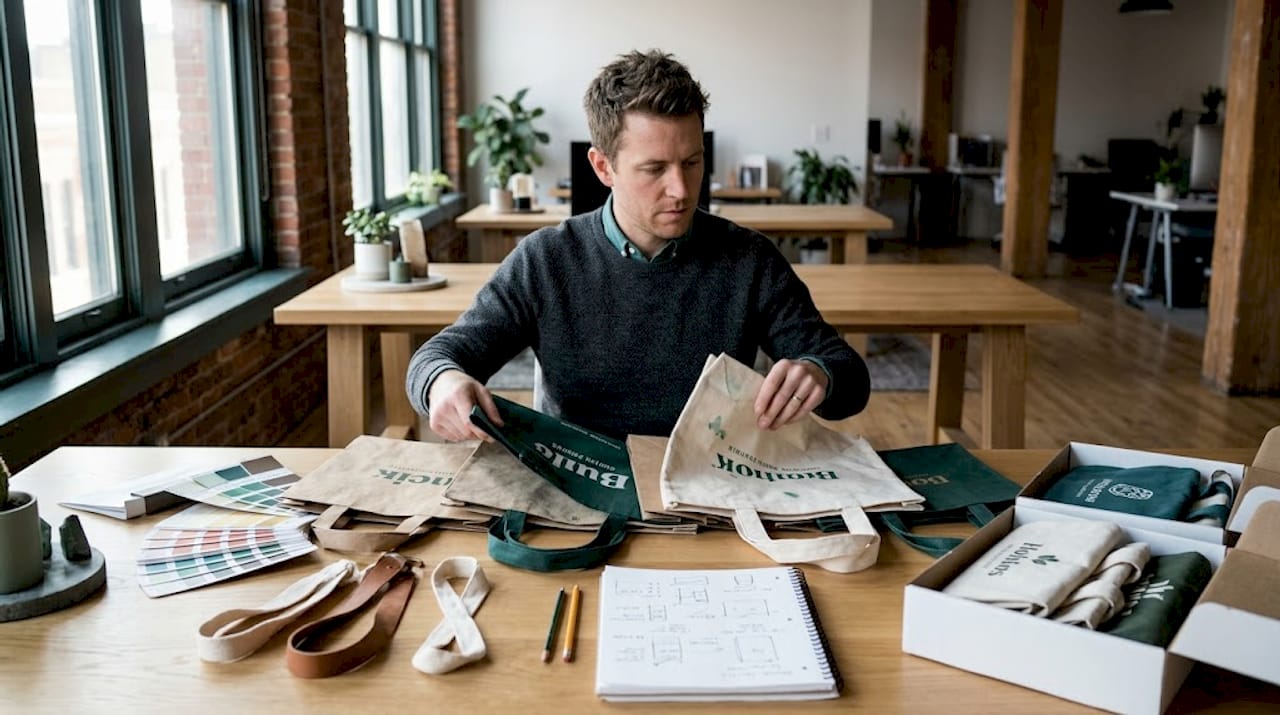
Every bag that leaves your store or kitchen is a walking advertisement, and a plain brown bag is a missed opportunity. Customers carry your packaging through busy streets, farmers markets, and office lobbies, giving your brand dozens of free impressions per trip. When that bag is customized with thoughtful design, quality materials, and functional features, it stops being disposable and starts being memorable. This article breaks down the most effective, practical ways to personalize shopping bags so your brand gets noticed, your customers feel good carrying them, and your packaging actually reflects what your business stands for.
Table of Contents
- Criteria for impactful bag personalization
- Custom printing: logos, colors, and artwork
- Add-ons: handles, finishes, and tactile touches
- Functional personalization for foodservice and retail
- Why true personalization is more than print
- Partnering for custom eco-friendly bag solutions
- Frequently asked questions
Key Takeaways
| Point | Details |
|---|---|
| Define personalization goals | Outline clear branding objectives and material requirements before customizing bags. |
| Use custom printing | Feature logos, colors, and artwork with eco-friendly inks for maximum impact. |
| Enhance functionality | Select sizes, finishes, and features that support operational needs and customer comfort. |
| Prioritize sustainability | Choose compostable, recycled, and recyclable materials to align with eco-conscious branding. |
| Layer personalization | Combine visual, tactile, and functional elements to create bags that stand out and build loyalty. |
Criteria for impactful bag personalization
Now that we’ve framed the potential of personalized bags, let’s explore how to set criteria for customizing them with purpose. Before you choose a color or pick a handle style, you need a clear framework. Personalization without a strategy produces bags that look busy, fall apart too soon, or contradict your brand values. The right criteria keep every decision aligned with both your identity and your customers’ expectations.
Brand message clarity should be your first filter. Ask yourself what a customer should feel when they see your bag. A high-end boutique and a casual taco counter are both brands, but their bags should feel completely different. Every design decision, from font weight to color palette, should reinforce that single, clear brand feeling. Confusion in branding is expensive, so start with intent.
Material sustainability is no longer optional for North American retailers and foodservice operators. Eco-friendly materials are increasingly preferred by brands across retail and foodservice for custom shopping bags, and customers notice. Kraft paper, recycled board, and compostable options each offer distinct advantages depending on your product weight, moisture exposure, and disposal expectations. For sustainable bag design tips, matching your material to your brand’s environmental promises is just as important as the logo on the front.
Here are the core criteria to evaluate before ordering:
- Print quality and color accuracy: Does the printing method support your logo’s detail level and color precision?
- Durability for end use: A retail bag holding a heavy candle set needs different strength than a light pastry bag.
- Bag functionality for format: Counter service, curbside pickup, and boutique retail all have unique dimensional and structural needs.
- Recyclability or compostability: Does the finished bag meet the environmental claims you make to your customers?
- Cost per unit at your order volume: Premium personalization should scale efficiently so it doesn’t eat your margin.
Pro Tip: Request physical samples before committing to a full production run. Colors look different on screen than on kraft paper, and handle strength is something you can only feel in your hands.
When choosing paper bags for your brand, treat the criteria above as a checklist, not a suggestion. Skipping even one step often results in costly reprints or customer complaints about bags that tear, bleed ink, or can’t hold weight.
Custom printing: logos, colors, and artwork
With your personalization criteria in mind, let’s dive into the transformative power of custom printing for brand visibility. Your bag’s printed surface is the most direct communication channel between your brand and the people holding it. Done right, it builds instant recognition. Done wrong, it looks cheaper than a plain bag.
There are three major printing methods worth knowing:
- Flexographic printing uses rubber plates and fast-drying inks to print at high volume with consistent quality. It’s ideal for large runs with bold graphics and a limited color palette. At Gather Packaging, our 8-color flexo printing capability handles complex brand artwork with accuracy and speed.
- Digital printing works best for shorter runs, detailed artwork, or variable data (like personalized batch numbers or seasonal messaging). It costs more per unit but cuts setup costs, making it accessible for smaller brands testing new designs.
- Offset printing produces exceptional color precision and is often used for premium retail packaging where color matching to strict brand standards is non-negotiable. It’s less common for bags but worth knowing if your brand guidelines are strict.
Custom printing is consistently a top choice for brands wanting bold graphics and messaging on their eco-friendly shopping bags, and the reason is simple: print is your first impression. Logo placement matters enormously. Centering a logo on the front panel creates formality and authority. Placing it offset to one side, or wrapping it around the gusset, creates a more editorial, modern feel. Neither is wrong. Both are intentional.
“The bag is a canvas. If you treat it like a container, you’re wasting 75% of its value as a branding surface.”
Eco-friendly ink options are expanding fast. Water-based inks, soy inks, and UV-curable inks all offer lower VOC emissions than traditional solvent inks, and many are fully compatible with recycled paper substrates. The critical balance is between vibrancy and recyclability. Heavy metallic or foil printing can interfere with paper recycling streams, so understanding paper bag manufacturing helps you make smarter choices about where to spend your print budget.
Pro Tip: Use a spot color for your brand’s most distinctive color instead of a CMYK mix. Spot colors reproduce more consistently across print runs, keeping your brand identity sharp even at high volumes.
Add-ons: handles, finishes, and tactile touches
Beyond visual branding, personalization includes hands-on features. Let’s compare the impact of custom handles and finishes. A bag’s feel is just as powerful as its look. When a customer picks up your bag and it feels substantial, smooth, or pleasantly textured, that sensation reinforces your brand’s perceived quality without a single word being spoken.
Handle options and their positioning:
- Twisted paper handles are the workhorse of retail packaging. They’re cost-effective, strong, and available in dozens of colors to match your brand palette. They work well for boutiques, gift shops, and mid-range retail.
- Flat ribbon handles signal premium positioning. They’re smoother against the palm, they photograph beautifully, and they give a luxury unboxing feel. Apparel brands and specialty food retailers often prefer this style.
- Die-cut handles are cut directly into the bag body, making them ideal for high-volume foodservice where speed matters and loose handles are a liability.
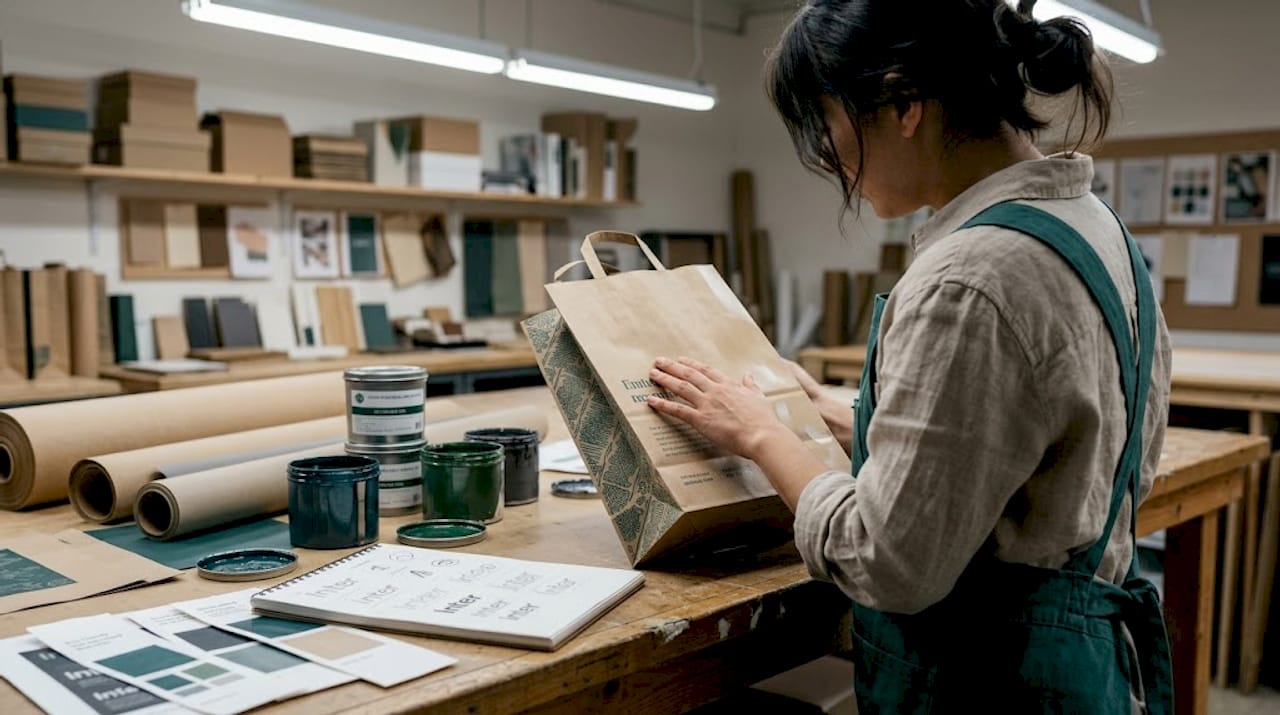
Surface finishes transform a printed bag into a brand artifact. Lamination and custom finishes enhance both user experience and perceived value while still supporting sustainability goals when the right materials are chosen. The main options break down like this:
| Finish type | Feel and look | Best use case | Eco compatibility |
|---|---|---|---|
| Matte lamination | Soft, non-reflective, upscale | Boutiques, high-end retail | Good with water-based adhesives |
| Glossy lamination | Bright, high-contrast, bold | Food brands, lifestyle retail | Moderate, check recyclability |
| Kraft natural finish | Earthy, minimal, raw | Organic brands, farmers markets | Excellent |
| Embossed logo | Raised, tactile, prestigious | Luxury goods, gift packaging | Compatible with uncoated paper |
| Debossed design | Pressed in, understated | Premium apparel, specialty stores | Compatible with uncoated paper |
Embossing and debossing deserve special attention. These techniques press a design into the paper surface, either raising it (emboss) or recessing it (deboss), creating a tactile experience that print alone cannot replicate. When a customer runs their fingers across a debossed logo, they’re physically touching your brand. That’s a powerful, subconscious connection.
For best custom bag types suited to your industry, the goal is to combine the right handle, finish, and base material into a package that feels cohesive rather than assembled from disconnected choices.
Functional personalization for foodservice and retail
Personalization goes beyond aesthetics. Let’s look at functional enhancements for foodservice and retail. A beautiful bag that can’t handle the weight of your product, leaks grease on a customer’s car seat, or violates food safety labeling standards is a liability, not an asset. Functional personalization solves real operational problems while still keeping your brand front and center.
Foodservice operators need custom shopping bags designed specifically for moisture resistance, correct size specifications, and labeling compliance. These aren’t optional extras. They’re the baseline for professional foodservice packaging.
Here’s a practical sizing framework for different merchandise categories:
| Bag size category | Typical dimensions | Best for |
|---|---|---|
| Small | 6" x 3.5" x 11" | Jewelry, cosmetics, small pastries |
| Medium | 10" x 5" x 13" | Apparel, books, boxed meals |
| Large | 16" x 6" x 19" | Shoes, multi-item grocery, catering |
| Extra large | 20" x 10" x 24" | Bulk orders, event merchandise |
Functional features worth adding:
- Moisture-resistant coatings: Food-safe, grease-resistant liners prevent bag failure for hot food, sauces, and baked goods. These can be integrated without compromising the recyclability of the outer paper shell.
- Reinforced base panels: For heavier retail products, a double-ply base dramatically extends bag life and prevents embarrassing street-side failures.
- Allergen and ingredient labeling panels: Pre-designed label areas on bag exteriors allow foodservice operators to apply compliant stickers or printed panels without covering branding.
- Tamper-evident closures: For delivery-heavy operations, tamper-resistant features protect product integrity and build customer trust.
Pro Tip: If your foodservice operation spans multiple menu categories, consider ordering two bag sizes with the same branding rather than one universal size. Proper fit reduces paper waste per order and looks significantly more professional to the customer.
A well-designed ordering process considers all these functional variables upfront, saving you costly mid-run changes. And because domestic manufacturers like Gather Packaging rely on automated bag manufacturing processes, consistent quality across functional specs is achievable even at high volumes.
Why true personalization is more than print
After seeing the many dimensions of personalization, let’s consider why brands should think bigger than aesthetics for lasting impact. The industry tends to treat bag customization as a graphic design exercise. Pick a color, slap on a logo, done. That approach produces forgettable packaging, and forgettable packaging doesn’t justify its cost.
The brands that get the most out of their shopping bags treat them as layered brand experiences. Visual identity is the starting point. But tactile quality, functional reliability, and material honesty are what make a bag worth keeping, photographing, or talking about.
We’ve seen retailers invest heavily in beautiful printing while using handles that snap after one use. The customer’s last memory of that bag isn’t the gorgeous logo. It’s the broken handle and the spilled contents. Conversely, a simply printed kraft bag with a strong ribbon handle and a clean matte finish communicates confidence and quality, even without complex artwork.
There’s also the eco dimension, which has shifted from marketing angle to customer expectation. Brands that personalize their bags with genuinely sustainable materials, verified by FSC® certification and real recycled content, build credibility that performance ads and social posts rarely achieve. When a customer reads “made from 100% recycled kraft” on a bag that actually holds together perfectly, it reinforces trust in every other brand promise you make.
A strong bag printing strategy isn’t just about beautiful graphics. It’s about choosing a printing method that works with your substrate, selecting inks that don’t compromise recyclability, and designing artwork that still looks sharp after 10,000 impressions. Retailers who approach personalization as a system, rather than a one-time design project, consistently outperform those who treat every bag order as a fresh start.
The bottom line is this: when visual design, tactile experience, and functional performance all reinforce the same brand message, your bag becomes a marketing asset that earns its cost many times over. When even one of those layers is weak, the whole impression suffers.
Partnering for custom eco-friendly bag solutions
Ready to move from concept to production? Finding the right manufacturing partner makes the difference between bags that look great in a mockup and bags that perform in the real world.
Gather Packaging specializes in custom eco-friendly bag options for retail brands and foodservice operators across North America, with production based in Toronto, Canada. That domestic presence means faster turnaround, lower logistics costs, and direct communication with the people actually making your bags. Whether you need a small pilot run to test a seasonal design or a high-volume order with moisture-resistant coatings and custom handles, the team provides design assistance, prototyping, and quality assurance from first proof to final delivery. FSC®-certified materials, water-based inks, and recycled content options are standard, not premium add-ons. If your brand is ready to treat its packaging as seriously as its product, Gather Packaging is built for that conversation.
Frequently asked questions
What is the best material for eco-friendly custom shopping bags?
Compostable and recycled kraft paper are top choices for eco-friendly custom shopping bags, offering strength, printability, and genuine environmental credentials. Both materials are widely accepted in North American recycling and composting streams.
How can I print vibrant colors on sustainable shopping bags?
Eco-friendly inks and digital printing allow for vibrant colors while maintaining sustainability. Custom printing methods with water-based or soy-based eco inks support bold visuals without compromising recyclability.
Are custom bag handles and finishes compatible with recycling?
Many custom handles and finishes are designed to be recyclable or compostable, supporting your eco initiatives. Lamination and finishing choices made with water-based adhesives and uncoated papers have the broadest compatibility with recycling programs.
Can functional personalization benefit foodservice branding?
Functional options like moisture-resistant linings and correctly sized bags directly improve the customer experience while keeping your brand looking polished. They also ensure compliance with food safety labeling standards, which protects your operation.
Share:
Paper bag QA checklist: a step-by-step guide
Top 4 ocat.ca Alternatives 2026