
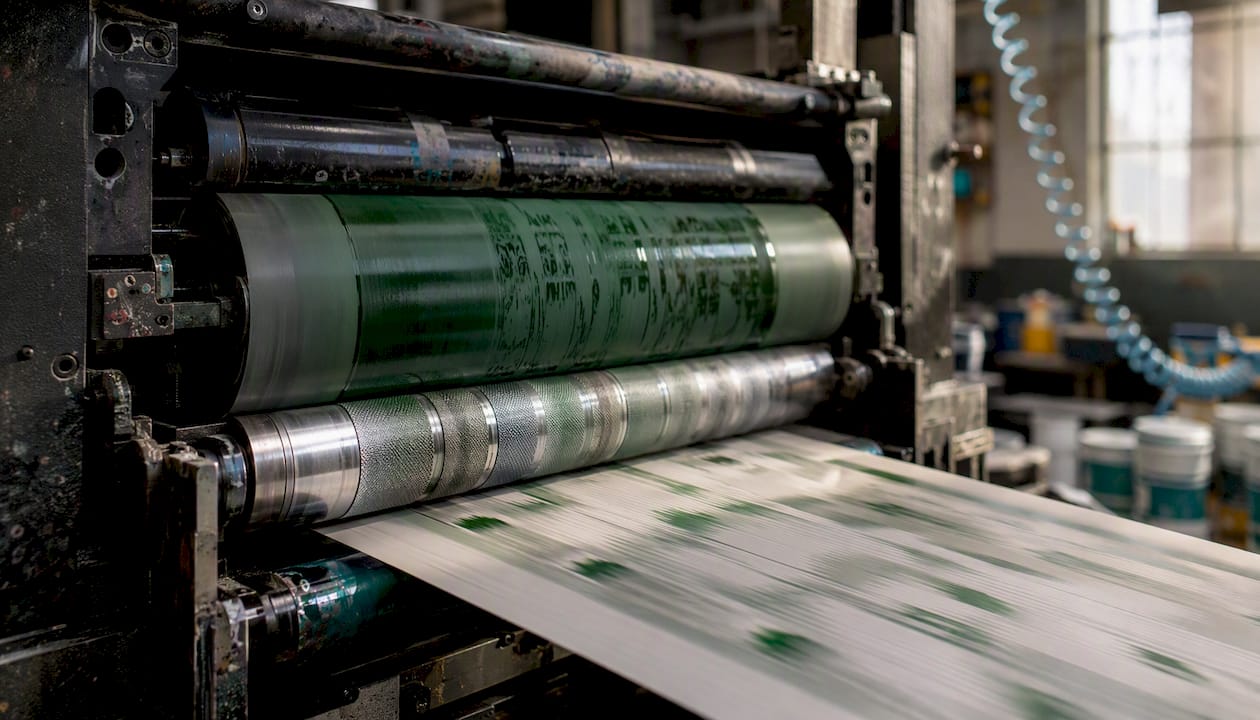
For high-volume paper shopping bags, corrugated, flexible film, and label runs, flexo is the right call. For premium folding cartons where photographic gradients and fine typography are the primary selling asset, offset earns its higher setup cost. The decision comes down to five variables: substrate, run length, image fidelity requirements, lead time, and whether you need inline finishing.
At a glance:
- Substrate: Flexo handles kraft, corrugated, film, and foil; offset favors coated SBS board and flat sheets.
- Run length: Flexo’s economics improve sharply at higher volumes; offset can be competitive at shorter, higher-fidelity runs.
- Image fidelity: Offset still leads on photographic detail and smooth gradients; modern HD flexo has closed much of that gap for most packaging applications.
- Lead time: Flexo’s inline converting consolidates production steps; offset typically requires separate offline finishing.
- Environmental profile: Water-based and UV flexo inks carry a lower VOC burden than conventional oil-based offset litho inks.
| Dimension | Flexo | Offset |
|---|---|---|
| Best for | Corrugated, kraft paper bags, films, labels | Coated SBS folding cartons, premium retail |
| Print quality | Good to excellent (HD flexo); moderate screen ruling typical | Excellent; higher screen ruling; superior gradients |
| Setup cost | Lower plate cost; faster makeready | Higher plate and makeready cost |
| Breakeven run length | Economical from mid-to-high volumes | Can be competitive at shorter, high-fidelity runs |
| Finishing integration | Inline die-cutting, gluing, varnish | Typically offline finishing required |
| Ink and curing | Water-based, solvent, UV-curable | Oil-based litho, UV-curable options |
Key Takeaways
For most paper shopping bag programs, flexo is the correct process: it handles kraft and recycled paper substrates, supports inline converting, and delivers favorable economics at the run lengths retail brands actually order.
| Point | Details |
|---|---|
| Substrate drives the decision | Kraft and recycled paper webs require flexo; offset is not practical for bag production. |
| Run length and setup cost | Flexo economics improve with volume; at 10,000+ units, per-unit cost is typically favorable. |
| Inline finishing reduces risk | Flexo’s inline die-cutting, varnish, and handle attachment compress lead time and reduce handoff risk. |
| Image fidelity threshold | HD flexo handles bold graphics and spot colors well; photographic gradients may still favor offset on coated board. |
| Gatherpackaging | Offers 8-color flexo, FSC-certified materials, and domestic inline production for custom paper shopping bags. |
Table of Contents
- How do flexo and offset actually transfer ink?
- Plates, prepress, and how setup differences affect your cost and turnaround
- What ink systems and curing methods mean for your packaging
- Which substrates does each method handle best?
- How do print quality and resolution compare between the two methods?
- What does the cost structure actually look like?
- How do production speed and lead time differ?
- How finishing choices interact with your printing method
- Environmental and regulatory considerations in North America
- Decision matrix: which method fits your program?
- Questions to ask your printer before committing to a print run
- Why lead time and inline production reliability often matter more than unit price
- What a domestic flexo manufacturer actually sees on these trade-offs
- Gatherpackaging’s paper shopping bag capabilities
- Sources
How do flexo and offset actually transfer ink?
The mechanical difference between these two processes explains almost every practical trade-off that follows.
Flexographic printing is a direct relief process. Ink flows from a chambered doctor blade system onto an engraved anilox roller, which meters a precise, consistent volume of ink into its microscopic cells. The anilox then transfers that ink to a raised photopolymer plate, and the plate prints directly onto the substrate. No intermediate carrier. The substrate runs continuously on a web, which is why flexo presses can run at high speeds and integrate converting operations inline.
Offset is planographic and indirect. The image area on an aluminum plate is treated to accept oil-based ink while the non-image area accepts water from a dampening system. Ink transfers from the plate to a rubber blanket, and the blanket prints onto the substrate. That extra transfer step is what gives offset its characteristic smoothness: the blanket conforms to minor surface irregularities and lays down an exceptionally thin, even ink film.
Key mechanical differences:
- Flexo ink path: Ink reservoir → chambered doctor blade → anilox roller (metered cells) → photopolymer relief plate → substrate
- Offset ink path: Ink train → aluminum plate (with dampening) → rubber blanket → substrate
- Dot gain: Flexo plates compress on impression, which can spread dots; offset’s thin film and blanket transfer produce tighter dot reproduction, especially at fine screen rulings.
- Substrate tolerance: Because flexo plates are flexible and the impression is gentle, the process handles uneven, rough, or non-rigid substrates that would jam or misregister on a sheet-fed offset press.
Pro Tip: When reviewing prepress files with your printer, ask specifically which anilox cell count they plan to use and what screen ruling the job will run at. A mismatch between anilox volume and ink viscosity is one of the most common causes of solid coverage problems on paper bags.
For a deeper look at how these mechanics translate to bag production, Gatherpackaging’s bag printing process guide walks through the production steps in detail.
Plates, prepress, and how setup differences affect your cost and turnaround
Plate type is where the cost and schedule diverge most visibly before a single sheet runs.
Flexo uses flexible photopolymer plates, typically 0.045–0.112 inches thick depending on the substrate and press configuration. These plates are made from a digital file using UV exposure and washout, a process that takes hours rather than days. Plate sets for a standard paper shopping bag job, say four to eight colors, can be produced and mounted within a day or two at a well-equipped shop. Plate cost per color is real but modest, and the plates are durable enough for long runs without quality degradation.
Offset uses rigid aluminum plates, processed quickly but requiring precise registration on a sheet-fed press. The plates themselves are inexpensive per unit, but offset makeready, which includes ink/water balance setup, color proofing, and waste sheets, takes longer and generates more substrate waste before the press reaches saleable output. For short runs, that makeready waste can represent a meaningful share of total material cost.
Practical comparison:
- Flexo plate lead time: Typically 1–3 business days for a standard photopolymer set.
- Offset plate lead time: Usually 1–2 days, but makeready on press adds time and waste.
- Artwork change frequency: Flexo plates are economical to replace for seasonal or versioned artwork when run lengths are high enough to absorb the plate cost. Offset plates are cheap individually but makeready cost still applies each time.
- Registration sensitivity: Offset registration on coated board is tight and predictable. Flexo registration on extensible substrates like kraft paper requires careful tension control; misregistration on a paper bag handle area is a common QA flag.
Pro Tip: Always request a plate proof or a digital contract proof before approving a flexo job for paper bags. Ask your printer for the plate thickness specification and confirm that minimum type sizes in your artwork are no smaller than 6pt positive / 8pt reverse to avoid fill-in on the bag surface.
Understanding print registration for packaging operators is worth reviewing before you finalize artwork, particularly if your bag design includes tight multi-color trapping.
What ink systems and curing methods mean for your packaging
Ink chemistry affects drying speed, scuff resistance, regulatory compliance, and how your brand colors hold up in transit and on shelf.
Flexo presses run three main ink types. Water-based inks are the standard for paper substrates including kraft shopping bags: they dry by absorption and evaporation, carry low VOC levels, and are compatible with FSC-certified and recycled paper stocks. Solvent-based inks dry faster and adhere to non-porous films and foils, but they carry higher VOC loads and require solvent recovery systems. UV-curable flexo inks cure instantly under ultraviolet light, producing a hard, scuff-resistant surface with near-zero VOC emissions during curing, though the ink itself contains photoinitiators that require careful handling and SDS review.
Offset presses traditionally use oil-based litho inks, which dry by oxidation and absorption. These inks produce an exceptionally thin, smooth film that renders fine detail and subtle gradients with high fidelity. UV-curable offset inks are available and increasingly common for folding cartons where scuff resistance and instant curing matter.
Ink system comparison:
- Water-based flexo: Low VOC, food-contact-friendly options available, good for kraft and coated paper bags, slower drying on non-absorbent substrates.
- Solvent flexo: Fast drying, strong adhesion to films and foils, higher regulatory burden.
- UV flexo: Instant cure, excellent scuff resistance, low VOC during curing, higher ink cost.
- Oil-based offset litho: Superior thin-film detail, slower drying, higher VOC, not suitable for direct food contact without barrier coating.
- UV offset: Fast cure, good scuff resistance, used for premium folding cartons.
The anilox roller in flexo metering is both a strength and a constraint. Cell geometry controls ink volume precisely, which is excellent for solid coverage and spot colors. For subtle gradients and photographic midtones, though, the anilox can limit tonal smoothness compared to offset’s ink train, which lays down a thinner, more graduated film. Packaging color accuracy is directly tied to this difference, and it is worth discussing with your printer before committing to a process for brand-critical artwork.
Water-based and UV flexo inks generally carry a lower VOC burden than conventional oil-based offset litho inks, making them a practical fit for brands with sustainability commitments and for retail packaging that may be subject to state or provincial VOC reporting requirements.
Which substrates does each method handle best?
Substrate is often the deciding factor before run length or quality even enters the conversation.
| Substrate | Flexo suitability | Offset suitability | Notes |
|---|---|---|---|
| Kraft / virgin paper (bags) | Excellent | Limited | Flexo handles tension variation; offset struggles with extensible webs |
| Corrugated board | Excellent | Not suitable | Flexo is the industry standard for corrugated |
| SBS coated folding carton | Good (HD flexo) | Excellent | Offset preferred for photo-quality graphics |
| Uncoated recycled board | Good | Fair | Surface roughness limits offset quality |
| Plastic film (flexible pouches) | Excellent | Not suitable | Flexo with solvent or UV inks is standard |
| Adhesive labels | Excellent | Good (sheet-fed) | Flexo dominates label production |
| Metallized / foil substrates | Good (with testing) | Good (with testing) | Both require adhesion testing; UV inks preferred |
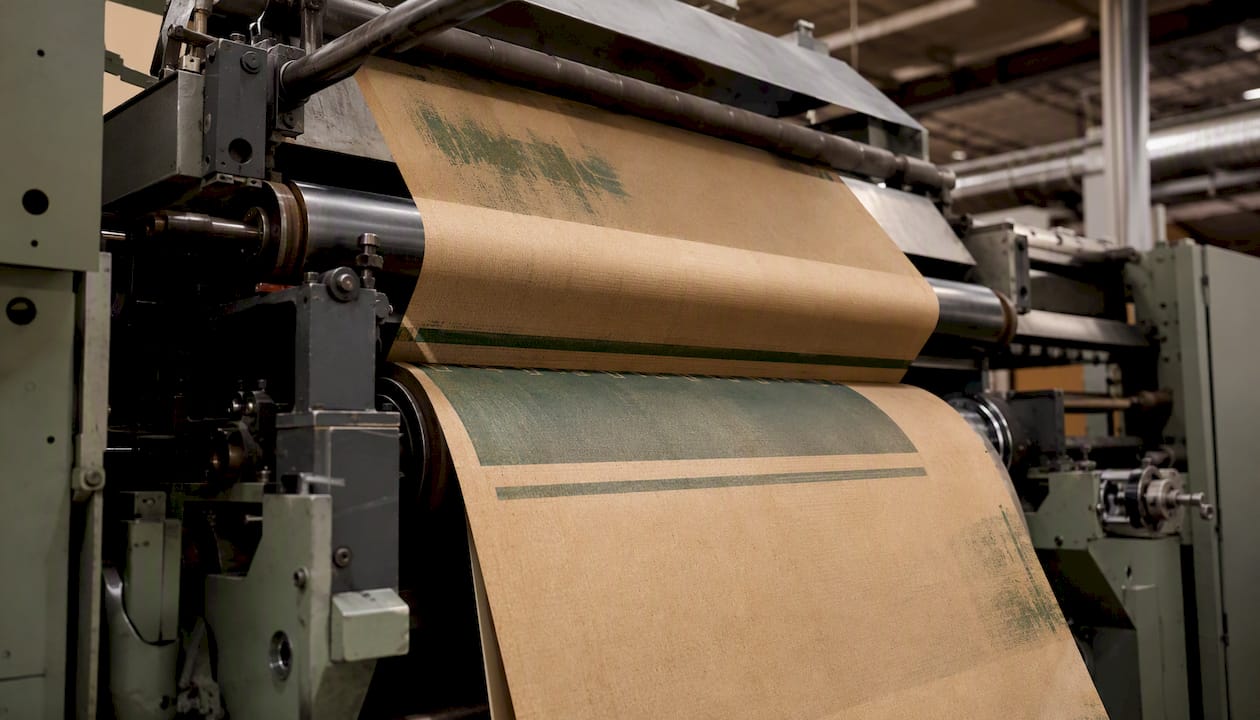
Flexographic printing handles this substrate range because the photopolymer plate is compliant and the impression pressure is low. Offset’s rigid plate and blanket system performs best on flat, dimensionally stable, coated sheets.
Rules of thumb for paper shopping bags and retail cartons:
- Kraft paper bags: flexo, always. The substrate’s surface texture and web tension variation make offset impractical.
- Coated SBS folding cartons with photographic imagery: offset is the conventional choice, though HD flexo is closing the gap for many designs.
- Recycled or uncoated board: flexo handles the surface variation better.
- Flexible pouches and film wraps: flexo with solvent or UV inks.
Special cases to flag with your printer: Heavily textured kraft, metallized substrates, and board over 24pt thickness all warrant a test run before committing to a full production order. Adhesion and ink holdout can vary significantly, and a short pilot run costs far less than a rejected production batch.
How do print quality and resolution compare between the two methods?
The quality gap between flexo and offset is real but narrower than it was a decade ago.
Offset typically runs at 175–200+ lines per inch (LPI), producing fine halftone dots with tight registration and smooth tonal gradients. Photographic images, fine reverses out of dark backgrounds, and small serif typography all reproduce more reliably on offset. ISO print standards define the measurement frameworks buyers can reference when specifying resolution and fidelity requirements in an RFQ.
Flexo has historically run at 133–150 LPI for standard work, with dot gain from plate compression softening fine detail. Modern HD flexo plate technology and flat-top dot screening have pushed practical screen rulings to 175 LPI and beyond for many applications, and HD flexo plate improvements now allow flexo to approach offset image quality for a wide range of packaging needs. For most paper shopping bag designs, which typically feature bold brand graphics, spot colors, and large type rather than photographic imagery, modern flexo delivers fully acceptable quality.
Where offset still wins clearly: subtle photographic gradients, fine vignettes fading to white, small reversed type below 6pt, and highly detailed brand marks with hairline elements. If your bag design includes any of those, ask your printer for a flexo press proof before approving production.
Pro Tip: Request a digital contract proof matched to your printer’s press profile, then compare it against a short press proof run before full production. For paper bags specifically, check that spot Pantone colors are matched to your brand standard under both store lighting and natural daylight, since metamerism can shift apparent color between environments.
Color management in packaging is a discipline in itself. Gatherpackaging’s color management guide covers ICC profiles, proof types, and press check procedures worth reviewing before your next print run.
What does the cost structure actually look like?
The economics of flexo vs offset printing come down to how fixed setup costs are spread across a run.
Flexo carries meaningful fixed costs: photopolymer plate sets, anilox selection, and makeready waste. Once those are absorbed, the per-unit cost drops steadily as volume rises, because flexo presses run fast on continuous webs with minimal stops. Offset carries higher makeready costs in time and substrate waste, but its per-unit variable cost can be competitive at shorter runs where the press speed difference matters less.
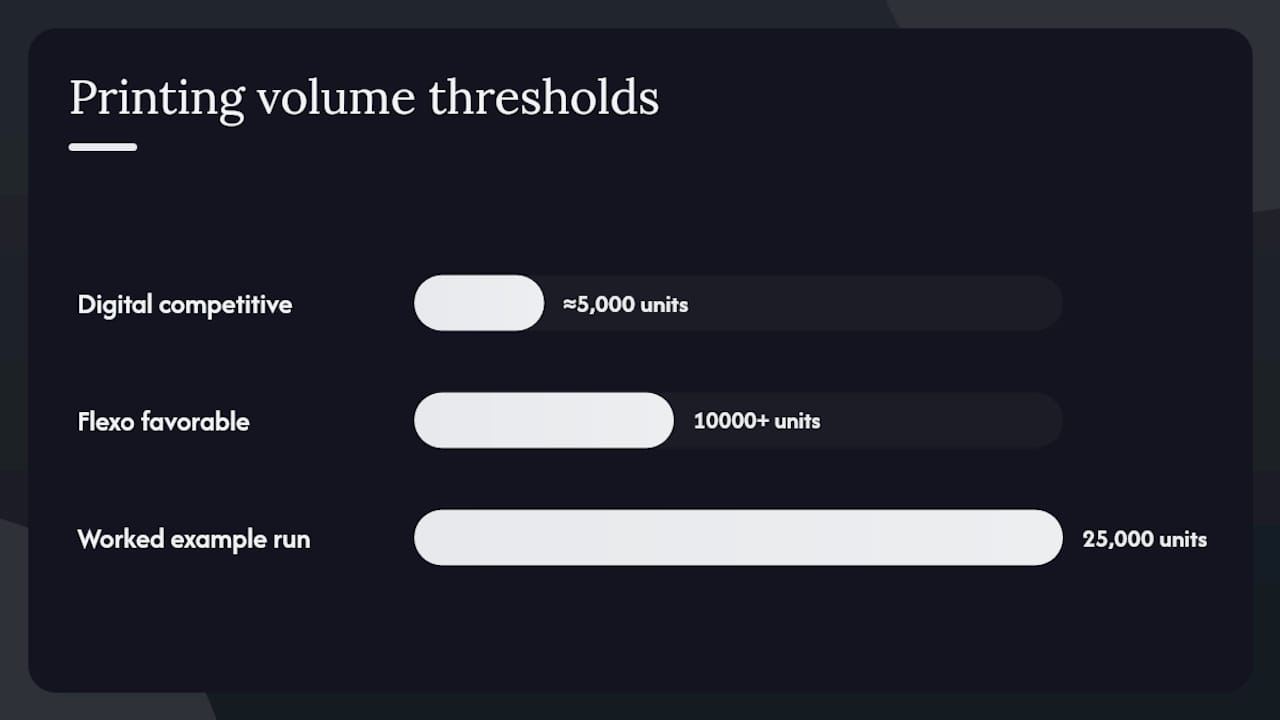
The breakeven logic works like this: if flexo setup costs $X more than offset setup, but flexo’s per-unit cost is lower, the breakeven point is where the cumulative per-unit savings equal the setup cost premium. For most paper shopping bag programs, that breakeven falls well within the volume ranges that retail brands and foodservice operators actually order.
Worked example for a branded kraft paper shopping bag:
- Run: 25,000 units, 2 spot colors, inline gloss varnish
- Flexo setup: Plate set for 2 colors + makeready; absorbed across 25,000 units, the per-unit plate cost is modest.
- Offset alternative: Higher makeready waste on kraft (offset is not well-suited to this substrate anyway), plus offline varnish as a separate pass.
- Result: Flexo wins on both economics and substrate fit at this volume and specification.
Practical guidance:
- Below roughly 5,000 units, digital printing often competes on total cost because there are no plate costs at all.
- From mid-volume upward (10,000+ units for most bag programs), flexo’s per-unit economics are typically favorable.
- Offset makes sense when the substrate is coated SBS board and the design demands photographic fidelity that flexo cannot match even with HD plates.
Industry analysis confirms that flexo typically outperforms offset in speed, substrate versatility, and inline finishing, while offset excels at higher screen rulings and photographic fidelity. The trade-off is setup cost and makeready waste.
How do production speed and lead time differ?
Speed on press is only part of the lead-time equation. Finishing is where the real difference shows up.
Flexo presses run as continuous webs, which means die-cutting, gluing, handle attachment, and varnish application can all happen inline in a single pass. For a paper shopping bag, that means the press converts the bag from printed web to finished unit without the job leaving the press line. Total production time from plate approval to finished goods is compressed significantly.
Offset is sheet-fed for most packaging applications. Printed sheets come off the press and then move to separate offline operations: UV coating, lamination, die-cutting, folding, and gluing each require their own setup and scheduling. Each handoff adds time and creates an opportunity for scheduling delays, quality variation between operations, and additional handling damage.
Typical turnaround windows (from plate approval):
- Flexo, standard run (25,000–100,000 units): 10–15 business days to finished goods, including inline converting.
- Offset, standard run with offline finishing: 15–25 business days depending on finishing complexity and scheduling.
- Short run (under 10,000 units), either process: Add 3–5 days for makeready proportionally.
- Press proofs: Allow 3–5 business days for a flexo press proof; digital contract proofs are faster.
For seasonal retail launches, where a missed ship date means unsold inventory or a bare shelf, the consolidated timeline of inline flexo production is a genuine operational advantage. A job that runs, converts, and ships from a single press line has fewer handoffs, fewer scheduling dependencies, and a more predictable delivery window than one that moves through multiple offline finishing steps.
Gatherpackaging’s analysis of packaging supply chain reliability covers how lead-time predictability affects retail operations planning in more detail.
How finishing choices interact with your printing method
Finishing is not an afterthought. It affects substrate performance, transit durability, and total program cost, and the choice of printing method determines which finishes are practical.
Finishes commonly applied to paper shopping bags and retail cartons:
- Gloss or matte aqueous varnish: Applied inline on flexo presses as a final station; adds scuff resistance and surface sheen without a separate offline pass. On offset, varnish is typically a separate coating unit or offline operation.
- UV spot varnish: Usually offline for both processes, though some flexo lines include UV stations inline.
- Lamination (gloss or matte film): Almost always offline for both processes; adds significant durability and a premium hand feel to folding cartons.
- Foil stamping: Offline for both; requires a stable, dimensionally consistent substrate. Works better on offset-printed coated board than on extensible kraft.
- Die-cutting and creasing: Inline on flexo web presses for bags; offline on offset sheet-fed lines.
- Handle attachment and gluing: Inline on flexo bag lines; a separate operation for offset-printed bag blanks.
Varnish laydown quality depends on ink surface energy. Water-based flexo inks generally accept aqueous varnish well. Oil-based offset inks require adequate oxidation drying before varnish adhesion is reliable, which is one reason UV offset has become common for folding cartons where fast turnaround and scuff resistance are both required.
When specifying finishes in your order, list every operation in sequence: print process, varnish type and application method, lamination if required, die-cut spec, and handle type for bags. Ambiguity in the spec is the most common source of rework at conversion. Gatherpackaging’s guide to creative packaging finishes covers how finish choices affect brand presentation and durability.
Environmental and regulatory considerations in North America
Ink chemistry and material sourcing both carry compliance implications that procurement teams need to address before placing an order.
Environmental and regulatory checklist:
- VOC emissions: Solvent-based flexo inks are subject to VOC reporting under EPA regulations and equivalent provincial rules in Canada. Water-based and UV flexo inks significantly reduce this burden. Conventional oil-based offset litho inks also carry VOC considerations. Verify ink type and request the Safety Data Sheet (SDS) for every ink used in your job.
- Food-contact compliance: For takeout delivery bags or any packaging with direct food contact, confirm that inks and coatings comply with FDA guidance (21 CFR) in the US or CFIA requirements in Canada. Water-based flexo inks with food-contact-approved formulations are available; not all inks qualify.
- FSC chain-of-custody: FSC certification provides documented proof that paper and board come from responsibly managed sources. Retail buyers increasingly require FSC chain-of-custody documentation as a condition of supply. Ask your printer and substrate supplier for their FSC certificate number and confirm it covers the specific grade you are ordering.
- Recycled content: Recycled paper stocks are compatible with flexo printing. Confirm the recycled content percentage and whether it is pre- or post-consumer, since some retail sustainability programs distinguish between the two.
Procurement teams should list required certifications, including FSC chain-of-custody and any ink compliance declarations, directly in the RFQ. Leaving certification requirements to verbal confirmation after order placement creates substitution risk and potential delays when a supplier cannot produce the required documentation.
Gatherpackaging’s sustainability page details the FSC-certified materials, recycled content options, and water-based ink systems available for paper shopping bag orders.
Decision matrix: which method fits your program?
| Requirement | Flexo | Offset | Notes |
|---|---|---|---|
| Substrate: kraft / recycled paper bag | Recommended | Not suitable | Offset cannot handle extensible web substrates |
| Substrate: coated SBS folding carton | Good (HD flexo) | Recommended | Offset preferred for photographic imagery |
| Image fidelity: bold graphics, spot colors | Excellent | Excellent | Both handle this well |
| Image fidelity: photographic gradients | Good (HD flexo) | Superior | Offset still leads for fine photographic detail |
| Run length: 10,000–100,000+ units | Recommended | Competitive | Flexo unit cost advantage grows with volume |
| Finishing: inline die-cut, glue, varnish | Recommended | Not available | Flexo inline converting reduces lead time |
| Lead-time sensitivity: seasonal launch | Recommended | Slower | Inline flexo consolidates production steps |
Worked example: 25,000-unit branded kraft paper shopping bag
- Substrate check: Kraft paper web. Offset is not suitable. Flexo is the only practical choice.
- Design check: 2 spot colors, brand wordmark, no photographic imagery. Flexo at standard or HD screen ruling handles this without quality compromise.
- Finishing check: Inline gloss varnish required. Flexo press with varnish station delivers this in a single pass.
- Economics check: At 25,000 units, plate cost is absorbed; per-unit cost is favorable.
- Lead time check: Inline converting targets 10–15 business days to finished goods.
- Recommendation: Flexo, with water-based inks and inline aqueous varnish.
A hybrid approach, where offset-printed coated sheets are laminated to a kraft substrate before converting, can make sense for premium retail bags that require photographic imagery on a kraft-look surface. This adds cost and lead time but delivers offset image quality on a paper bag format. Discuss this option with your printer when the design brief cannot be met by HD flexo alone.
Questions to ask your printer before committing to a print run
The right questions separate capable suppliers from ones who will cost you time and money at the worst moment.
Numbered checklist:
- What plate type and thickness do you use for this substrate, and what is your typical plate lead time?
- What anilox cell count and volume will you run for this job, and how does that affect solid coverage and fine detail?
- What screen ruling do you run for this substrate, and can you provide a press proof at that ruling before full production?
- What is your typical makeready waste, and is it included in the quoted quantity?
- Do you have inline die-cutting, gluing, and varnish capability for this job, or will finishing be offline?
- What ink chemistry will you use, and can you provide the SDS and any food-contact compliance documentation if required?
- What is your FSC certificate number, and does it cover this substrate grade?
- What is your lead time from plate approval to finished goods, and what contingency do you have if a press goes down?
- Can I see a press proof or a short pilot run before committing to the full quantity?
- What QA checks do you perform on paper bags specifically: handle pull strength, print registration tolerance, and color delta-E against the approved proof?
Red flags to watch for:
- No press proof available, only a digital proof: for paper bags, a digital proof does not replicate ink holdout on the actual substrate.
- Vague answer on ink chemistry or inability to produce an SDS: a compliance problem waiting to happen.
- No inline finishing capability for a bag job: means offline converting, longer lead time, and more handling risk.
- Unclear answer on FSC certification scope: the certificate must cover the specific substrate grade, not just the facility in general.
- Unwillingness to run a pilot quantity: a supplier confident in their process will offer a short run to validate quality before full commitment.
Gatherpackaging’s packaging quality assurance checklist covers the QA steps and tests relevant to paper shopping bags in detail.
Why lead time and inline production reliability often matter more than unit price
The most underestimated factor in the flexo vs offset decision for retail packaging is not cost per unit. It is the total program timeline and what happens when a step slips.
Industry analysis consistently shows that flexo’s inline converting and faster makeready reduce total program lead time and supply-chain risk for seasonal retail cycles. When a paper shopping bag job runs, converts, and ships from a single press line, there are no inter-facility transfers, no scheduling conflicts between the print shop and the converting house, and no quality variation introduced by handling between operations.
Consider the contrast: an offset-printed bag blank requires printing, then offline varnish or lamination, then die-cutting, then handle attachment, each at potentially different facilities or at minimum different scheduling queues. A delay at any step cascades. For a holiday retail launch with a fixed floor-set date, that cascade risk is not theoretical.
Practical implications for buyers:
- Build a minimum 5-business-day buffer into your RFQ lead-time requirement beyond the printer’s stated standard.
- Ask specifically whether all converting operations for your job happen at the same facility or involve subcontractors.
- Request a written lead-time commitment with a defined escalation process if the schedule slips.
Pro Tip: When issuing an RFQ for seasonal paper shopping bags, include a line asking the supplier to identify every subcontracted operation and its location. A supplier who converts inline at a single domestic facility carries materially less schedule risk than one who ships blanks to a separate converting house.
For retail operations teams, Gatherpackaging’s overview of packaging supply chain efficiency explains how domestic manufacturing and consolidated production reduce the variables that cause missed ship dates.
What a domestic flexo manufacturer actually sees on these trade-offs
The technical comparison above is accurate, but it describes the decision from the outside. From inside a domestic paper bag manufacturing operation, the trade-offs look slightly different.
For paper shopping bags specifically, the substrate settles the question in the vast majority of cases. Kraft paper, whether virgin or recycled, is a web substrate. It stretches under tension, absorbs ink differently across the sheet, and requires the kind of impression control that flexo presses are built for. Offset on kraft is not a realistic option for bag production at any meaningful volume.
Where the real decision lives is in the design brief. A bag with bold brand graphics, 2–4 spot colors, and a clean wordmark will look excellent off a well-tuned flexo press running HD plates. A bag that requires photographic imagery, fine vignettes, or complex gradients needs an honest conversation with the printer about whether HD flexo can deliver the required fidelity, or whether a pre-laminated coated sheet approach is worth the added cost and lead time.
Gatherpackaging runs 8-color flexo with water-based inks and FSC-certified materials, which covers the vast majority of retail bag programs without compromise. For procurement teams who want to see the output before committing, a sample proof and a breakeven estimate are the right starting point.
Gatherpackaging’s paper shopping bag capabilities
Gatherpackaging manufactures custom paper shopping bags domestically in Toronto, Canada, with 8-color flexo printing, water-based inks, and FSC-certified and recycled material options. Every order includes design assistance, prepress review, QA testing specific to paper bags (handle pull, print registration, color delta-E), and logistics coordination.
For retail brands and procurement teams who need dependable supply with short lead times and documented sustainability credentials, Gatherpackaging’s inline production model consolidates printing, converting, and finishing in a single facility. Browse the kraft paper bag range or contact Gatherpackaging directly to request a sample proof and a tailored breakeven estimate for your next paper shopping bag program.
Sources
Procurement teams can use these references to validate supplier claims and specify quality requirements in RFQs.
When issuing an RFQ, list required certifications explicitly: FSC certificate number, ink compliance declarations, and any ISO quality targets. Leaving these to verbal confirmation after order placement creates substitution risk.
Share:
Best aapapercorp.com Alternatives for North American Buyers
The Best customboxestoronto.com Alternatives for Paper Bags