
TL;DR:
- Packaging often receives insufficient strategic attention, yet its specifications significantly impact costs, traceability, and sustainability. Properly sizing, certifying, and auditing packaging materials enhance operational efficiency, reduce risks, and support ESG compliance. Prioritizing packaging as a supply chain lever enables better cost control, transparency, and brand consistency.
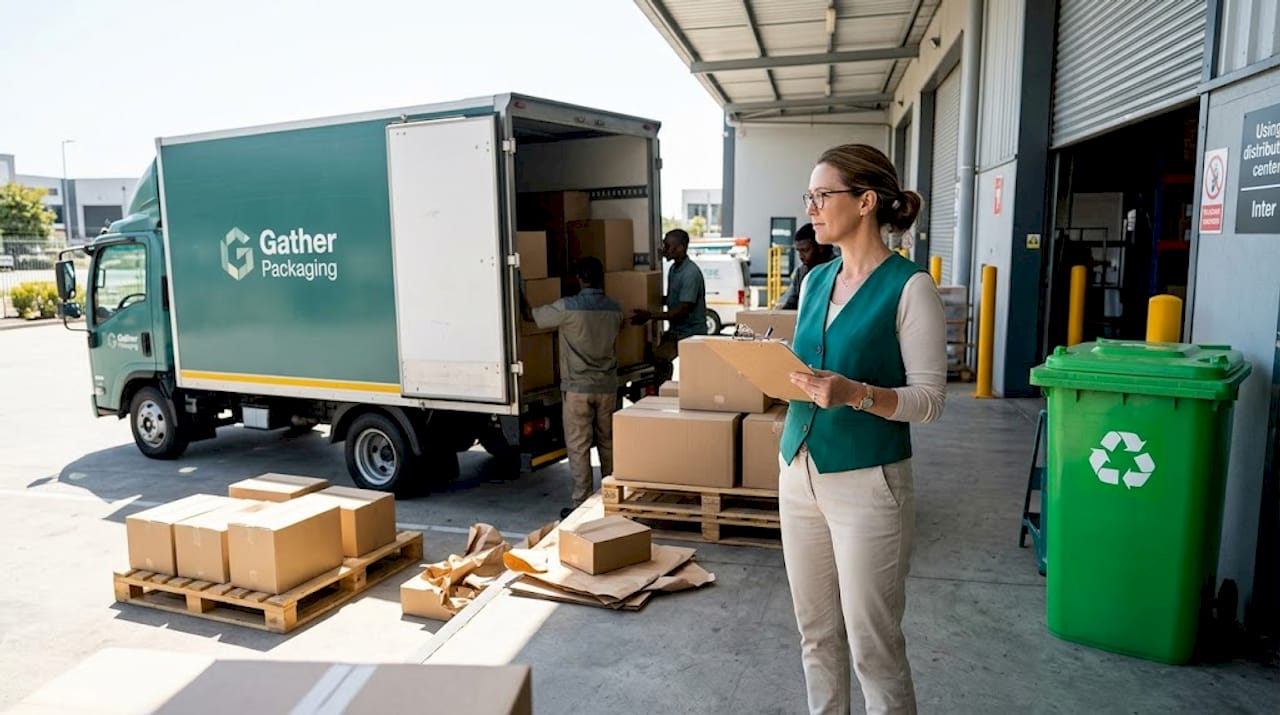
Packaging rarely gets the strategic attention it deserves. Most supply chain teams treat it as a line item, something to specify once and revisit when costs spike or complaints roll in. But why packaging supply chain matters becomes clear the moment a poorly sized bag creates dimensional weight overcharges, or a supplier with no traceability puts your brand at risk during a regulatory audit. For retail and foodservice operations running on tight margins and tighter timelines, packaging decisions made upstream ripple through every stage of fulfillment, sustainability reporting, and consumer trust. This article breaks down exactly where packaging drives or disrupts your supply chain.
Table of Contents
- Key Takeaways
- Why packaging supply chain matters for operational efficiency
- Supply chain transparency and packaging traceability
- Sustainability priorities and where paper bags fit
- Operational reliability: quality assurance and lead times
- Packaging lifecycle analysis and cost optimization
- My take on why packaging gets underestimated
- How Gatherpackaging supports your packaging supply chain
- FAQ
Key Takeaways
| Point | Details |
|---|---|
| Packaging drives cost more than most realize | Dimensional weight pricing and oversized packaging create hidden costs that compound across every shipment. |
| Traceability starts with packaging design | Building data capture into your packaging spec early avoids costly retrofits and supports regulatory compliance. |
| Paper bags are a practical sustainability choice | FSC-certified and recycled paper shopping bags meet real sustainability targets without sacrificing function. |
| Domestic sourcing shortens lead times | Canadian manufacturing reduces exposure to international shipping delays and quality inconsistencies. |
| Lifecycle analysis reveals true cost | Auditing packaging from production through disposal exposes inefficiencies invisible in per-unit pricing. |
Why packaging supply chain matters for operational efficiency
Packaging is a physical constraint. Its dimensions, weight, and structural integrity determine how much you pay to ship, how fast your warehouse can turn product, and how often you absorb damage claims.
How dimensional weight quietly inflates shipping costs
Carriers do not charge by actual weight alone. They use dimensional weight pricing, calculating cost based on box or bag volume against a divisor. A 16x12x8 inch box has a dimensional weight of 11.1 lbs even if the product inside weighs 3 lbs. That is a 3.7x overcharge. For a retail operation shipping thousands of units monthly, that gap compounds into a significant budget leak most teams never trace back to packaging specifications.
For paper shopping bags specifically, this plays out differently but just as consequentially. A bag that is too large for its typical load creates handling inefficiency in store, inconsistent branding at the register, and poor stacking in storage. Right-sizing your bag spec to actual product dimensions is not a minor detail. It is a cost and operations decision.
Most operations teams use 30-40% more cardboard than necessary because legacy packaging standards never get audited against current product assortments. The same logic applies to paper bag inventories. What you specified three years ago may not reflect your current product mix.
Pro Tip: A custom insert or structural redesign that allows a smaller bag or box size often pays for itself quickly. A $0.80 insert enabling a smaller box can save $1.50 to $3.00 per shipment in carrier fees. Run the math on your top-volume SKUs before your next packaging renewal.
Packaging also affects warehouse flow. Bags that are hard to open, inconsistently sized, or prone to tearing under load slow down every pick-and-pack station they touch. The role of packaging in supply chain efficiency is not abstract. It shows up in labor hours and error rates every shift.
- Product protection reduces damage returns and downstream waste
- Right-sized packaging cuts dimensional weight fees and storage footprint
- Consistent bag specs speed up handling at registers and fulfillment centers
- Structural integrity in foodservice takeout bags prevents spills and customer complaints
Supply chain transparency and packaging traceability
Transparency and traceability are related but not the same. Traceability is the ability to track a product or material through its journey. Transparency is sharing that data with stakeholders, whether that is regulators, retail partners, or end consumers. Packaging is the physical carrier that enables both.
For retail and foodservice brands, why supply chain transparency in packaging matters is increasingly driven by regulation and buyer expectations. The EU Packaging and Packaging Waste Regulation mandates 40% reusable B2B transport packaging by 2030. North American markets are catching up through extended producer responsibility programs and voluntary ESG commitments that require documented, auditable packaging data.
“Supply chain transparency powered by packaging enables stronger supplier collaboration and consumer trust.” — Packaging World Insights
Digital tools are turning packaging into an active data layer. QR codes printed on shopping bags can link to sourcing certifications, material composition, and recycling instructions. Blockchain integrations let brands log chain-of-custody data at each handoff. These tools enhance recall efficiency and reduce the mass product waste that happens when brands cannot isolate affected lots quickly.
The packaging supply chain benefits of building traceability in from the start are significant:
- Faster recall identification and containment
- Documented supplier compliance for ESG reporting
- Consumer-facing proof of sustainable sourcing
- Stronger audit readiness for retail partner requirements
The challenge most organizations face is tier-mapping beyond their immediate suppliers. You know who prints your bags. Do you know where their paper stock originates, or whether that mill holds FSC certification? Incorporating traceability data capture into packaging design early avoids the expensive process of retrofitting specs later when a customer or regulator asks for it. Companies with mature traceability programs report 15-30% fewer disruptions and meaningfully better supplier quality outcomes.
Sustainability priorities and where paper bags fit
The packaging paradox is real. More packaging protects products and reduces food waste, which accounts for about 10% of global greenhouse gas emissions. Less packaging reduces material waste. The practical answer is not less packaging but better packaging, materials and formats chosen for real-world outcomes rather than sustainability optics.

Packaging generates 36% of municipal solid waste in the EU, and consumption increased 20% between 2009 and 2020. That data context matters for North American supply chain teams even if PPWR is a European regulation. The direction of regulatory travel is consistent: governments want brands to document what their packaging is made of, how it is disposed of, and whether suppliers meet certifiable standards.
Why packaging lifecycle matters in this context is straightforward. Paper shopping bags made from recycled or FSC-certified materials offer a traceable, auditable material story. They are curbside recyclable in most North American municipalities, biodegradable, and available from suppliers who can provide certification documentation your ESG team can actually use.
Here is how to evaluate sustainability claims when sourcing paper bags:
- Request FSC certification numbers and verify them directly on the FSC database.
- Ask for material composition percentages: post-consumer recycled content, virgin fiber, and wet-strength additives.
- Confirm ink type. Water-based inks are compostable-compatible; solvent inks are not.
- Review the supplier’s own manufacturing footprint, including energy sourcing and waste management.
- Ask whether the bags qualify under current extended producer responsibility programs in your operating markets.
The challenge with reusable packaging in foodservice and retail deserves a direct acknowledgment. Reusable packaging must complete 100+ trips to offset its environmental impact, and most programs see failure before 50 uses. For many retail and foodservice contexts, a well-designed recyclable paper bag manufactured with recycled content delivers a more defensible lifecycle outcome than a reusable program that cannot maintain return rates.
Pro Tip: Build a sustainable packaging workflow that connects procurement, quality, and your sustainability team before selecting packaging formats. Siloed decisions produce formats that work for marketing but create operational headaches or lack documentation for compliance.
Operational reliability: quality assurance and lead times
Packaging efficiency is crucial not just in what you specify but in how consistently you receive it. For retail and foodservice operations, a bag spec that prints inconsistently, tears under normal load, or varies in handle strength between production runs creates real operational problems at the point of sale and in back-of-house handling.
Packaging quality assurance for paper shopping bags specifically should include verification of:
- Print registration and color accuracy across production runs
- Handle attachment strength and pull-test performance
- Basis weight and caliper consistency against spec
- Seam integrity and bottom gusset strength for loaded bags
- Material certification documentation matching the order
Failures in any of these areas increase rejects, operational delays, and brand inconsistency at the point of consumer contact.
Domestic manufacturing in Canada addresses the lead time side of this equation directly. When your paper bag supplier operates domestically, you gain shorter order-to-delivery windows, the ability to inspect production in person, and faster resolution when a quality issue surfaces. You also avoid the currency exposure and shipping unpredictability that come with extended offshore supply chains.
Pro Tip: Treat packaging lead time the same way you treat your inventory of core product. Build a minimum stock level and reorder trigger into your procurement system. A two-week shortage of shopping bags during a peak retail period is not a packaging problem. It is a revenue problem.
Packaging lifecycle analysis and cost optimization
What is packaging lifecycle analysis? It is the practice of evaluating packaging cost and environmental impact from raw material sourcing through production, transportation, retail use, and end-of-life disposal. It is the tool that makes why packaging lifecycle matters concrete rather than theoretical.
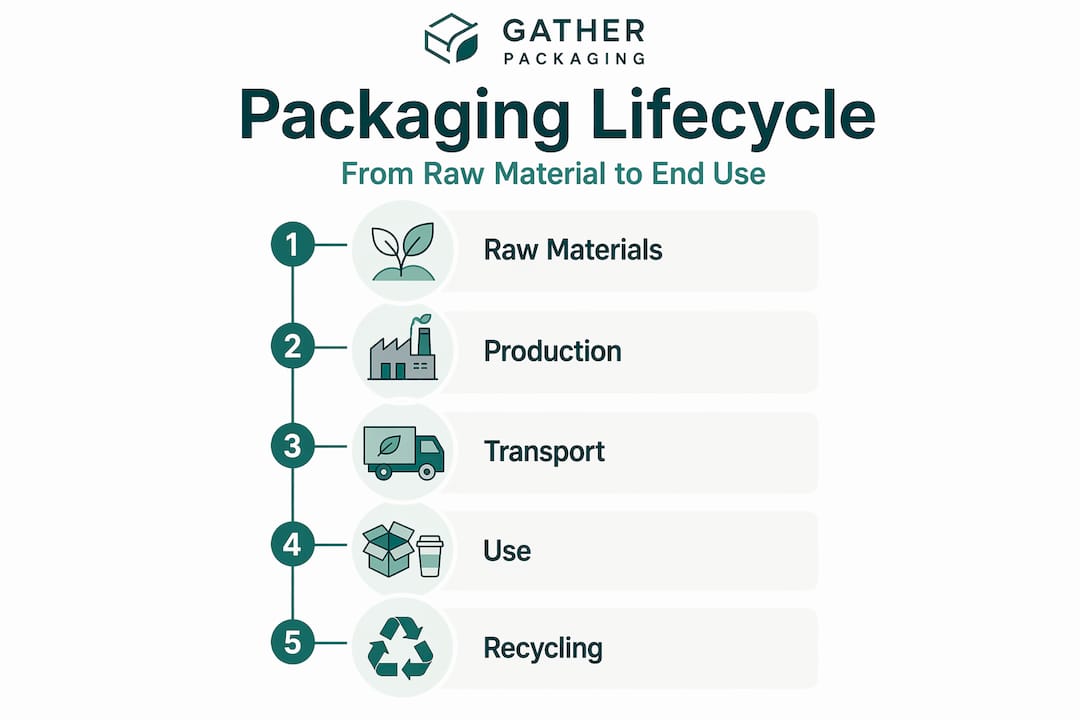
Most procurement teams price packaging at the per-unit level. Lifecycle analysis adds the costs that per-unit pricing misses: dimensional weight penalties in transit, labor time spent handling suboptimal formats, disposal fees for non-recyclable materials, and the cost of non-compliance with certification requirements.
| Factor | Standard approach | Lifecycle-optimized approach |
|---|---|---|
| Bag spec | Legacy size, rarely audited | Right-sized to product assortment |
| Material certification | Unverified or partial | FSC or recycled content documented |
| Print quality | Variable, accepted as normal | Spec-tested per run with rejection criteria |
| Transportation | Volume-based ordering | Timed to avoid dimensional weight waste |
| End-of-life | Not factored into sourcing | Recyclability confirmed by market |
Auditing your current packaging against actual operational data is where the value appears. Compare your bag sizes against your actual product dimensions across your top 20 SKUs. Look at damage return rates by packaging type. Review whether your current supplier can provide material documentation for your ESG report. Each of those gaps has a cost attached to it.
Sustainable packaging programs that integrate with procurement, quality, and sustainability functions avoid the siloed outcomes that produce well-intentioned specs that nobody operationally owns.
My take on why packaging gets underestimated
I’ve spent enough time watching procurement decisions get made to have a clear read on where packaging falls in the priority stack. It’s near the bottom. Teams optimize freight, negotiate supplier contracts, and overhaul warehouse layouts while the bags going out the door with every customer transaction get ordered on autopilot.
What I’ve learned is that this is where the compounding inefficiencies hide. The bags that are slightly too large. The supplier who cannot provide FSC documentation. The print quality that varies enough to make your brand look inconsistent across locations. None of these feel urgent until they become a cost audit, a compliance failure, or a customer service issue.
The brands that have their packaging supply chain genuinely dialed in treat it as a procurement discipline, not an afterthought. They audit their specs regularly. They build traceability requirements into supplier agreements. They understand that a domestic paper bag manufacturer is not just a vendor. It’s a supply chain partner whose lead times and quality controls directly affect store operations.
Packaging is not just a cost center. It’s a lever. The teams who pull it deliberately get better outcomes on cost, compliance, and brand.
— Taylor
How Gatherpackaging supports your packaging supply chain
If the sections above surfaced gaps in your current packaging program, Gatherpackaging is built to address them directly.
Gatherpackaging manufactures paper shopping bags in Toronto, Canada, which means shorter lead times, in-person quality oversight, and supply chain continuity that offshore sourcing cannot match. Their eco-friendly paper bag line includes FSC-certified, post-consumer recycled, and compostable options with full material documentation for ESG reporting. Custom print capabilities run up to eight-color flexo printing, so your bags meet brand standards at scale without quality variability. If you are auditing your packaging specs, evaluating sustainability credentials, or simply need a reliable domestic supplier with proven quality assurance, contact Gatherpackaging to discuss your paper shopping bag and retail packaging needs.
FAQ
Why does packaging supply chain efficiency matter for retailers?
Packaging decisions directly affect shipping costs, warehouse handling speed, damage rates, and sustainability compliance. Inefficient packaging specifications create costs that compound across every shipment and store transaction.
What is packaging lifecycle analysis?
Packaging lifecycle analysis evaluates the total cost and environmental impact of a packaging format from raw material sourcing through production, use, and disposal. It reveals costs that per-unit pricing alone does not capture.
How does packaging support supply chain transparency?
Packaging carries the physical and digital information, such as certifications, QR codes, and material disclosures, that enables traceability through the supply chain. Companies with mature traceability programs report fewer disruptions and better supplier quality outcomes.
Are paper shopping bags a sustainable packaging choice for retail?
Yes, when made with FSC-certified or post-consumer recycled content and water-based inks, paper shopping bags are curbside recyclable, biodegradable, and carry auditable material certifications that support ESG reporting requirements.
What quality assurance checks matter most for paper shopping bags?
Key checks include handle pull strength, print color consistency across runs, seam and gusset integrity under load, basis weight accuracy, and material certification documentation from the supplier.
Share:
Why local sourcing for packaging matters for your brand
Must-Have Features in Paper Bags for Retail and Foodservice