
TL;DR:
- Print registration ensures all printed elements on packaging align precisely, preventing visual flaws and costly errors. Modern AI inspection systems and advanced tools significantly improve registration accuracy, but proper design and setup remain critical. Consistent quality depends on combining solid prepress practices with cutting-edge technology for reliable, high-quality paper bag printing.
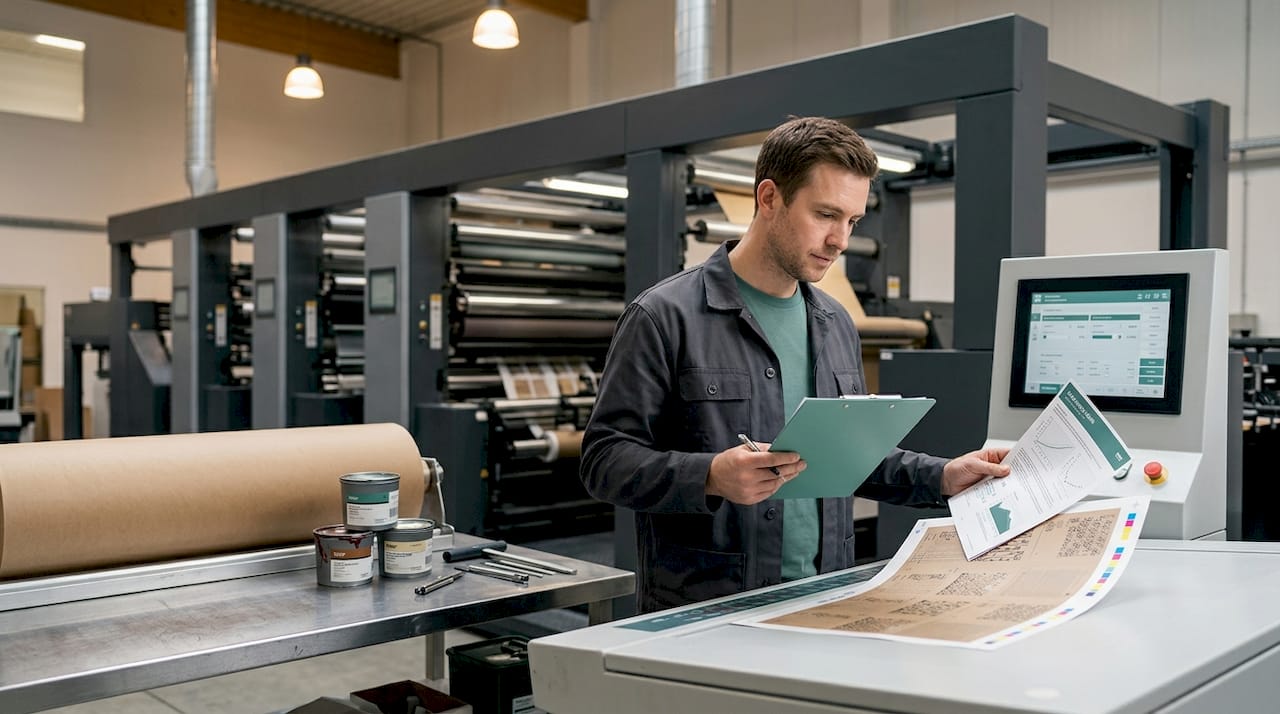
When a finished paper shopping bag comes off the press with a color halo around the logo or blurry text on the panel, the problem usually isn’t the design. It’s print registration. Understanding what is packaging print registration, and how it breaks down in production, is one of the most practical skills a print operator or packaging buyer can develop. This article covers the core definition, the marks and tools used on press, the technologies changing how registration is monitored, and the best practices that keep paper bag print runs tight and on spec.
Table of Contents
- Key takeaways
- What is packaging print registration
- Registration marks, tools, and common causes of error
- Modern technology improving registration accuracy
- Best practices for paper shopping bag print registration
- Registration tolerances and cost impact
- What I’ve learned about registration that theory doesn’t teach
- How Gatherpackaging delivers accurate print registration
- FAQ
Key takeaways
| Point | Details |
|---|---|
| Registration defined | Print registration is the precise alignment of every color layer and design element printed on a substrate. |
| Marks drive calibration | Registration marks (color dots and crosshairs) are the technical reference points press operators use to verify alignment at speed. |
| Design errors cause most problems | Missing bleed, improper safe zones, and wrong ink settings at the prepress stage cause more registration failures than mechanical issues alone. |
| AI inspection shifts the model | Inline inspection systems now verify registration in real time, catching microscopic shifts before they become expensive scrap runs. |
| Tolerances vary by print method | Flexo, offset, and digital printing each carry different acceptable registration ranges. Exceeding them drives scrap costs up fast. |
What is packaging print registration
Print registration is the precise alignment of all printed elements on a substrate, including every color separation, graphic element, and text block across every layer of the print job. When a design uses four colors, for example, each color is applied by a separate plate or print station. Registration is what keeps those layers locked in position relative to each other so the final image looks sharp and intentional.
When registration fails, the results are visible and damaging. Color halos appear around logos when a magenta or cyan plate shifts even half a millimeter from where it should be. Text goes soft or doubles. Thin keylines, which are common on premium retail bags, break apart or ghost. These are not subtle flaws. On a paper shopping bag, which is often the first physical brand touchpoint a customer holds, blurry or misaligned print signals poor quality regardless of what the brand itself represents.
The stakes are financial too, not just aesthetic. Registration marks are purely technical calibration aids, and even tiny shifts can cause expensive print run failures across thousands of units before anyone catches the problem.
The registration marks themselves, the small colored dots, squares, and crosshair targets printed in the trim area outside the bag’s finished dimensions, are what press operators use for quality control during production. They are not consumer-facing and get trimmed off or folded away on the finished bag. But they are critical during the press run. Each mark tells the operator whether ink density, plate position, and color-to-color alignment are all tracking within tolerance.
Pro Tip: When reviewing press proofs for paper shopping bags, check registration at the corners and along fold lines specifically. Those are the areas where slight substrate movement during printing shows up first.
Here is what misregistration typically looks like in practice:
- A brand logo with tight knockout text where the black plate drifts, leaving colored fringe around letter edges
- A gradient background where two color passes don’t align, creating a banding effect across the bag panel
- A barcode or SKU number that prints with a shadow effect because two passes are offset by fractions of a millimeter
- Fold and glue areas where misaligned print creates an uneven seam appearance on the finished bag
Registration marks, tools, and common causes of error
Print operators use several types of registration marks depending on the press configuration and the job requirements. The three most common are crosshair targets (a circle with intersecting lines), color control patches (solid blocks of each ink color), and densitometer bars (used to measure ink density across the sheet). Each type serves a different diagnostic purpose, but all of them work together to give the operator a real-time picture of print alignment.
The process for using them follows a defined sequence:
- During makeready, the operator prints a test sheet and checks each registration mark under a loupe or magnifier to confirm that all color plates are landing in the correct position relative to each other.
- The operator adjusts plate position using micro-register controls on the press, moving each station independently until the crosshair targets on all colors overlap cleanly.
- Once the run starts, inline sensors or periodic pull-and-check sampling monitors for any drift caused by substrate tension changes, heat, or mechanical vibration.
- If a mark drifts outside the acceptable tolerance, the operator stops the run, identifies the cause, and recalibrates before continuing.
- At job end, registration data is documented as part of the quality record, which matters for repeat orders where matching a previous run is part of the brief.
Common causes of registration error fall into three categories. Mechanical causes include worn bearings, inconsistent substrate tension, and impression cylinder pressure variation. Design-related causes are more common than most operators expect. Upstream design errors like missing bleed or improper safe zones frequently cause registration issues more than mechanical failure. Environmental causes include humidity changes that cause paper substrate to expand or contract between passes on a multi-pass press.
Measurement tools used to verify registration accuracy include optical comparators, spectrophotometers for color accuracy confirmation, and camera-based vision systems mounted inline on the press. Spectrophotometers measure color values numerically, so operators can track whether a color is printing at its target density, which is directly tied to whether the plate is seated correctly.

Pro Tip: Plate mounting is where most registration problems begin, not during the run itself. Take the time to verify plate-to-plate mounting accuracy before the first sheet is pulled. It saves far more time than troubleshooting mid-run.
Modern technology improving registration accuracy
The tools available for print registration control have changed significantly in recent years. The most consequential shift is the move toward 100% inline inspection rather than periodic manual sampling. Inline systems use high-resolution cameras positioned along the press to capture and analyze every single printed piece in real time, comparing it against a digital reference file.
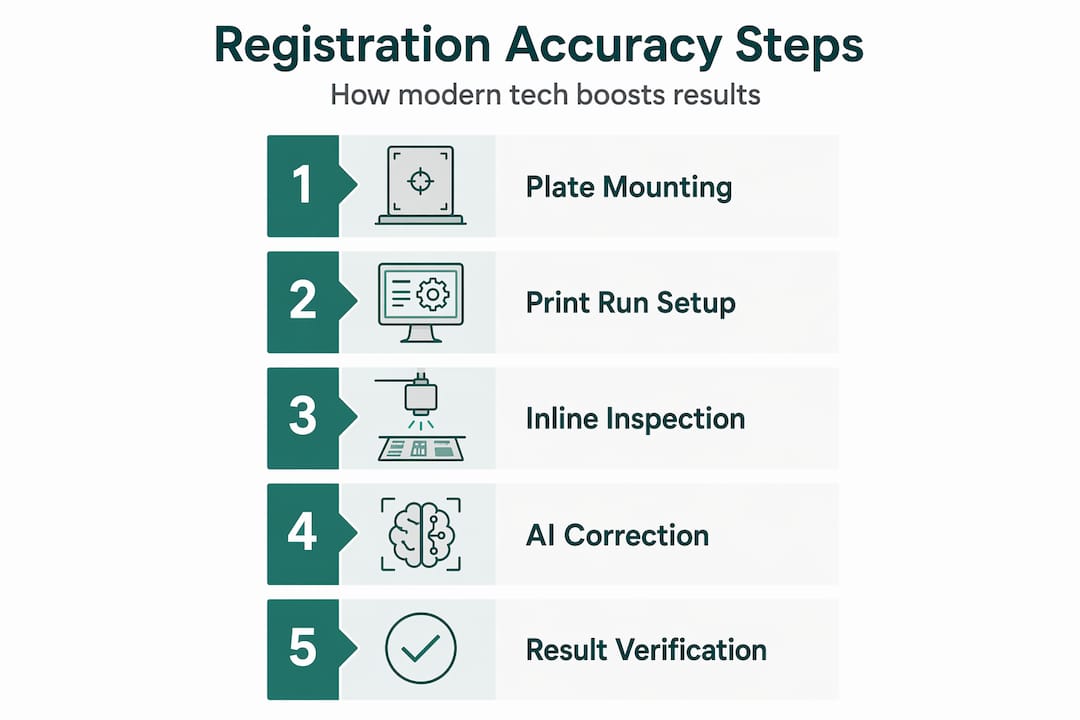
AI-driven packaging workflows reduce review and revision cycles by up to 95%, accelerate design-to-print by 65%, and cut color defects by 40%. Those numbers come from documented case studies, not projections. The underlying mechanism is that AI systems analyze registration data continuously and flag anomalies faster than any operator could detect them by eye or by periodic sampling.
Beyond inspection, AI integration is also changing how equipment behaves during a run. AI platforms now predict equipment failures and prevent registration errors before production is disrupted, shifting quality assurance from reactive to predictive.
At the leading edge, software-defined motion controls using magnetically levitated movers allow dynamic package positioning for registration accuracy on complex shapes without mechanical reconfiguration. This XPlanar technology is particularly relevant for shaped or structured packaging where a flat-bed approach cannot maintain consistent registration across curved or irregular surfaces.
Here is a summary of what modern registration technology delivers versus traditional methods:
| Technology | Function | Key benefit |
|---|---|---|
| 100% inline camera inspection | Verifies every printed unit against reference file | Catches drift immediately, eliminates sampling gaps |
| AI defect prediction | Analyzes press data to forecast registration failures | Prevents costly mid-run scrap events |
| Spectrophotometer integration | Measures color density tied to plate position | Confirms ink accuracy alongside alignment checks |
| XPlanar magnetic movers | Dynamically adjusts substrate position per print station | Precise registration on complex geometries |
For domestic manufacturers like Gatherpackaging, adopting automated bag manufacturing systems that incorporate these technologies is what allows consistent print quality at production scale, without the variability that comes from relying solely on operator sampling intervals.
Best practices for paper shopping bag print registration
Paper shopping bags present specific registration challenges that flat-sheet printing does not. The substrate moves through multiple folding, gluing, and forming stages after printing, so any registration error that looked minor on the flat sheet can compound into a visible misalignment once the bag is constructed. Getting registration right from the start of the job is the only way to avoid that outcome.
Practical steps that reduce registration errors in paper bag production:
- Build every design file with accurate bleed (typically 3mm minimum) and safe zones that keep critical art away from fold and trim lines.
- Confirm that registration marks are placed in positions the press can actually read without interference from other print elements or substrate edges.
- Set substrate tension controls carefully before the run. Paper is sensitive to humidity and temperature, and tension variation during printing is one of the primary mechanical causes of mid-run registration drift.
- Run regular in-process pull checks using a loupe at the marks, not just a visual pass at arm’s length.
- Use the paper bag QA checklist approach to verify registration at each major production stage, including after folding and gluing, not just on the flat printed sheet.
Collaboration between designers, prepress operators, and press operators matters more than most teams acknowledge. A prepress operator who catches a missing bleed or a misplaced registration mark before plate-making saves the entire team from a press stop and a rerun conversation.
Pro Tip: Never use registration black in packaging design files. Registration black represents 100% of all CMYK inks simultaneously and overloads the press, causing ink spread and registration defects. Use rich black or standard black instead, depending on the element size.
Registration tolerances and cost impact
Registration tolerance is the maximum allowable deviation between where a printed element lands and where it is supposed to land. Tolerances are not universal. They vary by print method, substrate type, and the complexity of the design.
| Print method | Typical registration tolerance | Notes |
|---|---|---|
| Flexographic | ±0.5mm to ±1.0mm | Wider tolerance due to plate flex; tighter on servo-driven presses |
| Offset lithography | ±0.1mm to ±0.3mm | High precision; common for folding cartons |
| Digital (inkjet/toner) | ±0.1mm or less | Tightest tolerance; no plate variables |
Industry-standard registration tolerance benchmarks vary by printing method, and exceeding them increases scrap and costs directly. For a flexo-printed paper shopping bag run of 10,000 units, a registration drift that goes undetected for even 500 sheets can mean reprinting a significant portion of the order.
Registration quality also feeds into brand consistency across repeat orders. If a retail brand reorders its paper shopping bags three times a year and the registration tolerance shifts each time, the logo reads differently on every bag in circulation. That inconsistency is a brand equity problem, not just a production quality problem.
Regulatory compliance is a consideration for some packaging categories, especially food-adjacent applications like takeout delivery bags, where print accuracy on allergen information or branding near food contact surfaces must meet specific standards. Consistent registration is part of meeting that bar.
What I’ve learned about registration that theory doesn’t teach
I’ve reviewed a lot of press runs where registration problems were diagnosed as mechanical when the real cause was sitting in the design file the whole time. A designer specifying registration black on a large filled area, or a prepress team that didn’t flag a 1mm bleed shortfall, and suddenly the press operator is chasing a problem that was never theirs to solve.
In my experience, the operators who consistently produce clean registration aren’t necessarily running the newest presses. They understand their specific substrate behavior, they check marks early and often, and they talk to the design team before plates are made, not after something goes wrong on press. That communication habit is worth more than any single piece of equipment.
The technology improvements in inline inspection and AI-based defect prediction are real and worth investing in. But they work best when the foundational practices are already in place. An AI inspection system can catch a registration shift faster than any operator. It cannot fix a design file that never had the right bleed. The combination of good prepress practice and modern inspection technology is what produces consistent, high-quality print on paper shopping bags at scale.
Gatherpackaging’s quality assurance approach reflects that combination. It’s not one or the other.
— Taylor
How Gatherpackaging delivers accurate print registration

Gatherpackaging produces custom paper shopping bags with up to 8-color flexo printing from its domestic facility in Toronto, Canada. Every production run goes through registration verification as part of a documented quality assurance process, using both inline inspection and in-process checks at key production stages. That process is outlined in detail in the packaging quality assurance checklist Gatherpackaging publishes for its customers.
For brands that need consistent, repeatable print across multiple orders, domestic manufacturing means faster response when a registration issue needs to be addressed, without the lag of overseas production timelines. If you’re sourcing custom printed paper shopping bags and print registration quality is part of your brand standard, contact Gatherpackaging to discuss your project. The team can walk through your design files, tolerance requirements, and production schedule before a single plate is made.
FAQ
What is packaging print registration?
Print registration is the precise alignment of all color layers and design elements printed on a packaging substrate. When registration is off, colors appear as halos, text blurs, and graphic elements lose their sharpness.
What causes poor print registration on paper bags?
The most common causes are design file errors (missing bleed or improper safe zones), inconsistent substrate tension during printing, and mechanical issues like worn press bearings or incorrect plate mounting.
What are registration marks used for?
Registration marks are small colored dots, squares, and crosshair targets printed in the trim area of a packaging job. Press operators use them to calibrate plate alignment and verify color-to-color accuracy throughout the print run.
How tight should registration tolerances be for flexo printing?
Flexo printing typically holds registration tolerances of ±0.5mm to ±1.0mm, depending on press configuration and substrate. Servo-driven flexo presses with inline inspection can achieve tighter tolerances closer to offset standards.
Can AI really improve print registration accuracy?
Yes. AI-driven inline inspection systems verify registration on every printed unit in real time and can predict equipment-related registration drift before it creates scrap. The shift is from detecting defects after the fact to preventing them during the run.
Share:
Why Custom Bag Sizes Matter for Your Brand
Top Paper Bag Finishes for Branding and Sustainability