
TL;DR:
- Modular packaging systems reconfigure components for multiple products, reducing waste and handling steps.
- They offer sustainability benefits with fewer materials, easier recycling, and longer reusable life.
- Successful adoption requires workflow redesign, equipment compatibility, and thorough regulatory compliance.
Retail and foodservice brand managers face a stubborn trade-off every season: go green and accept more process friction, or prioritize operational speed and generate more waste. Modular packaging solutions break that trade-off entirely. By designing containers, inserts, and closures as a system that mixes, matches, and adapts across your entire workflow, you can slash waste, cut labor steps, and still deliver the polished, on-brand presentation your customers expect. This guide walks you through exactly how that works, where the real challenges lie, and how to make modular packaging a genuine competitive advantage.
Table of Contents
- What are modular packaging solutions?
- Efficiency and sustainability: The dual advantage
- Challenges: Upfront costs, integration, and compliance
- How modular packaging elevates brand value
- A practical perspective: What most brands miss about modular packaging
- Find the right modular packaging partner
- Frequently asked questions
Key Takeaways
| Point | Details |
|---|---|
| Streamline workflows | Modular packaging cuts handling steps and simplifies processes from production to display. |
| Drive sustainability | Modular systems reduce waste and enable recyclable, reusable packaging for modern eco standards. |
| Lower total costs | Less labor, less inventory, and fewer wasted resources add up to significant savings over time. |
| Boost brand image | Custom, high-quality packaging elevates your perceived value and supports responsible branding. |
| Consider integration needs | Successful modular adoption requires equipment compatibility and process adjustments from the start. |
What are modular packaging solutions?
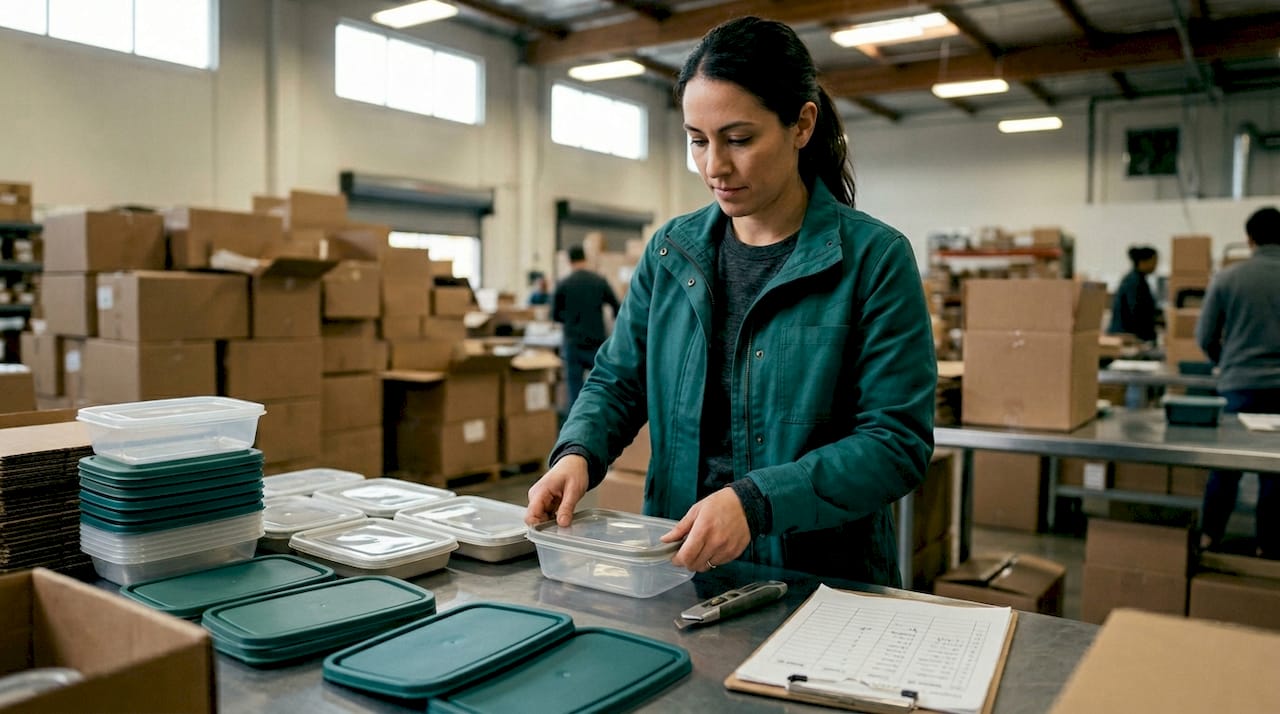
Modular packaging refers to systems where individual components, containers, lids, trays, inserts, and closures, are designed around standardized dimensions and material specifications so they can be reconfigured to fit different products, volumes, or workflow stages. Think of it as a platform rather than a one-off solution. Instead of ordering a unique package for every SKU, you build a core system and adapt it.
Traditional packaging is rigid in both form and function. You specify a box for one product, a tray for another, and a bag for a third. Each has its own supply chain, its own storage footprint, and its own handling protocol. Modular systems collapse that complexity. A standardized tray with interchangeable inserts can carry a café’s grab-and-go salad in the morning, a hot prepared meal at lunch, and a chilled dessert in the evening, all without changing the base container.
Key features of a well-designed modular system include:
- Standardized outer dimensions that work across display fixtures and transit packaging
- Reconfigurable interior components like dividers, inserts, and liners
- Material flexibility, meaning you can swap substrates based on product requirements without redesigning the whole system
- Compatibility with multiple temperature zones and handling conditions
A strong real-world example comes from the retail foodservice sector. Multifunctional trays for supermarket prepared foods support oven-to-freezer-to-display workflows, reducing labor, contamination risk, and waste by eliminating the need to transfer product between containers at each stage. That is not a minor efficiency gain. It is a fundamental change in how your operation moves product from prep to customer.
Understanding food-safe packaging requirements is the foundation for choosing the right modular components. Materials must meet contact-safety standards at every temperature and handling stage, so confirm specs before committing to a platform.
Pro Tip: Even removing one transfer step from a foodservice workflow can meaningfully reduce both labor costs and contamination risk. Map every hand-touch in your current packaging process before evaluating modular options so you know exactly where the gains are.
Efficiency and sustainability: The dual advantage
The common assumption is that eco-friendly packaging costs more to use, takes longer to process, and adds friction to workflows built around conventional materials. Modular systems disprove that. They deliver sustainability and efficiency together, not as a compromise but as a built-in feature.
On the sustainability side, the wins are concrete:
- Fewer containers in rotation means less raw material consumed overall
- Standardized formats are easier to sort and recycle because they reduce contamination in the recycling stream
- Reducing product transfers cuts food spoilage, which is one of the largest contributors to supply chain waste
- Longer-use reusable components reduce the volume of single-use packaging entering landfills
On the operational side, one-container workflows reduce labor requirements, handling risk, and food waste by minimizing transfers. When a tray moves from kitchen prep straight to the display case without repacking, you eliminate the labor hours, the risk of contamination, and the packaging materials required for that intermediate step.
“The goal of one-container systems is not just convenience. It is a systemic reduction in every resource consumed between production and the customer’s hands.” This is the framing that modular packaging demands: systems thinking, not product thinking.
The table below compares how modular and traditional packaging stacks up across the factors that matter most to retail and foodservice operators:
| Factor | Modular packaging | Traditional packaging |
|---|---|---|
| Material waste | Lower (fewer SKU-specific formats) | Higher (unique formats per product) |
| Labor per unit | Lower (fewer transfers) | Higher (repacking at each stage) |
| Recyclability | Higher (standardized materials) | Variable (mixed materials) |
| Storage footprint | Smaller (standardized stack) | Larger (varied sizes) |
| Scalability | High (add components, not new formats) | Low (new SKU needs new format) |
| Upfront design cost | Moderate (platform investment) | Low per item, high over time |
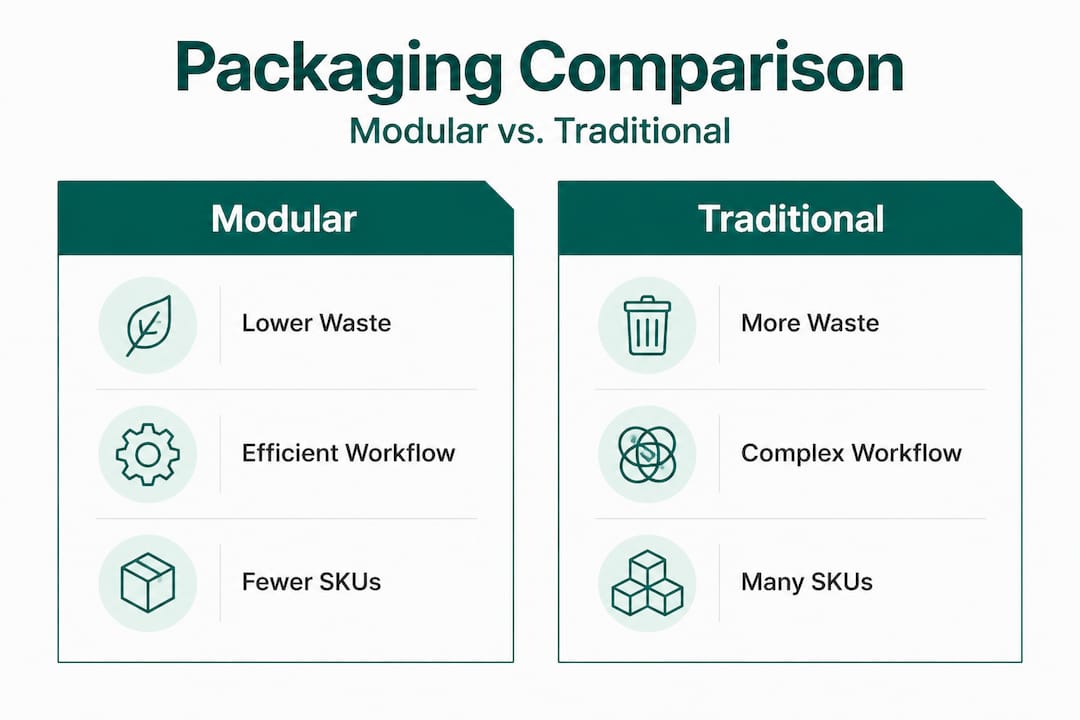
Building a sustainable packaging workflow around modular principles also simplifies your supplier relationships. Instead of managing dozens of packaging vendors for different product lines, you consolidate around a core platform. That consolidation alone drives cost savings in procurement, quality management, and logistics.
Challenges: Upfront costs, integration, and compliance
No honest assessment of modular packaging skips the challenges. Three barriers consistently slow adoption, and knowing them in advance lets you plan around them rather than discover them mid-rollout.
The first barrier is upfront investment. While initial costs or technology can be prohibitive for smaller businesses, the math shifts substantially when you account for labor savings, reduced waste, and lower long-term procurement costs. The mistake most brands make is comparing the unit cost of a modular tray to the unit cost of a conventional one without factoring in the full cost of the workflow the conventional tray sits inside. A modular tray that costs 20% more per unit but eliminates two labor-intensive repacking steps often delivers a net cost reduction within the first quarter of deployment.
The second barrier is integration. Success with modular trays hinges on real workflow integration, meaning the system must fit your actual equipment and meet food safety and labeling requirements, not just look good in a supplier catalog. A tray that cannot fit your existing oven racks or display refrigerators adds cost rather than removing it. Equipment compatibility audits are not optional; they are the foundation of a successful modular rollout.
The third barrier is compliance. Food safety regulations, packaging labeling requirements, and material certifications vary by market and product category. Modular systems that cross temperature zones (oven to freezer, for example) require materials validated for each condition. Review packaging compliance requirements early in the evaluation process, not after you have committed to a platform.
Here is a direct comparison to help frame the trade-offs:
| Criteria | Modular/reusable | Single-use traditional |
|---|---|---|
| Cost over time | Lower | Higher |
| Upfront investment | Higher | Lower |
| Flexibility | High | Low |
| Environmental footprint | Lower | Higher |
| Compliance complexity | Moderate | Low to moderate |
| Brand differentiation potential | High | Low |
Three steps for a smoother adoption:
- Audit your existing workflow to identify every transfer point, storage stage, and handling step where packaging is touched or changed.
- Consult suppliers who specialize in retail and foodservice integration, not generic packaging distributors, before finalizing any platform choice.
- Run a compliance check against the relevant food safety, labeling, and material regulations for your specific markets and product categories before committing to a system.
A packaging quality assurance checklist helps you build a structured evaluation framework so nothing gets missed during supplier vetting.
Pro Tip: Ask prospective suppliers for references from brands in your specific category, retail prepared foods, grab-and-go foodservice, or specialty retail. Generic case studies do not tell you whether a modular system will actually fit your operation.
How modular packaging elevates brand value
Operational efficiency is a compelling reason to adopt modular packaging. But the brand value case is equally strong and often more persuasive when making the argument to marketing and leadership stakeholders.
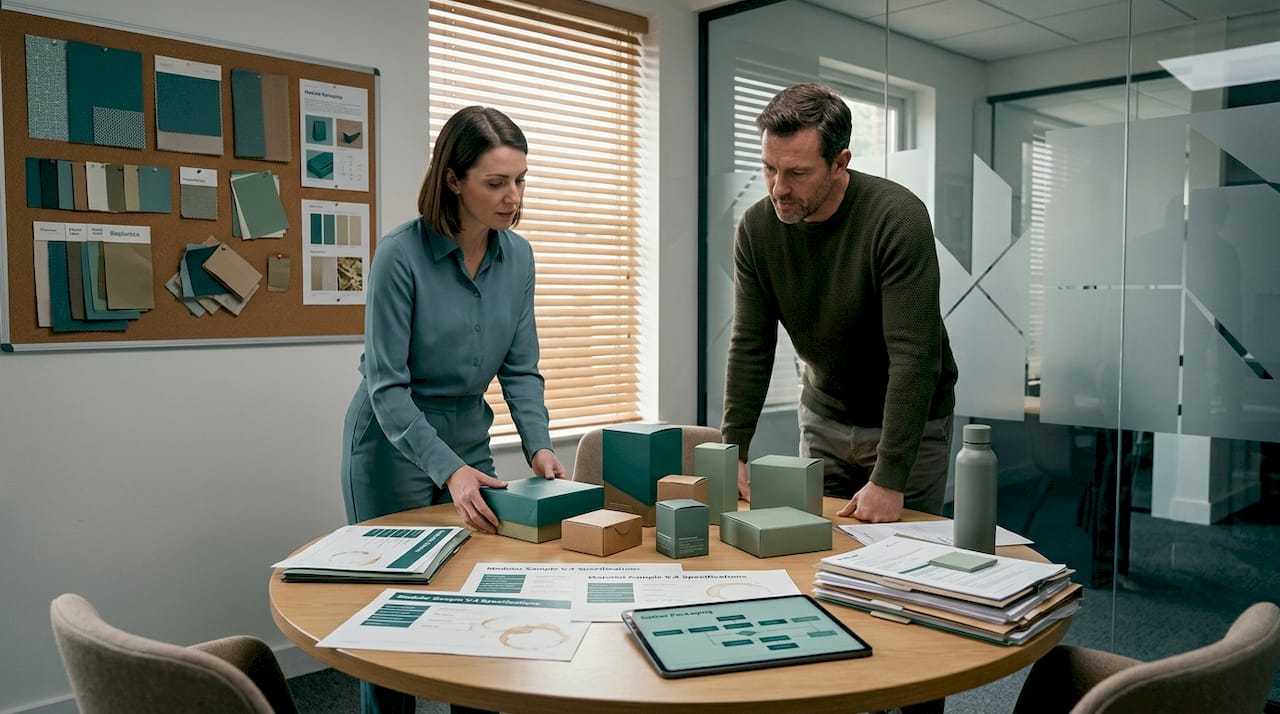
Premium packaging signals quality before a customer ever touches the product. When your containers are coordinated, purposeful, and visually consistent across product lines, the presentation communicates that your brand pays attention to detail. Modular systems make that consistency easier to maintain because every component is designed to work together visually and structurally.
One-container modular solutions simplify inventory and reduce costs across the supply chain, which gives your team more capacity to focus on customization and brand expression rather than managing packaging complexity. When you are not firefighting packaging logistics, you have bandwidth to invest in visual merchandising, seasonal campaigns, and new product launches.
Specific ways modular packaging strengthens brand value:
- Faster new product rollouts: Because the base platform is already established, introducing a new SKU requires adapting existing components, not sourcing and approving entirely new packaging.
- Consistent brand presentation: Standardized formats ensure that every product in your line looks like it belongs to the same family, which strengthens brand recognition across retail environments.
- Eco-credentials as a differentiator: Shoppers and retail partners increasingly expect sustainable sourcing. Modular systems built on recyclable or recycled materials give you a credible story to tell.
- Scalable growth support: As your product line expands, a modular platform scales with you without requiring proportional increases in packaging complexity or supplier management.
- Campaign flexibility: Modular inserts and labels can be swapped to support seasonal campaigns or limited-edition products without replacing the entire container.
Brands that invest in domestic packaging and branding also gain shorter lead times and more responsive production schedules, which directly supports the kind of agile campaign execution that modular systems enable. The custom packaging value for restaurants and foodservice operators is particularly clear: when your packaging is as thoughtfully designed as your menu, the overall brand experience becomes cohesive and memorable.
A practical perspective: What most brands miss about modular packaging
Here is the uncomfortable reality: most brands approach modular packaging as a product purchase, not a process transformation. They swap out one container for another, celebrate the switch at a sustainability meeting, and move on. Then six months later, they wonder why the efficiency gains never materialized.
The real value of modular packaging is not in the tray or the bag. It is in what happens when you redesign your workflow around it. That means pulling logistics, marketing, operations, and supply chain into the conversation from the start, not as approvers at the end of a procurement process, but as co-designers of the system you are building.
Consider how a prepared foods brand with three product lines might approach this correctly. Instead of asking “which modular tray fits our current process?”, they ask “if we rebuilt our process from scratch to minimize handling, what would that look like, and what packaging would support it?” That reframe changes everything. Suddenly, you are not just buying packaging. You are redesigning how your operation moves product through its lifecycle.
Exploring automation and packaging innovation is part of that broader conversation. Automated production and packaging systems amplify the gains from modular design by reducing the human handling that adds both cost and variability to the process.
Long-term return on investment depends on broad organizational adoption. If your supply chain team adopts modular trays but your marketing team still designs campaigns around single-use secondary packaging, you are getting a fraction of the potential benefit. Align the entire brand experience around the modular platform and the gains compound over time.
Pro Tip: Pilot your modular system on a single product line before full rollout. Measure both operational metrics (labor hours, waste volume, transfer steps) and customer experience indicators (presentation quality, shelf appeal, return purchase rate). The combined data makes a far more compelling case for organization-wide adoption than operational data alone.
Find the right modular packaging partner
Making the move to modular packaging is a strategic decision that requires a supplier who understands both the operational demands of foodservice and retail and the brand value that thoughtful, eco-conscious packaging delivers.
At Gather Packaging, we build Canadian-made packaging solutions designed for brands that take both sustainability and presentation seriously. Our eco-friendly paper bags are produced using FSC-certified materials, recycled content, and water-based inks, so your packaging story is credible from raw material to retail shelf. Whether you are looking for a modular retail bag system or fully custom kraft paper bags tailored to your brand identity, our team provides design assistance, prototyping, and quality assurance from a single domestic source. Reach out to explore what a modular packaging platform could look like for your specific operation.
Frequently asked questions
What makes modular packaging more sustainable than traditional single-use packaging?
Modular packaging reduces waste via streamlined workflows, supporting reusable and multi-purpose systems that cut both material consumption and food spoilage throughout the supply chain.
Are modular packaging systems compatible with all existing equipment?
Not always. Modular trays must fit existing equipment including ovens, freezers, and display fixtures, so a thorough compatibility audit is essential before committing to any platform.
What are the main barriers to switching to modular packaging?
The main barriers are upfront investment, workflow integration, and compliance complexity. Upfront costs or new technology can be a real obstacle, particularly for smaller operators, but long-term savings typically offset the initial investment.
How does modular packaging improve product presentation?
Modular systems produce coordinated, visually consistent displays across product lines, enabling brands to maintain a polished, professional appearance whether presenting seasonal promotions or year-round staples.
Does modular packaging help reduce labor needs?
Yes. By enabling one-container workflows, fewer transfers reduce labor requirements and handling risk at every stage from production through to display, producing measurable reductions in labor costs per unit.
Share:
Why custom die-cut bags elevate brand impact
Top 4 Colemancontainers.com Alternatives 2026