

TL;DR:
- Multi-industry packaging uses a single, optimized design to meet multiple sector requirements, enhancing efficiency and compliance. It employs versatile materials like kraft paper and corrugated cardboard, which satisfy regulatory standards across retail, foodservice, and other industries. Designing to the strictest regulations upfront and sourcing domestically can reduce costs, streamline supply chains, and improve brand consistency across channels.
Multi-industry packaging is defined as a packaging strategy that uses a single, optimized design to serve the protection, compliance, and branding requirements of multiple industries simultaneously. Rather than maintaining separate packaging lines for retail, foodservice, and distribution, companies consolidate around formats that work across sectors. The multi-functional packaging market is valued at USD 13.4 billion in 2025 and is projected to reach USD 20.1 billion by 2035. That scale reflects a structural shift in how procurement teams and brand managers think about packaging investment. For businesses sourcing paper shopping bags, retail carriers, or takeout packaging, understanding this concept directly affects cost control, supply chain efficiency, and regulatory standing.
What is multi-industry packaging, exactly?
Multi-industry packaging, also referred to in the industry as multi-sector packaging or multi-material packaging, describes formats engineered to meet the functional and regulatory demands of more than one market segment. A kraft paper shopping bag used in retail apparel, gifting, and specialty food takeout is a practical example. It carries product, communicates brand identity, and satisfies food-contact or retail labeling requirements depending on the context.
The concept is distinct from multi-layer packaging, which refers specifically to laminated or coated structures combining materials like polyethylene and foil within a single substrate. Multi-use packaging, another related term, focuses on reusability across product cycles. Multi-industry packaging is broader: it is about designing one format that performs reliably across different business environments, regulatory frameworks, and consumer touchpoints.
Flexible packaging accounts for over 58% of multi-functional packaging revenue in 2025. This dominance reflects how paper-based and film-based formats outperform rigid containers when brands need to serve multiple channels without redesigning from scratch.
What materials and technologies define multi-industry packaging?
Multi-material packaging combines wood, corrugated cardboard, metal, plastic, and foam, selecting each component for the specific protection or logistics role it plays. In industrial shipping, Strip Pak crates pair wood framing with corrugated interiors to reduce damage and cost simultaneously. In retail and foodservice, paper-based formats dominate because they satisfy food-contact requirements, accept high-resolution print, and align with sustainability mandates across sectors.

The table below compares the most common material types used in multi-industry packaging by their primary function and sector fit.
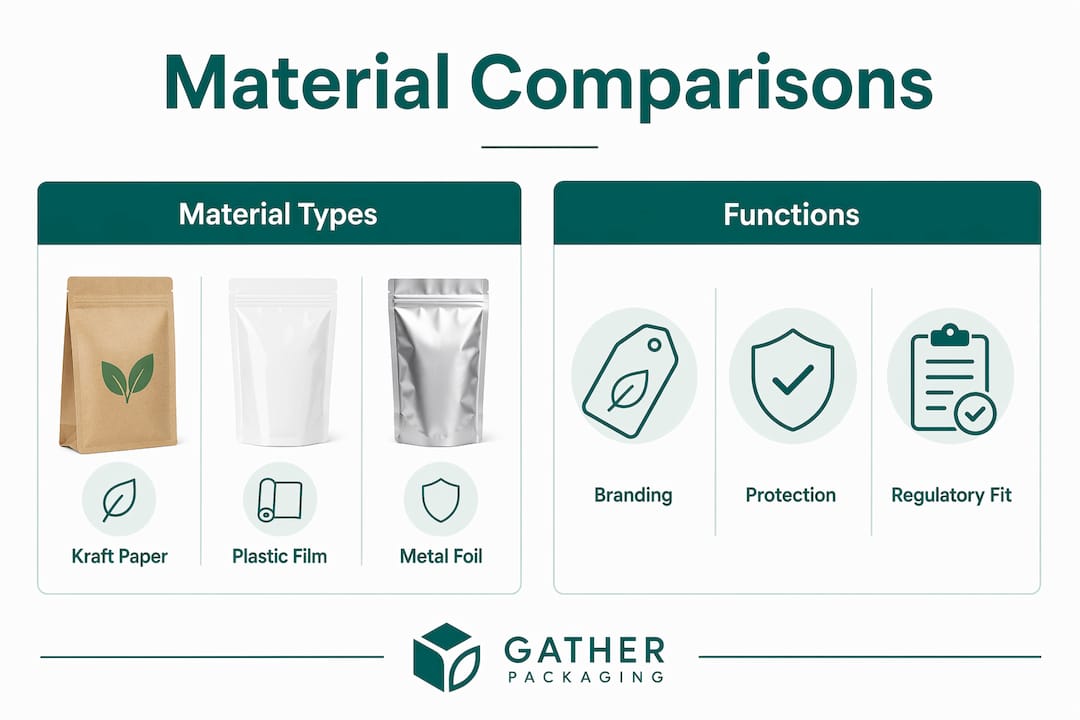
| Material | Primary function | Sector fit |
|---|---|---|
| Kraft paper | Branding, product containment | Retail, foodservice, apparel |
| Corrugated cardboard | Structural protection, shipping | Industrial, e-commerce, wholesale |
| Foam inserts | Cushioning, vibration control | Electronics, medical, industrial |
| Metal components | Tamper evidence, closure | Food, pharmaceutical, beverage |
| Recycled plastic film | Moisture barrier, flexibility | Food, personal care, healthcare |
Active packaging features, including moisture control liners, tamper-evident seals, and oxygen scavengers, extend the functional range of a single format across food, pharmaceutical, and consumer goods applications. For paper shopping bags specifically, features like reinforced handles, gusseted bases, and water-based ink coatings allow the same bag construction to serve a boutique retailer, a grocery chain, and a restaurant takeout program without structural redesign.
Pro Tip: Before committing to a multi-industry format, map every regulatory environment your packaging will enter. A bag that works for apparel may need additional food-contact certification for takeout use. Confirm material compatibility with your supplier before production begins.
How does regulatory compliance work across multiple sectors?
Designing to the strictest regulatory baseline across target industries is the most reliable compliance strategy for multi-sector packaging. When a single format must satisfy the FDA for food contact, the USDA for agricultural products, and the FTC for environmental claims, the safest approach is to build to the highest standard first and verify downward from there. This reduces audit complexity and eliminates the risk of a compliant retail bag failing a food-contact inspection.
The most common compliance risks in multi-industry packaging design include:
- Conflicting eco-label claims. The FTC Green Guides prohibit unqualified claims like “biodegradable” or “compostable” unless the product meets specific degradation standards. A bag certified for retail may not meet the same threshold for foodservice disposal regulations.
- Food-contact material restrictions. The FDA regulates inks, adhesives, and coatings that contact food directly. Water-based inks and unbleached kraft paper generally pass; UV-cured coatings may not without specific clearance.
- State-level extended producer responsibility laws. California, Oregon, and Colorado have enacted EPR frameworks that affect packaging material composition and labeling requirements, independent of federal standards.
- FSC and BPI certification gaps. Certifications like FSC and the Biodegradable Products Institute enable cross-sector compliance, but only when the full supply chain, from pulp source to finished bag, maintains chain-of-custody documentation.
Understanding packaging compliance for retail professionals is not optional when your packaging crosses sector lines. Procurement teams that treat compliance as a post-design checklist consistently face costly reformulations. Build it into the brief.
Pro Tip: Ask your manufacturer for a compliance matrix that maps each material and coating to the specific regulatory frameworks of your target sectors. Suppliers who cannot produce this document are not equipped for multi-sector work.
What are the business benefits of multi-industry packaging?
Adopting multi-material solutions can reduce packaging costs by more than 50% compared to single-material methods. That figure comes from consolidating SKUs, reducing tooling costs, and simplifying inventory management across product lines. For a retailer operating across apparel, gifting, and specialty food, replacing three separate bag specifications with one compliant format cuts reorder complexity and reduces minimum order volume requirements.
“Packaging decisions require holistic views beyond raw material cost, factoring logistics, damage prevention, and consumer acceptance.” — Packaging Strategies
The operational case for multi-sector packaging extends beyond cost. Multifunctional packaging lines that handle filling, sealing, and palletizing in a single pass support smaller batch sizes and faster response to fragmented consumer demand. For brands managing seasonal SKUs or limited-edition product runs, this agility is a direct competitive advantage.
The table below compares traditional single-industry packaging against a multi-industry approach across key operational metrics.
| Metric | Traditional packaging | Multi-industry packaging |
|---|---|---|
| SKU count | High, one format per sector | Reduced, shared formats across sectors |
| Compliance management | Separate audits per sector | Unified audit against highest standard |
| Material waste | Higher due to overspecification | Lower through material optimization |
| Lead time | Longer with multiple suppliers | Shorter with consolidated sourcing |
| Brand consistency | Variable across channels | Consistent across all touchpoints |
Sustainable packaging workflows that integrate FSC-certified materials, recycled content, and water-based inks also strengthen brand perception across retail and foodservice simultaneously. Sustainability is no longer a differentiator in isolation. It is a baseline expectation in most procurement specifications, and multi-industry packaging lets you meet it once rather than repeatedly.
Where does multi-industry packaging apply in practice?
Multi-industry packaging applications span food and beverage, personal care, healthcare, apparel, and industrial distribution. In each case, the goal is the same: one format that performs across the supply chain without sector-specific redesign. Paper-based formats are particularly well-suited to this because kraft paper accepts food-contact certification, FSC chain-of-custody documentation, and high-resolution flexo printing within the same substrate.
Practical applications include:
- Retail shopping bags used across apparel, gifting, and specialty food retail. A single kraft paper bag with reinforced handles and 8-color flexo printing serves a fashion boutique, a chocolate brand, and a cosmetics retailer without format changes.
- Foodservice takeout bags that meet FDA food-contact requirements while carrying full brand graphics. Serrated-top and turn-top paper bags serve quick-service restaurants and specialty food operators from the same production run.
- Wholesale and distribution packaging where corrugated paper outer cases protect product across multiple retail channels, reducing damage claims and return rates.
- Healthcare and personal care secondary packaging where tamper-evident paper bags or boxes satisfy both retail shelf requirements and pharmacy dispensing standards.
Packaging logistics directly shapes brand value when the same bag appears consistently across every channel a customer encounters. Domestic manufacturing in Canada, as practiced by Gatherpackaging, shortens lead times and allows faster iteration when a format needs adjustment for a new sector application. Canadian packaging manufacturers offer proximity advantages that offshore sourcing cannot replicate when compliance timelines are tight.
Pro Tip: When selecting a manufacturer for multi-industry paper packaging, prioritize suppliers who hold FSC chain-of-custody certification and can provide food-contact compliance documentation. These two credentials cover the majority of retail and foodservice regulatory requirements in North America.
Key takeaways
Multi-industry packaging reduces cost, simplifies compliance, and strengthens brand consistency by replacing sector-specific formats with a single, optimized design that meets the highest applicable standard across all target markets.
| Point | Details |
|---|---|
| Define the standard first | Design to the strictest regulatory requirement across all target sectors before selecting materials. |
| Consolidate SKUs deliberately | Fewer formats reduce tooling costs, inventory complexity, and reorder minimums across channels. |
| Certifications carry the compliance load | FSC and BPI certifications satisfy the majority of retail and foodservice requirements simultaneously. |
| Paper outperforms in multi-sector retail | Kraft paper accepts food-contact, print, and sustainability certifications within a single substrate. |
| Domestic sourcing accelerates iteration | Manufacturers in Canada or the US reduce lead times when sector requirements change mid-production. |
Why multi-industry packaging is worth taking seriously
I have spent enough time reviewing packaging briefs to recognize the ones that will cause problems six months into production. They almost always share one trait: the brand treated packaging as a category decision rather than a systems decision. They chose a bag for retail, then discovered it failed food-contact requirements when they expanded into specialty food gifting. Or they sourced offshore to hit a price point, then spent more on expedited freight and reformulation than they saved on unit cost.
Multi-industry packaging forces a different kind of thinking. You start with the full map of where your product will be sold, how it will be handled, and what regulatory environments it will pass through. Then you design one format that satisfies all of it. That process is harder upfront. It requires a manufacturer who understands compliance documentation, material science, and print quality as interconnected variables rather than separate departments.
The paper packaging market’s 3.8% CAGR growth is not driven by novelty. It reflects procurement teams recognizing that paper-based formats are the most practical substrate for multi-sector compliance in retail and foodservice. Kraft paper takes FSC certification, food-contact clearance, and full-color branding in a single production run. No other material does all three as cleanly.
The businesses I see getting this right are not necessarily the largest. They are the ones who ask their manufacturer the hard questions before the brief is finalized: What certifications does this material carry? What is the food-contact status of this ink? What happens to lead time if we add a gusset for foodservice use? Those questions, asked early, are what separate a packaging program that scales from one that creates recurring problems.
— Taylor
How Gatherpackaging supports multi-industry packaging programs
Gatherpackaging manufactures paper shopping bags in Toronto, Canada, for retail brands, foodservice operators, and specialty businesses that need packaging to perform across multiple sectors. Every bag is produced with FSC-certified materials, water-based inks, and quality assurance testing built into the production process, not added at the end. The product range includes turn-top, serrated-top, and tamper-resistant styles, all customizable in size and print with 8-color flexo capability.
For businesses building a multi-sector packaging program, Gatherpackaging offers design assistance, prototyping, and compliance documentation to support retail and foodservice requirements simultaneously. Explore the full range of eco-friendly paper bags or contact Gatherpackaging directly to discuss your specific sector requirements and lead time needs.
FAQ
What is multi-industry packaging in simple terms?
Multi-industry packaging is a single packaging format designed to meet the functional, regulatory, and branding requirements of more than one industry at the same time. A kraft paper shopping bag certified for food contact and retail use is a common example.
How does multi-sector packaging reduce costs?
Multi-material solutions can cut packaging costs by more than 50% by consolidating SKUs, reducing tooling investment, and simplifying supplier relationships across product lines.
What certifications matter most for multi-industry paper packaging?
FSC chain-of-custody certification and Biodegradable Products Institute approval cover the majority of retail and foodservice compliance requirements in North America. Food-contact clearance for inks and coatings is also required for any bag entering a food or beverage application.
What is the difference between multi-layer and multi-industry packaging?
Multi-layer packaging refers to laminated material structures combining substrates like paper, foil, or film within a single sheet. Multi-industry packaging is a broader strategy describing formats that serve multiple sectors, which may or may not use multi-layer materials.
Why should procurement teams prioritize domestic manufacturers for multi-industry packaging?
Domestic manufacturers reduce lead times and allow faster compliance iteration when sector requirements change. Proximity also simplifies quality assurance audits and chain-of-custody documentation, both of which are critical for multi-sector paper packaging programs.
Share:
FSC-Certified Packaging Guide for Buyers in 2026
Why Packaging Efficiency Matters for Retail and Foodservice