
TL;DR:
- Packaging logistics involves designing and managing materials to ensure products reach customers in perfect condition, on time, and at the right cost. Proper management reduces costs, environmental impact, and builds brand loyalty by emphasizing sustainability, right-sizing, and supply chain performance. Data-driven optimization enhances brand trust and operational efficiency, emphasizing strategic material selection and system-wide planning over superficial sustainability claims.
Most operators assume packaging logistics is just a back-office concern, something handled by the warehouse team after the “real” decisions get made. That assumption is costing brands money, consumer trust, and competitive standing. Packaging logistics touches every point between production and purchase, shaping how customers feel about your product before they even open it. For retail and foodservice operators specifically, the right approach can cut costs, reduce environmental impact, and build the kind of brand loyalty that no marketing campaign alone can manufacture.
Table of Contents
- What is packaging logistics and why does it matter?
- Sustainability and eco-friendly packaging logistics solutions
- Comparing packaging logistics options and trade-offs
- Customization and right-sizing: Steps for optimizing your packaging logistics workflow
- Our perspective: The overlooked value of packaging logistics in driving brand loyalty and sustainability
- Level up your packaging logistics with customized eco-solutions
- Frequently asked questions
Key Takeaways
| Point | Details |
|---|---|
| Packaging logistics boosts brand credibility | Choosing logistics solutions that enhance delivery and eco-performance strengthens consumer trust. |
| Right-sizing saves money and resources | Adopting right-sized packaging can cut operational expenses by up to 30 percent while minimizing waste. |
| Material choice affects sustainability impact | Paper, flexible plastics, and compostables offer varying balances of cost, durability, and eco-friendly credentials. |
| Customize for operational and branding success | Tailored packaging systems help manage costs, support sustainability goals, and elevate brand presentation. |
| Comparisons reveal trade-offs | Every packaging logistics option has unique pros and cons—use empirical data to guide your decisions. |
What is packaging logistics and why does it matter?
Packaging logistics is the discipline of designing, sourcing, moving, and managing packaging materials so that products reach customers in perfect condition, on time, and at the right cost. It is not just about choosing a box. It covers material selection, structural design, vendor sourcing, transit performance, waste management, and customer-facing presentation, all working together as a system.
For retail operators, packaging logistics determines whether a bag conveys premium quality or cheap afterthought. For foodservice operators, the stakes are even higher. Packaging costs in delivery run 10 to 15% of total order value, and each container must manage temperature control, leak-proof seals, stackability, and structural integrity simultaneously. A failure in any one of those variables means a spoiled customer experience and a lost repeat order.
The key elements that packaging logistics controls include:
- Delivery performance: Will the packaging survive the supply chain from manufacturer to end consumer without damage?
- Brand presentation: Does the packaging communicate your brand values accurately and memorably?
- Eco-responsibility: Does the material choice and logistics approach minimize waste and carbon output?
- Cost efficiency: Is the packaging right-sized so you are not paying to ship air or excess material?
One of the most common misconceptions is that better packaging automatically means higher costs. That is simply not true. Operators who invest in sustainable packaging design upfront often find that thoughtful material and dimension choices reduce total logistics spend while simultaneously improving brand perception. The real cost trap is reactive packaging decisions made without a systems view.
Sustainability and eco-friendly packaging logistics solutions
Packaging logistics is one of the most powerful tools you have for hitting sustainability targets. The materials you choose, the dimensions you specify, and the routes your packaging travels all contribute to your brand’s overall carbon footprint and environmental credibility.
Material innovation has moved fast. The four primary categories operators work with today are recycled content paper, compostable films, flexible plastics, and rigid reusable containers. Each has a role depending on the application. Paper remains the most versatile and consumer-trusted option for retail carry bags and foodservice delivery bags. Compostables are gaining regulatory momentum but still require mature composting infrastructure to deliver on their promise. Flexible plastics offer excellent barrier properties but are increasingly under pressure from extended producer responsibility regulations across North America.
Right-sizing is where significant wins hide. Research shows that optimizing carton dimensions for better pallet utilization cuts both material use and CO2 equivalent emissions without any change to the product itself. A meat logistics case study in that same research framework showed measurable dimension changes delivering real carbon reductions across the full supply chain. This is not theoretical. It is engineering applied to packaging, and it pays.
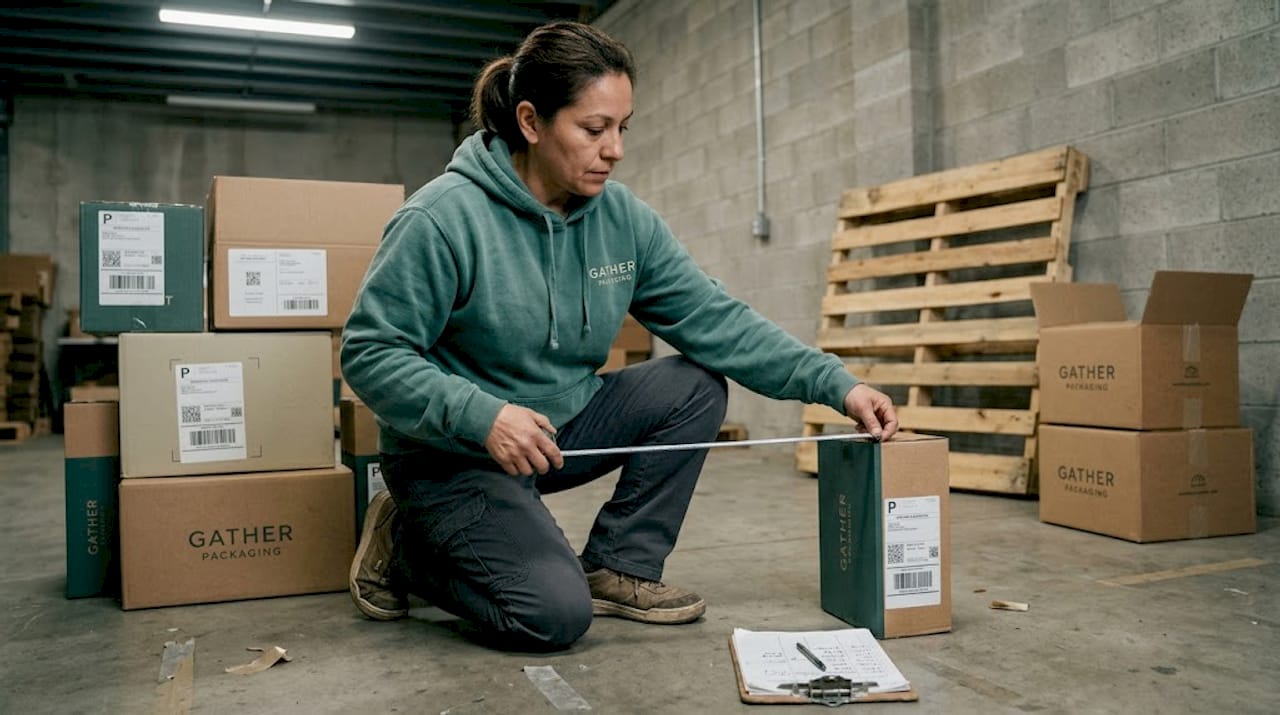
Industry benchmarks from sustainability tracking programs reveal specific targets worth aiming for. Post-consumer recycled content benchmarks across sectors show:
| Sector | PCR content target | Weight reduction median | Right-sized shipments median |
|---|---|---|---|
| Food and beverage | 15 to 30% (food-contact) | 8 to 15% | Not primary metric |
| Retail | 20 to 30% private label | Variable | Not primary metric |
| E-commerce and logistics | Not primary metric | Variable | 40 to 60% |
These benchmarks matter because they give you a concrete performance bar. If your retail packaging is sitting at 5% recycled content, you have significant room to improve before you even reach the low end of your sector peers.
Pro Tip: Before switching materials, audit your current carton or bag dimensions against pallet fill rates. In most cases, a 10 to 15% reduction in void space across a full pallet load translates to fewer trucks, lower fuel consumption, and real dollar savings on freight.
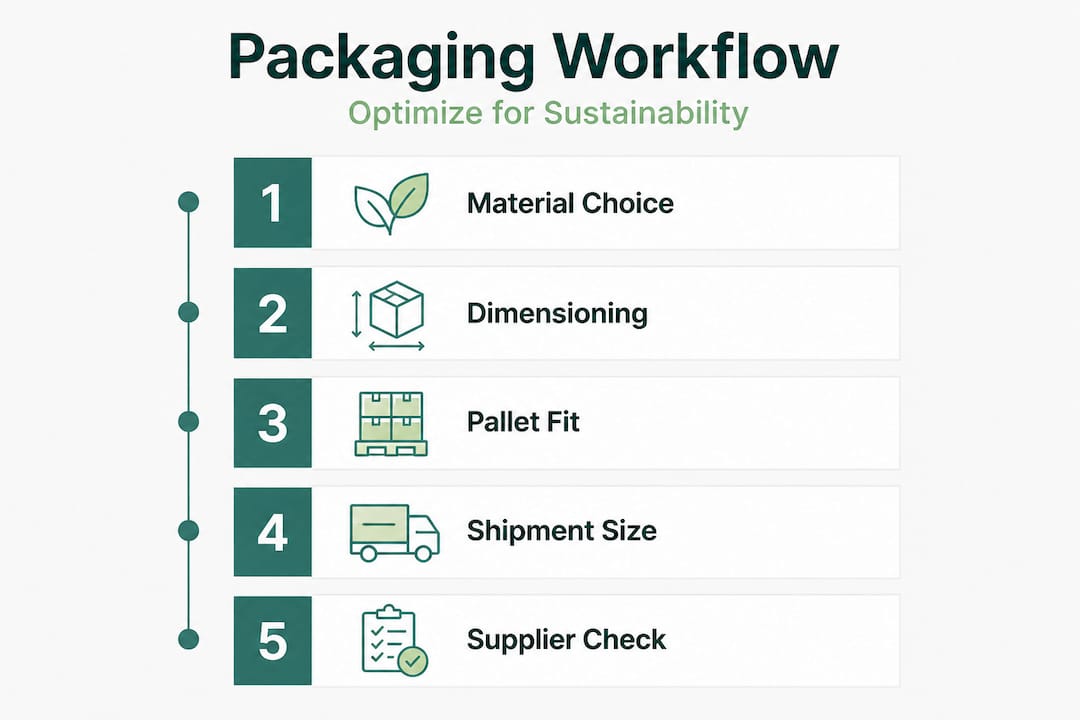
The sustainable packaging workflow used by leading brands starts with material selection, moves into dimension engineering, and closes with supply chain validation. Operators who follow that sequence avoid the expensive mistake of redesigning packaging after production tooling is already built. For those exploring material options, a review of available eco-friendly bag options at the manufacturing stage prevents costly corrections later.
Comparing packaging logistics options and trade-offs
Understanding the sustainability data is one thing. Making smart purchasing decisions means putting the options side by side and understanding where each excels and where it falls short.
The most studied comparison in North American produce and food logistics is corrugated containers versus reusable plastic containers. A 2025 life cycle assessment found that corrugated containers outperform reusable plastic containers on global warming potential and total energy use by 69 to 110% in US produce transport scenarios. Reusable plastic containers perform better in certain impact categories when reuse cycles are fully optimized, but that optimization requires closed-loop logistics infrastructure that most retail operators simply do not have access to.
Here is a practical side-by-side comparison:
| Packaging type | CO2 performance | Reusability | Cost profile | Best fit |
|---|---|---|---|---|
| Corrugated containers | Strong in open logistics | Single use, recyclable | Low to mid | Retail, produce, foodservice delivery |
| Reusable plastic containers | Strong in closed loops | High with infrastructure | High upfront | Grocery closed networks |
| Compostable bags and films | Growing validation | Single use | 30 to 50% premium | Foodservice, specialty retail |
| Paper bags with recycled content | Strong consumer perception | Single use, recyclable/compostable | Mid | Retail carry, foodservice |
The strategic picture for North America is becoming clearer. A BCG analysis confirms that paper and flexible plastics remain favored for their sustainability and cost profile, while regulations are pushing compostable adoption even though barrier performance and recycling system readiness still need improvement.
“The choice between packaging formats should not be driven by what sounds best in a press release. It should be driven by life cycle data, supply chain realities, and the actual end-of-life infrastructure available in your market.”
For operators exploring how production methods influence performance, the evolution of automated bag manufacturing directly affects consistency, material efficiency, and the ability to scale sustainable specifications. Understanding wholesale packaging strategies alongside your logistics framework ensures cost decisions are grounded in volume realities.
Key trade-offs to keep in mind:
- Compostables deliver on consumer expectation but cost 30 to 50% more and require composting infrastructure to avoid landfill
- Corrugated is the strong default for most operators who ship into open retail supply chains without closed-loop systems
- Paper bags hit the sweet spot for retail and foodservice carry applications because they are recyclable, consumer-trusted, and increasingly available in high recycled content options
- Reusable plastics only justify their carbon advantage with high turn rates in managed closed-loop systems
Customization and right-sizing: Steps for optimizing your packaging logistics workflow
Having the right packaging type means nothing if it is the wrong size, the wrong structure, or arriving in batches that disrupt your operations. Customization and right-sizing are not just about aesthetics. They are a direct lever on cost, carbon, and customer experience.
Right-sizing packaging reduces total packaging expenses by up to 30%. Automated systems make this achievable at scale, though high implementation costs mean smaller operators need to plan carefully and phase investments. The good news is that the optimization process itself does not require automation to start.
Here are five practical steps to optimize your packaging logistics workflow:
- Assess your current packaging footprint. Map every SKU you ship against the bag or container it uses. Note void fill, overhang, and damage rates. This baseline reveals where waste is hiding.
- Measure actual transit performance. Track damage rates and returns by packaging type. Poor structural performance is often blamed on carriers when the root cause is insufficient packaging specification.
- Right-size your dimensions. Work with your packaging manufacturer to test smaller configurations. A 2-centimeter reduction in bag width across a high-volume SKU compounds significantly across annual volume.
- Automate where it makes economic sense. For operators running high volumes, automated filling and sealing systems pay back within 12 to 24 months while delivering consistent pack quality that manual processes cannot match.
- Validate with real-world shipping tests. Before committing to new specifications at full volume, run a 200 to 500 unit trial across your actual distribution network. Real transit conditions reveal failures that lab tests miss.
Pro Tip: Align your bag or carton dimensions to standard pallet footprints from the start. Packaging that fits cleanly onto 40 by 48-inch pallet formats without overhang or unusual stacking configurations reduces freight costs, damage rates, and warehouse handling time all at once.
Reviewing a structured custom packaging workflow at the design stage ensures customization decisions are operationally grounded. Broader packaging workflow tips across product categories reinforce why the sequence of decisions matters as much as the decisions themselves.
Common pitfalls to avoid include overbuilding structural complexity into a design that only needs basic protection, underestimating lead times for custom specifications, and treating automation as an all-or-nothing investment rather than a phased upgrade.
Our perspective: The overlooked value of packaging logistics in driving brand loyalty and sustainability
Here is something most packaging conversations avoid: the gap between what brands claim about their packaging and what the data actually shows. We see it regularly. A brand announces a sustainability commitment, switches to a bag labeled “eco-friendly,” and considers the job done. But if the bag is over-sized, shipped in inefficient freight configurations, or made from materials that cannot actually be composted in the consumer’s municipality, the environmental claim evaporates. That is not sustainability. That is greenwashing, and consumers are increasingly able to recognize it.
The operators who are genuinely building brand loyalty through packaging logistics are doing something different. They are starting with empirical life cycle data rather than marketing narratives. They are optimizing dimensions before they consider printing options. They are asking hard questions about what happens to their packaging after it leaves the customer’s hands.
We believe the biggest missed opportunity in packaging logistics is the connection between operational discipline and brand trust. When a customer receives an order in a bag that holds its structure, carries the brand clearly, and communicates genuine eco-credentials through certifiable material choices, something happens. They trust the brand more. That trust is built in the supply chain, not in the ad campaign.
Starting with dimension and material optimization is not glamorous, but it is where the real brand value improvement lives. Operators who get that right first and layer on customization and print second end up with packaging that performs and presents. That combination is what moves consumers from a single transaction to a repeating relationship.
Level up your packaging logistics with customized eco-solutions
Gather Packaging works with retail brands and foodservice operators across North America who are serious about getting packaging logistics right, not just checking a sustainability box. From FSC-certified materials and high-recycled-content paper to vibrant 8-color flexo printing and precise custom sizing, every bag we manufacture is engineered to perform in real logistics conditions.
Our eco packaging solutions are built around the same principles this article covers: right-sized dimensions, certified materials, and verified environmental credentials. Browse our full range of custom eco-friendly products to find configurations that match your volume, brand, and sustainability targets. Every order is backed by our quality assurance process, so what you spec is what arrives, every time. Reach out to our team to start with a design consultation and sampling run tailored to your operation.
Frequently asked questions
How much can right-sizing packaging logistics save my business?
Right-sizing packaging reduces total packaging expenses by up to 30%, particularly when combined with automated systems, though smaller operators should plan for higher upfront investment costs when pursuing full automation.
What are the most eco-friendly packaging materials for retail and foodservice?
Paper and flexible plastics lead in sustainability and cost performance across North America, while compostable options are growing but still need better barrier technology and more widely available composting infrastructure to deliver on their full promise.
How can packaging logistics help reduce my brand’s carbon footprint?
Optimizing carton dimensions for better pallet utilization, using recycled content materials, and right-sizing shipments each reduce material consumption and GHG emissions, a result confirmed in real-world logistics case studies across food supply chains.
Are compostable packaging options worth the extra cost?
Compostable solutions typically cost 30 to 50% more than conventional alternatives and deliver their environmental benefit only where composting infrastructure exists, so operators should verify end-of-life systems in their market before committing at volume.
Share:
How biodegradable bags are made: a practical guide
Tamper resistant packaging: A guide to safety and sustainability