

TL;DR:
- Packaging efficiency involves optimizing design and materials to lower costs, waste, and environmental impact while protecting products. Right-sized packaging can reduce shipping expenses by 20 to 30 percent and improve supply chain performance across storage, transportation, and damage rates. Integrating functional protection and sourcing domestically enhances overall sustainability and operational efficiency for retail and foodservice brands.
Packaging efficiency is the strategic optimization of packaging design and materials to reduce costs, waste, and environmental impact while maintaining product protection and supply chain performance. For retail and foodservice decision-makers, this is not a back-office detail. It is a direct margin lever that affects every shipment, every pallet, and every sustainability report your brand produces. Dimensional (DIM) weight pricing, lifecycle assessments from researchers at MDPI, and audits from logistics specialists like ShipBuddies all confirm that packaging decisions made at the design stage ripple through your entire cost structure.
Why packaging efficiency matters for your shipping costs
Carriers like UPS and FedEx charge based on whichever is greater: actual weight or dimensional weight. The DIM weight formula divides a package’s cubic volume by a carrier-specific divisor, which means a lightweight paper shopping bag shipped in an oversized box can cost as much to send as a heavy product. That math punishes every retailer and foodservice operator who has not audited their package dimensions.
Right-sizing packaging can reduce shipping spend by 20 to 30 percent. That figure represents real margin, not theoretical savings. When you cut even one inch from each dimension of a standard retail bag shipment, the cubic volume drops multiplicatively, and the billable weight drops with it.
The cost stack compounds quickly. Fuel surcharges, peak-season rate increases, and tier changes all calculate from the same dimensional weight input. Every carrier fee layer is affected when you reduce that base number. Void fill, the foam peanuts and air pillows used to pad oversized boxes, adds material cost on top of the inflated shipping rate. It looks cheap per unit but accumulates into a significant line item across thousands of shipments.
Pro Tip: Before your next carrier contract negotiation, run a full audit of your actual versus billed dimensional weight across your top 20 SKUs. The gap between what you are shipping and what you are paying for is almost always larger than expected, and that data gives you direct leverage at the negotiating table.
How packaging efficiency supports sustainability goals
Packaging efficiency and sustainability are not separate conversations. They are the same conversation approached from two directions. Research published in MDPI’s Sustainability journal confirms that optimized carton dimensions aligned with pallet footprints increase product counts per load, reducing the number of trips required and cutting associated CO2 emissions across food supply chains.
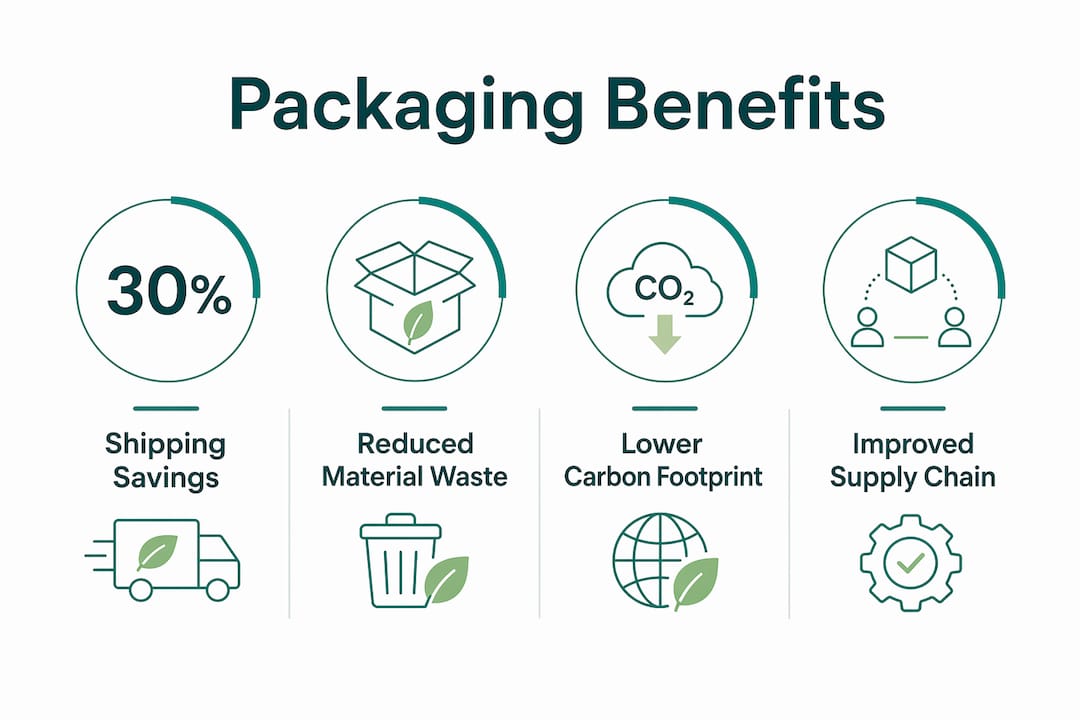
The more counterintuitive finding comes from lifecycle analysis research. Conventional packaging lifecycle assessments (LCAs) frequently overstate the environmental impact of packaging materials because they ignore what the packaging prevents. A study published in MDPI’s Sustainability journal found that packaging-related food waste reduction delivers five to ten times more environmental benefit than simply reducing packaging weight. That ratio changes the entire sustainability calculus for foodservice operators sourcing takeout delivery bags.
This means chasing lighter materials without considering protection performance can actually increase your environmental footprint. If a thinner bag fails and product is damaged or spoiled, the emissions and waste from that lost product far outweigh any material savings. The practical implication for retail and foodservice buyers is clear:
Packaging functionality, including structural integrity and shelf-life protection, must be built into any honest environmental assessment. A bag that fails is never the sustainable choice, regardless of what it weighs.
Choosing FSC-certified materials, recycled content, and water-based inks addresses the material side of the equation. Choosing the right structural design addresses the functional side. Both are required for a sustainability claim that holds up under scrutiny. Gatherpackaging’s approach to sustainable packaging solutions integrates both, using certified materials alongside quality assurance protocols that confirm functional performance before bags reach your stores.
What packaging efficiency does for your supply chain operations
Packaging design directly influences supply chain costs at every node: transportation, warehouse productivity, and product damage rates. Most decision-makers focus on the shipping invoice. The warehouse and damage costs are often larger and harder to see.

A case study from fresh produce logistics in India illustrates the operational scale of this problem. Q-Bic cube-based pack designs doubled net product weight per box and cut packaging material consumption per kilogram from 88 grams to 48 grams. Pallet density improved by 40 to 50 percent. That single design change reduced freight costs, material use, and handling complexity simultaneously.
The comparison below shows how packaging design choices translate into measurable supply chain outcomes:
| Design factor | Inefficient approach | Efficient approach |
|---|---|---|
| Box or bag sizing | Oversized with void fill | Right-sized to product dimensions |
| Pallet utilization | Low density, irregular stacking | Standardized sizes, full pallet coverage |
| Product damage rate | Higher from movement in transit | Lower with structural reinforcement |
| Warehouse pack speed | Slower, more manual adjustment | Faster with consistent, stackable formats |
| Freight cost basis | Inflated DIM weight | Reduced cubic volume and billable weight |
Reducing void fill and oversized cartons also decreases product damage and return rates while simplifying sustainability reporting. Fewer damaged goods mean less material waste, fewer replacement shipments, and lower customer service costs. For retail brands shipping paper shopping bags in bulk, standardized bag dimensions that stack cleanly on pallets translate directly into faster receiving, easier storage, and more predictable replenishment cycles.
Pro Tip: Measure packaging efficiency beyond units per hour. Track cube utilization rate (the percentage of carton or pallet volume actually occupied by product) and first-pass quality rate (the percentage of shipments arriving without damage or rework). These two metrics expose the real cost of inefficient packaging faster than any invoice audit.
Packaging optimization strategies for retail and foodservice leaders
Implementing packaging efficiency requires a structured approach, not a one-time redesign. The following strategies apply directly to retail and foodservice operations sourcing paper shopping bags and retail packaging.
- Audit dimensional data first. Map your current packaging dimensions against actual product dimensions across your full SKU range. Dimension creep and over-protection are the two most common sources of avoidable cost. Cartonization rules driven by SKU dimension and fragility data eliminate both.
- Apply cartonization logic to bag selection. For retail shopping bags, this means selecting sizes based on your actual product mix rather than defaulting to one or two sizes that “work for most things.” A bag that is two inches too tall adds cubic volume to every shipment and reduces pallet density.
- Validate sustainability claims with functional data. Material certifications matter, but they do not substitute for performance data. Confirm that any material reduction maintains the structural integrity required for your product weight, handle load, and transit conditions. Gatherpackaging’s quality assurance process tests bags against these functional requirements before production runs are approved.
- Source from domestic manufacturers with short lead times. Long international lead times force buyers to over-order and carry excess inventory, which is itself a form of packaging inefficiency. Domestic production in Toronto means faster replenishment cycles and less buffer stock.
- Collaborate with your supplier on design, not just specification. Suppliers with in-house design and prototyping capability can identify efficiency opportunities you would not find reviewing a spec sheet. Custom printing and conversion expertise also means your packaging can carry brand value without adding unnecessary material weight.
The retail packaging supply chain rewards buyers who treat packaging as a system rather than a commodity purchase. Every design decision has a downstream cost or savings attached to it.
Key takeaways
Packaging efficiency reduces costs, waste, and environmental impact simultaneously when design decisions account for dimensional weight, functional protection, and supply chain performance from the start.
| Point | Details |
|---|---|
| DIM weight drives shipping cost | Right-sizing packaging reduces billable weight and can cut shipping spend by 20 to 30 percent. |
| Functionality prevents greater waste | Packaging that protects product reduces food and goods waste, delivering far more environmental benefit than material reduction alone. |
| Supply chain gains extend beyond freight | Standardized, right-sized packaging improves pallet density, pack speed, and damage rates across the full supply chain. |
| Audit before redesigning | Measuring actual versus billed DIM weight and cube utilization exposes the real cost of current packaging before any investment is made. |
| Domestic sourcing supports efficiency | Short lead times from domestic manufacturers reduce over-ordering and inventory carrying costs tied to packaging supply. |
The efficiency gap most buyers are not measuring
From my experience working with retail and foodservice brands on packaging decisions, the most consistent finding is this: the cost of inefficient packaging is almost never visible on a single line of the P&L. It is distributed across freight invoices, damage claims, warehouse labor, and sustainability reporting gaps. That distribution makes it easy to underestimate and hard to fix without a deliberate audit.
The brands that make the most progress are not the ones chasing the lightest material or the lowest unit price. They are the ones who treat packaging as a supply chain performance variable with measurable inputs and outputs. They track cube utilization. They know their actual versus billed DIM weight. They have tested whether their bag handles the load their customers actually put in it.
The sustainability piece follows the same logic. I have seen brands reduce packaging weight and then watch damage rates and product waste climb. The net environmental outcome was worse, not better. Integrating functional performance into your sustainability assessment is not optional. It is the only way to know whether your packaging decisions are actually helping.
The practical path forward is straightforward. Audit your current dimensions and damage data. Work with a supplier who can prototype and test before you commit to a production run. And choose domestic manufacturing when lead time reliability matters to your replenishment model. Those three steps address the majority of the efficiency gap I see in retail and foodservice packaging programs.
— Taylor
How Gatherpackaging supports packaging efficiency for your brand
Gatherpackaging manufactures paper shopping bags and retail packaging in Toronto, Canada, with domestic production that delivers fast lead times and dependable supply for retail and foodservice brands across North America.
Their eco-friendly paper bag catalog includes customizable sizes, FSC-certified materials, recycled content, and 8-color flexo printing, all backed by quality assurance protocols that confirm structural performance before bags ship. For retail buyers and foodservice operators who need packaging that meets both cost and sustainability targets, Gatherpackaging offers design assistance, prototyping, and logistics support to help you get the specification right the first time. Contact Gatherpackaging to discuss your paper shopping bag or retail packaging requirements.
FAQ
What is packaging efficiency?
Packaging efficiency is the optimization of packaging design and materials to minimize wasted space, material, and cost while maintaining product protection and supply chain performance. It applies to dimensions, weight, structural integrity, and environmental impact simultaneously.
How does packaging affect shipping costs?
Carriers charge based on dimensional weight, calculated from package volume, which means oversized packaging increases billable weight even for light products. Right-sizing packaging dimensions can reduce shipping spend by 20 to 30 percent by lowering the cubic volume input to every carrier fee calculation.
Why does packaging efficiency matter for sustainability?
Packaging that protects product and prevents spoilage or damage delivers significantly more environmental benefit than simply reducing material weight. Research shows packaging-related food waste reduction provides five to ten times more environmental benefit than material reduction alone.
What metrics measure packaging efficiency?
Cube utilization rate, first-pass quality rate, and actual versus billed dimensional weight are the three most direct measures of packaging efficiency in retail and foodservice operations. Units per hour alone does not capture the full cost picture.
How do domestic manufacturers improve packaging efficiency?
Domestic manufacturers reduce lead times, which lowers the over-ordering and excess inventory that inflate total packaging costs. Shorter replenishment cycles also allow buyers to adjust specifications more frequently as product mix or shipping conditions change.
Share:
What Is Multi-Industry Packaging and Why It Matters
What Are Compostable Bag Materials? A Buyer's Guide