

TL;DR:
- Compostable bag materials are engineered blends of bioplastics and natural fibers designed to fully biodegrade under specific composting conditions without leaving toxic residues. Buyers should prioritize certified blends like BPI or TÜV Austria to ensure proper compostability, matching material types to intended use and local composting infrastructure. Understanding these distinctions helps prevent environmental contamination and guarantees performance during both use and disposal.
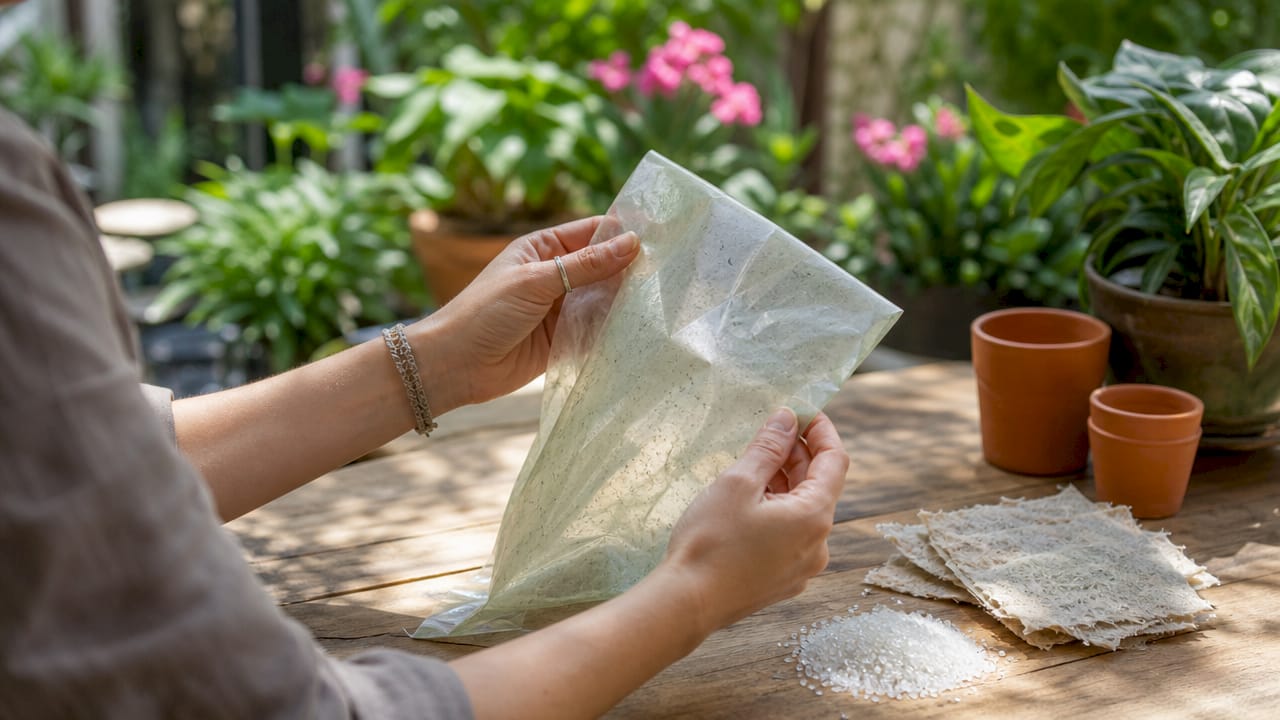
Compostable bag materials are engineered blends of bioplastics and natural fibers designed to break down fully into water, carbon dioxide, and biomass under specific composting conditions, leaving no toxic residues or microplastics. The primary materials used in compostable bags include PLA (polylactic acid), PBAT (polybutylene adipate terephthalate), thermoplastic starch, and cellulose. Understanding what are compostable bag materials matters for packaging buyers and retail brands because the wrong material choice leads to bags that fail to compost properly, contaminate organic waste streams, or simply don’t hold up during use. Certifications from bodies like BPI and TÜV Austria confirm whether a bag’s material blend actually meets composting standards.
What are the key materials used in compostable bags?
Compostable bags are primarily made of PLA and PBAT blends, with starch and cellulose added for structure and renewable content. Each material plays a distinct role, and no single ingredient does the job alone. Understanding those roles helps buyers evaluate supplier claims and select bags that perform in both use and disposal.
Here is how the core materials function:
- PLA (polylactic acid): Derived from plant sugars such as corn starch or sugarcane, PLA provides structural stiffness and tensile strength. It is the backbone of most compostable film formulations. The trade-off is brittleness. On its own, PLA is stiff and brittle, which makes it unsuitable for bags that need to flex or carry weight without cracking.
- PBAT (polybutylene adipate terephthalate): PBAT is a synthetic biodegradable polymer that adds the flexibility and tear resistance PLA lacks. Blending PLA and PBAT produces a film that is both structurally sound and pliable enough for shopping bags, produce bags, and food waste liners. PBAT is what allows compostable bags to behave like conventional plastic during use.
- Thermoplastic starch (TPS): Derived from corn, potato, or tapioca, starch-based materials improve biodegradability and increase the renewable content of the blend. Starch breaks down readily in composting environments and reduces the proportion of synthetic polymer in the final product.
- Cellulose fibers: Plant-derived cellulose adds structure, improves compostability, and is fully renewable. Cellulose is more common in paper-based compostable bags than in film bags, where it contributes to tear strength and wet resistance.
- Additives and processing aids: Manufacturers include plasticizers, nucleating agents, and compatibilizers to improve film blowing performance and shelf stability. These additives must also meet compostability certification requirements to avoid contaminating the final compost.
Most compostable bags on the market are blends rather than single materials, engineered for performance during use and full breakdown after disposal. This is not a shortcut. It reflects the reality that no single biopolymer delivers the combination of strength, flexibility, and compostability that retail and foodservice applications demand.
Pro Tip: Ask your supplier for the specific material blend ratio and certification documentation before ordering. A bag labeled “plant-based” without a certified blend ratio tells you nothing about how it will actually compost.
How do industrial and home compostable bag materials differ?
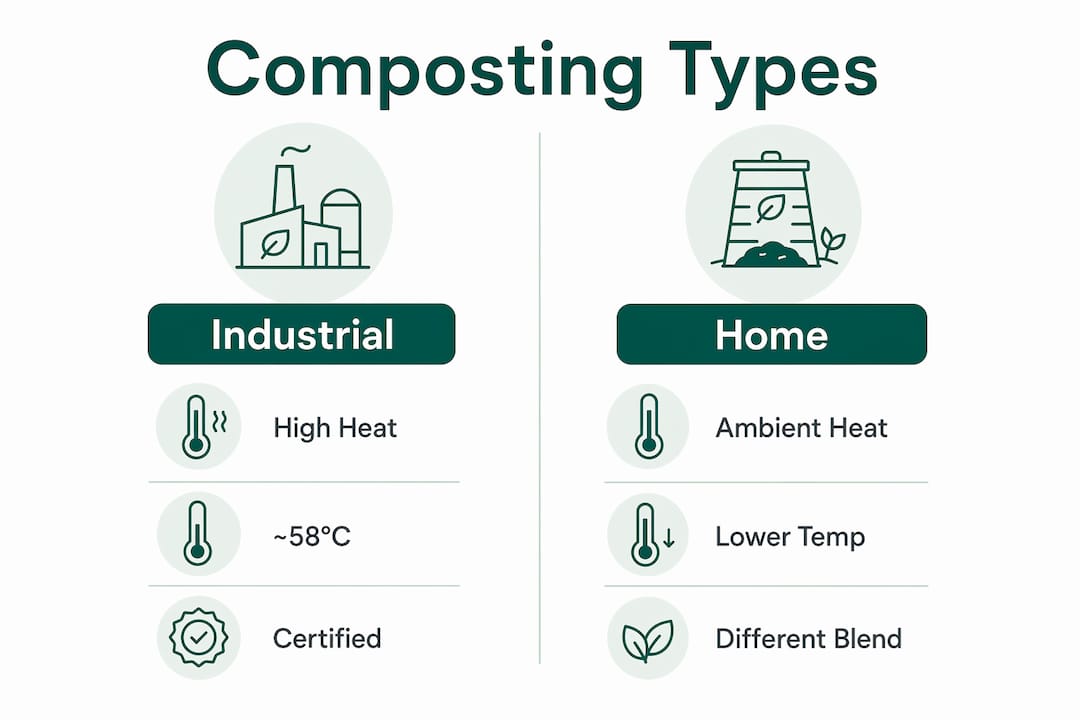
The distinction between industrial and home compostable materials is one of the most misunderstood areas in sustainable packaging. Both categories use bioplastic blends, but they are engineered for very different composting environments.
| Feature | Industrial composting | Home composting |
|---|---|---|
| Temperature required | ~58°C sustained | Ambient, typically 20–30°C |
| Timeframe | 90–180 days | 6–12 months or longer |
| Microbial activity | High, controlled | Variable, uncontrolled |
| Suitable materials | PLA/PBAT blends, most certified films | Specially formulated starch-heavy blends |
| Key certifications | BPI (ASTM D6400), EN13432 | OK Compost Home (TÜV Austria) |
Industrial composting requires sustained heat at approximately 58°C, conditions that most backyard compost piles never reach. PLA and standard PBAT blends are certified for industrial composting. They will not break down reliably in a home compost bin. Placing an industrially certified bag in a backyard pile risks incomplete breakdown and the release of microplastic fragments into the soil.
Home compostable bags require a different formulation. These blends typically contain higher proportions of thermoplastic starch and are certified under programs like OK Compost Home from TÜV Austria. Only materials certified for home composting will degrade in typical backyard settings. The certification label is the only reliable way to confirm this.
Retail buyers sourcing bags for customers who will dispose of them at home need to specify home compostable certification explicitly. Sourcing standard compostable bags and marketing them as home-friendly creates a real environmental liability, not just a marketing problem.
Pro Tip: If your retail customers are in municipalities without industrial composting pickup, home compostable certification is not optional. Verify the OK Compost Home or equivalent label before finalizing your order.
What certifications verify true compostable bag materials?
Certification is the only objective proof that a bag’s material blend meets composting standards. Marketing language like “eco-friendly,” “plant-based,” or “green” carries no regulatory weight. Certifications do.
The major standards buyers should recognize are:
- BPI certification (ASTM D6400): The Biodegradable Products Institute certifies products meeting ASTM D6400 in North America. BPI-certified bags must pass disintegration, biodegradation, and eco-toxicity testing. This is the most recognized certification for industrial composting in the United States and Canada.
- TÜV Austria OK Compost Industrial: The European standard for industrial composting, based on EN13432. Widely recognized by composting facilities globally and accepted by many North American programs.
- TÜV Austria OK Compost Home: A separate and more demanding certification for home composting. Products must biodegrade at ambient temperatures without controlled heat. This is the certification to require if your customers compost at home.
- EN13432: The European standard that defines compostability criteria for packaging. Products must disintegrate within 12 weeks and biodegrade at least 90% within 6 months under industrial conditions.
Certified compostable products must pass disintegration, biodegradation, and eco-toxicity tests to confirm they leave no harmful residues. This three-part requirement matters because a bag can disintegrate into small fragments without fully biodegrading at the molecular level. Certification closes that gap. Proper certification combined with manufacturing quality ensures bags perform during use and fully break down after disposal, supporting circular organics programs.
Buyers should request certification numbers, not just logos. Logos can be copied or misused. A legitimate certification number can be verified directly with BPI or TÜV Austria.
How to choose compostable bag materials for retail packaging
Selecting the right materials for compostable bags is a matching exercise. The goal is to align the material blend with the bag’s intended use, the product it will carry, and the composting infrastructure available to your customers. Here is a practical process for packaging buyers:
- Define the bag’s primary function. Shopping bags carrying apparel or retail goods need tear resistance and a clean print surface. Food waste liners need moisture resistance and odor containment. Produce bags need breathability. Each use case favors a different material blend. PLA-heavy blends suit rigid applications; PBAT-heavy blends suit flexible, high-stress uses.
- Assess your customers’ composting access. If your retail locations are in cities with industrial organics collection, BPI-certified bags work well. If customers compost at home or your municipality lacks industrial composting, specify OK Compost Home certified materials. Matching material blend to local composting infrastructure is the single most important factor in real-world performance.
- Consider shelf life and storage conditions. PLA is sensitive to heat and humidity. Bags stored in warm retail environments or shipped through hot climates may degrade before use if the formulation is not stabilized. Ask suppliers about shelf life under your specific storage conditions.
- Verify certifications before ordering. Request the certification number and the certifying body. Cross-reference with BPI’s online database or TÜV Austria’s certified product list. Do not accept a logo on a spec sheet as sufficient proof.
- Work with manufacturers who understand the full supply chain. A supplier who can explain blend ratios, certification scope, and composting compatibility is a more reliable partner than one who leads with marketing language. For sustainable bag materials guidance specific to retail packaging, working with a domestic manufacturer shortens lead times and simplifies quality verification.
No single compostable material perfectly meets all needs. Blends are chosen based on flexible handling, shelf life, and local composting systems. Buyers who understand this make better decisions than those chasing a single “best” material.
Common misconceptions about compostable bag materials
Several persistent misunderstandings lead buyers and consumers to purchase bags that do not perform as expected. Knowing these pitfalls saves money and prevents environmental harm.
- “Biodegradable” and “compostable” are not the same. Biodegradable means a material will eventually break down, but gives no timeframe, no conditions, and no guarantee against toxic residues. Compostable means breakdown occurs within a defined period under specific conditions, leaving non-toxic compost. A bag labeled only “biodegradable” may take decades to break down in landfill conditions and may leave harmful fragments behind.
- “Plant-based” does not mean compostable. A bag made from plant-derived PLA is still a plastic film. Without the correct blend and certification, it will not compost reliably. Plant origin describes the feedstock, not the end-of-life behavior.
- Uncertified bags create microplastic risk. Incomplete composting or uncertified bags can leave microplastics or toxic residues in finished compost. This contaminates the compost product and can harm soil biology. Certification testing specifically screens for this outcome.
- Industrial compostable bags do not belong in home compost. Placing a BPI-certified bag in a backyard bin is not a neutral act. The bag will not break down fully, and the fragments may persist in your garden soil for years.
- Marketing claims are not substitutes for certification. Terms like “eco-friendly,” “green,” and “sustainable” are unregulated in most markets. They describe a brand’s positioning, not a material’s verified performance. Always require a certification number.
Understanding how biodegradable bags are made at the production level helps buyers ask the right questions and avoid purchasing decisions based on packaging copy rather than material science.
Key takeaways
Compostable bags require certified material blends matched to the composting environment where they will actually be disposed, or they will not perform as intended.
| Point | Details |
|---|---|
| Core materials | PLA provides stiffness, PBAT adds flexibility, starch and cellulose improve biodegradability and renewable content. |
| Industrial vs. home composting | Industrial certified bags need ~58°C heat; only OK Compost Home certified bags work in backyard compost. |
| Certification is mandatory | BPI (ASTM D6400) and TÜV Austria OK Compost are the standards that verify real compostability, not marketing labels. |
| Match material to use case | Bag function, storage conditions, and local composting infrastructure all determine the right material blend. |
| Avoid misleading labels | “Biodegradable” and “plant-based” without certification numbers do not guarantee compostable performance. |
What I’ve learned working with compostable materials in retail packaging
The conversation around compostable bag materials has matured significantly, but the gap between marketing and reality is still wide. In my experience working with retail brands and packaging buyers across North America, the most common mistake is treating certification as a checkbox rather than a specification. A buyer will confirm that a bag has “some kind of compostable certification” and move on. That is not enough. The certification type, the certifying body, and the composting environment it covers are all distinct variables that determine whether the bag actually does what it claims.
The second thing I have noticed is that buyers underestimate how much local composting infrastructure shapes the right material choice. A brand operating in Toronto, where Green Bin organics collection is widespread, has different needs than a brand whose customers compost at home in a rural area. The material blend that works perfectly in one context fails in the other. This is not a flaw in the materials. It is a matching problem, and it is solvable with the right information upfront.
What gives me confidence in the direction the market is heading is that more buyers are asking specific questions. They want blend ratios, certification numbers, and shelf life data. That specificity leads to better outcomes for brands, consumers, and composting facilities alike.
— Taylor
Gatherpackaging’s approach to eco-friendly retail bags
Gatherpackaging manufactures paper shopping bags in Toronto, Canada, with a direct focus on quality, sustainability, and supply reliability for retail brands. The product line includes eco-friendly and compostable bag options made with FSC-certified materials, recycled content, and water-based inks, all available with custom 8-color flexo printing. Domestic production means shorter lead times, easier quality verification, and direct access to the team managing your order. If you are sourcing compostable or sustainable bags for retail, foodservice takeout, or specialty packaging and want to discuss material options, certifications, and print specifications, contact Gatherpackaging directly. You can also browse the full range of custom eco-friendly bags to see what is available for your application.
FAQ
What are compostable bags made of?
Compostable bags are made from blends of PLA, PBAT, thermoplastic starch, and cellulose fibers. Each material contributes specific properties: PLA for stiffness, PBAT for flexibility, and starch or cellulose for biodegradability and renewable content.
How long do compostable bags take to break down?
Certified compostable bags biodegrade fully within 90 to 180 days in industrial composting conditions. Home composting takes longer and requires bags specifically certified for lower-temperature breakdown.
What is the difference between biodegradable and compostable bags?
Compostable bags meet verified standards for full breakdown within a defined timeframe, leaving no toxic residues. Biodegradable is an unregulated term that provides no guarantee of timeframe, conditions, or safety of breakdown byproducts.
How do I know if a compostable bag is certified?
Look for BPI certification (ASTM D6400) for North American industrial composting or TÜV Austria OK Compost Home for backyard composting. Request the certification number from your supplier and verify it directly with the certifying body.
Can I put industrial compostable bags in my home compost?
No. Industrial compostable bags require sustained temperatures around 58°C to break down fully. Placing them in a home compost bin leads to incomplete breakdown and potential microplastic contamination in the finished compost.
Share:
Why Packaging Efficiency Matters for Retail and Foodservice
How to Manage Wholesale Paper Bag Orders: 2026 Guide