

TL;DR:
- Effective management of wholesale paper bag orders involves accurate forecasting, supplier vetting, detailed logistics planning, and proper post-delivery storage to prevent waste and avoid shortages. Selecting domestic suppliers and ensuring clear communication about specifications can shorten lead times and improve supply chain reliability. Proper inventory practices and early planning help maintain operations efficiently while supporting sustainability goals and cost control.
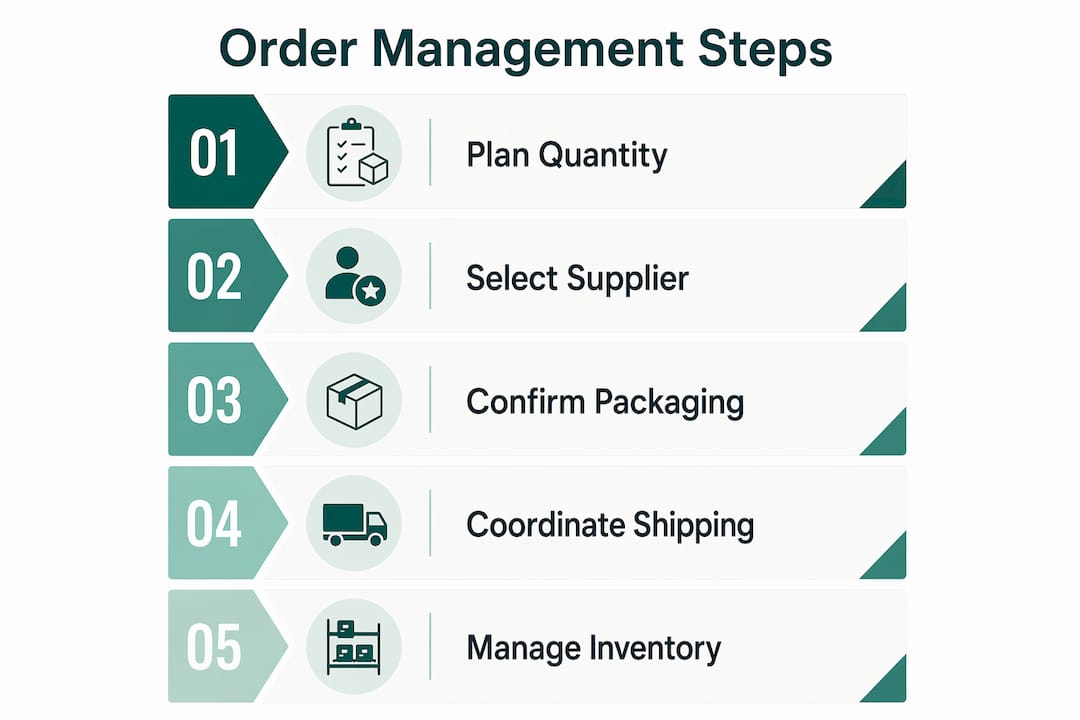
Wholesale paper bag order management is the process of planning quantities, selecting suppliers, coordinating logistics, and maintaining inventory to keep retail and foodservice operations stocked with quality eco-friendly packaging. Getting this process right means balancing cost, supply reliability, and sustainability without tying up capital in excess stock or scrambling when bags run short. For procurement teams working with kraft paper bags, custom-printed retail bags, or takeout delivery bags, the decisions you make before placing an order determine whether your supply chain runs smoothly or creates constant friction. This guide covers every stage of that process, from forecasting to receiving.
How to manage wholesale paper bag orders: quantity planning first
Accurate quantity planning is the foundation of wholesale paper bag management. Without it, you either overstock and tie up cash in warehouse space or run short during peak season and scramble for emergency orders at premium prices.
The most reliable starting point is transaction-based consumption data. Industry best practice suggests planning for 1.1 to 1.4 bags per retail transaction and one bag per event attendee, plus a 10–20% buffer to account for damage, packaging errors, and late-arriving customers. That buffer is not optional. In practice, bags get crushed in storage, handles fail during quality checks, and a busy Saturday can burn through inventory faster than any forecast predicted.
Here is a straightforward process for calculating your order quantity:
- Pull your transaction data. Use your POS system to find average daily transactions over the past 90 days, then identify your peak period multiplier (holiday season, summer events, back-to-school).
- Apply the consumption rate. Multiply average daily transactions by 1.2 as a mid-range estimate, then multiply by the number of days you need to cover before your next delivery.
- Add your buffer. Multiply the result by 1.15 to build in a 15% safety stock. For foodservice takeout operations with high volume, push that buffer to 20%.
- Factor in lead time. The full order cycle from sample approval to delivery typically runs 30–60 days. Order before you hit your reorder point, not after.
- Align with MOQ. Round your calculated quantity up to the nearest minimum order quantity increment so you are not paying for a partial run.
Pro Tip: Set a reorder trigger in your inventory system at 30 days of supply remaining. That gives you enough runway to place a new order and receive it before you hit zero, even if production runs long.
For foodservice operators managing takeout delivery bags, volume spikes around holidays and local events can be dramatic. Build a separate forecast for those windows rather than relying on your baseline daily average.
What should you look for in a wholesale paper bag supplier?
Supplier selection determines your cost, quality consistency, and how reliably bags arrive on time. The wrong supplier creates a cascade of problems: delayed production, color inconsistencies across runs, and bags that fail under load.
Key factors to evaluate before committing to a supplier:
- Minimum order quantities. MOQs typically range from 1,000 to 5,000 units. Gatherpackaging offers flexible MOQs starting at 500–1,000 units, which is a meaningful advantage for brands testing a new bag size or launching a seasonal design.
- Production lead times. Standard production runs 10–15 business days. Complex orders with multi-color printing or specialty finishes can extend to 25 days. Add shipping time and you are looking at a total process of 30–60 days from proof approval to delivery.
- Pre-production samples. A pre-production sample (PPS) tests handle strength, material weight, and color accuracy before bulk production begins. The cost is a few hundred dollars. Skipping it to save time is a false economy when a full run comes back with the wrong Pantone match or a handle that pulls free under load.
- Customization depth. Confirm that the supplier can match your exact specifications: bag size, handle type (twisted paper, flat ribbon, die-cut), surface finish, and artwork requirements. Gatherpackaging’s 8-color flexo printing capability handles most retail brand standards without compromise.
- Sustainability credentials. For brands with eco-friendly commitments, verify FSC® certification, recycled content percentages, and whether water-based inks are standard or an add-on.
Partnering with a domestic manufacturer reduces supply chain risk and supports brand sustainability goals in ways that offshore sourcing cannot match. Shorter transit distances mean lower carbon footprint per shipment and faster response when you need to adjust an order.
Before finalizing specs, run through a paper bag QA checklist with your supplier to confirm every production detail is documented and agreed upon. Misaligned specs discovered after bulk production are expensive to fix.
How do packing and shipping terms affect your order?
Logistics decisions made before production starts determine how efficiently bags move from the factory to your warehouse. Getting these details wrong adds cost and delays that are entirely avoidable.
| Logistics Factor | What to Specify | Why It Matters |
|---|---|---|
| Carton quantity | Fixed units per carton (e.g., 250 bags) | Consistent counts speed up receiving and inventory counts |
| Carton dimensions | Standardized size for your racking | Prevents wasted pallet space and storage inefficiency |
| Palletization | Layer count, wrap type, pallet size | Simplifies forklift handling and reduces damage in transit |
| Bag orientation | Flat packed vs. folded | Flat packing maximizes carton density and reduces crush damage |
| Barcode placement | Carton face and position | Poor barcode placement causes receiving delays and inventory errors |
Specifying carton quantity and palletization preferences at the start of the order is one of the most overlooked steps in wholesale paper bag management. Buyers focus on the bags themselves and treat packing as an afterthought. That creates real problems at the receiving dock when cartons arrive in inconsistent quantities and your team has to hand-count every box.
For international shipments, understanding Incoterms such as EXW (Ex Works), FOB (Free on Board), and DDP (Delivered Duty Paid) is non-negotiable. EXW puts all freight and customs responsibility on the buyer. DDP shifts it to the supplier. Most retail procurement teams without dedicated import staff are better served by DDP or a freight forwarder who handles customs documentation on their behalf.
Pro Tip: Request that your supplier mark every carton with your SKU, bag size, color, and quantity on at least two faces. This single step cuts receiving time significantly and prevents mis-picks in a busy warehouse.
Domestic suppliers like Gatherpackaging eliminate most of the Incoterms complexity for Canadian and North American buyers. No customs clearance, no ocean freight delays, and a supply chain that responds faster when you need to adjust quantities.
How do you maintain inventory after bags are delivered?
Post-delivery inventory management is where many retail and foodservice operations lose the gains they made during ordering. Bags that arrive in perfect condition can degrade quickly if stored incorrectly.
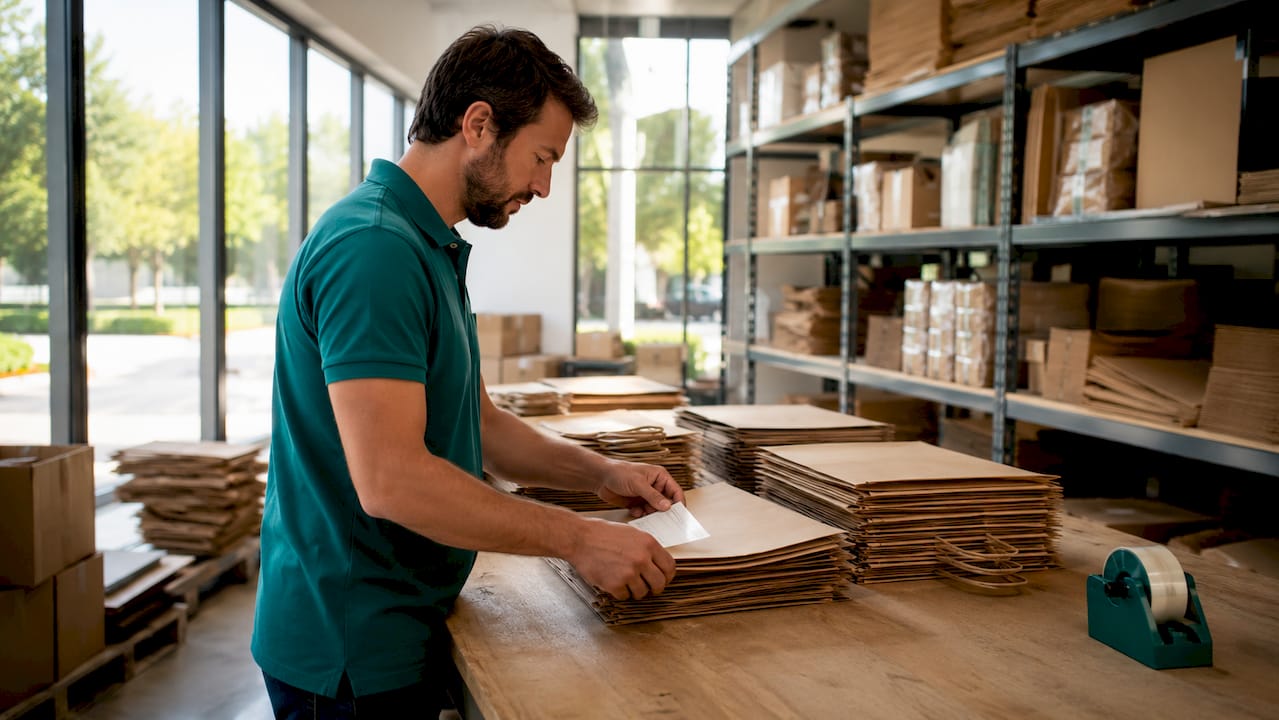
Paper bag storage best practices center on three principles: flat storage, vertical sorting, and labeled cartons. Flat storage prevents handle compression and keeps bag gussets from creasing permanently. Vertical sorting in open cartons lets staff pull bags without disturbing the rest of the stack. Labeled cartons with size, style, and quantity visible from the aisle eliminate the time wasted opening boxes to identify contents.
Additional practices that protect your investment:
- Store bags away from direct sunlight and humidity. UV exposure fades printed colors over time, and moisture weakens kraft paper fiber.
- Keep bags off the floor on pallets or shelving. Floor storage invites moisture damage and pest contact.
- Rotate stock using first-in, first-out (FIFO) sequencing. Older stock should move before newer deliveries to prevent long-term compression damage.
- Track inventory by SKU with a simple spreadsheet or your existing inventory management system. Record quantity received, current on-hand, and daily usage rate.
- Flag damaged bags at receiving rather than discovering them during a rush. Set a threshold (for example, any carton with more than 5% damaged units) that triggers a supplier claim.
Monitoring your inventory turnover rate tells you whether your order quantities are calibrated correctly. If bags are sitting in storage for more than 90 days, your order size is too large for your current volume. Adjust your next order down and recalculate your buffer. For retail and foodservice bag selection, matching bag style to use case also reduces waste from bags that are the wrong size for the transaction.
Key takeaways
Effective wholesale paper bag order management requires accurate quantity forecasting, careful supplier vetting, precise logistics specifications, and disciplined post-delivery storage to keep operations running without waste or shortfalls.
| Point | Details |
|---|---|
| Plan quantities with data | Use 1.1–1.4 bags per transaction plus a 10–20% buffer to avoid stockouts. |
| Vet suppliers on MOQ and lead time | Standard production runs 10–15 days; total delivery cycles reach 30–60 days. |
| Request pre-production samples | A PPS validates color, handle strength, and material before bulk production starts. |
| Specify packing details upfront | Define carton quantity, palletization, and barcode placement before production begins. |
| Store bags flat and labeled | Flat storage and FIFO rotation preserve bag quality and speed up warehouse operations. |
What i’ve learned about managing paper bag orders the hard way
The single biggest mistake I see retail and foodservice buyers make is treating the paper bag order as a commodity transaction. They focus entirely on unit price and ignore every other variable. Then they wonder why bags arrive late, look different from the approved sample, or fall apart under normal use.
The spec sheet matters more than the price sheet. I have seen buyers save a few cents per bag by skipping the pre-production sample, then receive 10,000 bags with handles that pull free at the seam. The reprint cost, the delay, and the emergency sourcing from a secondary supplier wiped out months of price savings in a single order cycle.
Early communication with your manufacturer about packing specifications is equally undervalued. Most suppliers will pack however is convenient for their production line unless you tell them otherwise. That means inconsistent carton counts, no barcode placement, and pallets that do not fit your racking. Fixing this after delivery is expensive and time-consuming. Fixing it before production costs nothing.
My honest recommendation for North American retail and foodservice buyers is to prioritize a domestic supplier before defaulting to offshore sourcing. The lead time advantage alone changes how you manage inventory. Instead of carrying 60 days of safety stock to cover ocean freight variability, you can operate leaner and reorder more frequently. Gatherpackaging’s Canadian manufacturing model is built exactly for this. Shorter cycles, faster response, and a sustainability story that holds up to scrutiny.
Balance is the discipline that separates good procurement from reactive procurement. Order too little and you pay premium prices for rush orders. Order too much and you tie up capital in bags sitting in a back room. The forecasting framework in this guide gives you the structure to find that balance and hold it.
— Taylor
How Gatherpackaging supports your wholesale paper bag program
Gatherpackaging manufactures eco-friendly paper shopping bags in Toronto, Canada, with flexible MOQs, fast domestic lead times, and full customization from handle style to 8-color flexo print. Whether you are sourcing kraft retail bags or takeout delivery bags for foodservice, the team supports you through spec confirmation, pre-production sampling, and quality assurance before any bulk run ships.
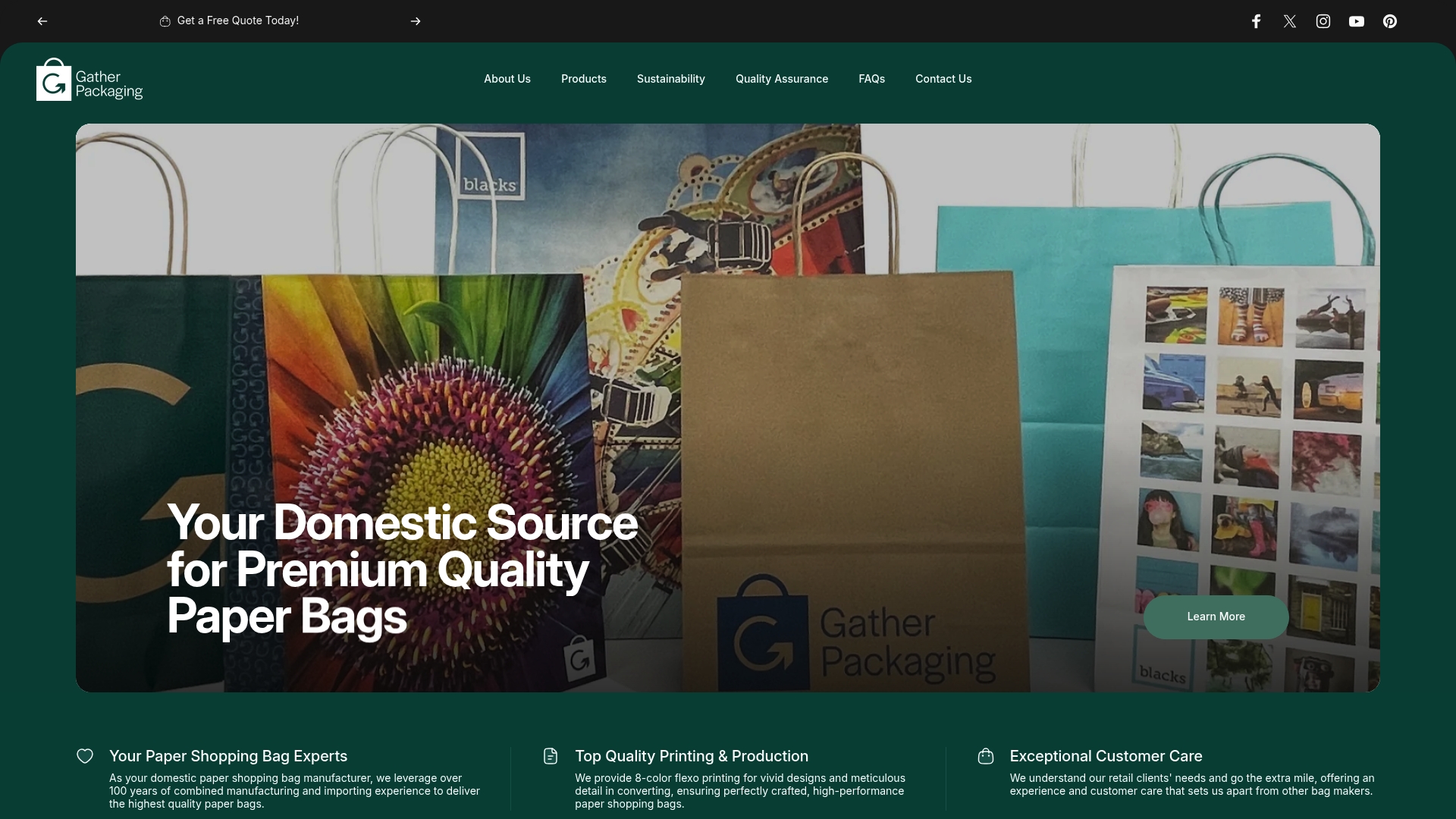
Gatherpackaging’s eco-friendly bag options include FSC®-certified materials, recycled content, and water-based inks built for brands with real sustainability commitments. For buyers ready to see the full product range, the custom kraft paper bags catalog covers retail, foodservice, apparel, and specialty formats. Contact Gatherpackaging directly to discuss your volume requirements, lead time needs, and design specifications.
FAQ
What is a standard MOQ for wholesale paper bags?
MOQs typically range from 1,000 to 5,000 units for most suppliers. Gatherpackaging offers flexible MOQs starting at 500–1,000 units for buyers with lower volume needs or new product launches.
How long does a wholesale paper bag order take from start to delivery?
The full order cycle runs 30–60 days from proof approval to delivery. Standard production takes 10–15 business days, with complex orders extending to 25 days before shipping begins.
Why should i request a pre-production sample?
A pre-production sample validates handle strength, material weight, and print color accuracy before bulk production starts. It prevents expensive reprints and delivery delays caused by spec errors discovered after the full run is complete.
How should i store wholesale paper bags after delivery?
Flat storage in labeled cartons with vertical sorting keeps bags presentable and prevents handle compression. Store away from sunlight and moisture, and rotate stock using FIFO to move older inventory first.
What incoterm is best for retail buyers importing paper bags?
DDP (Delivered Duty Paid) is the most straightforward option for retail buyers without dedicated import staff, as it places customs and freight responsibility on the supplier. Buyers with freight forwarder relationships may prefer FOB to control shipping costs and routing.
Share:
What Are Compostable Bag Materials? A Buyer's Guide
What Is Branded Packaging? A Guide for Retailers