

TL;DR:
- Branded packaging visually and structurally reflects a company’s identity, turning functional containers into marketing tools. Its benefits include improved brand recognition, enhanced customer experience, and increased marketing value at every customer touchpoint. Creating sustainable, high-quality branded packaging requires careful alignment of design, materials, and manufacturer partnerships, with partial branding as a low-risk testing approach.
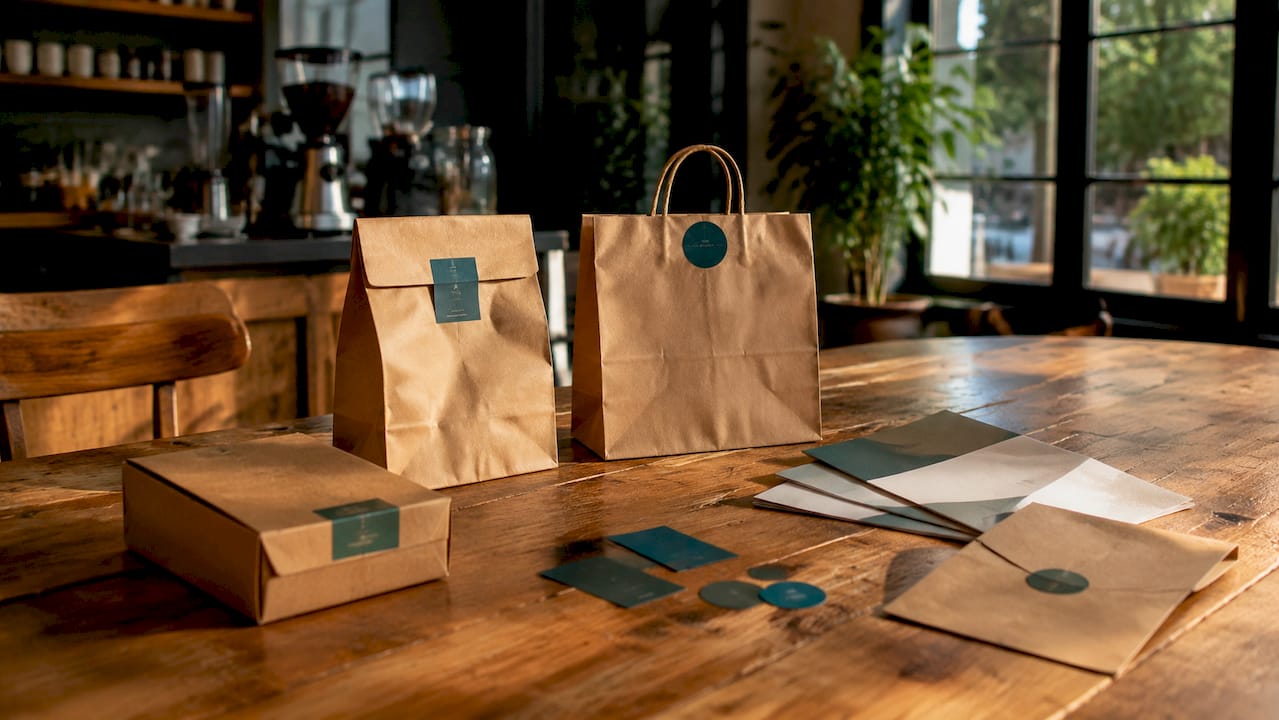
Branded packaging is packaging designed to visually and structurally reflect a company’s identity through logos, colors, typography, and structural choices that align with brand personality. It goes beyond basic containment. Branded packaging tells a story the moment a customer sees or touches the product, and it applies across retail, e-commerce, and foodservice contexts. For business owners and marketers, understanding what is branded packaging means recognizing it as a direct extension of your marketing strategy, not just a shipping necessity. This guide breaks down the components, benefits, and practical steps to build a packaging program that serves both your brand and your sustainability goals.
What is branded packaging and what makes it work?
Branded packaging is the practice of applying consistent visual and structural brand elements to every package a customer receives. The core components are logo placement, color schemes, typography, and structural design that together create a recognizable, cohesive product presentation.
The most effective branded packaging programs treat each element as a deliberate choice:
- Logo placement: Position your logo where it reads clearly in retail displays and during unboxing. On paper shopping bags, this typically means the front panel at eye level.
- Color schemes: Match your brand’s primary and secondary colors exactly. Flexo printing on paper bags, such as the 8-color printing Gatherpackaging offers, allows precise color reproduction across large runs.
- Typography: Use the same typefaces from your brand guidelines. Inconsistent fonts signal a lack of attention to detail and undermine trust.
- Structural design: The bag or box shape itself communicates quality. A turn-top paper bag with reinforced handles reads as premium. A plain kraft bag without structure reads as commodity.
- Material selection: Recycled content, FSC®-certified paper, and water-based inks are now baseline expectations for retail brands that want to signal environmental responsibility.
- Print quality and finish: Matte, gloss, or uncoated finishes each carry a different brand signal. Matte reads as refined. Gloss reads as bold and high-energy.
Modular packaging approaches allow cost-effective branding flexibility. This means you can start with a standard bag and add branded tissue paper or a custom sticker before committing to a full custom print run.
Pro Tip: If you are testing a new product line, use partial branding first. A custom stamp or branded insert on a stock bag lets you gauge customer response before investing in a full custom production run.
What are the benefits of branded packaging for businesses?
The benefits of branded packaging extend well beyond aesthetics. Packaging quality directly influences how consumers assess product quality and brand credibility within seconds of first contact. That perception gap between branded and unbranded packaging is where real business value is built.
Here are the core benefits, ranked by business impact:
- Brand recognition and recall. Visual consistency in colors, logos, and messaging strengthens customer trust and recall across retail, wholesale, and online channels. A shopper who carries your bag down a busy street is delivering an impression to everyone who sees it.
- Improved customer experience. A premium unboxing or carry experience signals that you care about the product inside. This perception directly affects repeat purchasing decisions.
- Mobile advertising. Each parcel becomes a mobile advertisement seen by couriers, neighbors, and bystanders. Paper shopping bags carried through retail environments are especially visible.
- Reduced returns and support costs. Structurally sound branded packaging protects products during transit. Fewer damaged arrivals mean fewer returns, refund requests, and customer service interactions.
- Sustainability as a brand signal. Selecting sustainable packaging materials improves brand reputation and meets evolving buyer preferences for environmentally responsible choices. Recycled and compostable paper bags communicate this clearly without additional marketing spend.
“The primary ROI of branded packaging is often a long-term increase in customer lifetime value due to brand recognition and trust, rather than immediate sales alone.” — Packaging Fulfillment
The importance of branded packaging compounds over time. Every touchpoint where your packaging appears is a free brand impression. For retail brands using paper shopping bags, that impression travels from the store floor to the parking lot to the customer’s home.
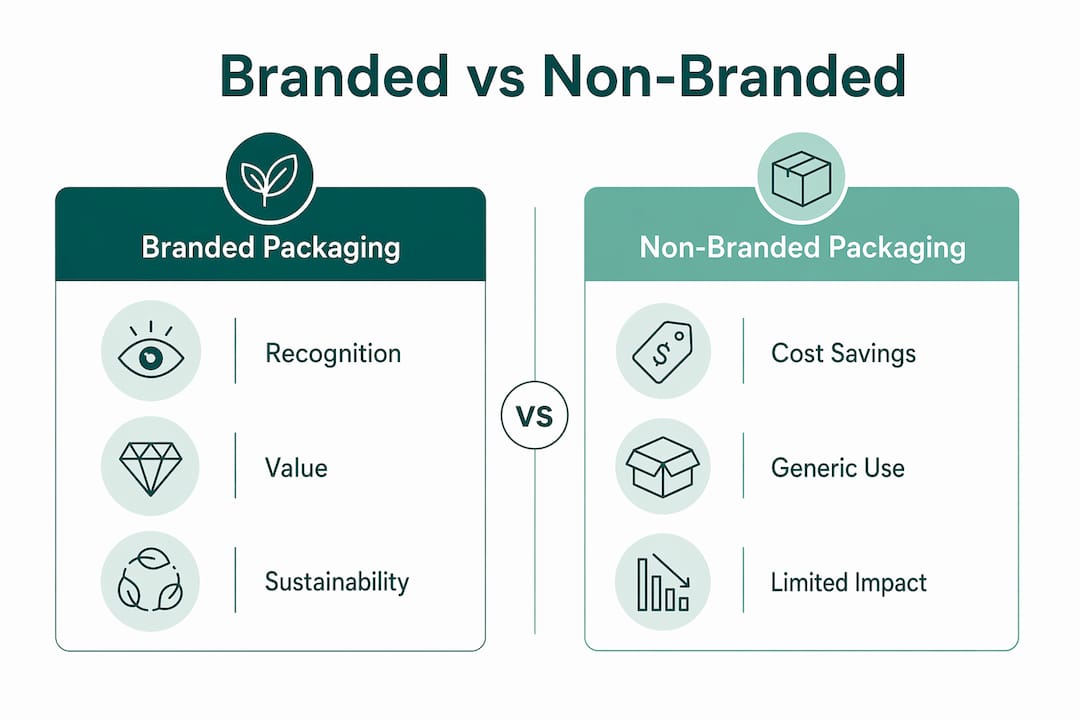
How does branded packaging differ from non-branded packaging?
Non-branded packaging is any generic, unprinted, or stock packaging with no visual connection to a specific brand. Plain brown kraft bags, unprinted white boxes, and clear poly mailers are common examples. They serve a functional purpose but deliver no brand signal.
The cost difference between branded and non-branded packaging is real, but the framing matters. Non-branded packaging has a lower per-unit cost. Branded packaging has a higher per-unit cost but generates marketing value with every use. The question is not which costs less. The question is which delivers more total value per dollar spent.
Pro Tip: Calculate the cost of branded packaging per customer impression, not just per unit. A paper shopping bag carried through a retail district generates dozens of brand impressions. That changes the math significantly.
Here is a direct comparison of the two approaches:
| Factor | Branded Packaging | Non-Branded Packaging |
|---|---|---|
| Brand recognition | High, consistent across channels | None |
| Customer perception | Premium, professional | Commodity, forgettable |
| Marketing value | Every use is a brand impression | No marketing return |
| Per-unit cost | Higher upfront | Lower upfront |
| Customer trust | Reinforced through visual consistency | Neutral or negative |
| Best use case | Retail, gifting, premium products | Internal logistics, bulk storage |
Non-branded packaging is appropriate for internal warehouse transfers, bulk ingredient shipments, or situations where the end customer never sees the outer packaging. For any customer-facing touchpoint, branded packaging is the stronger business decision.
How do you create branded packaging that balances brand and sustainability?
Creating branded packaging that works for both your brand identity and your sustainability commitments requires a structured process. Starting with brand guidelines and packaging function before selecting materials prevents costly redesigns later.
Follow this sequence:
- Start with brand guidelines. Pull your exact color codes, approved typefaces, and logo usage rules before briefing any manufacturer. Inconsistency at this stage creates print problems that are expensive to fix.
- Define the packaging function. A retail shopping bag has different structural requirements than a takeout delivery bag. Specify handle type, load capacity, and whether the bag needs to be tamper-resistant before selecting materials.
- Select sustainable materials. Recycled content paper, FSC®-certified stock, and water-based inks are the standard for brands with public sustainability commitments. Custom printed eco-friendly paper bags offer sustainable options without sacrificing print quality or customization.
- Specify print quality requirements. For paper shopping bags, flexo printing with water-based inks delivers vibrant color reproduction while meeting environmental standards. Confirm the number of colors your design requires and whether spot colors or process printing is appropriate.
- Test structural integrity. Durability testing including ink rub resistance and drop tests ensures branded packaging maintains its visual appeal and protective qualities through shipping and handling. A bag that tears at the handle or fades after one use damages brand perception more than plain packaging would.
- Consider modular or partial branding. For new product lines or limited runs, branded inserts, tissue paper, or custom tape applied to a stock bag reduces upfront cost while still delivering a brand signal.
- Partner with a domestic manufacturer. Domestic manufacturing of custom paper bags shortens lead times, improves quality control, and increases responsiveness to supply issues. These factors matter especially for brands with seasonal peaks or tight retail launch windows.
The table below maps each step to its primary outcome:
| Step | Primary Outcome |
|---|---|
| Brand guidelines review | Print consistency across all runs |
| Function specification | Correct structural design for use case |
| Sustainable material selection | Meets consumer and regulatory expectations |
| Print quality specification | Color accuracy and durability |
| Structural and ink testing | Protects product and brand through transit |
| Domestic manufacturer partnership | Reliable supply and faster turnaround |
Packaging design for sustainable branding requires treating material choice and print quality as equal priorities, not trade-offs. The best paper shopping bags deliver both.
Key takeaways
Branded packaging is the most cost-effective marketing asset a retail brand controls, and its value compounds with every customer-facing use.
| Point | Details |
|---|---|
| Core definition | Branded packaging applies logos, colors, and structure to reflect brand identity on every customer-facing package. |
| Sustainability matters | Recycled content, FSC®-certified paper, and water-based inks meet consumer expectations and strengthen brand reputation. |
| Structural integrity is non-negotiable | Packaging that fails during transit damages brand perception more than plain packaging would. |
| Partial branding reduces risk | Custom inserts or branded tape on stock bags let you test market response before committing to full custom runs. |
| Domestic sourcing improves reliability | Local manufacturers shorten lead times and improve quality control, which matters most during seasonal peaks. |
Why packaging is your quietest and most consistent brand asset
I have reviewed a lot of packaging briefs over the years, and the most common mistake I see is treating packaging as the last decision in a product launch rather than one of the first. By the time a brand gets to packaging, the budget is thin and the timeline is compressed. The result is a generic bag with a logo slapped on it, and that is a missed opportunity.
The brands that get the most out of their packaging treat it the same way they treat their storefront or their website. Every detail is intentional. The handle type, the paper weight, the color accuracy, the finish. These are not cosmetic choices. They are the physical expression of what the brand believes about itself.
The sustainability angle is not just a consumer preference trend. It is a procurement reality. Retailers and foodservice operators are increasingly required to document the environmental credentials of their packaging suppliers. FSC® certification, recycled content percentages, and water-based ink specifications are now part of vendor qualification conversations, not afterthoughts.
My recommendation for brands starting this process is to begin with partial branding. Test a custom-printed bag on your top-selling product line. Measure customer response. Then scale. This approach protects your budget and gives you real data before you commit to a full production run. Working with a domestic manufacturer makes this iteration cycle faster and more manageable.
— Taylor
How Gatherpackaging supports your branded packaging program
Gatherpackaging manufactures custom-printed paper shopping bags in Toronto, Canada, with 8-color flexo printing, FSC®-certified materials, recycled content options, and water-based inks. Their eco-friendly paper bag options include compostable, recycled, and biodegradable styles across turn-top, serrated-top, and tamper-resistant formats. Domestic production means shorter lead times and direct quality oversight from design through delivery. Whether you are launching a new retail line or scaling an existing packaging program, Gatherpackaging offers design assistance, prototyping, and quality assurance testing specific to paper shopping bags. Contact Gatherpackaging to discuss your custom paper bag requirements and get a production timeline that fits your retail schedule.
FAQ
What is the branded packaging definition in simple terms?
Branded packaging is any packaging that uses a company’s logos, colors, typography, and structural design to visually represent the brand. It turns functional packaging into a marketing asset at every customer touchpoint.
What are the most common examples of branded packaging?
Common examples include custom-printed paper shopping bags, branded tissue paper, printed mailer boxes, and labeled product pouches. For retail, paper shopping bags with logo printing and brand colors are among the most visible and widely used formats.
How do i start creating branded packaging on a limited budget?
Start with partial branding. Apply a custom stamp, branded sticker, or printed insert to a stock bag before investing in a full custom print run. This approach lets you test customer response and refine your design without a large upfront commitment.
Why does packaging structural integrity matter for branding?
A bag or box that fails during transit or use damages brand perception regardless of how well it is printed. Structural integrity testing, including drop tests and ink rub resistance checks, protects both the product and the brand impression it carries.
How does domestic manufacturing affect branded packaging quality?
Domestic manufacturers offer faster turnaround, direct quality oversight, and quicker responses to production issues. For brands with seasonal retail peaks or tight launch windows, local production reduces supply chain risk and supports consistent quality across runs.
Share:
How to Manage Wholesale Paper Bag Orders: 2026 Guide
Visual Storytelling in Packaging: A Brand Strategist's Guide