

TL;DR:
- Visual storytelling in packaging uses color, typography, imagery, and layout to quickly convey brand values and narratives. Integrating packaging early in product development ensures alignment, reduces costs, and maximizes its role as a powerful marketing asset. Verifiable sustainability messaging and measurable impact metrics strengthen brand trust and effectiveness in consumer engagement.
Visual storytelling in packaging is the deliberate use of color, typography, imagery, and structural design to communicate a brand’s values and narrative before a consumer ever opens the product. The role of visual storytelling in packaging has moved from a design preference to a business requirement. Packaging design influences purchase decisions for 72% of consumers who decide within 3–7 seconds of seeing a product. That window is not a design challenge. It is a strategic one. For brand strategists and marketing professionals working with paper shopping bags and retail packaging, understanding how visual narrative works at every design layer is the difference between packaging that sells and packaging that gets ignored.
How does visual storytelling in packaging actually work?
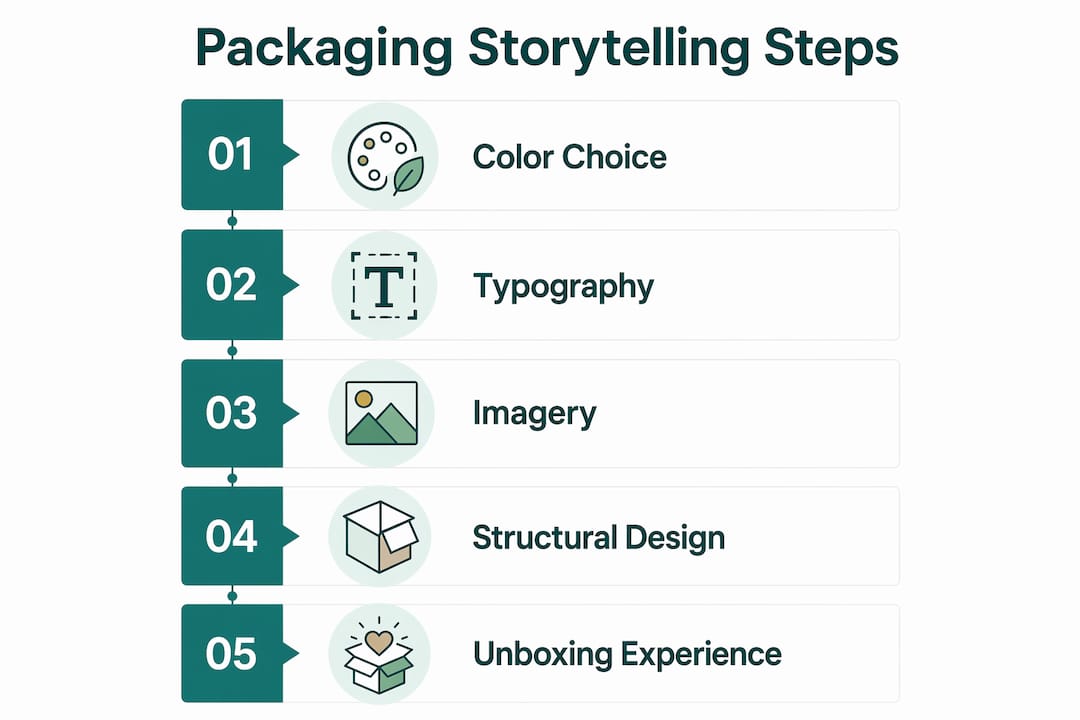
Visual storytelling in packaging operates through four design systems working in concert: color, typography, imagery, and layout. Each carries meaning independently. Together, they deliver a brand’s full narrative in a fraction of a second.
Color is the fastest communicator in packaging design. It triggers emotional associations before the brain processes text. A warm kraft brown signals natural and sustainable. A bold, high-contrast palette signals confidence and energy. Color palettes function as brand identifiers that consumers recognize across product lines, retail environments, and social media feeds.
Typography does more than display words. It establishes hierarchy, signals brand personality, and controls where the eye travels. No more than two or three typefaces should appear on any package, with explicit visual hierarchy to prevent consumer confusion. A serif headline paired with a clean sans-serif body copy communicates heritage and clarity simultaneously.

Imagery and illustration carry origin stories, cultural references, and brand personality in ways copy cannot. Fishwife, the DTC tinned seafood brand, built its entire identity around illustrated packaging that doubled as social media content. The illustration style communicated playfulness, quality, and sustainability without a single word of explanation.
Layout and graphic hierarchy determine what the consumer sees first, second, and third. On a paper shopping bag, the primary visual zone is the front panel. The brand mark anchors trust. A secondary illustration or pattern extends the story. A tagline or material callout closes the narrative loop.
- Lead with your strongest visual asset in the primary panel
- Reserve secondary panels for brand story extensions, sustainability credentials, or product detail
- Use negative space deliberately. Crowded packaging reads as low-value
- Align typography scale with the physical size of the bag. A headline that reads well on a screen may disappear on a small gift bag
Pro Tip: Test your packaging design at arm’s length and in motion. Retail shoppers rarely stop to study a bag. If the brand story does not land in a glance, the design needs revision.
Why packaging is strategic infrastructure, not a cosmetic step
Packaging is the highest-distribution creative asset for most DTC and retail brands. Every bag that leaves a store carries the brand into new environments, new hands, and new social media posts. That reach costs nothing beyond the original production investment.
Most brands treat packaging as the last step in product development. That sequencing creates expensive problems. When packaging is designed after brand identity, marketing strategy, and retail placement decisions are already locked, the result is misalignment. The bag looks like a different brand than the website. The sustainability messaging on the package contradicts the materials used. The typography does not match the brand standards.
“Packaging is not just an aesthetic layer but a strategic framework requiring early brand integration to avoid bottlenecks in conversion.” — Design Force
Brands that integrate packaging into the creative brief from day one avoid these costs. Early investment in illustration and structural design leads to packaging that generates organic social content, reduces customer acquisition costs, and builds brand recognition that compounds over time. Social media creative has an average lifespan of approximately 11 days. A well-designed paper shopping bag circulates for weeks in the real world.
Here is the sequence that high-performing brands follow:
- Define the brand story and core values before any design brief is written
- Brief packaging alongside digital creative, not after it
- Select materials and structural formats that support the brand promise physically
- Build sustainability messaging into the narrative from the start, not as an afterthought
- Align packaging specifications with retail and logistics requirements before finalizing design
Pro Tip: Bring your packaging manufacturer into the brief process early. Domestic manufacturers like Gatherpackaging can flag material and print constraints before they become costly redesigns.
What narrative techniques make packaging design more compelling?
Narrative techniques in packaging design fall into two categories: visual language and structural experience. Both require deliberate planning. Neither happens by accident.
Silent storytelling across languages
Silent storytelling through layered typography, color hierarchy, and structural design conveys brand meaning across cultures without relying on copy. This approach is particularly valuable for brands operating in multilingual retail environments or exporting to international markets. A paper shopping bag with a strong illustrated pattern, a clear brand mark, and a single material callout communicates quality and identity in any language.
Iconography carries weight that copy cannot. A small FSC® certification mark on a kraft paper bag tells a sustainability story in one symbol. A hand-drawn illustration signals craft and care. A geometric pattern signals modernity and precision.
Unboxing and structural design as narrative devices
The physical experience of receiving and opening a package is a storytelling moment. Choreographing the unboxing experience to trigger shareability deepens emotional connection with customers. For paper shopping bags, this means thinking about handle quality, tissue paper interaction, interior printing, and the sound and feel of the bag itself.
Drunk Elephant built a loyal following partly through unboxing experiences that felt intentional and premium. The packaging communicated the same values as the product: clean, deliberate, and worth the price.
| Technique | Best Used For | Paper Bag Application |
|---|---|---|
| Illustrated patterns | Brand personality and storytelling | Full-panel flexo printing on front and sides |
| Layered typography | Hierarchy and readability | Brand mark plus tagline plus material callout |
| Sustainability iconography | Trust and transparency | FSC® mark, recycled content callout |
| Interior printing | Surprise and delight | Inside panel color or brand message |
| Structural texture | Tactile brand experience | Kraft finish, matte laminate, or soft-touch coating |
Integrating sustainability messaging authentically
Sustainability messaging must be transparent and verifiable to maintain consumer trust. Brands face real pressure to reduce packaging waste without losing narrative identity. The solution is to make the material choice part of the story. A paper shopping bag made from FSC®-certified materials with water-based inks is not just a functional container. It is a proof point for the brand’s values. That story belongs on the bag, stated plainly and backed by certification.
- State the material clearly: “Made from recycled kraft paper”
- Reference the certification: FSC®-certified or post-consumer recycled content
- Connect the material to the brand value: “Because what we put in the bag matters as much as what we put in the product”
How do you measure the impact of visual storytelling on packaging?
The global consumer packaging market was valued at $655 billion in early 2026 and is projected to reach $950 billion by 2034. That scale reflects how seriously the industry treats packaging as a business driver, not a cost center. Measuring its impact at the brand level requires specific metrics.
Consumers make rapid quality judgments based on packaging visuals. Premium packaging supports higher pricing and builds trust, according to research by Ipsos for the Paper and Packaging Board. That finding has a direct implication: brands that underinvest in packaging design leave pricing power on the table.
Visual storytelling improves brand memory retention by leveraging faster brain processing of visuals than text. Color palettes and typography become brand recall triggers. A consumer who cannot name your brand may still recognize your bag across a crowded retail floor.
Brand marketers can track packaging impact through several measurable indicators:
- Repeat purchase rate correlated with packaging satisfaction surveys
- Social media mentions and user-generated content featuring the bag
- Net Promoter Score questions that reference the unboxing or in-store experience
- Return rates as a proxy for expectation alignment between packaging and product
The most common pitfall is treating packaging analytics in isolation. Packaging decisions include logo placement, color, typography, and sustainability messaging within a unified strategic framework. Measuring only one variable produces misleading conclusions.
Pro Tip: Align packaging performance data with your broader marketing measurement calendar. If a new bag design launches in Q2, track social mentions and repeat purchase rates through Q3 before drawing conclusions.
Key takeaways
Effective visual storytelling in packaging requires integrating design, material choice, and brand narrative from the earliest stage of product development, not as a finishing step.
| Point | Details |
|---|---|
| Design communicates before copy | Color, typography, and imagery deliver brand meaning within 3–7 seconds of consumer contact. |
| Packaging is a marketing asset | A well-designed paper bag circulates far longer than paid social creative and compounds brand exposure at no additional cost. |
| Early integration reduces cost | Brands that brief packaging alongside digital creative avoid expensive misalignment and redesign cycles. |
| Sustainability must be verifiable | Sustainability claims on packaging require certification backing to maintain consumer trust and brand credibility. |
| Measure across multiple signals | Track social mentions, repeat purchase rates, and NPS alongside packaging changes to assess real impact. |
Packaging storytelling is harder than it looks
I have reviewed hundreds of packaging briefs over the years, and the most consistent mistake I see is treating the bag as a container with a logo on it. That framing costs brands real money. The packaging is often the first physical touchpoint a customer has with a brand. It sets the expectation for everything that follows.
What I find genuinely underappreciated in 2026 is how much the material choice itself communicates. A brand that talks about sustainability on its website but ships in a generic, unbranded plastic bag has a credibility problem. Conversely, a brand that hands a customer a well-constructed kraft paper bag with clean flexo printing and an FSC® mark has already made a brand promise and kept it before the product is even seen.
The brands I respect most treat packaging as a living part of the creative system. They update it seasonally. They test new illustration styles. They use the bag as a content asset, not just a logistics solution. Domestic manufacturing partnerships make that kind of iteration practical. Shorter lead times and direct communication with the production team mean you can move from concept to shelf faster without sacrificing print quality.
The uncomfortable truth is that most brands know their packaging underperforms. They just do not know where to start fixing it. Start with the story. Then work backward to the design. Then find a manufacturer who can execute it with the quality and consistency the story deserves.
— Taylor
Bring your packaging story to life with Gatherpackaging
Gatherpackaging manufactures high-quality paper shopping bags in Toronto, Canada, with 8-color flexo printing capabilities that bring brand stories to life at retail scale. If your packaging is not working as hard as your other marketing assets, that is a fixable problem. Gatherpackaging offers custom paper shopping bags built from FSC®-certified materials, recycled content, and water-based inks, with design assistance and prototyping support included. Whether you are building a new retail line or refreshing an existing one, the team can help you align your sustainable packaging design with the brand story you are trying to tell. Contact Gatherpackaging to discuss your paper bag requirements and get a production timeline that fits your retail calendar.
FAQ
What is visual storytelling in packaging?
Visual storytelling in packaging is the use of color, typography, imagery, and structural design to communicate a brand’s values and narrative at the point of consumer contact. It operates before any copy is read, influencing purchase decisions within seconds.
How does packaging design influence consumer purchase decisions?
Research by Ipsos for the Paper and Packaging Board shows packaging influences purchase decisions for 72% of consumers, with most decisions made within 3–7 seconds. Visual clarity and brand consistency are the primary drivers of that influence.
Why should packaging be integrated early in brand development?
Packaging briefed alongside digital creative avoids costly misalignment between physical and digital brand experiences. Disconnect between online promises and physical packaging delivery results in higher return rates and loss of consumer trust.
How can sustainability messaging be included in packaging storytelling?
Sustainability claims must be backed by verifiable certifications such as FSC® to maintain credibility. State the material, reference the certification, and connect both to the brand’s core values directly on the package.
What metrics track packaging storytelling effectiveness?
Track social media mentions featuring the packaging, repeat purchase rates, NPS scores referencing the unboxing experience, and return rates. Align these metrics with packaging change timelines to isolate the design’s contribution to brand performance.
Share:
What Is Branded Packaging? A Guide for Retailers
How to Select Bag Sizes for Retail and Foodservice