

TL;DR:
- Choosing the right bag size depends on internal dimensions that fit your product and customer needs, not just exterior specs.
- Always measure your actual items, add at least 4-5 cm clearance, and verify gusset depth before ordering.
Selecting the right bag size means matching your packaging’s internal dimensions to your product and customer requirements, not just picking a number off a spec sheet. Get it wrong and you end up with bags that crush merchandise, look sloppy on the shelf, or frustrate customers at the register. This guide covers how to select bag sizes using the measurements that actually matter: internal width, height, gusset depth, and handle drop. Whether you’re a retailer sourcing paper shopping bags or a foodservice operator ordering takeout bags, the method is the same. Start with your product, work outward to the bag.
How to select bag sizes: the dimensions that actually matter
Bag sizing in the packaging industry is defined by four measurements: width, height, gusset (depth), and handle drop. Width and height are the most visible numbers on a spec sheet, but they are often exterior measurements. What matters for product fit is the internal usable space, which accounts for material thickness, seam allowances, and gusset fold.

Exterior dimensions can be misleading; the internal usable space, opening width, and base gusset depth determine actual capacity. A bag that measures 14 inches wide on the outside may offer only 12.5 inches of usable internal opening. That gap matters when you’re fitting a boxed product or a clamshell container.
Gusset depth is the most underestimated measurement in bag selection. Bag depth critically affects volume; a wide but shallow bag cannot fit bulky items despite large width or height numbers. Always check the gusset before committing to a size.
Handle drop also affects usability in ways buyers often overlook. A strap drop of 20–25 cm (8–10 inches) is the standard for comfortable shoulder carry. For retail shopping bags carried by hand, a shorter drop of 10–15 cm works well. For foodservice takeout bags, a longer drop improves grip and reduces spill risk during delivery.
Standard bag size categories and typical use cases
Industry standard sizing categories by width are Small (18–24 cm), Medium (25–34 cm), Large (35–45 cm), and Oversized (45 cm+). Capacity in liters follows a parallel scale: Small bags hold 1–5 liters, Medium bags hold 6–15 liters, and Oversized bags hold 16 liters or more. These ranges give you a functional starting point before you ever touch a tape measure.
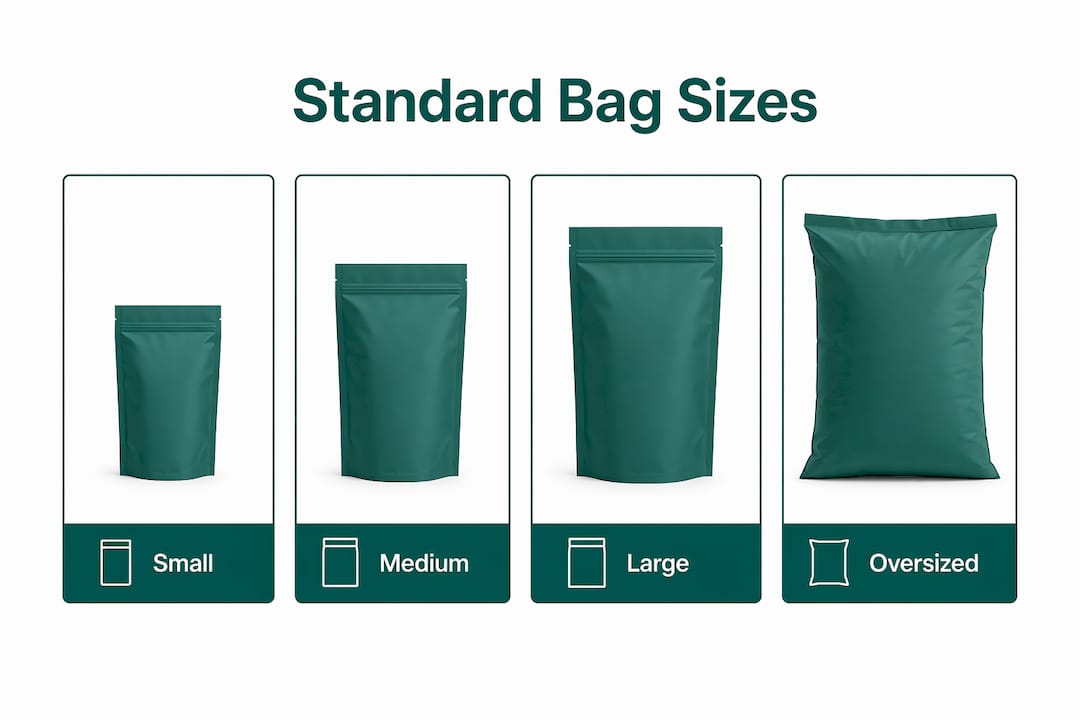
| Size Category | Width | Capacity | Typical Use Case |
|---|---|---|---|
| Small | 18–24 cm (7–9 in) | 1–5 L | Promo items, jewelry, accessories |
| Medium | 25–34 cm (10–13 in) | 6–15 L | Apparel, gift retail, everyday shopping |
| Large | 35–45 cm (14–18 in) | 15–25 L | Footwear, bulky merchandise, multi-item orders |
| Oversized | 45+ cm (18+ in) | 16+ L | Trade show kits, corporate gifts, bulk takeout |
For tote-style paper bags, typical dimensions range from Small at 8x10x3 inches for giveaways to Oversized at 18x20x6 inches for trade shows. These benchmarks apply directly to paper shopping bags used in retail and foodservice.
Pro Tip: Always request internal dimensions from your manufacturer, not just the printed exterior spec. Gatherpackaging provides both on request, which removes guesswork before production begins.
How to measure your products and check your inventory
The most reliable method for choosing bag dimensions starts with a physical inventory check of everything the bag will carry. List every item: the primary product, tissue paper or filler, inserts, receipts, and any accessories. Then identify the largest rigid item in that group. That item sets your minimum internal bag opening.
- Measure the largest rigid item at its widest, tallest, and deepest points. Use a tape measure, not a product spec sheet. Boxes compress; actual products sometimes do not.
- Add internal clearance. A 4–5 cm margin between the bag’s internal dimensions and the product is industry best practice. This prevents damage during insertion and reduces stress on handles and seams.
- Check the bag opening width separately. A bag can have the right overall width but a narrow opening that makes loading difficult. Confirm the opening measurement matches your product plus clearance.
- Account for all contents together. Place all items side by side on a flat surface and measure the combined footprint. This gives you the true minimum base dimension the bag needs to accommodate.
- Verify gusset depth against your deepest item. If your product is 8 cm deep and the bag gusset is 6 cm, the bag will bulge and the base will fail under load.
Pro Tip: Build a physical mockup using cardboard cut to your target bag dimensions before placing a production order. This takes 10 minutes and prevents costly resizing after samples arrive.
This process applies equally to paper bag design for retail and takeout bag selection for foodservice. The product dictates the bag, not the other way around.
How do customer usage and body proportion affect bag size?
The end customer’s physical context changes which bag size works best in practice. A bag that fits the product perfectly may still feel awkward or oversized to the person carrying it. This matters most for retail brands where the bag is part of the customer experience.
Customers under 5’4" are generally better served by small to medium bags that do not overwhelm their frame. Customers over 5’7" can carry medium to oversized bags with better aesthetic balance. For retailers, this means your bag size should reflect your core customer demographic, not just your product dimensions.
Usage context also drives the right choice:
- Gift retail and boutique: Medium bags (25–34 cm wide) work for most apparel and accessory purchases. They look proportionate, carry well, and photograph cleanly for social media.
- Footwear and bulky merchandise: Large bags (35–45 cm wide) accommodate shoe boxes and folded outerwear without straining handles or seams.
- Foodservice takeout: Bag volume and base stability matter more than aesthetics. A medium to large bag with a wide gusset keeps containers upright and reduces spill risk.
- Events and trade shows: Oversized bags (45 cm+) carry multiple items and branded inserts, but they become unwieldy for customers on foot. Consider handle length carefully.
Understanding why custom bag sizes matter for your brand goes beyond product fit. A bag that suits your customer’s physical context reinforces brand quality at the moment of purchase.
What are the most common bag sizing mistakes?
The most frequent error in bag size selection is choosing based on aesthetics before confirming functional capacity. Choosing bags for style first rather than functional capacity causes practical disappointment and increases return rates. Style and function are not mutually exclusive, but function must come first in the selection sequence.
Other common mistakes include:
- Relying on exterior dimensions only. An ample exterior width can hide a narrow internal volume that will not fit intended products. Verifying bag opening width and base gusset is critical before finalizing any size.
- Ignoring gusset depth for rigid products. Buyers often size bags by width and height, then discover the gusset is too shallow for boxed items. Measure depth first when your product has significant bulk.
- Underestimating clearance requirements. Skipping the 4–5 cm internal margin leads to bags that are difficult to load, damage product edges, and fail at the seams under normal use.
- Choosing one size for all SKUs. Retailers with multiple product lines often try to standardize on a single bag size to simplify ordering. This works only if your product range is genuinely similar in dimension. Otherwise, you end up with oversized bags for small items, which wastes material and looks unprofessional.
- Skipping sample testing before bulk orders. A sample run with your actual products loaded inside reveals fit issues that no spec sheet will show.
Before committing to a production run, load your actual products into a physical sample bag. If the product fits with room to spare and the handles hold the weight without distortion, the size is right. If anything feels forced, resize before you order thousands.
Consulting your manufacturer early in the process prevents most of these errors. Gatherpackaging works with buyers to confirm internal dimensions, gusset specs, and handle configurations before production begins.
Industry standard sizes for retail and foodservice paper bags
Paper shopping bags and takeout bags follow consistent dimension standards across the industry. Knowing these benchmarks helps you choose the right paper bags for retail and foodservice without starting from scratch on every order.
| Bag Type | Width | Height | Gusset | Best For |
|---|---|---|---|---|
| Small promo bag | 8 in (20 cm) | 10 in (25 cm) | 3 in (7.5 cm) | Jewelry, cosmetics, small gifts |
| Medium shopping bag | 13 in (33 cm) | 15 in (38 cm) | 4 in (10 cm) | Apparel, accessories, mid-size retail |
| Large merchandise bag | 15 in (38 cm) | 18 in (46 cm) | 5 in (12.5 cm) | Footwear, folded outerwear, multi-item |
| Takeout delivery bag | 12 in (30 cm) | 14 in (35 cm) | 6 in (15 cm) | Foodservice containers, meal kits |
| Oversized event bag | 18 in (46 cm) | 20 in (51 cm) | 6 in (15 cm) | Trade shows, corporate kits, bulk retail |
The takeout delivery bag stands apart from retail bags in one key way: gusset depth takes priority over width. A wide, shallow takeout bag tips over easily and fails to keep containers stable. A narrower bag with a deep gusset performs better in delivery contexts.
Paper material and construction also affect usable size. Kraft paper bags with reinforced handles carry more weight without handle failure, which matters when you’re sizing up for heavy merchandise. FSC-certified paper maintains structural integrity across size categories, which is why Gatherpackaging uses it as a standard material across their product range.
Key takeaways
Selecting the right bag size requires measuring internal dimensions, not just exterior specs, and validating fit with your actual products before ordering at scale.
| Point | Details |
|---|---|
| Internal dimensions decide fit | Always confirm internal width, height, and gusset depth, not just exterior measurements. |
| Use 4–5 cm clearance | Add a minimum 4–5 cm margin beyond your largest product dimension to prevent damage and loading difficulty. |
| Gusset depth is the critical variable | Check gusset before width or height when your product has significant bulk or rigid packaging. |
| Match size to customer context | Align bag size with your customer demographic and usage scenario, not just product dimensions. |
| Test before bulk ordering | Load actual products into a physical sample to confirm fit, handle strength, and base stability. |
Why I think most buyers size bags in the wrong order
Most packaging buyers I’ve worked with start with aesthetics: they find a bag they like the look of, then try to make their product fit it. That sequence almost always creates problems. The bag either looks overstuffed, or it’s so large that the product rattles around inside and the brand impression suffers.
The right sequence is product first, then function, then aesthetics. Measure your largest item, add your clearance margin, check the gusset, confirm the handle drop works for your customer, and then choose the finish and print. When you work in that order, the final bag looks good because it fits properly, not despite how it fits.
Medium bags are the most versatile for a reason. They cover the widest range of retail products without looking disproportionate on most customers. If you’re unsure where to start, a medium-width bag with a 4-inch gusset handles the majority of apparel and accessory use cases.
One more thing: bag sizing is not a one-time decision. As your product line changes, your bag specs should be reviewed. A retailer who added a new footwear line without updating their bag program ended up handing customers a bag that barely closed. That’s a brand experience problem, not just a logistics problem. Build a review cycle into your packaging program, and treat your manufacturer as a technical partner in that process.
— Taylor
How Gatherpackaging helps you get bag sizing right
Gatherpackaging manufactures custom paper shopping bags and takeout bags from its Toronto facility, with sizing options across the full range from small promo bags to oversized merchandise carriers. Their team works directly with retail buyers and foodservice operators to confirm internal dimensions, gusset specs, and handle configurations before any production run begins. Every bag is made with FSC-certified materials and available with water-based ink printing in up to 8 colors. If you’re sourcing eco-friendly paper bags that meet specific size and sustainability requirements, Gatherpackaging provides prototyping and quality assurance as part of the process. Contact Gatherpackaging to discuss your bag size requirements and get a custom quote for your retail or foodservice program.
FAQ
What dimensions should I measure to select the right bag size?
Measure internal width, height, and gusset depth, not just exterior dimensions. Add a 4–5 cm clearance margin beyond your largest product to confirm the bag will load and close without stress on seams or handles.
What is the standard bag size for retail paper shopping bags?
A medium paper shopping bag at approximately 13x15x4 inches (33x38x10 cm) covers most apparel and accessory retail needs. Large bags at 15x18x5 inches suit footwear and bulky merchandise.
How do I size a takeout bag for foodservice?
Prioritize gusset depth over width for takeout bags. A bag with a 6-inch gusset keeps food containers upright and stable during delivery. Standard takeout bag dimensions run approximately 12x14x6 inches.
Why do exterior bag measurements not match the product fit?
Exterior dimensions include material thickness, seam allowances, and folded gussets that reduce internal usable space. Always request internal measurements from your manufacturer before finalizing a bag size for production.
How many size categories do standard paper bags fall into?
Standard sizing runs four categories: Small (18–24 cm wide), Medium (25–34 cm), Large (35–45 cm), and Oversized (45 cm+). Each category corresponds to a capacity range from 1–5 liters for small bags up to 16 liters or more for oversized formats.
Share:
Visual Storytelling in Packaging: A Brand Strategist's Guide
Eco-Friendly Bag Certifications List for Brands in 2026