

TL;DR:
- Eco-friendly bag certifications include standards like EN 13432, GRS, GOTS, and OEKO-TEX, which verify different sustainability claims. Proper certification requires thorough documentation of components, supply chain verification, and understanding distinctions between standards like industrial and home compostability. Brands must combine multiple certifications and verify each supply chain stage to prevent greenwashing and ensure compliance.
Eco-friendly bag certifications are third-party verified standards that confirm a bag’s environmental, chemical, social, or biodegradability claims meet defined criteria. The most recognized certifications in this space include EN 13432, ASTM D6400, the Global Recycled Standard (GRS), the Global Organic Textile Standard (GOTS), and OEKO-TEX Standard 100. Each one addresses a different dimension of sustainability, which means no single badge covers everything. For brands and procurement teams building a credible packaging program, understanding this eco-friendly bag certifications list is the first step toward meeting both regulatory requirements and buyer expectations.
1. What are industrial compostability certifications for eco-friendly bags?
Industrial compostability certifications verify that a bag material breaks down completely under controlled composting conditions. EN 13432 and ASTM D6400 are the two primary standards, each requiring 90% biodegradation within 180 days under industrial conditions. EN 13432 is mandatory for EU imports, while ASTM D6400 is the dominant standard in North America.
Certification bodies that issue these marks include TÜV Austria (which issues the OK Compost INDUSTRIAL label), DIN CERTCO, and the Biodegradable Products Institute (BPI) in North America. Each body runs rigorous lab testing before issuing a certificate. The process is not a self-declaration. It requires documented test results from accredited laboratories.
One of the most common misconceptions is that industrial compostability equals home compostability. These are entirely separate certifications. Home compostability requires a distinct mark such as OK Compost HOME, which is far less common for bags and involves lower temperature thresholds. A bag certified under EN 13432 will not necessarily break down in a backyard compost bin.
Material selection matters at every component level. Non-compliant inks, adhesives, or plastic closures can disqualify a bag from compostable certification even when the base substrate qualifies. Comprehensive compliance dossiers, including PFAS-free declarations and migration test results, are required documentation for full certification integrity.
Key materials that commonly meet EN 13432 or ASTM D6400 include:
- Unbleached kraft paper with water-based inks
- PLA-lined paper composites (when PLA meets the standard)
- Certified compostable adhesives and handles
- Bags free from metallic foils or synthetic coatings
Pro Tip: Request the full compliance dossier from your supplier, not just the certificate. A certificate number alone does not confirm that every component, including inks and handles, passed testing.
2. Global Recycled Standard (GRS): the key recycled content certification
The Global Recycled Standard (GRS) is the leading certification for verifying recycled content in bags and packaging. GRS requires at least 20% recycled content to enter certification, but a product must contain 50% or more recycled content to use the GRS logo and make public recycled content claims. That threshold distinction matters significantly for marketing.
GRS goes well beyond a simple material content check. The GRS certification system includes chemical safety audits, environmental compliance, social standards, and supply chain traceability. Transaction Certificates (TCs) are issued at each stage of the supply chain to confirm that certified recycled materials actually passed through each processing site.

A common buyer mistake is assuming that a final manufacturer’s GRS certificate covers the entire supply chain. It does not. Every supply chain stage must hold its own certification and issue TCs to confirm material flow. Brands that skip this verification expose themselves to greenwashing liability.
GRS also distinguishes between two types of claims:
- Product claim: The specific product contains a verified percentage of recycled content.
- System claim: The manufacturer’s overall production system meets GRS requirements, but individual products may not carry the logo.
Understanding which claim applies to your bags determines what you can legally state on packaging and in marketing materials. Misrepresenting a system claim as a product claim is a documented source of false labeling in the industry.
Pro Tip: Match your GRS certification level to your actual marketing claims. If your bags carry the GRS logo on retail packaging, every supplier in your chain needs a current TC on file before you print.
3. GOTS vs. OCS: organic fiber certifications compared
Organic fiber certifications apply primarily to cotton bags and tote bags made from natural fibers. The two main standards are the Global Organic Textile Standard (GOTS) and the Organic Content Standard (OCS). They are not interchangeable.
GOTS mandates at least 70% organic fiber content and applies strict chemical restrictions, environmental processing standards, and social compliance requirements across the entire supply chain. Products with 95% or more organic content can be labeled “organic.” Products with 70–94% content are labeled “made with organic” materials. GOTS is the more demanding and more credible certification for premium retail positioning.
OCS tracks only the volume of organic material in a product. It does not audit processing chemicals, labor conditions, or environmental practices at manufacturing facilities. OCS is appropriate when a brand needs to verify organic fiber origin without the full cost and complexity of GOTS compliance.
| Certification | Organic fiber minimum | Chemical standards | Social compliance | Best use case |
|---|---|---|---|---|
| GOTS | 70% | Yes, strict | Yes | Premium retail, apparel, branded totes |
| OCS | Must contain organic content | No | No | Budget projects, fiber traceability only |
For brands selling certified sustainable bags in premium retail or corporate gifting channels, GOTS carries significantly more weight with buyers and end consumers. OCS is a reasonable starting point for brands new to organic sourcing that are not yet ready for full GOTS compliance costs.
4. OEKO-TEX Standard 100: chemical safety certification for bags
OEKO-TEX Standard 100 certifies that every component of a textile product, including threads, dyes, and accessories, has been tested and found free from harmful substances. OEKO-TEX Standard 100 does not certify that a bag is sustainable, organic, or made from recycled content. That distinction is critical and frequently misunderstood.
OEKO-TEX is issued by the OEKO-TEX Association and involves laboratory testing against a list of over 100 substances, including heavy metals, pesticides, and formaldehyde. The certification applies to the finished product, not just the raw fiber. That makes it one of the most consumer-relevant safety certifications available for bags.
Brands should position OEKO-TEX Standard 100 correctly in their communications:
- Use it to support claims about product safety and skin contact suitability.
- Do not use it as a standalone sustainability claim.
- Pair it with GRS, GOTS, or compostability certifications to build a complete picture.
The multilayered certification approach is the recognized best practice. No single certification covers all aspects of sustainability. OEKO-TEX fills the chemical safety gap that GRS and GOTS do not fully address.
5. FSC certification: sustainable sourcing for paper bags
The Forest Stewardship Council (FSC) certification applies specifically to paper and wood-based products. FSC verifies that the paper used in a bag originates from responsibly managed forests that meet environmental, social, and economic standards. For paper shopping bags, FSC is one of the most directly relevant green certifications available.
FSC certification comes in three forms: FSC 100% (all material from FSC-certified forests), FSC Recycled (all material from reclaimed sources), and FSC Mix (a combination of certified, recycled, and controlled wood). Each label carries a different claim, and brands must use the correct label for their product’s actual material composition.
Gatherpackaging uses FSC-certified materials in its paper bag production, which means the fiber sourcing meets verified chain-of-custody requirements. For retail brands that sell into European markets or work with sustainability-focused retailers, FSC certification on paper bags is frequently a procurement requirement, not an optional add-on.
6. How to compare and choose the right certifications for your brand
Choosing the right eco bag standards depends on your product type, target market, and the specific sustainability claims you want to make. A compostable foodservice bag needs EN 13432 or ASTM D6400. A recycled cotton tote for retail needs GRS or GOTS. A paper shopping bag for a European retailer needs FSC and potentially EN 13432 if compostability is claimed.
| Certification | Scope | Best for | Geographic relevance |
|---|---|---|---|
| EN 13432 | Industrial compostability | Compostable bags, foodservice | EU (mandatory) |
| ASTM D6400 | Industrial compostability | Compostable bags | North America |
| GRS | Recycled content, supply chain | Recycled material bags | Global |
| GOTS | Organic fiber, processing, social | Organic cotton totes | Global, premium retail |
| OCS | Organic fiber traceability only | Budget organic projects | Global |
| OEKO-TEX 100 | Chemical safety | All textile bags | Global |
| FSC | Responsible forest sourcing | Paper bags | Global, EU priority |
Practical guidance by use case:
- Retail paper shopping bags: FSC certification plus water-based inks as a baseline. Add compostability certification if making biodegradable claims.
- Corporate gifting totes: GOTS for premium organic cotton. OEKO-TEX Standard 100 for safety assurance.
- Foodservice takeout bags: ASTM D6400 or EN 13432 for compostability. Verify every component including handles and adhesives.
- Export to EU: EN 13432 for compostable claims. FSC for paper. Biodegradable claims without lab certification risk consumer protection actions under EU regulations.
Understanding certification thresholds and documentation requirements is the most direct way to avoid false marketing and regulatory penalties. Verify every stage of your supply chain, not just the final product.
Pro Tip: Prioritize certifications that directly address your highest greenwashing risk. If your brand makes recycled content claims, GRS with full TC documentation is non-negotiable. If you claim compostability, request the full lab test report, not just the certificate.
Key takeaways
The most defensible sustainable packaging program combines multiple certifications because each standard covers a different dimension of environmental and social compliance.
| Point | Details |
|---|---|
| No single certification covers everything | Combine FSC, GRS, GOTS, and OEKO-TEX to address sourcing, content, safety, and processing. |
| Component compliance matters | Inks, adhesives, and handles must meet certification requirements, not just the base material. |
| Supply chain TCs are mandatory for GRS | Every processing stage needs its own GRS certificate and Transaction Certificate on file. |
| OEKO-TEX is a safety cert, not a sustainability badge | Use it alongside other certifications, not as a standalone green claim. |
| EN 13432 and ASTM D6400 are not interchangeable | EN 13432 is required for EU markets; ASTM D6400 governs North American compostability claims. |
What I’ve learned about certifications that most brands get wrong
The most common mistake I see brands make is treating a certificate as a finish line. A supplier hands over a GRS certificate, the procurement team files it, and everyone moves on. Six months later, a retailer’s compliance audit reveals that a converting facility in the middle of the supply chain was never certified. The certificate was real. The supply chain claim was not.
Certifications reduce greenwashing only when every link in the chain is verified. That requires Transaction Certificates at each stage, not just a certificate from the final manufacturer. Most brands do not ask for TCs until a problem surfaces.
The second issue I see consistently is misusing OEKO-TEX Standard 100 as a sustainability signal. It is a chemical safety certification. It tells your customer the bag will not harm them. It does not tell them the bag was made responsibly or from recycled materials. Brands that lead with OEKO-TEX as their primary green credential are setting themselves up for scrutiny.
My practical advice: build your certification portfolio around the claims you actually make. If your bags are marketed as recycled, get GRS with full TC documentation. If they are marketed as compostable, get EN 13432 or ASTM D6400 with a complete compliance dossier. If you sell into the EU, treat EN 13432 as a baseline requirement, not a premium add-on. Certifications are only as strong as the documentation behind them. Ask for the paperwork, not just the logo.
— Taylor
Gatherpackaging’s certified eco-friendly paper bags
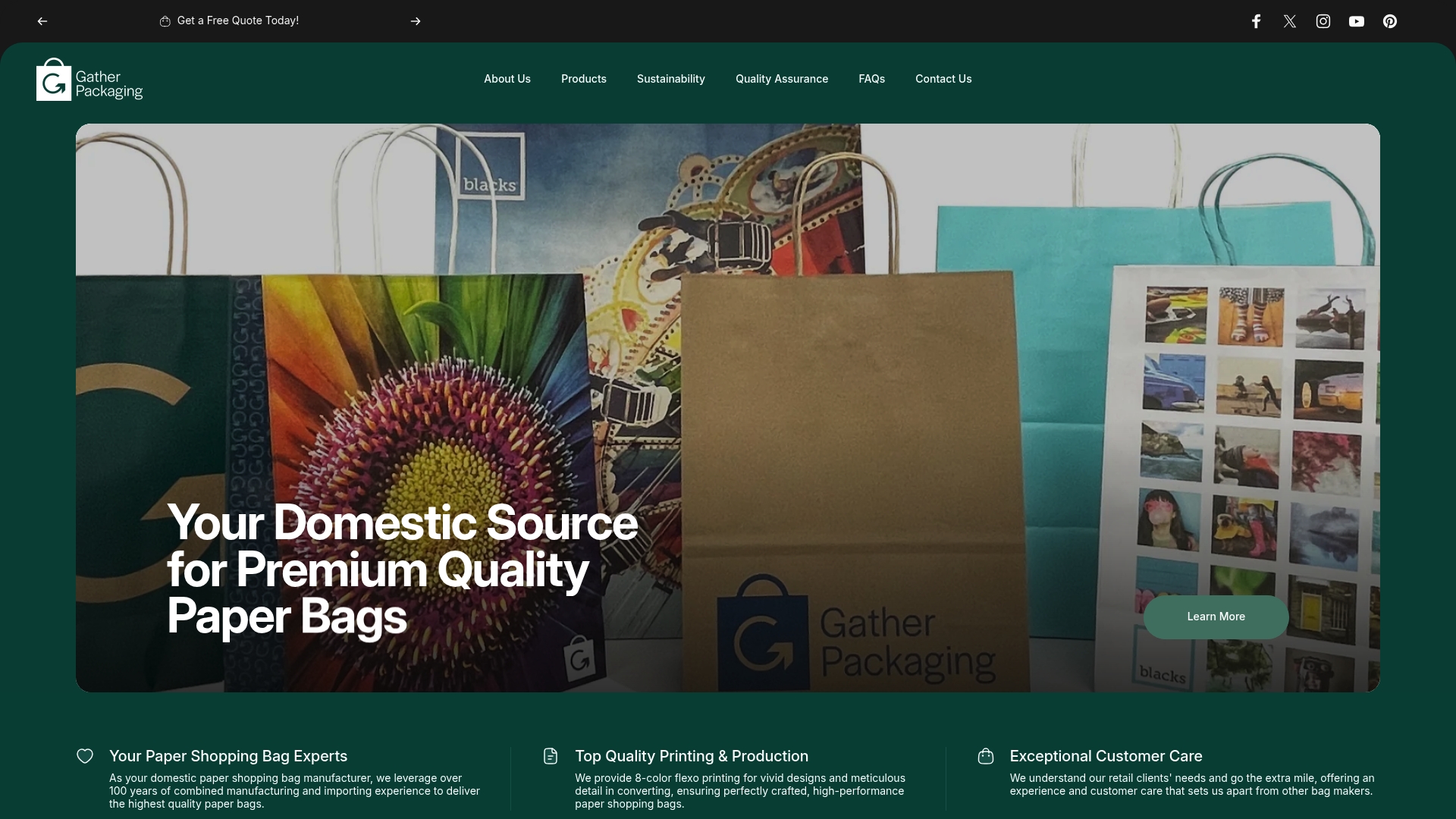
Gatherpackaging manufactures paper shopping bags in Toronto, Canada, using FSC-certified materials, recycled content, and water-based inks. The domestic production model means shorter lead times, direct quality oversight, and full documentation support for brands that need certified sustainable packaging. Whether you need kraft paper bags for retail, compostable options for foodservice takeout, or custom-printed bags that meet specific eco bag standards, Gatherpackaging works with you to match the right materials and certifications to your program. Explore the full range of certified eco-friendly bags or contact Gatherpackaging directly to discuss your paper shopping bag requirements and get a quote tailored to your volume and sustainability goals. Visit Gatherpackaging to get started.
FAQ
What certifications should paper shopping bags have?
Paper shopping bags should carry FSC certification for responsible fiber sourcing as a baseline. Brands making compostability claims need EN 13432 (EU) or ASTM D6400 (North America) with full component testing documentation.
What is the difference between EN 13432 and ASTM D6400?
Both standards require 90% biodegradation within 180 days under industrial composting conditions. EN 13432 is mandatory for compostable packaging sold in the EU, while ASTM D6400 governs compostability claims in North America.
Does OEKO-TEX Standard 100 mean a bag is eco-friendly?
OEKO-TEX Standard 100 certifies that a bag is free from harmful substances. It does not certify organic content, recycled materials, or sustainable production practices, so it should not be used as a standalone sustainability claim.
What is the minimum recycled content required for GRS certification?
GRS requires at least 20% recycled content for certification entry. Products must contain 50% or more recycled content to display the GRS logo and make public recycled content claims on packaging or marketing materials.
How do I verify a supplier’s GRS certification is valid?
Request Transaction Certificates (TCs) for every stage of the supply chain, not just the final manufacturer’s certificate. A valid GRS claim requires each processing facility to hold its own current certification and issue TCs confirming material flow.
Share:
How to Select Bag Sizes for Retail and Foodservice
Qualities of Premium Shopping Bags: A Buyer's Guide