

TL;DR:
- Premium shopping bags are defined by durable construction, verified sustainability, and refined design quality. Gatherpackaging builds paper bags that meet these standards, with rigorous testing of strength, handle attachment, and material performance. Proper specifications and real-world testing ensure that bags uphold brand reputation and sustainability goals.
Premium shopping bags are defined by the combination of tested structural durability, superior tactile feel, verified sustainability credentials, and refined design execution. These are not marketing descriptors. They are measurable, specifiable qualities that procurement professionals in retail and foodservice can evaluate, test, and hold suppliers accountable for. Gatherpackaging, a Toronto-based manufacturer with over a century of combined manufacturing experience, builds paper shopping bags to exactly these standards. Understanding what separates a genuinely premium bag from a standard one protects your brand at every customer touchpoint.
1. What durability features distinguish premium shopping bags?
Durability is the most technically demanding quality to specify correctly. The most common procurement mistake is equating higher paper GSM with stronger bags. Higher GSM does not directly correlate with structural strength. Adhesion area, seam construction, and bonding quality often govern real-world performance far more than paper weight alone.
The two tests that matter most are Mullen burst strength and internal bond strength. Burst strength testing measures how much pressure a bag wall can withstand before rupturing, while internal bond tests measure layer adhesion under stress. Both align to ISO and ASTM standards and give procurement teams objective pass/fail criteria. Drop-impact testing adds a third dimension by simulating what happens when a loaded bag is set down hard.
Handle attachment is the single most common failure point in premium bags. Handle tear-out risk must be tested under repeated carry and unload cycles, not just static load claims from a spec sheet. A bag that holds 10 pounds once is not the same as a bag that holds 10 pounds reliably across a customer’s walk from store to car.
- Specify minimum burst strength values in your procurement brief, not just GSM
- Request internal bond test results from the manufacturer, not just material data sheets
- Require drop-impact test results for bags carrying products over 3 pounds
- Test handle attachment under repeated load cycles before approving production runs
Pro Tip: Request production samples that match the exact bag construction you will order, including handle attachment method and seam type. A sample made with different bonding specs will not predict real-world performance.
2. How materials and finishes shape tactile and visual quality
The premium tactile feel of a shopping bag depends on bonding quality and handle design as much as it depends on the paper itself. Material selection sets the ceiling. Construction determines whether you reach it.
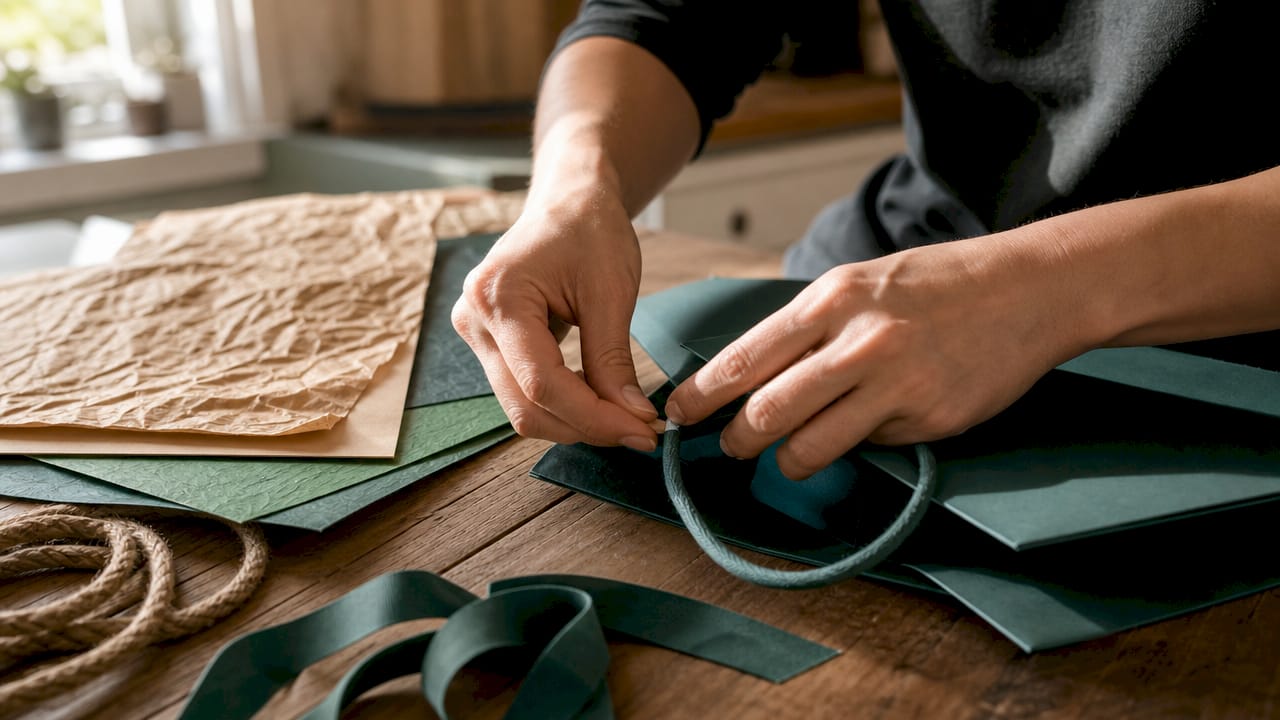
Coated art paper delivers the smoothest surface for high-resolution printing and a clean, upscale hand feel. Textured kraft papers communicate a different kind of premium: natural, earthy, and increasingly associated with sustainability-forward brands. Specialty kraft options sit between these two, offering structural strength with a more refined surface than standard brown kraft.
Lamination choices directly affect both durability and perceived quality. Matte lamination reduces glare and creates a soft, tactile surface that reads as sophisticated. Gloss lamination intensifies color saturation and creates a high-impact visual finish suited for fashion and cosmetics retail. Both options add a protective layer that extends bag life and resists moisture. You can review lamination options and their tradeoffs before specifying your next production run.
Handle material and construction shape the carry experience directly. Rope handles in cotton or paper twisted cord feel substantial in hand. Ribbon handles in satin or grosgrain add a fashion-forward detail. Reinforced paper handles work well for heavier loads and maintain a clean, minimal look. The attachment method matters as much as the material.
- Coated art paper: best for high-resolution print, smooth feel, fashion and cosmetics
- Textured kraft: best for natural brand positioning, foodservice, specialty retail
- Matte lamination: soft hand feel, reduced glare, premium understated look
- Gloss lamination: high color impact, moisture resistance, fashion and beauty retail
- Rope handles: substantial feel, suited for mid-to-heavy loads
- Ribbon handles: fashion detail, lighter loads, boutique retail
Pro Tip: Evaluate prototypes with the actual product load you expect customers to carry. A bag that feels premium empty may sag or distort under real weight if the paper weight and handle attachment are not matched to the load.
3. What sustainability qualities define eco-friendly premium shopping bags?
Sustainability is the most misrepresented quality in the premium bag category. The word “eco-friendly” on a spec sheet means nothing without verified certification and lifecycle data to back it.
FSC certification is the baseline standard for responsibly sourced paper. Verifying FSC certification requires checking active status, validity, scope, and specific product coverage in the FSC public database. A supplier who says “we use FSC paper” without a certificate number and active database entry is making an unverifiable claim. Gatherpackaging uses FSC-certified materials and can provide documentation.
Lifecycle data adds a layer of nuance that certification alone cannot. Paper bags require at least three uses to match the global warming potential of a single-use plastic bag. Single use followed by landfill disposal worsens the carbon footprint of paper significantly. This means durability and reuse potential are not just brand qualities. They are environmental requirements.
For plastic bag components, material choice matters at the recycling stage. Mechanically recycled polyethylene produces lower lifecycle CO2 emissions than both virgin and bio-based polyethylene. That finding applies directly to handle cords and any plastic reinforcement elements in otherwise paper bags.
- Verify FSC certification through the FSC public database before accepting supplier claims
- Confirm water-based inks are used in printing to avoid chemical contamination of recycled paper streams
- Ask for lifecycle assessment data, not just material composition claims
- Specify bag durability and reuse potential as part of your sustainability brief
- Check whether biodegradable claims are certified for industrial composting or home composting conditions
Sustainable material selection involves more variables than most procurement briefs account for. Getting the lifecycle picture right protects your brand from greenwashing exposure.
4. How design and customization options enhance the premium bag experience
Design is where technical quality becomes visible to the customer. The features of high-end bags that customers notice first are print quality, color consistency, and the overall structural presence of the bag.
Custom printing with 8-color flexo capability, as Gatherpackaging offers, produces color fidelity that holds across large production runs. Color consistency from the first bag to the last is a quality control issue, not just a design preference. Inconsistent color across a retail season undermines brand recognition at the point of sale. You can see how paper bag finishes affect branding across different retail applications.
Reinforced edges and gussets prevent the bag from losing its shape under load. A bag that collapses or deforms in a customer’s hand communicates the opposite of premium, regardless of the print quality on its surface. ISO 6591-1:2026 standardizes measurement methods and dimensions for paper sacks to 1mm accuracy. That level of dimensional precision matters when bags need to fit branded tissue paper, boxes, or specific product configurations.
| Design element | Standard execution | Premium execution |
|---|---|---|
| Printing | 1–4 color, basic registration | 6–8 color flexo, tight registration |
| Handle attachment | Glued flat | Reinforced with patch or board |
| Edge finish | Plain fold | Turned top or serrated top |
| Sizing | Standard stock sizes | Custom to product dimensions |
| Surface finish | Uncoated kraft | Matte or gloss lamination |
Ergonomic handle placement is a detail that separates thoughtful design from standard production. Handles positioned too close together force an awkward grip. Handles set too wide create imbalance under load. Both issues show up in customer experience before they show up in a quality audit.
5. Which bag materials and features suit different retail and foodservice applications?
The right premium bag for a jewelry boutique is not the right premium bag for a restaurant takeout order. Application context determines which qualities to prioritize.
Fashion and apparel retail demands visual impact and a strong carry experience. Coated art paper with matte lamination, ribbon or rope handles, and reinforced handle attachments deliver the right combination. The bag needs to hold garments without creasing them, which means adequate width and a clean gusset design.
Cosmetics and beauty retail prioritizes color accuracy and surface finish above all else. Gloss lamination with tight-registration printing and a turned-top edge finish creates the unboxing-adjacent experience that beauty brands require. Handle comfort matters because customers often carry multiple bags.
Foodservice takeout bags operate under different constraints. Grease resistance, structural integrity under moisture, and tamper-evident closures take priority. Gatherpackaging produces tamper-resistant bag styles specifically for this application. Sustainability credentials matter here too, since paper bags beat plastic on emissions when bags are reused or properly recycled.
A practical procurement checklist for any application:
- Define the maximum product load the bag must carry reliably
- Specify the surface finish and printing requirements before requesting quotes
- Confirm handle type and attachment method match the load and use case
- Verify sustainability certifications with documentation, not supplier assurances
- Request production-matched samples before approving the full run
- Confirm dimensional specs align with your product packaging or tissue paper inserts
Key takeaways
Premium shopping bags require tested durability, verified sustainability credentials, and precise design execution to deliver genuine brand value in retail and foodservice.
| Point | Details |
|---|---|
| Durability requires testing | Specify burst strength, internal bond, and handle tear-out tests, not just paper GSM. |
| Materials shape perception | Coated art paper, lamination type, and handle material together create the tactile premium feel. |
| Sustainability needs verification | Check FSC certification in the public database and request lifecycle data, not just material claims. |
| Design details are functional | Reinforced edges, precise dimensions, and consistent print quality protect brand integrity at every use. |
| Application context drives selection | Match paper weight, finish, handle type, and closure style to the specific retail or foodservice use case. |
What I’ve learned about specifying premium bags that actually hold up
The most expensive mistake I see procurement teams make is approving a bag based on a spec sheet and a single sample. Paper weight and print quality are easy to evaluate on a desk. Handle attachment failure, seam separation under load, and color drift across a production run are not.
Real-world testing changes the conversation. When you load a prototype with the actual product weight, carry it for two minutes, and set it down on a hard surface, you learn things no data sheet will tell you. I have seen bags with impressive GSM specs fail at the handle patch on the first drop test. I have also seen lighter-weight bags with well-engineered bonding outperform heavier stock under the same conditions.
Sustainability claims deserve the same skepticism. The FSC database check takes five minutes. Asking for water-based ink documentation takes one email. These steps are not bureaucratic friction. They are the difference between a verified sustainability story and a liability. Brands that skip this step are one investigative article away from a credibility problem.
The procurement teams that get this right treat bag specification the same way they treat product specification. They define performance requirements, test against them, and hold suppliers to documented standards. Gatherpackaging’s QA process is built around exactly this approach, and it is worth understanding what a paper bag QA checklist actually covers before your next sourcing conversation.
— Taylor
Gatherpackaging’s premium paper bags for retail and foodservice
Gatherpackaging manufactures premium paper shopping bags from its Toronto facility, with FSC-certified materials, water-based inks, and 8-color flexo printing across a full range of styles including turn top, serrated top, and tamper-resistant formats.
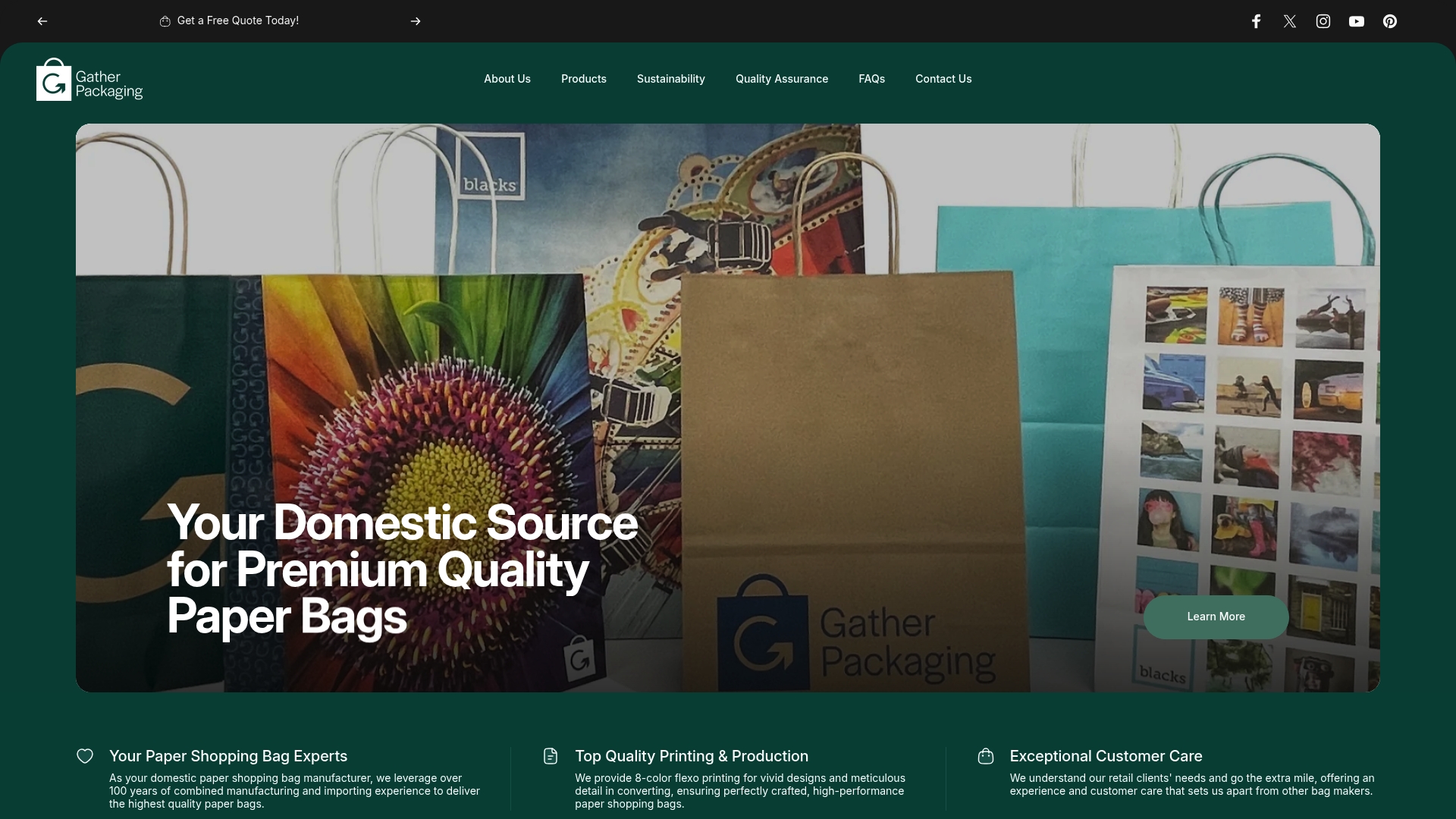
Retail and foodservice buyers can specify custom sizes, finishes, handle types, and sustainability certifications with documented QA at every production stage. Domestic manufacturing means shorter lead times and direct access to the production team when specs need to change. Gatherpackaging’s eco-friendly bag range covers compostable, recycled, and FSC-certified options with full documentation. Contact Gatherpackaging directly to discuss your specific bag requirements, load specs, and brand standards.
FAQ
What is the most important durability test for premium shopping bags?
Mullen burst strength testing and internal bond strength testing are the two most critical durability measures for paper shopping bags. Handle attachment tear-out testing under repeated load cycles is equally important and is often overlooked in standard procurement briefs.
How many times must a paper bag be reused to be genuinely eco-friendly?
A paper bag requires at least three uses to match the global warming potential of a single-use plastic bag, based on lifecycle assessment data. Durability and reuse potential are therefore core sustainability requirements, not just brand qualities.
How do I verify that a supplier’s FSC certification is legitimate?
Check the supplier’s certificate number against the FSC public database to confirm active status, validity, scope, and specific product coverage. A supplier who cannot provide a verifiable certificate number is making an unverifiable claim.
Does higher GSM paper always mean a stronger shopping bag?
Higher GSM does not directly correlate with structural strength. Adhesion area, seam construction, and bonding quality often determine real-world performance more than paper weight alone.
What bag styles does Gatherpackaging produce for foodservice?
Gatherpackaging produces tamper-resistant bags suited for foodservice takeout applications, along with turn-top and serrated-top styles. All formats are available with custom printing, FSC-certified materials, and grease-resistant options.
Share:
Eco-Friendly Bag Certifications List for Brands in 2026
Why Packaging Material Traceability Matters in 2026