

TL;DR:
- Third-party packaging certification verifies sustainable, safe, and quality standards through independent audits.
- They support retail brands by confirming fiber sourcing, reducing greenwashing risk, and enabling market access.
Third-party packaging certification is an independent, audit-based assessment that verifies a packaging product or process meets predefined standards for sustainability, safety, and quality. An accredited external body conducts the evaluation, which separates it from a supplier’s own claims (first-party) or a buyer’s audit of a supplier (second-party). For procurement teams sourcing paper shopping bags, that independence is the whole point: the certification confirms what a supplier says is actually true.
The assessment typically covers three components:
- Onsite audits reviewing manufacturing processes and facility compliance
- Supply chain documentation tracing fiber sourcing through chain-of-custody records
- Laboratory testing verifying material composition, ink safety, and structural performance
Standards bodies like the Forest Stewardship Council (FSC) and the Sustainable Forestry Initiative (SFI) set the criteria; accredited certifiers measure conformance against them. The result is a certificate number that procurement teams can verify independently through a public registry.
Table of Contents
- Why third-party certification matters for retail brands and procurement
- Key third-party packaging certifications in North America
- How to integrate certification into procurement and quality assurance
- How North American retail brands put certification to work
- How Gatherpackaging supports certified, sustainable paper shopping bags
- Key Takeaways
- Why certification is worth the administrative effort
Why third-party certification matters for retail brands and procurement
Retailer expectations have shifted. For decades, packaging conformance relied on supplier declarations. Today, major brands require verified proof before a supplier enters their approved list, driven by ESG reporting obligations and tightening regulations around environmental claims.
The practical risk is greenwashing exposure. A paper shopping bag labeled “sustainably sourced” without a verifiable certificate is a liability, not a selling point. Procurement teams increasingly use certification as the filter that separates a credible supplier from one making unverifiable claims.
Key benefits for retail brands include:
- Market access: Many large retailers require FSC or SFI symbols from their packaging suppliers
- ESG compliance: Verified certifications support internal sustainability reporting and investor disclosures
- Regulatory alignment: Packaging compliance with Extended Producer Responsibility rules is easier to demonstrate with documented chain-of-custody
- Consumer credibility: 70% of global consumers are more likely to purchase products carrying recognized sustainability labels
- Reduced audit burden: A certified supplier has already passed independent scrutiny, reducing the need for repeated buyer-side audits
Stat to know: 81% of consumers prefer products with sustainability labels, according to PEFC research.
Pro Tip: When evaluating a new paper bag supplier, ask for their certificate number and verify it directly through the issuing body’s public registry before placing any order.
Key third-party packaging certifications in North America
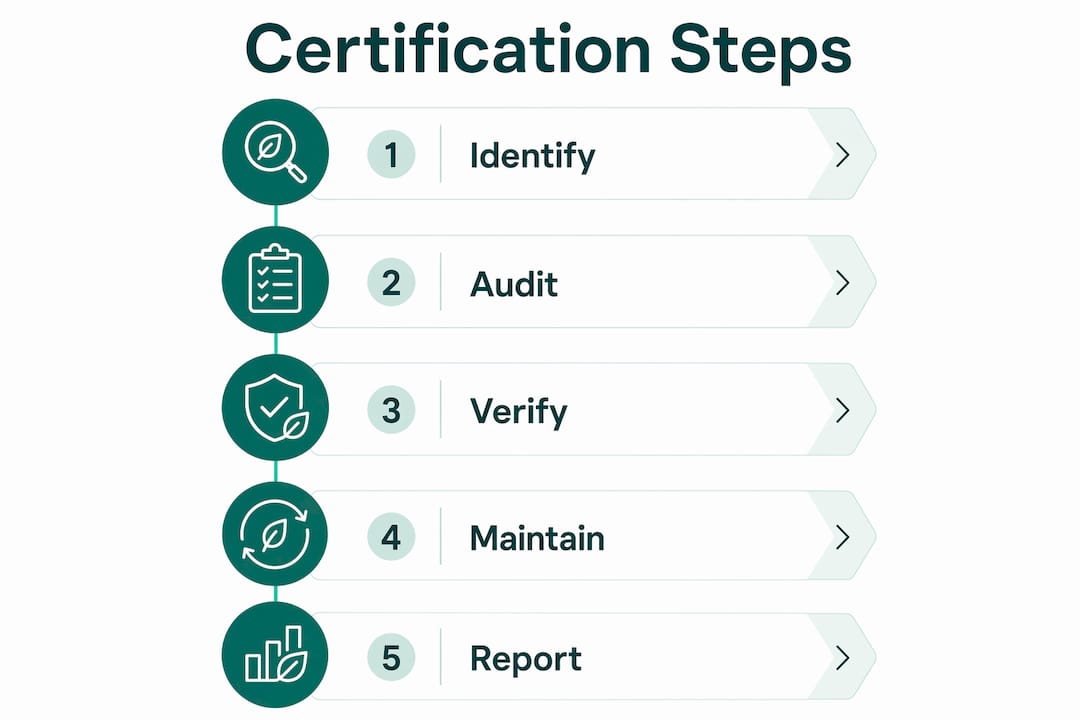
Three programs cover the vast majority of fiber-based packaging certification requirements for North American retail brands.
Forest Stewardship Council (FSC)
FSC is the most globally recognized standard for responsible forest management and chain-of-custody. FSC certification verifies that fiber in a paper shopping bag traces back to forests managed under strict environmental, social, and economic criteria. As of April 2024, FSC-certified forests covered approximately 160.7 million hectares across 89 countries. For brands selling into European markets or working with major North American retailers, FSC chain-of-custody is typically the first certification to require from a packaging partner.
Key features:
- Globally accepted by major retailers and consumer brands
- Strict public disclosure requirements
- Annual third-party audits by accredited certifiers
- Trademark use requires a valid chain-of-custody certificate
Sustainable Forestry Initiative (SFI)
SFI is a North American standard with strong adoption among U.S. and Canadian mills. As of 2024, SFI certified a very large area under its Forest Management Standard. SFI is endorsed by PEFC and operates on a parallel framework to FSC, so many manufacturers hold both. For procurement teams sourcing domestically, SFI often offers logistical advantages because more North American suppliers carry it.
Key features:
- North American supply chain focus
- PEFC-endorsed, supporting cross-market recognition
- Commonly held alongside FSC by U.S.-based manufacturers
- Strong fit for brands with primarily domestic distribution
Programme for the Endorsement of Forest Certification (PEFC)
PEFC is the largest forest certification system in the world by certified area, covering a very large area globally as of September 2025. It endorses both FSC and SFI, making it the standard most recognized across European supply chains. Brands subject to the EU Deforestation Regulation (EUDR) benefit from suppliers holding PEFC-recognized certifications.
Key features:
- Dominant in European markets
- Endorses FSC and SFI frameworks
- Supports EUDR and Lacey Act compliance
- Brands can use the PEFC label through a promotional trademark license without being certified themselves
Holding multiple certifications is common practice among manufacturers serving diverse retail markets. A supplier carrying both FSC and SFI covers domestic and international procurement requirements without gaps.
How to integrate certification into procurement and quality assurance
Certification only protects your brand if your procurement process is built around it. Here is how retail procurement teams typically structure that integration.
Core procurement steps:
- Add certification requirements to supplier qualification criteria before issuing RFQs
- Request the supplier’s certificate number and verify it through the issuing body’s online registry
- Confirm the certificate covers the specific product category (e.g., paper shopping bags, kraft liners)
- Review chain-of-custody documentation to confirm fiber traceability from forest to finished bag
- Incorporate certification status into annual supplier reviews
Ongoing compliance checklist:
- Confirm certificate renewal annually (most certifications require yearly audits)
- Request updated documentation after any supplier facility change
- Audit corrective action records if a supplier has had a non-conformance finding
- Align your internal quality assurance checklist with certification requirements, covering both sustainability and print consistency
Maintaining certification is an active process. Annual audits, chain-of-custody compliance, and corrective actions require ongoing administrative effort from suppliers, which is why some smaller manufacturers let certifications lapse. Verifying renewal dates protects you from sourcing from a supplier whose certificate has expired.
One detail procurement teams often overlook: the right to use a certification trademark on your packaging depends on your supplier’s chain-of-custody certificate, not just your sourcing policy. Brands and retailers can use certification labels through a promotional trademark license, but that license is only valid when the underlying supplier certificate is current and covers the product in question.

Quality assurance for paper shopping bags goes beyond fiber sourcing. Certifications like GMI-Prime complement sustainability credentials by verifying print quality and visual consistency, which matters when your bag is the first branded touchpoint a customer sees.
How North American retail brands put certification to work
The clearest signal that certification has moved from “nice to have” to a procurement requirement comes from how major North American retailers now structure their supplier approval processes. Retailers with published sustainability commitments require FSC or SFI symbols on paper shopping bags before a supplier can be listed. That requirement flows directly to manufacturers: if your paper bag supplier cannot produce a valid certificate number, they are not on the approved list.
For brands managing material traceability across a retail network, certified suppliers simplify the documentation burden considerably. A single chain-of-custody certificate covers the fiber sourcing claim for every bag in that product line, rather than requiring individual material declarations for each order.
Brands sourcing eco-friendly packaging for retail or promotional use face the same verification challenge: a supplier’s self-declared sustainability claim carries no weight with a retailer’s compliance team. A certificate number that checks out in a public registry does.
How Gatherpackaging supports certified, sustainable paper shopping bags
Gatherpackaging manufactures custom paper shopping bags using FSC-certified materials, recycled content, and water-based inks, with quality assurance processes built around certification standards from the start of production.
Capabilities that support certified procurement:
- FSC-certified fiber sourcing with full chain-of-custody documentation
- Recycled content and biodegradable material options
- Water-based inks meeting safety and environmental standards
- 8-color flexo printing with print consistency verification
- Domestic manufacturing in Toronto for reliable lead times
- Design assistance, prototyping, and logistics support
Procurement teams that need certified paper shopping bags with documented traceability and dependable supply can contact Gatherpackaging directly to discuss their requirements. Visit the sustainability page to see the full range of eco-friendly certified options, or reach out to start a conversation about your sourcing needs.
Key Takeaways
Third-party packaging certification is the only reliable way for retail brands to verify supplier sustainability claims and protect against greenwashing exposure.
| Point | Details |
|---|---|
| What certification confirms | An independent audit verifies fiber sourcing, chain-of-custody, and process compliance for paper shopping bags. |
| Consumer demand is documented | Most global consumers are more likely to buy products with recognized sustainability labels, per PEFC research. |
| FSC leads globally | FSC chain-of-custody is the first certification most major retailers require from paper packaging suppliers. |
| SFI suits North American sourcing | SFI’s domestic focus and PEFC endorsement make it a practical complement to FSC for North American procurement. |
| Verify before you source | Always confirm a supplier’s certificate number through the issuing body’s public registry before placing an order. |
Why certification is worth the administrative effort
Procurement teams sometimes treat certification as a checkbox, something to confirm once and file away. That framing misses how the process actually protects a brand. A certificate is only as good as the last audit. Suppliers that hold FSC or SFI credentials have passed scrutiny that most manufacturers never face, and the annual renewal cycle means the standard is enforced continuously, not just at onboarding.
The brands that get the most value from certified packaging are the ones that build it into their sourcing policy from the start, not the ones that retrofit it after a retailer compliance request. Requiring a valid certificate number before issuing a purchase order costs nothing. Sourcing from an uncertified supplier and discovering the gap during a retailer audit costs considerably more.
Share:
Top Retail Packaging Mistakes That Cost You Sales
Styles of Reusable Bags: A Retail Buyer's Guide