
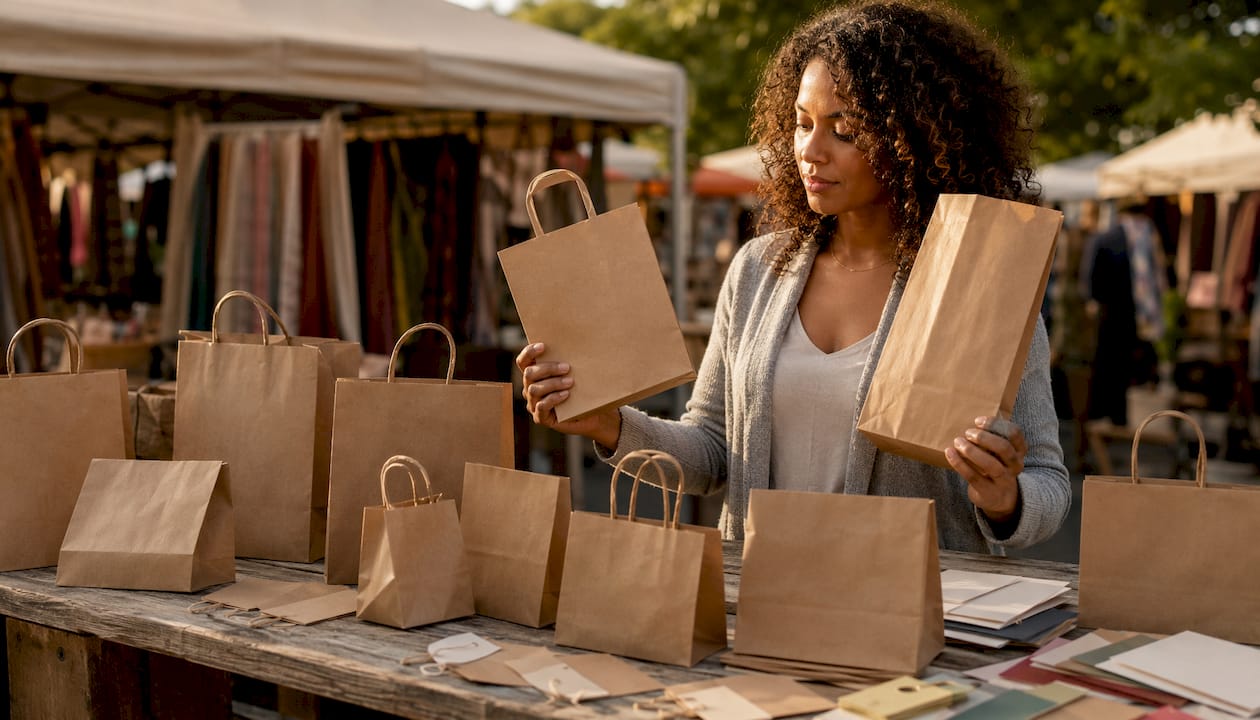
Reusable paper shopping bags come in several distinct styles, each defined by structure, handle type, and intended retail use. Choosing the right one affects how your brand is perceived, how customers carry the bag, and whether it gets reused. For procurement teams and retail brands sourcing sustainable packaging in North America, the decision starts with understanding what each format actually does.
Table of Contents
- What are the main styles of reusable paper shopping bags?
- How handle style affects bag performance and retail use cases
- Why material quality and domestic manufacturing matter for your brand
- How to choose the right reusable paper bag style for your retail brand
- Key Takeaways
- Gatherpackaging makes custom paper bags in Canada for North American retailers
What are the main styles of reusable paper shopping bags?
The four formats you will encounter most often in retail are the flat-bottom box bag, the euro tote, the gusseted tote, and the takeout bag. Each has a different structural logic.
- Flat-bottom (box-style) bags stand upright on their own and pack easily. The squared base makes them ideal for apparel, gifts, and specialty retail where presentation matters.
- Euro totes are the premium tier. Stiffer stock, refined handles, and a structured silhouette make them the default choice for luxury boutiques and high-end cosmetics brands.
- Gusseted totes expand at the sides to accommodate bulkier purchases. Structured gussets increase perceived value and encourage repeat use, which extends brand exposure well beyond the original transaction.
- Takeout bags prioritize speed and function. Wide openings, flat handles, and a stable base suit foodservice and quick-service environments where staff need to pack fast.
Standard sizes run from small to large, with custom dimensions available for brands whose product mix does not fit standard formats. Durability varies by construction: euro totes and flat-bottom bags with reinforced bottoms outlast simple gusseted styles under repeated use. For brands thinking about sustainable bag materials, the structural choice and material weight work together to determine how long a bag stays in circulation.
How handle style affects bag performance and retail use cases
The handle is the part of the bag that fails first and the part customers notice most. Getting it right means matching the construction to the actual load and the retail context.
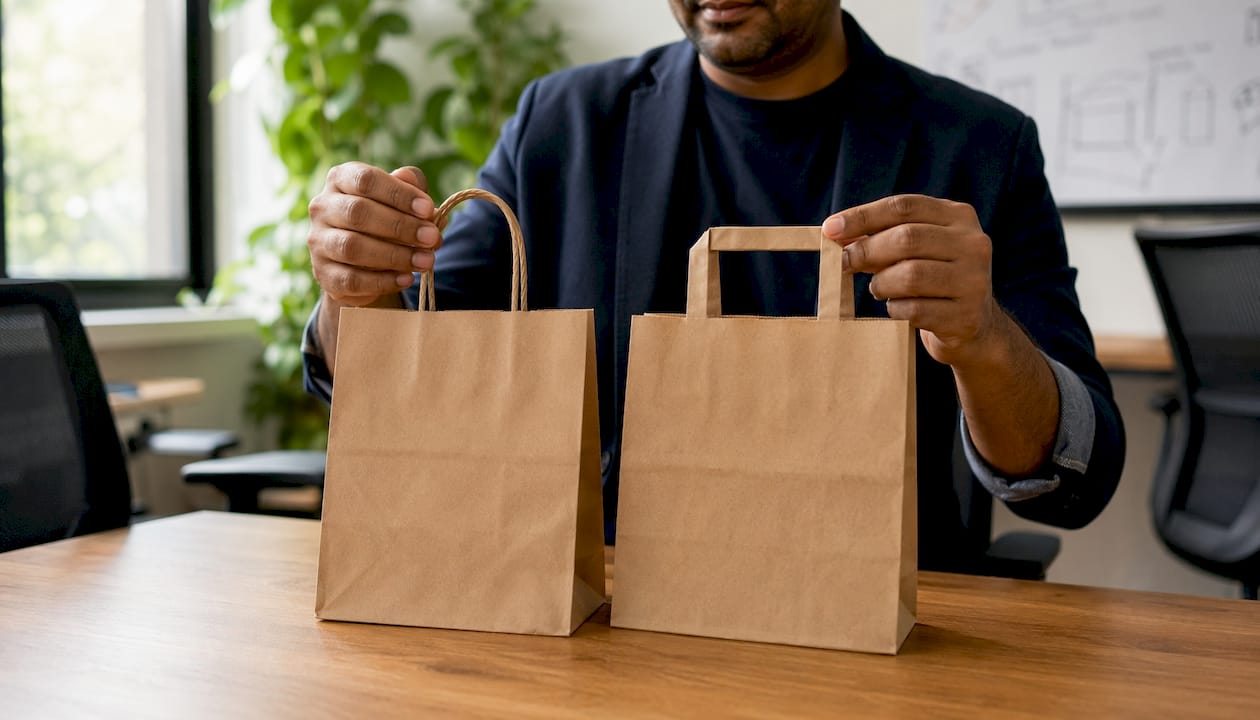
- Twisted-paper handles are the most versatile option for general retail and events. They are comfortable for carry weight, cost-effective to produce, and hold up under heavier loads better than flat alternatives.
- Flat paper handles load quickly and work well in takeout and foodservice settings where speed matters more than premium feel. They are not suited for heavy items.
- Rope and ribbon handles signal luxury. Satin ribbon in a custom color adds perceived value; cotton rope appeals to eco-conscious customers and carries more weight than ribbon. Both are standard on euro totes in high-end retail.
- Reinforced die-cut handles are cut directly into the paper, eliminating attachment points entirely. They work for small, lightweight bags where cost is the priority.
Handle choice also shapes reuse behavior. A bag with a comfortable, well-attached handle gets carried again. A flat paper handle that digs into the hand after one trip does not. For brands treating packaging as a mobile brand impression, that distinction has real marketing consequences. North American consumers tend to keep structured bags with functional handles; flimsy alternatives get discarded quickly.
Pro Tip: Check handle attachment points as carefully as the handle material itself. A twisted-paper handle glued to a thin panel will fail under load regardless of the handle’s own strength. Reinforced attachment panels are a standard quality marker on premium retail bags.
Why material quality and domestic manufacturing matter for your brand
Paper bag material sets the ceiling on print quality, durability, and sustainability credentials. The main options are natural brown kraft, white kraft, coated art paper, and recycled kraft, each with a different performance profile.
- Natural brown kraft is strong, cost-effective, and carries an inherent eco-friendly signal. Dark inks print well; pastels and light colors lose contrast on the brown surface.
- White kraft gives you a clean printing surface for full-color artwork and accurate brand color reproduction. It is the most common choice for mid-range retail brands.
- Coated art paper produces the sharpest print results and suits luxury boutiques, but it is less strong than kraft and better for lightweight items.
- Recycled kraft communicates sustainability authentically. The visible fiber speckles are a feature for eco-conscious brands, not a flaw.
Gatherpackaging manufactures its bags in Toronto using FSC®-certified paper, with every bag made to be 100% recyclable. The facility runs eight automated lines with full quality control and advanced color consistency testing. Certifications like FSC® and ASTM D6400 are increasingly required in retail procurement contracts across California, New York, and Ontario, so having a supplier who already meets those standards removes a sourcing risk.
Local production also means faster turnaround and tighter quality control than offshore sourcing typically allows. Color consistency is one area where domestic manufacturing shows its advantage most clearly: the logo has to be the right color every time, across every run. Gatherpackaging’s 8-color flexo printing capability gives brands precise color matching across campaigns, which matters when your bag is the last thing a customer sees before they walk out the door.
Pro Tip: Interior printing is one of the most underused branding tools in retail packaging. Printing your logo or a brand message inside the bag creates a second moment of discovery when the customer opens it. Interior printing and custom tissue paper together reinforce brand identity well beyond the initial purchase.
How to choose the right reusable paper bag style for your retail brand
The right bag style comes from matching four variables: size, handle, material weight, and brand positioning. Procurement teams that treat these as separate decisions often end up with a bag that looks good in a sample but fails in the field.
- Size and capacity: Match bag dimensions to your typical customer purchase. North American shoppers tend to buy in bulk and transport by car, so larger formats with wide gussets perform better than compact styles suited to European transit habits.
- Handle selection: Twisted-paper handles for general retail; flat handles for foodservice takeout; rope or ribbon for premium positioning. The handle should match the load, not just the aesthetic.
- Material weight and structure: Heavier paper stock and reinforced bottoms extend bag life and support repeat use. Bags designed for long-term customer reuse need construction that can withstand repeated handling without losing shape or print quality.
- Cleaning and maintenance: Paper bags are not washable, so durability comes from material weight and coating choices rather than cleaning cycles. A bag that holds its structure and print after multiple uses stays in circulation longer.
- Brand positioning: The bag style signals where your brand sits in the market. A euro tote with rope handles and foil-stamped logo reads differently than a kraft gusseted tote. Align the format with the customer expectation at your price point.
- Supply reliability: Partnering with a domestic manufacturer reduces lead time risk and gives you more control over quality and customization. For brands that need bag customization to be consistent across seasonal campaigns, offshore sourcing introduces variables that a local supplier does not.
Retail packaging functions as a strategic brand asset, not a commodity purchase. Brands like Harry Rosen have maintained coordinated, recyclable packaging programs across their entire national footprint for decades, treating every bag as part of a unified brand identity. That level of consistency requires a supplier who can match color, construction, and material standards run after run. For a deeper look at what separates functional bags from premium ones, Gatherpackaging’s guide to premium shopping bag qualities covers the construction details that matter most.
For brands exploring custom branded reusable options beyond paper, custom logo bags for events and promotions follow similar customization logic, and premium euro-tote styles with rope handles illustrate the aesthetic benchmark luxury retail brands typically aim for.
Key Takeaways
Reusable paper shopping bag style determines durability, brand perception, and how long the bag stays in circulation, making it one of the most consequential packaging decisions a retail brand makes.
| Point | Details |
|---|---|
| Style drives function | Flat-bottom, euro tote, gusseted, and takeout bags each suit different retail contexts and load requirements. |
| Handle choice affects reuse | Twisted-paper handles carry more weight and last longer; flat handles suit foodservice speed; rope and ribbon signal luxury. |
| Material sets print quality | White kraft gives the truest brand colors; natural kraft signals eco-friendliness; recycled kraft communicates sustainability authentically. |
| Certifications gate contracts | FSC® and ASTM D6400 certification are increasingly required for retail procurement in California, New York, and Ontario. |
| Gatherpackaging for domestic supply | Toronto-based manufacturing with FSC®-certified paper, 8-color flexo printing, and full quality control for North American retailers. |
Gatherpackaging makes custom paper bags in Canada for North American retailers
Sourcing bags offshore means accepting longer lead times, less color consistency, and supply chain variables that show up at the worst moments. Gatherpackaging was built specifically to solve that problem for North American retail brands.
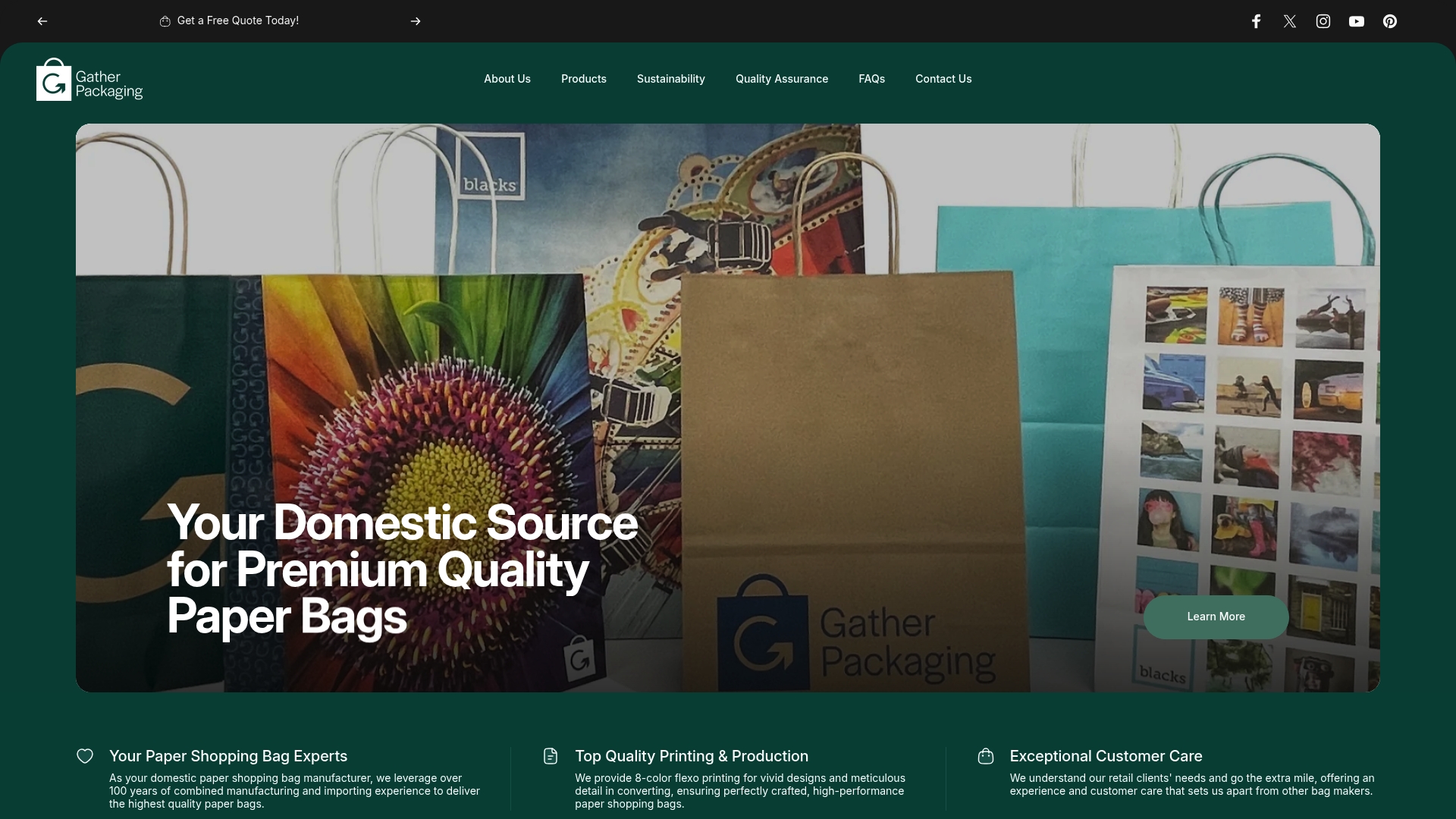
The Toronto facility runs eight automated production lines with FSC®-certified paper, water-based inks, and 100% recyclable construction. Eco-friendly paper bags are available across multiple styles, from gusseted retail totes to foodservice takeout bags, all customizable with up to 8-color flexo printing for precise brand color matching. The team brings over a century of combined manufacturing and importing experience, which means quality assurance processes that catch problems before they reach your stores, not after.
Whether you are sourcing for a fashion boutique, a specialty food brand, or a national retail chain, contact Gatherpackaging to discuss your paper shopping bag requirements and get a quote built around your actual volume and timeline.
Share:
Third-Party Packaging Certification: What Retail Brands Need to Know
Why Packaging Color Accuracy Is Important for Your Brand