
TL;DR:
- Bag customization turns functional packaging into a key branding tool that boosts sales and consumer perception. Well-designed custom bags reinforce brand identity, encourage reuse, and foster loyalty through social sharing and recognition. Choosing high-quality, sustainable materials and effective print techniques enhances brand image while aligning with regulatory standards and customer values.
Bag customization is defined as the practice of designing packaging with brand-specific colors, logos, typography, and materials to create a consistent, recognizable identity at every customer touchpoint. The role of bag customization in branding goes well beyond aesthetics. Nearly 98% of brand owners identify packaging as critical to brand success, and custom packaging is linked to sales lifts of 10–30%. For brand managers and marketing professionals, a well-designed paper bag is not a commodity purchase. It is a mobile marketing asset that works every time a customer carries it out the door.
How does bag customization enhance branding and consumer perception?
Custom bags shape how consumers perceive your brand before they even open a product. 73% of consumers associate premium custom packaging with higher product quality. That association transfers directly to the product inside, which means your bag is doing brand-building work the moment it leaves the register.

The repeat purchase effect is equally significant. 52% of online shoppers say they are more likely to reorder from a brand that uses branded packaging. A distinctive paper bag reinforces the memory of a positive purchase experience and signals that the brand pays attention to detail.
Bag personalization in marketing also generates organic reach. Custom packaging encourages social sharing in about 40% of customers, and reusable branded bags extend that exposure into public spaces, transit, and workplaces. Each time a customer carries your bag, it functions as a walking advertisement with zero additional media spend.
Branded bags also build loyalty through a psychological mechanism worth understanding. Branded reusable bags act as loyalty tokens and habit anchors, reinforcing repeat shopping by creating brand recall at home and in public. Customers who reuse a bag associate the brand with their daily routine, not just a single transaction.
Key visibility and perception benefits of custom bags include:
- Logo placement and color consistency that reinforces brand recall across every use
- Sustainability cues such as FSC®-certified kraft paper that signal environmental responsibility
- Typography and finish choices that communicate brand tier, whether mass-market or premium
- Reusable construction that extends the bag’s life and multiplies brand impressions over time
What design decisions make bag customization most effective?
Effective bag design starts with a written brief, not a logo file sent to a supplier. The brief should define the target customer, the primary use case (retail carry-out, gift packaging, event giveaway), material weight, print finish, and brand consistency rules. Without that foundation, design decisions become guesswork, and the result is a bag that looks generic regardless of how much was spent on printing.
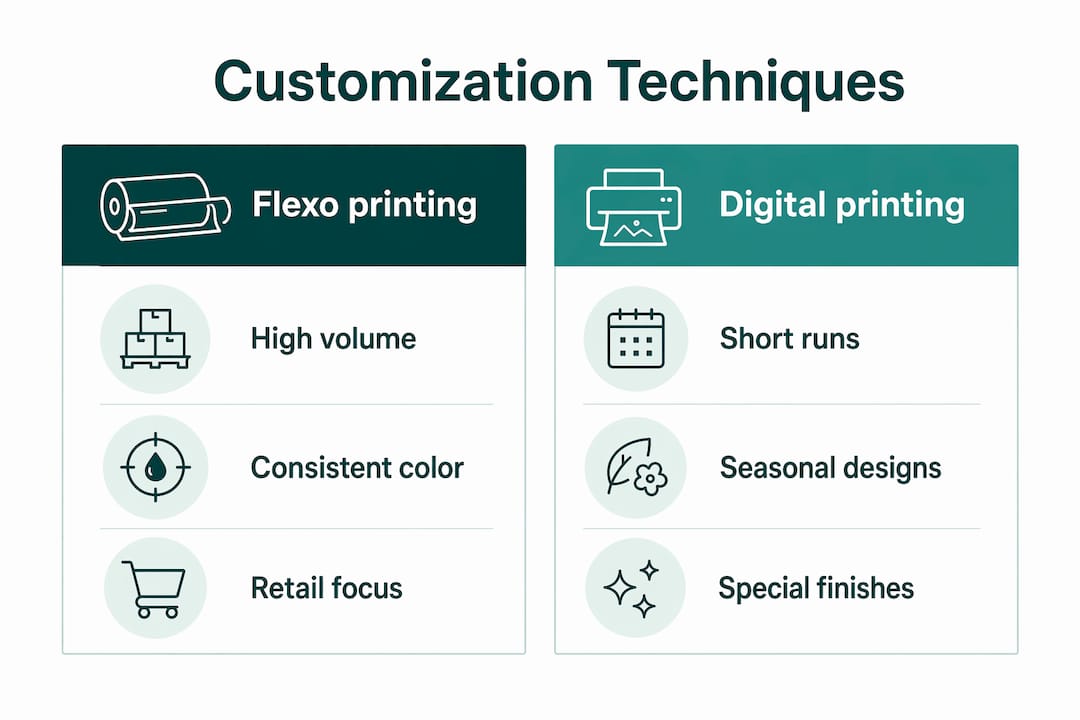
Print technique is one of the highest-leverage decisions in the entire process. Digital printing and specialty finishes such as foil stamping and embossing can elevate a bag to collectible status, increasing brand equity well beyond the cost of production. Flexo printing, the method used by Gatherpackaging with up to 8-color capability, delivers vibrant, consistent results at production volumes that make per-unit costs manageable.
The table below compares the most common customization techniques by use case and output quality.
| Technique | Best for | Output quality | Volume fit |
|---|---|---|---|
| Flexo printing | Retail, foodservice, high-volume runs | High color accuracy, consistent | 500+ units |
| Digital printing | Short runs, seasonal designs | Photo-quality detail | 250–500 units |
| Foil stamping | Premium retail, gift packaging | Metallic, high-end finish | Medium to high |
| Embossing | Luxury brands, specialty retail | Tactile, dimensional | Medium to high |
Seasonal and limited-edition designs deserve more attention than most brand managers give them. Short-run digital printing enables seasonal or limited-edition bag runs that increase customer engagement through scarcity and collectibility. A holiday bag that customers want to keep is a bag that keeps working for your brand through february and beyond.
Pro Tip: Build a seasonal bag calendar at the start of each fiscal year. Plan at least two design refreshes, one for peak retail season and one for a mid-year event or promotion. This keeps your packaging feeling current without requiring a full brand overhaul.
The most common pitfall in bag design is treating the bag as a procurement item rather than a creative asset. Brands that apply design discipline and a marketing-first approach consistently achieve higher returns than those that simply print a logo on a generic bag. The difference shows up in customer recall, reuse rates, and social sharing. You can explore custom bag printing options to understand how technique choices affect both cost and brand impact.
Why do material quality and sustainability matter for bag branding?
Material choice is a brand statement. A bag made from FSC®-certified paper with water-based inks tells a customer something specific about your values before they read a single word of copy. Sustainability and material quality directly influence brand image and consumer purchase decisions, particularly among customers who factor environmental responsibility into their buying choices.
Gatherpackaging’s paper bags use FSC®-certified materials, recycled content, water-based inks, and biodegradable construction. These are not marketing claims added after the fact. They are production decisions that affect how the bag performs, how it feels in a customer’s hand, and how it reflects on your brand when a customer reuses it for weeks or months.
Regulatory context also shapes material decisions. Single-use plastic restrictions across Canadian provinces and many American states have pushed retailers toward paper alternatives. Brands that made the switch early now benefit from a perception advantage. Their bags signal compliance and responsibility, while brands still transitioning face customer scrutiny.
Benefits of choosing high-quality, sustainable paper bag materials include:
- Durability that supports heavier loads and multiple uses, extending brand exposure
- Print surface quality that allows clean color reproduction and sharp logo rendering
- Biodegradability that aligns with customer expectations and regulatory requirements
- FSC® certification that provides third-party verification of responsible sourcing
Pro Tip: Request a physical sample before committing to a full production run. The weight, texture, and handle construction of a paper bag communicate quality in ways that a digital proof cannot replicate. Customers notice the difference.
For a detailed look at sustainable bag materials and how they affect both branding and environmental performance, Gatherpackaging’s resource library covers the key options by retail category.
How do you implement custom bag branding in retail operations?
Translating a bag design into a working retail program requires a clear process. The steps below reflect what works for brands moving from concept to deployment efficiently.
-
Define your volume and budget. Ordering 250–500+ units optimizes unit cost and makes seasonal campaigns financially viable. Below that threshold, per-unit costs rise sharply and limit your ability to run design variations.
-
Request a proof before full production. A physical proof catches color, handle, and construction issues before they become expensive corrections. Build proof review time into your project timeline, not as an afterthought.
-
Align bag design with your brand standards document. Provide your supplier with Pantone color references, approved logo files, and clear rules about logo placement and minimum clear space. Ambiguity at this stage produces inconsistent output.
-
Plan your deployment strategy. Multi-channel deployment maximizes brand impressions. Use bags as loyalty rewards, event giveaways, staff carry items, and social media incentives. Each channel multiplies the number of impressions per bag produced.
-
Measure results. Track reorder rates, social media mentions featuring your bag, and direct customer feedback. These metrics tell you whether your bag design is generating the engagement you planned for.
-
Choose a supplier with retail and regulatory expertise. Partnering with a specialist manufacturer reduces the risk of costly errors, supports compliance with packaging regulations, and shortens time to market. Gatherpackaging’s domestic production in Toronto means shorter lead times and direct quality oversight compared to offshore sourcing.
The ordering process guide from Gatherpackaging covers how to order custom bags for retail and foodservice, including volume thresholds and print specifications. Pairing a well-designed bag with a personal brand touch, such as custom engraved tags on gift packaging, can further differentiate your retail presentation at key moments.
Key Takeaways
Bag customization is one of the highest-return branding investments available to retail brands because it generates repeated impressions at a fixed production cost.
| Point | Details |
|---|---|
| Packaging drives purchase decisions | 98% of brand owners rate packaging as critical; custom bags lift sales by 10–30%. |
| Consumer perception links quality to packaging | 73% of consumers associate premium packaging with higher product quality. |
| Reuse multiplies brand impressions | Branded reusable bags extend exposure into public spaces at no additional media cost. |
| Design discipline outperforms logo printing | Applying a full design brief and marketing strategy yields significantly higher returns than basic logo placement. |
| Sustainability signals brand values | FSC®-certified materials and water-based inks reinforce brand credibility with environmentally conscious customers. |
Branded bags are underrated marketing channels
The cost-per-impression argument for branded bags is one that most brand managers have heard but few have actually calculated for their own programs. A reusable paper bag produced for a few dollars and carried publicly dozens of times over several months delivers impressions at a rate that most paid media cannot match. Branded bags outperform ephemeral digital ads in cost per impression by a significant margin when reuse is factored in.
What I find most brands miss is the loyalty reinforcement angle. A customer who carries your bag to a farmers market or a coffee shop is not just advertising your brand to strangers. They are reinforcing their own identity as someone who shops with you. Bags function as informal membership tokens, and that emotional connection is worth more than any single transaction.
The seasonal design opportunity is also consistently underused. Brands that refresh their bag design twice a year give loyal customers a reason to notice the packaging again. That moment of recognition, “oh, they updated their bag,” is a micro-engagement that costs almost nothing and keeps your brand feeling alive between major campaigns.
My strongest advice is this: stop letting procurement own the bag decision. The moment a bag gets treated as a supply item with a cost-per-unit target and nothing else, you lose the marketing value entirely. Bring your creative team into the brief. Set impression and reuse goals. Measure the outcome. Treat it like the campaign it actually is.
— Taylor
Custom paper bags from Gatherpackaging
Gatherpackaging specializes in custom-printed, eco-friendly paper shopping bags manufactured domestically in Toronto, Canada. Their bags are available in multiple styles, including turn top, serrated top, and tamper-resistant formats, all printable with up to 8-color flexo printing for sharp, vibrant brand representation.
For brand managers who need reliable supply, fast turnaround, and packaging that reflects genuine environmental commitment, Gatherpackaging’s sustainable paper bag options cover FSC®-certified materials, recycled content, water-based inks, and biodegradable construction. Their team provides design assistance, prototyping, and quality assurance from brief to delivery. Contact Gatherpackaging directly to discuss your custom bag program and get a production quote tailored to your retail volume and brand requirements.
FAQ
What is the role of bag customization in branding?
Bag customization transforms functional packaging into a brand-building tool by displaying consistent visual identity, communicating quality, and generating repeated impressions every time a customer carries the bag. Research shows custom packaging is linked to sales lifts of 10–30% and significantly higher repeat purchase rates.
How does bag design affect consumer perception of quality?
73% of consumers associate premium custom packaging with higher product quality, meaning a well-designed bag directly elevates how customers perceive the product inside. Material choice, print finish, and construction all contribute to that perception.
What print techniques work best for custom paper bags?
Flexo printing suits high-volume retail runs with consistent color output, while digital printing works for short seasonal runs. Specialty finishes like foil stamping and embossing are best for premium or gift-focused retail contexts where a tactile, elevated feel supports the brand tier.
How many units should I order for a custom bag program?
Ordering 250–500+ units optimizes unit cost and makes seasonal design variations financially practical. Below that threshold, per-unit costs rise and limit your ability to run multiple designs or test new formats.
Why does sustainability matter in custom bag branding?
Sustainable materials such as FSC®-certified paper and water-based inks signal environmental responsibility to customers and support compliance with single-use plastic regulations across North American markets. Brands that use verified sustainable packaging build credibility with customers who factor environmental values into their purchase decisions.
Share:
What Is Color Management in Packaging: A Brand Guide
What Is End-of-Life Packaging? A Brand Manager's Guide