

TL;DR:
- Visual appeal influences whether a shopping bag is reused or discarded, affecting brand exposure and perception of quality. Design elements like color, typography, imagery, and material signals shape shopper behavior, purchase intent, and willingness to pay. Balancing aesthetics with functionality and sustainability requires deliberate trade-offs during the design and production process.
Visual appeal determines whether a shopping bag gets carried home, kept, and reused — or crumpled and discarded at the door. For brand managers and packaging designers, that distinction is the difference between a one-time cost and an ongoing marketing asset. The role of visual appeal in bags operates on three levels simultaneously: it shapes a shopper’s immediate perception of product quality, it drives the decision to reuse a bag as an everyday accessory, and it influences in-store behavior including perceived store prestige and purchase intent.
Three effects worth knowing before you brief a designer:
- Perception of quality: Haptic and visual cues work together — thicker paper, structured bases, and quality handles signal premium product value before a shopper even opens the bag.
- Reuse and brand exposure: Stylish, well-designed bags become accessories people carry repeatedly, turning each trip into unpaid brand visibility. Research confirms that aesthetics and tactile feel are the primary drivers of bag retention.
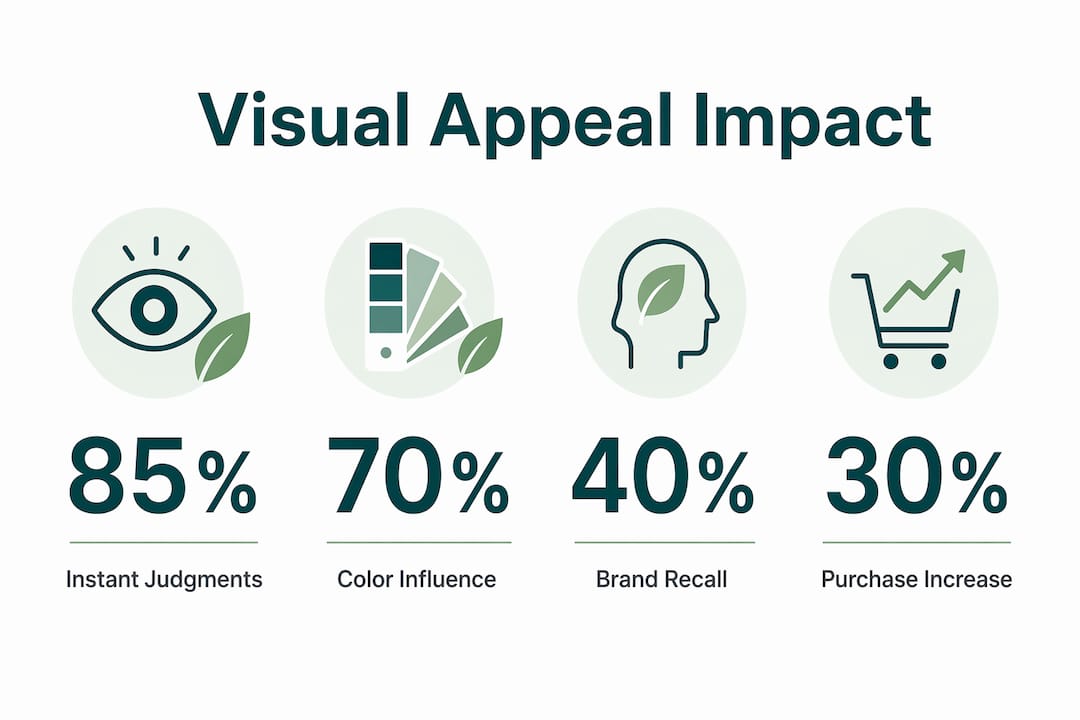
- In-store behavior: Color drives most immediate product judgments — packaging practitioners report that color impacts up to 90% of snap judgments about products, affecting both impulse purchases and perceived store positioning.
A well-executed bag program is not a commodity line item. It is a designed object that works for the brand every time it leaves the store.
Table of Contents
- How does visual appeal in bags influence consumer perception?
- What design elements determine a bag’s visual attractiveness?
- How do you balance aesthetics with functionality and sustainability?
- How do design choices affect production, cost, and lead time?
- Design approval checklist before sending art to print
- What visual approaches work for different brand goals?
- Key Takeaways
- The gap between design intent and manufacturing reality
- Gatherpackaging brings your bag design from brief to production
- Useful sources
How does visual appeal in bags influence consumer perception?
The psychology here is faster than most brand teams expect. Shoppers form judgments about a product’s quality tier within seconds of seeing its packaging, and those judgments are heavily color-driven. Packaging research consistently shows that color, graphics, logo, and layout each influence purchase intention — and that brand experience mediates the relationship between those visual elements and the actual decision to buy.
Hedonic vs. utilitarian shoppers respond differently
Not every shopper reads a bag the same way. Academic research on fashion shopping bags finds that hedonic shoppers — those motivated by novelty and pleasure — respond to bags that feel unique, attention-getting, and visually interesting. Utilitarian shoppers, by contrast, respond to cues of prestige and reliability: clean structure, restrained color, and a mark that signals the brand’s standing. Brief your designer with the shopper profile in mind, not just the brand guidelines.
The mobile billboard effect
A bag that gets reused is a bag that keeps working. Consumers are more likely to retain and carry bags they find genuinely attractive, and design-driven retention converts a functional packaging cost into ongoing street-level brand exposure. The Booths grocery case, recognized in design effectiveness awards, showed that repositioning fabric bags as collectible branded items turned a compliance challenge into a measurable sales program. The bags were priced, displayed, and designed to be kept — not discarded.
Willingness to pay follows design quality
University research on designer paper shopping bags found that graphic attributes — color, typography, pattern — help consumers associate products with higher income segments and perceived value, and that shoppers will pay more for bags linked to premium store experiences. That finding has a direct implication for procurement: investing in a better-designed bag is not purely a cost decision. It affects the price tier the brand occupies in the shopper’s mind.
Pro Tip: Before committing to a full production run, run a simple A/B test at point of sale: display two bag colorways or finishes side by side for two to four weeks and track which version shoppers comment on, photograph, or ask about. That qualitative signal is faster and cheaper than a formal study.
What design elements determine a bag’s visual attractiveness?
Every element of a bag’s surface and structure sends a signal. The challenge for brand teams is understanding which signals matter most for their specific positioning goal.
Color
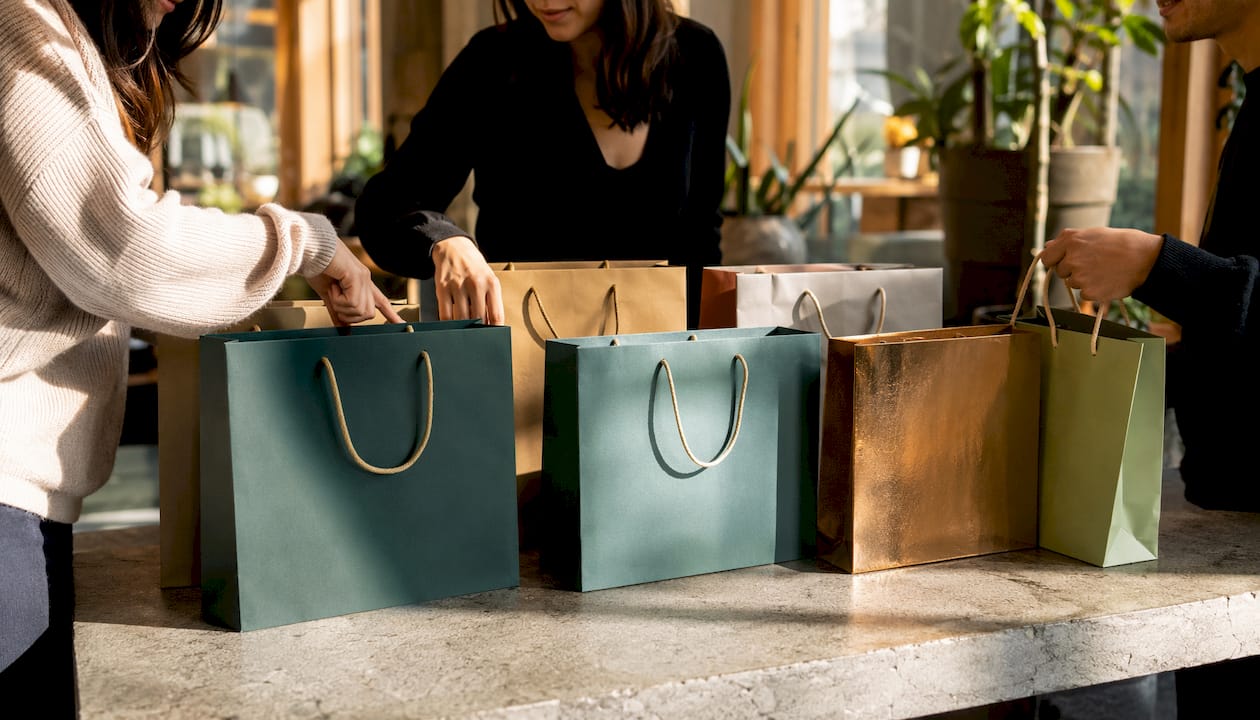
Color is the first thing a shopper registers, and it does more than represent the brand. Warm colors — red, orange, yellow — increase urgency and attention in impulse and food contexts. Cool colors build trust and encourage browsing time, which is why most premium fashion and lifestyle brands default to navy, forest green, or neutral palettes. Color also needs to hold up in real-world conditions: store lighting, natural daylight, and street use all shift how a printed color reads. Test proofs under the actual lighting conditions where the bag will be seen, not just on a monitor.
Typography and logo placement
On a standard retail bag, the logo is doing most of the identity work. Scalability matters: a mark that reads clearly at 4 inches needs to hold at 1.5 inches for smaller bag sizes. Packaging design research found that calligraphy-style typefaces produced a significant positive effect on purchase intention, while overly complex artistic typefaces did not reach significance. For most retail bags, a clean, legible wordmark or logomark outperforms decorative type. Place the primary mark on the largest face panel, centered or upper-center, with enough clear space that it reads from a distance.
Imagery and patterns
Figurative graphics — recognizable illustrations, product photography, seasonal motifs — positively influence purchase intention more reliably than abstract graphics, which showed a negative effect in controlled packaging studies. That does not mean abstraction never works; it means abstraction requires stronger brand equity to carry the weight. For brands still building recognition, concrete imagery or a strong pattern with clear brand color anchoring is the safer brief.
Material, structure, and haptic cues
Paper weight and bag construction are not just functional specs. Thicker, structured paper signals higher product value through touch — a shopper picking up a 157 gsm bag with a twisted paper handle reads it differently than a thin flat bag with a die-cut handle. Handle type, gusset width, and base reinforcement all contribute to the perceived quality of the bag before the shopper looks at the print. For a premium shopping bag, the structural spec and the visual spec need to be briefed together.
Finishes and embellishments
| Finish | Visual effect | Recyclability impact | Best for |
|---|---|---|---|
| Aqueous coating | Subtle sheen, protects print | Fully recyclable | Everyday retail, eco positioning |
| Spot gloss varnish | High contrast on selected areas | Generally recyclable | Premium accents, logo pop |
| Soft-touch matte laminate | Luxury feel, muted palette | Reduces recyclability | High-end fashion, gift retail |
| Embossing / debossing | Tactile dimension, no ink | No impact | Logo detail, premium texture |
| Foil stamping | Metallic highlight | Reduces recyclability | Seasonal, collectible, luxury |
Foil and laminate finishes add conversion steps that increase QA cycles and can introduce contamination risks for recycling streams. Validate any new finish with a pilot run before committing to volume.
Pro Tip: Match finish choice to the bag’s intended reuse life. A matte stock with soft-touch coating rewards a bag meant to be kept for months. A high-gloss finish is fine for a short-lived promotional bag where visual impact at point of sale is the only goal.
How do you balance aesthetics with functionality and sustainability?
Visual ambition and structural performance are not competing priorities — but they do require deliberate trade-offs. A bag that looks exceptional but fails at the handle seam after one use destroys the brand impression it was designed to create.
Functional constraints designers must respect
- Handle strength: Twisted paper handles carry more weight and last longer than flat die-cut handles. For bags intended to carry heavy retail purchases, specify handle type and load rating in the brief, not just the visual.
- Load capacity and gusset size: A narrow gusset limits what fits in the bag. Undersized bags that bulge or tear undercut the premium perception the design was trying to build.
- Base reinforcement: A glued and reinforced base is the difference between a bag that survives a grocery run and one that fails on the way to the car. Structural QA at the base is as important as print QA on the face panel.
Sustainability trade-offs in finish and material
Coatings and embellishments that improve visual appeal can compromise recyclability. Soft-touch laminate and foil stamping both introduce materials that standard paper recycling streams cannot easily process. For brands with sustainability commitments — or retailers operating under extended producer responsibility rules in Canadian provinces — this is a real procurement constraint, not a marketing footnote.
The practical path is to prioritize water-based inks and aqueous coatings, which preserve color fidelity and print quality while keeping the bag recyclable. FSC-certified paper stock and recycled content can be specified without any visual compromise. The bag looks the same; the lifecycle story is cleaner.
Heavier paper stock increases perceived prestige and reuse likelihood, but it also adds weight per unit, which affects shipping cost and carbon footprint at volume. That trade-off is worth modeling at the procurement stage, not discovering after the first full run.
Pro Tip: Specify water-based, low-VOC inks and aqueous coatings from the outset of the brief. They protect recyclability, meet most sustainability certification requirements, and deliver color fidelity that is indistinguishable from solvent-based alternatives on press.
How do design choices affect production, cost, and lead time?
Design decisions made in a creative brief have direct consequences on the manufacturing floor. Understanding those consequences before the brief is finalized saves revision cycles, cost overruns, and missed ship dates.
Printing methods for paper bags
Flexographic printing is the standard for high-volume custom paper bags. It delivers consistent color across large runs, handles up to 8 colors, and is cost-effective at the quantities most retail programs require. Digital printing suits short runs and variable-data applications but carries a higher per-unit cost. Spot color workflows using Pantone references are the most reliable way to maintain brand color consistency across production runs. For color management in packaging, Pantone-to-flexo matching should be validated at the proofing stage, not assumed.
How finishes add production steps
Every embellishment adds a conversion step. Embossing requires a die and a separate press pass. Foil stamping adds both a die and a foil application step. Each additional step adds time to the production schedule and a QA checkpoint. A bag with aqueous coating and a single-color flexo print can move through production significantly faster than one with foil, embossing, and a laminate finish. If lead time is a constraint, simplify the finish spec.
Quality assurance checkpoints
- Pre-press proofing: Wet-proof swatches validate color, ink density, and substrate interaction before the press run starts. Never skip this for a new stock or a new color.
- Press checks: A press check at the start of the run catches color drift before thousands of units are printed off-spec.
- Handle tensile testing: Handles are the most common failure point. Tensile testing confirms the handle attachment meets the load rating specified in the brief.
- Conversion QA: Glued bases and side seams need inspection for adhesion consistency. A missed glue application at the base is a structural failure waiting to happen in the field.
Production checklist for procurement and RFQ
- Confirm final dieline, including bleed margins and fold allowances.
- Specify paper weight (gsm) and stock type (kraft, white, recycled content percentage).
- Confirm handle type (twisted paper, flat die-cut, rope) and load rating.
- List all colors with Pantone references and confirm flexo color count.
- Specify all finishes (aqueous coating, spot gloss, embossing, foil) and confirm recyclability requirements.
- Confirm FSC certification requirement and any other sustainability spec.
- Request wet-proof swatch approval before press run authorization.
- Confirm order quantity, pilot run size if applicable, and required ship date.
- Agree on QA hold points: pre-press, press check, post-conversion.
For prototyping, proofing, and QA support on custom paper bag programs, contact Gatherpackaging to discuss your spec before the brief is finalized.
Design approval checklist before sending art to print
Use this checklist before any bag art file goes to the manufacturer. It is structured for sign-off by three roles: design lead, procurement, and QA.
- Dieline and bleeds confirmed — final dieline matches the specified bag size; bleed is set to manufacturer’s spec (typically 3–5 mm).
- Color proofs approved — Pantone swatches matched to brand standards; wet-proof swatch reviewed and signed off by design lead.
- Material weight confirmed — paper gsm specified and approved by procurement against load and reuse requirements.
- Handle spec locked — handle type, attachment method, and load rating confirmed by QA.
- Finish choices documented — all coatings, embossing, or foil specs listed with recyclability notes attached.
- Sustainability certifications noted — FSC chain of custody, recycled content percentage, and ink type (water-based) confirmed.
- Expected reuse life agreed — design lead and procurement align on whether the bag is a short-run promo or a long-life retail bag; finish spec matches that intent.
- Internal sign-off timeline set — design lead approves art by [date]; procurement confirms material and quantity by [date]; QA reviews structural spec by [date].
Pro Tip: For any new finish or non-standard stock, require a single wet-proof swatch or a short pilot run of 250–500 units before authorizing the full production quantity. Color, hand feel, and structural performance can all shift between a screen proof and a physical bag.
What visual approaches work for different brand goals?
The right visual strategy depends on what the bag needs to accomplish. Here are four patterns that consistently deliver results across different retail contexts.
-
Premium fashion: Minimal two-color palette on heavier stock (130 gsm or above), subtle embossing on the logo, restrained placement with generous clear space. The bag communicates restraint as a proxy for quality. Twisted paper or cotton rope handles reinforce the tactile premium. This approach aligns with how bag customization supports brand positioning for retailers building long-term brand equity.
-
Eco-minded retail: Kraft texture stock, muted earth-tone palette, clear FSC or recycled content badge placed visibly on the bag face. Water-based inks keep the sustainability story consistent from the ink to the substrate. The visual language communicates authenticity without requiring a premium finish. Shoppers who prioritize sustainability read these cues accurately and respond to them.
-
Impulse and takeout foodservice: Bright accent colors, bold typography at large scale, and durable flat or twisted handles for grab-and-go use. Warm colors increase urgency and attention in high-traffic environments. For takeout bag design, the visual brief should prioritize legibility at a distance and color contrast that holds under variable lighting conditions.
-
Grocery and regional brands: Regionally resonant graphics, seasonal motifs, and limited-edition runs drive collector behavior and social sharing. The Booths case demonstrated that limited-edition bag designs can generate spikes in bag sales and word-of-mouth when the design is genuinely distinctive and the bag is positioned as a product rather than a free commodity. Rotating seasonal designs keeps the program fresh and gives loyal shoppers a reason to return.
For a broader view of how packaging design connects to shopper experience, the user experience principles that apply to product packaging translate directly to retail bag programs.
Key Takeaways
Visual appeal in bags is a manufacturing and brand decision simultaneously: color, material, and finish choices made at the design stage determine both the shopper’s perception and the bag’s production cost, lead time, and recyclability.
| Point | Details |
|---|---|
| Color drives snap judgments | Color impacts up to 90% of snap judgments about product quality; choose palettes matched to shopper motivation, not only brand swatches. |
| Haptic cues reinforce visual signals | Paper weight, handle type, and base construction shape perceived quality as much as print; brief structural specs alongside visual specs. |
| Finish choice affects recyclability | Foil and laminate finishes reduce recyclability; aqueous coatings and water-based inks preserve visual quality and keep bags recyclable. |
| Design complexity adds lead time | Each embellishment (foil, embossing) adds a production step and a QA checkpoint; simplify the finish spec when lead time is constrained. |
| Gatherpackaging for custom programs | Gatherpackaging offers domestic manufacturing, FSC-certified materials, 8-color flexo printing, and QA support for custom paper bag programs. |
The gap between design intent and manufacturing reality
Most design briefs treat the bag as a flat surface. The finish looks right on screen, the color is approved against a Pantone chip, and the artwork is signed off. Then the physical bag arrives and the embossed logo is barely visible, the foil is lifting at the edges, or the color shifted three shades darker on the kraft stock. That gap is not a manufacturing failure. It is a briefing failure.
The most common place brand teams underestimate trade-offs is in finish selection. A soft-touch laminate looks exceptional in a sample book. What the sample book does not show is that the laminate adds a conversion step, extends lead time, and makes the bag non-recyclable — which creates a conflict with the sustainability claims printed on the same bag. Specifying a finish without understanding its downstream effects is how programs end up with bags that contradict the brand’s own positioning.
The other underestimated variable is paper weight. Heavier stock costs more per unit and more to ship, but it also increases the probability that the bag gets reused. A bag that survives six months of weekly use generates far more brand exposure than three bags that each last two weeks. That math rarely appears in a procurement spreadsheet, but it belongs there.
Gatherpackaging’s domestic manufacturing in Toronto means the proofing conversation and the production conversation happen with the same team. That matters when a designer wants to push a finish choice and procurement needs to understand what it costs in time and recyclability before the order is placed.
Gatherpackaging brings your bag design from brief to production
Custom paper bag programs require more than a good design file. They require a manufacturer who can validate color on press, test handle strength before the run ships, and advise on finish choices that hold up to both visual and sustainability scrutiny.
Gatherpackaging manufactures custom paper shopping bags domestically in Toronto, with FSC-certified and recycled material options, water-based inks, and 8-color flexo printing. The team supports design assistance, wet-proof swatch approvals, prototyping, and QA testing from handle tensile strength through base conversion. For brands that need eco-friendly bag options without sacrificing print quality or lead time, domestic production removes the supply chain uncertainty that offshore programs carry.
Whether you are running a pilot of 500 units to validate a new finish or placing a full seasonal program, contact Gatherpackaging to discuss your paper shopping bag specs and get a production-ready quote.
Useful sources
The following sources support the claims made in this article. They are organized by the type of claim they best support.
- Color psychology and snap judgments: The Psychology Behind Shopping Bag Color Selection — VSL Packaging practitioner guidance on color-driven consumer behavior, warm vs. cool color effects, and real-world lighting considerations.
- Visual elements and purchase intention: The Impact of Visual Elements of Packaging Design on Purchase Intention — PMC-published study using structural equation modeling across 490 consumers; covers color, graphics, typography, logo, and layout effects on purchase intent mediated by brand experience.
- Reuse behavior and haptic cues: The Psychology of Shopping Bag Design — industry write-up summarizing design-driven retention, tactile quality signals, and the mobile billboard effect.
- Hedonic vs. utilitarian shopper response: The Effect of Fashion Product’s Shopping Bag Types on Customer Response — Korean Fashion and Textile Research Journal study using SEM to distinguish hedonic and utilitarian shopper responses to bag design.
- Designer bags and willingness to pay: The Influence of Designer Paper Shopping Bags on Consumer Interest — university thesis showing graphic attributes drive premium associations and willingness to pay for designer paper bags.
- Collectible bag programs and revenue: Money Bags — DBA Design Effectiveness Award — case study showing how a retailer repositioned bags as collectible brand items and turned a compliance cost into a sales program.
- Multidimensional packaging design review: The Multidimensional Impact of Packaging Design on Purchase Intention — Humanities and Social Sciences Communications systematic review covering visual, structural, and sustainability dimensions of packaging design research.
Share:
What Is Bulk Packaging for Custom Paper Shopping Bags?
Turn Top Bag Design Tutorial for Retail Brands