
TL;DR:
- Bulk packaging consolidates finished units into larger containers, reducing handling and transport waste.
- Gatherpackaging produces FSC®-certified bulk paper shopping bags domestically, supporting efficient supply chains.
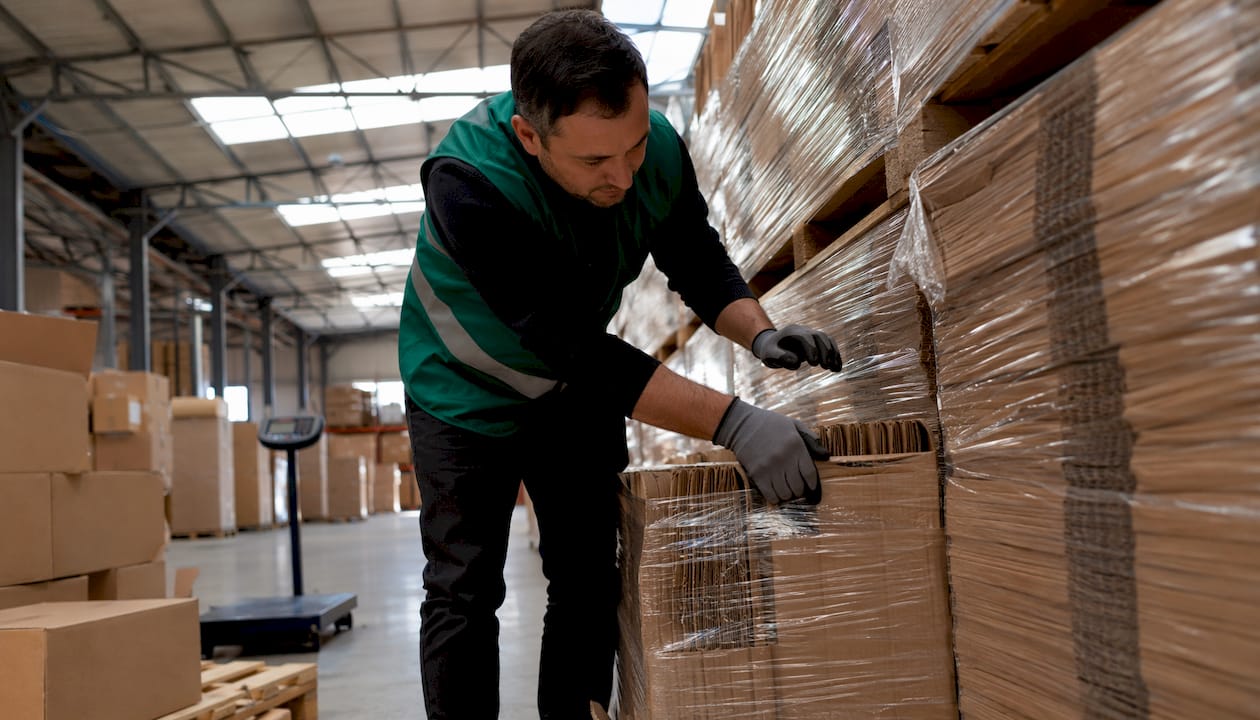
Bulk packaging groups individually finished units into larger shipping or warehouse containers for distribution and inventory efficiency. For retail brands and foodservice operators ordering custom paper shopping bags, it means receiving master cartons or palletized stacks of pre-folded bags rather than shelf-ready individual units. Gatherpackaging, a domestic manufacturer based in Toronto, produces FSC®-certified paper shopping bags in bulk formats designed for exactly this kind of B2B supply chain. According to DN Packaging, consolidating primary-packed units into larger containers reduces touchpoints, cuts manual picks, and simplifies pallet pattern design.
TL;DR for procurement teams:
- Bulk packaging is the right format when you have stable SKUs, recurring large orders, and warehouse space to receive pallets.
- It lowers cost per unit, reduces reorder frequency, and cuts transport-related waste.
- Gatherpackaging supplies bulk paper shopping bags with FSC®-certified materials and domestic lead times.
Table of Contents
- What does bulk packaging actually include?
- How does bulk packaging differ from retail-ready packaging?
- What are the operational and financial benefits of bulk ordering?
- How do you plan a bulk order of custom paper shopping bags?
- What materials work best for bulk paper bag programs?
- What QA checks should you require for bulk paper bag shipments?
- When is bulk packaging the wrong choice?
- How Gatherpackaging supports bulk paper bag programs in North America
- Key Takeaways
- What packaging buyers learn from running bulk programs
- Gatherpackaging is ready to support your bulk paper bag program
What does bulk packaging actually include?
The term covers several practical formats a buyer will encounter when ordering paper shopping bags at volume.
Common bulk formats for paper shopping bags:
- Master cartons of pre-folded bags, typically banded or interleaved with tissue separators to prevent scuffing during transit.
- Palletized stacks of master cartons, stretch-wrapped and labeled for forklift handling.
- Inner cartons for handles, accessories, or specialty inserts shipped alongside the bag cartons.
- Shrink-wrapped multipacks for smaller sub-units within a master carton, used when a retailer needs to break down quantities at the back of house.
These formats map directly to downstream processes. A retail receiving dock expects stretch-wrapped pallets with carton counts on the label; a foodservice operator unpacking takeout bags at the kitchen prep station wants a master carton that opens cleanly and stacks in a dry-storage cabinet. Bulk packaging solutions are engineered to support defined load limits compatible with forklifts and automated handling, with stronger outer cases and stable pallet loads to protect product in transit.
One practical distinction: bulk-packed paper bags carry minimal brand-facing print on the outer carton. The focus shifts to stacked stability, forklift compatibility, and carton integrity. Point-of-sale graphics live on the bags themselves, not the shipping unit.
How does bulk packaging differ from retail-ready packaging?
| Dimension | Bulk packaging | Retail/consumer-ready packaging |
|---|---|---|
| Primary use case | Distribution, warehouse replenishment | Shelf display, direct consumer purchase |
| Materials and durability | Reinforced kraft cartons, heavy-duty board, pallet-strength construction | Lighter board, shelf-facing finishes, tissue wraps |
| Customization and print | Standardized carton labels, limited outer print | Full-color point-of-sale graphics, branded tissue, hang tags |
| MOQ | Higher (full pallet or production run minimums) | Lower (smaller runs, retail-ready cartons) |
| Lead time | Longer production and scheduling window | Can be shorter for smaller runs |
| Cost per unit | Lower due to economies of scale | Higher due to branding and customization costs |
Bulk packaging emphasizes durability and standardized sizing to withstand stacking and shipping stresses, while retail packaging prioritizes high-quality printing and consumer engagement. That tradeoff is real: a buyer who needs bags on the shelf with branded tissue and a hang tag on day one should ask for retail-ready cartons. A buyer replenishing a warehouse for a 90-day season should be ordering bulk.

The operational implications matter too. Bulk orders carry longer production windows, higher MOQs, and require warehouse space for pallet receipt. Retail-ready runs are more flexible but cost more per unit and generate more packaging material per bag delivered.
What are the operational and financial benefits of bulk ordering?
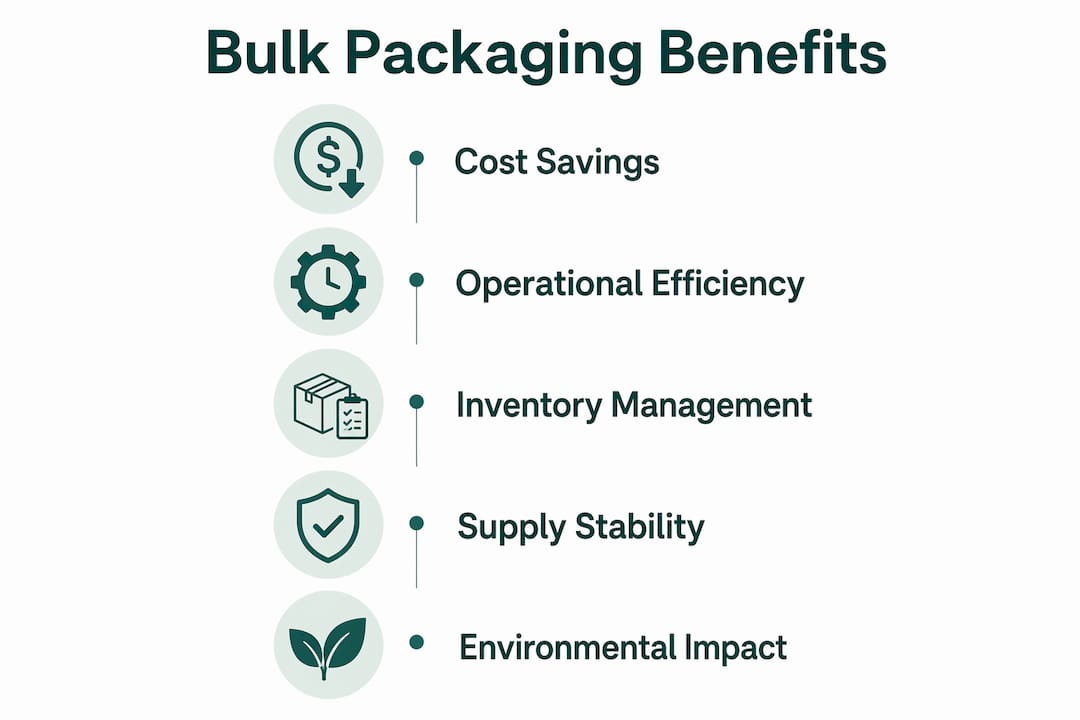
Bulk packaging increases operational efficiency through higher truck fill rates, improved warehouse density, and reduced handling of fragmented shipments. For paper shopping bags specifically, that means fewer deliveries, lower freight cost per bag, and a receiving process that takes minutes rather than hours.
Core benefits for packaging buyers:
- Lower cost per unit from production economies of scale.
- Fewer purchase orders, invoices, and supplier coordination tasks, freeing procurement to focus on strategic sourcing.
- Reduced reorder frequency and more stable supply, which avoids costly expedited orders during shortages.
- Better truck and pallet fill rates, which lower transport-related environmental impact per unit delivered.
- Easier compliance with FSC®-certified and recycled-content sourcing when you are ordering at volume.
Packaging shortages create hidden costs: delayed orders, emergency freight, and frustrated store managers waiting on bags. Building a reliable bulk-supplied inventory base helps avoid those costs entirely. The packaging supply chain is a financial lever, not just a logistics detail.
Pro Tip: Match your bulk order cadence to your actual demand forecast, not your optimistic sales plan. Effective bulk strategies align inventory levels with realistic demand to prevent overstock and stockouts. A 90-day forward buy with a 15-day safety buffer is a reasonable starting point for most retail paper bag programs.
How do you plan a bulk order of custom paper shopping bags?
- Forecast demand and confirm SKU stability. Bulk orders make sense only for SKUs you expect to run for at least one full season without artwork changes. Set a target reorder point and safety stock level before you contact a supplier.
- Build your specification sheet. Include bag style (turn top, serrated top, or tamper-resistant), dimensions, paper weight (GSM), handle type, number of print colors, ink type (water-based preferred), and any finishing details such as lamination or embossing.
- Request MOQ ranges and lead times. Ask for sample lead time, pre-production approval timeline, and full-production turnaround. Build in a buffer of at least two to three weeks for peak seasons.
- Confirm warehouse and logistics specs. Get the pallet pattern, cartons per pallet, weight per carton, stacking height limits, and any special handling instructions before you book receiving dock time.
- Require QA checkpoints in the PO. Specify pre-production sample approval, in-line inspection at mid-run, and a final shipment check before release. See the buyer’s guide to supplier questions for a full checklist.
- Document acceptance criteria. State dimensional tolerances, print registration limits, handle pull strength minimums, and carton count accuracy in the purchase order itself.
Pro Tip: For very large runs, negotiate phased deliveries or staggered production releases. This keeps your cash tied up in inventory lower while still locking in the per-unit price from the full-run MOQ.
What materials work best for bulk paper bag programs?
Durability and sustainability are not in conflict for paper shopping bags ordered in bulk. The right material spec handles the stresses of palletized transit while meeting your brand’s environmental commitments.
Material options for bulk paper shopping bags:
- Reinforced kraft paper (80–120 GSM for standard retail; heavier for foodservice takeout bags carrying hot or wet contents).
- Heavier caliper paperboard for bag bottoms and gussets, which is where compression damage most often occurs in stacked cartons.
- Recycled-content paper with specified post-consumer recycled (PCR) percentages, available with FSC® chain-of-custody certification.
- Water-based inks for all print colors, which reduce VOC emissions and are compatible with most recycling streams.
- Biodegradable coatings as an alternative to polyethylene lamination for moisture resistance.
For pallet stability, inner separators and corner guards protect bags in the bottom cartons from compression damage during long-haul freight. Handle reinforcement at the die-cut or sewn attachment point is the most common failure mode in transit; specify a pull-strength minimum in your PO.
FSC®-certified paper sourcing means the fiber in your bags can be traced back to responsibly managed forests. For retail brands making sustainability claims to consumers, that chain-of-custody certification is the difference between a marketing claim and a verifiable one. Bulk packaging reduces packaging waste per unit compared to individually wrapped retail units, and consolidated shipping further reduces energy use per bag delivered.
For takeout and foodservice bags, prioritize moisture resistance and bottom-board weight over print complexity. For retail shopping bags, the bag itself carries the brand; the bulk carton just needs to protect it.
What QA checks should you require for bulk paper bag shipments?
Essential tests to specify in your purchase order:
- Handle pull strength test (minimum load per handle, specified in pounds or kilograms).
- Bag bottom burst and compression test for stacked carton loads.
- Dimensional check against approved spec sheet (width, height, gusset, handle drop).
- Print accuracy check: color registration, ink density, and artwork match against approved pre-production sample.
- Pallet stability and stacking test for the full pallet load.
Recommended inspection protocol:
- Pre-production sample approval before any production run begins.
- First-off inspection at the start of the production run.
- Mid-run in-line inspection at approximately 50% of total quantity.
- Final shipment inspection: carton count, weight verification, damage check, and documentation review.
- On-receipt check at your warehouse: compare carton count to packing list, inspect top layer for transit damage, and pull a random sample for dimensional and print verification.
QA checklist for your SOW or PO:
- Approved pre-production sample on file before production start.
- Handle pull strength minimum stated in PO.
- Dimensional tolerances (±X mm per dimension).
- Print registration tolerance and color-match standard.
- Carton count accuracy (zero tolerance on short-ships).
- Pallet pattern and stacking height confirmed in writing.
When is bulk packaging the wrong choice?
Bulk ordering is not right for every situation. Knowing when to hold off saves you from tying up cash in inventory you cannot move.
Situations where bulk does not fit:
- Seasonal or promotional SKUs with a short window and uncertain sell-through. If the artwork changes every quarter, a large bulk run creates obsolete stock.
- Low-volume or niche items where the MOQ exceeds realistic demand for the year.
- Locations with limited storage. A boutique retailer with no back-of-house space cannot receive a full pallet.
- Situations requiring individually labeled retail units with price stickers, regulatory labels, or language-specific text that must be applied before the bag reaches the shelf.
- New product launches where the design is still being refined. Lock in the spec before you lock in the volume.
In these cases, smaller customized runs, retail-ready cartons, or hybrid programs with mixed pack sizes are better fits. The per-unit cost will be higher, but the flexibility is worth it.
How Gatherpackaging supports bulk paper bag programs in North America
Gatherpackaging manufactures custom paper shopping bags at its Toronto facility, which means domestic lead times, no ocean freight delays, and direct communication with the production team. For bulk programs specifically, the capabilities that matter most are:
- Bag styles: Turn top, serrated top, and tamper-resistant formats, all available in bulk master-carton configurations.
- 8-color flexo printing on the bags themselves, with water-based inks and pre-production sample approval built into the process.
- FSC®-certified and recycled-content paper stocks, with documentation available for buyers who need to support sustainability claims.
- QA and prototyping: Pre-production samples, in-line inspections, and handle and burst testing before shipment release.
- Logistics coordination: Palletization standards, carton specs, and scheduling support to fit your receiving calendar.
Sourcing domestically from a Canadian manufacturer also reduces the risk of supply disruptions that offshore programs carry. For buyers who have been burned by delayed containers, that reliability has real operational value.
Pro Tip: Request a pre-production sample before committing to a full bulk run. Gatherpackaging’s prototyping process lets you verify handle strength, print registration, and dimensional accuracy before production begins, which is the single most effective way to avoid a costly rework.
Key Takeaways
Bulk packaging for custom paper shopping bags pays off when your SKUs are stable, your volumes are predictable, and your warehouse can receive pallets.
| Point | Details |
|---|---|
| When to use bulk | Stable SKUs, recurring large orders, and warehouse capacity to receive palletized shipments. |
| Spec before you order | Confirm bag style, GSM, handle type, print colors, and pallet pattern in writing before production starts. |
| QA is non-negotiable | Require pre-production sample approval, mid-run inspection, and handle pull-strength testing on every bulk order. |
| Sustainability is achievable | FSC®-certified stocks and water-based inks are available at bulk volumes without sacrificing durability. |
| Gatherpackaging | Domestic manufacturer in Toronto offering bulk paper shopping bags with FSC® materials, 8-color flexo printing, and QA support. |
What packaging buyers learn from running bulk programs
The brands that run bulk paper bag programs well share one habit: they treat the purchase order as a quality document, not just a transaction record. Every spec that matters — handle pull strength, dimensional tolerances, print registration, pallet pattern — goes into the PO before production starts. When it is not written down, it is not enforceable.
Staging deliveries is underrated. A buyer who takes one large delivery and fills the warehouse has cash tied up in inventory and no flexibility if the artwork needs to change. Splitting a large run into two or three scheduled releases keeps inventory lean while still capturing the bulk per-unit price.
Pre-production sample approval is the single step most buyers skip when they are in a hurry, and it is the one that prevents the most expensive problems. A sample costs a few days. A rework on a full pallet run costs weeks and real money.
Gatherpackaging is ready to support your bulk paper bag program
Gatherpackaging manufactures custom paper shopping bags in Toronto for retail brands and foodservice operators across North America. For bulk orders, that means domestic production with predictable lead times, FSC®-certified and recycled-content material options, 8-color flexo printing with pre-production sample approval, and QA testing built into every production run. No ocean freight, no guessing on arrival dates.
If you are ready to spec a bulk paper bag program, explore the full range of eco-friendly paper bag options and custom bag styles, or contact Gatherpackaging directly to discuss your volume, timeline, and material requirements. The conversation starts with your spec sheet and ends with bags on your shelf.
Share:
Why Packaging Color Accuracy Is Important for Your Brand
How Visual Appeal in Bags Shapes Brand Perception