

TL;DR:
- A packaging guide is a detailed document that translates brand identity rules into production specifications. It helps prevent costly errors, ensures consistent brand presentation, and supports scalable product expansion. Using a guide with a domestic manufacturer improves quality, reduces lead times, and reinforces brand trust on the shelf.
A packaging guide is a production-aware extension of a brand style guide, translating visual identity rules into specifications a manufacturer can actually execute. Branding agencies that skip this document often discover the gap between design intent and printed output the hard way. Consistent brand presentation across packaging increases company revenue by 10% to 20%, and failing to enforce rigorous packaging standards can cost businesses $6 million to $10 million annually in lost opportunities and remediation. For agencies managing retail clients, especially those sourcing custom paper shopping bags, understanding why branding agencies need packaging guides is the difference between a brand that holds up on the shelf and one that quietly erodes.
Why branding agencies need packaging guides to prevent costly errors
Packaging errors are more common and more expensive than most agencies expect. Three to five preventable errors per year, including barcode failures, structural test rejections, and color mismatches, cost brands $80,000 to $400,000 annually. These are not edge cases. They are the predictable result of sending incomplete or ambiguous specifications to a manufacturer.
The most common failure points in packaging production
Color mismatch is the most frequent problem agencies encounter. A brand’s Pantone color looks correct on screen but prints differently on kraft paper versus coated stock. Without a packaging guide that specifies Pantone, CMYK, and substrate-specific adjustments, every new production run becomes a guessing game. Barcode errors are the second major failure point. A barcode that scans correctly in a PDF may fail at retail if the quiet zone, bar width, or contrast ratio is wrong for the chosen substrate. Structural failures, such as a bag handle that tears under load, round out the top three.
How packaging guides prevent rework cycles
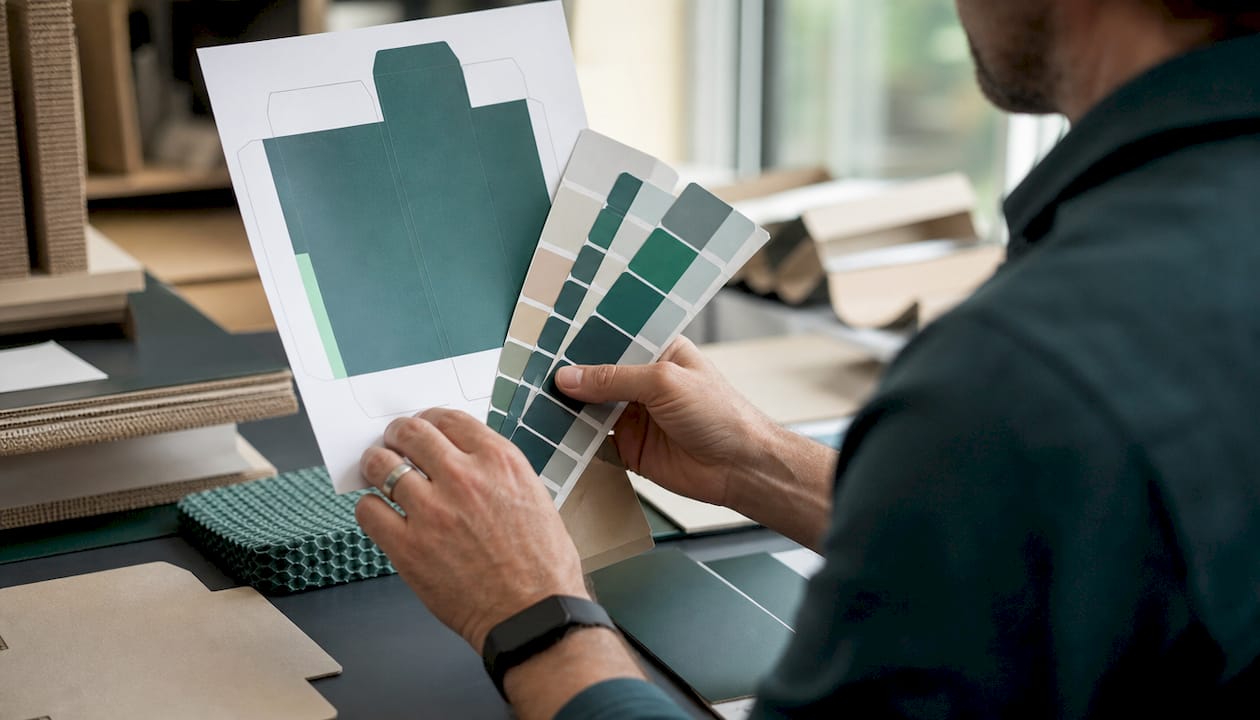
A well-built packaging guide eliminates the back-and-forth that drains agency time and client budgets. Packaging design systems act as living decision frameworks that translate brand identity into production-ready rules, covering variant management and channel requirements. When a manufacturer receives a guide that specifies dieline dimensions, handle attachment points, print color parameters, minimum type sizes, and finish rules, the first proof is far more likely to match the approved design. Fewer revision rounds mean faster time to shelf and lower agency overhead.
Pro Tip: Always request a Golden Sample from your manufacturer before approving a full production run. Golden Samples serve as physical benchmarks that verify color, material finish, and structural integrity against your approved specifications. One physical reference prevents an entire run of off-brand bags.
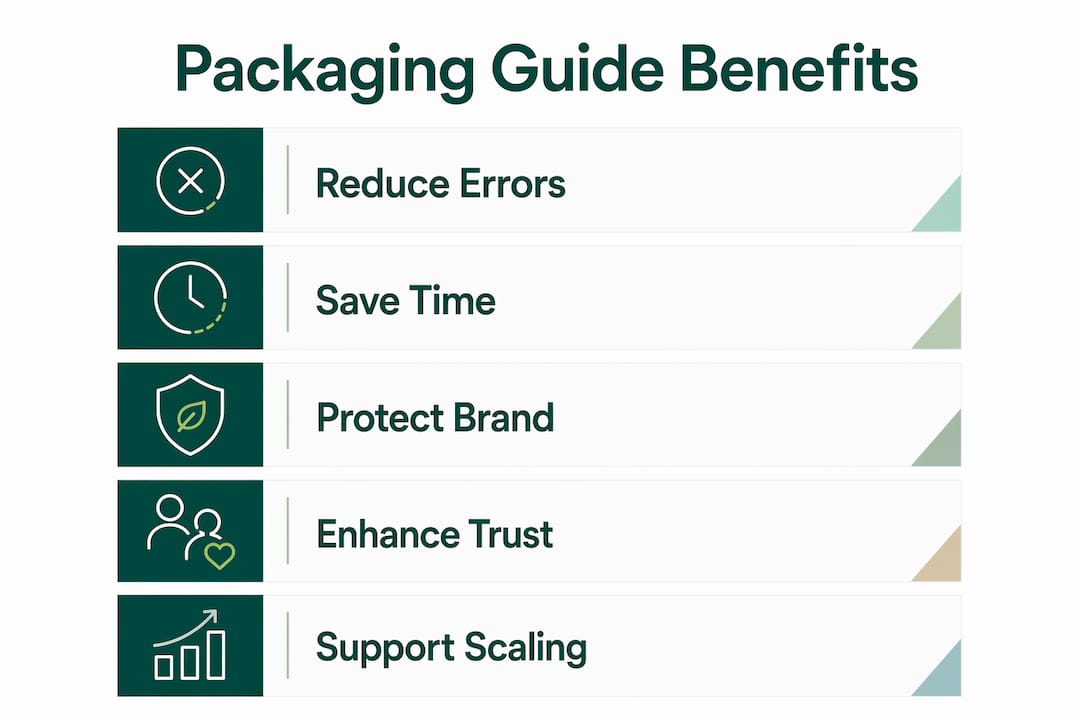
The financial case for packaging guides is straightforward. Agencies that build them spend time upfront on documentation. Agencies that skip them spend far more time and money fixing production problems after the fact.
How packaging guides protect brand identity on the shelf
Packaging is the most physically present brand touchpoint a retail customer encounters. 72% of consumers report that packaging design significantly influences their purchasing decisions. That number reflects how much brand identity work lives or dies at the point of physical contact.
Why digital brand guidelines fall short for packaging
A standard brand style guide covers logo usage, color palettes, and typography for digital and print media. It does not account for the physical constraints of packaging production. Ink behavior changes on uncoated kraft paper. Typography that reads clearly at 10pt on a screen may become illegible when printed at the same size on a textured surface. A packaging guide addresses these gaps directly.
“Packaging design must address print-aware standards and physical substrate characteristics, as digital proofs cannot predict exact outcomes. Mandating ink drawdowns or lab dips is a physical ‘insurance policy’ that protects brand identity through every production run.”
This distinction matters most for agencies working with paper shopping bags, where branded packaging must survive flexo printing on recycled kraft stock while still delivering the visual impact the brand expects. Flexo printing with water-based inks behaves differently than offset or digital printing. A packaging guide that specifies ink drawdown requirements and approved substrate finishes removes ambiguity before it becomes a production problem.
Building consumer trust through packaging consistency
Shoppers recognize brands through repeated visual cues. When a retailer’s paper shopping bags shift in color, logo placement, or finish from one season to the next, the inconsistency registers subconsciously as a quality signal. Consistent packaging reduces cognitive load for shoppers and partners alike, strengthening brand trust in retail environments. A packaging guide enforces that consistency across every vendor, every print run, and every new product variant.
How packaging guides support SKU expansion and brand scaling
Packaging systems versus one-off designs
One-off packaging designs create a specific problem at scale. Each new SKU requires a fresh design decision, a new approval cycle, and a new set of production files. Multiply that by a growing product portfolio and the cost and time burden becomes significant. A packaging system, by contrast, uses pre-defined rules that allow new variants to be created without starting from scratch.
| Approach | Design process | Production efficiency | Brand consistency |
|---|---|---|---|
| One-off designs | Full redesign per SKU | Low, repeated setup costs | Variable across variants |
| Packaging system with guide | Template-based extension | High, shared dielines and tooling | Consistent across all SKUs |
Extension logic, which means pre-defined hierarchies and grids built into the packaging system, enables rapid, independent variation creation without redesign. An agency that builds this logic into its packaging guide can hand a new vendor a single document and get production-ready files back without a lengthy briefing process.
Reducing friction with new vendors and team members
Agencies change vendors. Clients bring in new internal designers. Retail channels shift. Each transition creates a risk of brand drift if the packaging rules live only in the heads of the original design team. A packaging guide externalizes that knowledge. A new manufacturer receives the same Pantone callouts, dieline specifications, and finish requirements that the previous one used. A new designer inherits the same grid system and type hierarchy. The brand stays intact regardless of who executes it.
Reusable dielines and shared tooling are a concrete financial benefit of this approach. When a bag manufacturer already has a dieline on file that matches the guide’s specifications, setup costs drop and lead times shorten. For retail clients ordering multiple SKUs across a season, that efficiency compounds quickly.
Integrating packaging guides with sustainability and domestic manufacturing
Sustainability requirements belong inside a packaging guide, not as an afterthought. Agencies working with clients who have public environmental commitments need their packaging specifications to reflect those commitments at the production level. A guide that specifies FSC-certified paper stock, water-based inks, and recycled content percentages gives a manufacturer clear targets to meet and gives the client a document to reference in sustainability reporting.
Sustainable packaging design requires balancing branding goals with material and process realities. Some eco-friendly substrates absorb ink differently, which affects color reproduction. A packaging guide that accounts for these trade-offs prevents a situation where a brand’s sustainability choice inadvertently compromises its visual standards.
Domestic manufacturing adds another layer of value to a well-built packaging guide. Key benefits of pairing a packaging guide with a domestic manufacturer include:
- Faster proof cycles. Proximity reduces shipping time for physical samples, which shortens the approval loop.
- Easier quality assurance. A domestic manufacturer can reference the same guide and conduct in-person reviews against Golden Samples without international shipping delays.
- Consistent lead times. Standardized specifications reduce production variables, which makes lead time estimates more reliable.
- Lower remediation costs. When a production error occurs, a domestic facility can correct and rerun faster than an overseas supplier.
Packaging specs for eco-friendly retail work best when the guide and the manufacturer are aligned from the start. Agencies that build sustainability specifications into their packaging guides before approaching a manufacturer avoid the expensive process of retrofitting those requirements after production has begun.
Key Takeaways
Branding agencies that build packaging guides before production begins protect brand identity, reduce costly errors, and scale product portfolios without losing consistency.
| Point | Details |
|---|---|
| Packaging guides prevent costly errors | Three to five preventable errors per year cost brands $80,000 to $400,000 annually without clear production specifications. |
| Digital brand guidelines are not enough | Packaging guides add substrate, print, and structural rules that standard style guides do not cover. |
| Golden Samples are non-negotiable | Physical benchmarks verify color, finish, and structure before a full production run begins. |
| Packaging systems enable scaling | Extension logic and shared dielines allow new SKUs to launch faster and at lower cost. |
| Sustainability belongs in the guide | Specifying FSC-certified stock and water-based inks upfront prevents costly retrofits later. |
Why packaging guides changed how I think about agency work
Agencies tend to think of themselves as design partners. The packaging guide forces a different identity: production partner. That shift is uncomfortable for some teams, but it is the right one.
The agencies I have seen struggle most with packaging are the ones that hand off a beautiful brand book and assume the manufacturer will figure out the rest. They will not. A manufacturer needs to know the exact Pantone reference for kraft paper, the minimum handle attachment load, and whether the finish is matte or soft-touch. None of that lives in a typical brand style guide.
The agencies that invest in packaging guides also tend to win more repeat work. Their clients see fewer production surprises, shorter approval cycles, and more consistent results across seasons. That track record is worth more than any pitch deck. Partnering with a manufacturer like Gatherpackaging, which brings deep technical knowledge of paper shopping bag production, makes building that guide significantly easier. The manufacturer knows what the guide needs to say because they know what the production process requires.
— Taylor
Gatherpackaging supports agencies with production-ready packaging solutions
Branding agencies working on retail packaging need a manufacturing partner that understands both the design side and the production side. Gatherpackaging manufactures custom paper shopping bags in Toronto, Canada, with 8-color flexo printing, FSC-certified materials, and water-based inks. The team works directly with agencies on dieline specifications, Golden Sample approvals, and quality assurance testing to make sure the final bag matches the approved packaging guide. For agencies sourcing Canadian-made shopping bags with reliable lead times and domestic quality control, contact Gatherpackaging to discuss your client’s retail packaging requirements.
FAQ
What is a packaging guide and why do agencies need one?
A packaging guide is a production-aware document that translates brand guidelines into specifications a manufacturer can execute, covering dielines, Pantone colors, type sizes, and finish rules. Agencies need one because standard brand style guides do not address the physical constraints of packaging production.
How does a packaging guide reduce production costs?
By specifying exact print parameters, structural requirements, and approved substrates upfront, a packaging guide eliminates the revision cycles and rush reorders that cost brands $80,000 to $400,000 annually from preventable errors.
What is the difference between a brand style guide and a packaging guide?
A brand style guide covers visual identity for digital and general print use. A packaging guide extends those rules to include substrate behavior, ink drawdown requirements, dieline specifications, and structural testing standards that only apply to physical packaging.
How do packaging guides support sustainable packaging goals?
A packaging guide that specifies FSC-certified paper, recycled content percentages, and water-based ink requirements gives manufacturers clear targets to meet, ensuring sustainable design choices are built into production from the start rather than added after the fact.
What should a packaging guide include for paper shopping bags?
A complete guide for paper shopping bags covers dieline dimensions, handle type and attachment specifications, Pantone and CMYK color callouts for kraft substrates, minimum type sizes for flexo printing, finish requirements, and Golden Sample approval criteria.
Share:
What Is a Packaging Audit? A 2026 Guide for Brands
Workflow for Retail Bag Supply: A Procurement Guide