

TL;DR:
- Specialty packaging uses custom materials and structural features to protect products and boost brand identity. It offers significant benefits, including reducing damage, enhancing brand perception, and ensuring regulatory compliance. Domestic manufacturing provides faster lead times and better quality control, making it the preferred choice for retail brands.
Specialty packaging is defined as custom-designed packaging that uses non-standard materials, advanced printing techniques, and structural innovations to protect products and strengthen brand identity. Unlike standard stock packaging, specialty packaging solutions incorporate features like metallic foils, die-cuts, magnetic closures, and engineered inserts tailored to a specific product’s dimensions and fragility. For business owners and marketing professionals, understanding what is specialty packaging means recognizing it as both a protection tool and a brand asset. Gatherpackaging, based in Toronto, Canada, builds this principle into every paper shopping bag it manufactures, combining FSC-certified materials with 8-color flexo printing to deliver packaging that works as hard as the brand it carries.
What are specialty packaging solutions and how do they differ from standard packaging?
Specialty packaging types fall into three main categories: luxury and promotional, protective and functional, and retail-ready solutions. Each category serves a distinct purpose, and choosing the wrong one creates real problems for product safety and brand perception.
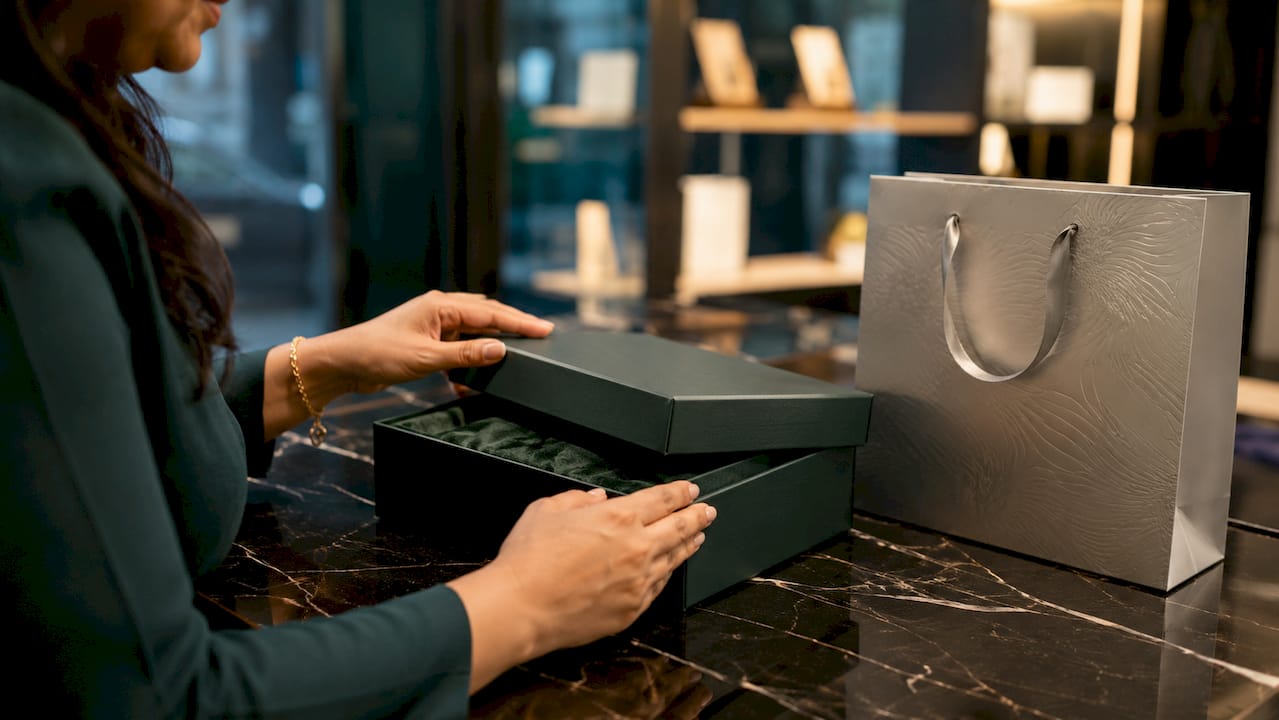
Luxury and promotional packaging includes rigid boxes, foil-stamped bags, and embossed wraps. These formats signal premium value before a customer opens the product. Retail apparel brands use them to reinforce price positioning at the point of sale.
Protective and functional packaging covers shock-absorbing inserts, weatherproof materials, and tamper-resistant closures. This category is critical for fragile goods, electronics, and any product shipped through a multi-stop supply chain. Over 30% of consumers have received damaged products due to poor packaging. That number represents real return costs, lost customers, and brand damage.
Retail-ready packaging is designed to move directly from the shipping carton onto a store shelf or into a customer’s hands. Paper shopping bags with reinforced handles, clean print registration, and consistent structural integrity fall squarely into this category.
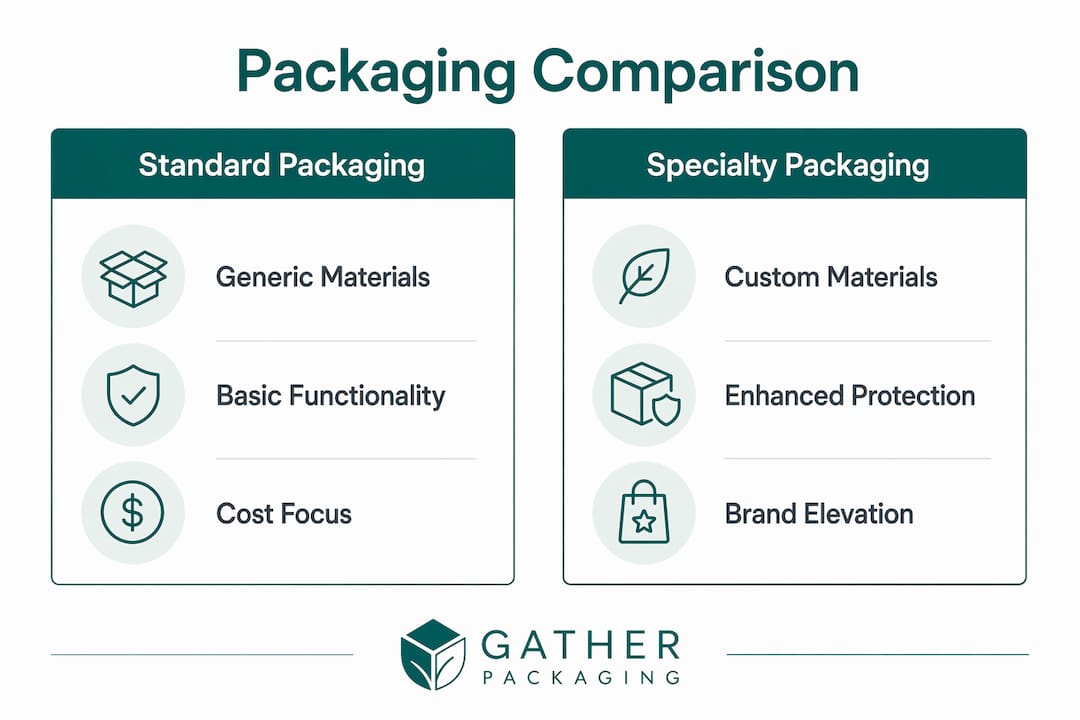
The table below shows how specialty packaging compares to standard packaging across the factors that matter most to buyers.
| Feature | Standard packaging | Specialty packaging |
|---|---|---|
| Materials | Generic kraft, plain corrugated | FSC-certified paper, recycled content, specialty substrates |
| Print capability | One or two colors, basic graphics | Up to 8-color flexo, foil, emboss, spot UV |
| Structural design | Stock dimensions, no customization | Custom die-cuts, inserts, closures, and handle types |
| Protection level | Basic containment | Engineered for product weight, fragility, and transit stress |
| Brand impact | Minimal | High, consistent with brand identity |
| Compliance support | Limited | Meets DOT, FSC, and EPR standards where required |
Pro Tip: Match the packaging category to the product’s primary risk first. A fragile product needs structural protection before it needs premium aesthetics. A retail bag that tears at the handle fails the brand regardless of how good the print looks.
What are the key benefits of specialty packaging for businesses?
Specialty packaging delivers measurable advantages across product safety, brand perception, customer experience, and regulatory compliance. These benefits compound over time, which is why procurement teams and brand managers treat packaging decisions as long-term investments rather than one-time purchases.
The core benefits are:
- Reduced product damage. Engineered protective packaging cuts the rate of goods arriving damaged. Poor packaging causes damage for more than 30% of consumers. Fewer damaged shipments mean fewer returns, lower replacement costs, and stronger customer trust.
- Elevated brand identity. Premium materials and finishes communicate quality before the product is seen. Consumers are more willing to pay higher prices for products presented in appealing, luxurious packaging. The packaging sets the price expectation.
- Memorable unboxing experience. The first physical interaction with a product through its packaging is a critical marketing touchpoint that shapes consumer perception. Brands that invest in this moment build loyalty that advertising alone cannot replicate.
- Regulatory compliance. Specialty packaging for hazardous or sensitive goods must meet DOT and regulatory standards to avoid legal liability and shipping failures. Compliance is not optional for these product categories.
- Sustainability alignment. Brands using recycled or FSC-certified materials demonstrate environmental responsibility. This matters to retail buyers, procurement teams, and end consumers who factor sustainability into purchasing decisions.
Each of these benefits connects directly to business outcomes. Damage reduction cuts operational costs. Brand elevation supports margin. Compliance avoids legal exposure. Sustainability opens doors with retailers and corporate buyers who require it.
How to design specialty packaging that fits your brand and product
Effective specialty packaging design starts with the product, not the logo. The structural requirements of the packaging must be defined before any aesthetic decisions are made. Custom specialty packaging must balance aesthetics with mechanical protection, including transit testing, to avoid damage despite attractive design.
A practical design process follows these steps:
- Define product requirements. Document the product’s weight, dimensions, fragility, and any regulatory requirements. This information drives every structural decision that follows.
- Select materials and structure. Choose substrates based on protection needs and sustainability goals. For paper shopping bags, this means selecting the right paper weight, handle type, and base construction for the intended load.
- Develop the print and finish specification. Determine color count, ink type, and any special finishes like spot UV or foil. Gatherpackaging’s 8-color flexo printing capability handles complex brand color systems without sacrificing registration quality.
- Build and test a prototype. Structural validation and transit testing confirm that the design performs under real shipping and handling conditions. Skipping this step is the most common cause of costly post-launch failures.
- Coordinate production and logistics. End-to-end manufacturers integrate strategy, design, manufacturing, and logistics in one workflow. This eliminates the communication gaps that fragment projects across multiple vendors.
- Plan for compliance review. If the product or market requires it, verify that the packaging meets applicable safety and labeling standards before production runs begin.
Pro Tip: Engage your manufacturer at step one, not step three. Gatherpackaging’s design assistance and prototyping services are built to catch structural problems before they become production problems. Early involvement shortens lead times and reduces revision cycles.
The choice between a self-serve online platform and an end-to-end manufacturing partner matters significantly for complex projects. Complex packaging projects require integrated strategy, design, manufacturing, and logistics coordination that self-serve platforms cannot provide. For retail paper shopping bags with custom print, specific handle conversions, and quality assurance requirements, a dedicated manufacturer is the right choice.
What sustainable specialty packaging options are available?
Sustainable specialty packaging uses recycled, compostable, and eco-friendly materials, enabling brands to meet environmental goals while maintaining functionality and aesthetics. Sustainability is no longer a differentiator for premium brands. It is a baseline expectation from retail partners and consumers alike.
The table below summarizes the most relevant sustainable material options for retail and specialty paper packaging.
| Material type | Key features | Best use case |
|---|---|---|
| FSC-certified paper | Sourced from responsibly managed forests | Retail shopping bags, branded carry bags |
| Recycled content paper | Reduces virgin fiber use, lower carbon footprint | General retail bags, secondary packaging |
| Compostable kraft | Breaks down in industrial compost conditions | Foodservice takeout bags, eco-focused retail |
| Water-based inks | No solvent VOCs, safer for recycling streams | All printed paper bags |
| Biodegradable options | Designed to break down without leaving microplastics | Specialty retail, zero-waste brand programs |
Gatherpackaging builds sustainability into its manufacturing process through FSC-certified materials, recycled content, water-based inks, and biodegradable bag options. Brands seeking to build an eco-friendly packaging workflow can integrate these material choices from the first design brief rather than retrofitting them later.
Certifications matter in this space. FSC certification verifies the chain of custody for paper fiber. EPR compliance addresses extended producer responsibility requirements that are becoming law in multiple North American jurisdictions. Brands that select certified materials now avoid regulatory exposure as these requirements expand.
How can businesses manage lead times and quality assurance with specialty packaging?
Domestic manufacturing is the most direct way to control lead times and quality for specialty paper packaging. Gatherpackaging’s Toronto facility serves North American retail brands with faster turnaround than overseas suppliers and without the import logistics complexity that adds weeks to project timelines.
Quality assurance for paper shopping bags covers specific checkpoints that generic packaging vendors often skip. The following are the critical QA and compliance points for retail paper bag procurement:
- Handle pull strength testing. Handles must support the rated load without tearing from the bag body. This is the most common structural failure point for retail carry bags.
- Print registration and color consistency. Multi-color flexo printing requires tight registration tolerances across a full production run. Spot checks at press start and mid-run catch drift before it affects the full order.
- Bag construction integrity. Bottom seams, side gussets, and glue bonds must hold under load and humidity conditions representative of retail environments.
- Ink adhesion and rub resistance. Water-based inks must cure fully to resist scuffing during transit and in-store handling.
- Dimensional accuracy. Bag dimensions must match the specification to fit retail display fixtures and branded inserts.
- Compliance documentation. FSC chain-of-custody records and any applicable EPR compliance documentation must accompany the order for retail buyers who require it.
Partnering with a domestic manufacturer also reduces the risk of supply disruption. Overseas production introduces port delays, customs holds, and quality inspection gaps that domestic production eliminates. For brands with seasonal peaks or tight retail floor dates, that reliability is worth more than a marginal cost saving from offshore sourcing. Gatherpackaging’s focus on retail packaging design efficiency supports brands that need both quality and speed from the same supplier.
Key takeaways
Specialty packaging is a business tool that protects products, builds brand equity, and meets compliance requirements. Generic stock packaging cannot do all three.
| Point | Details |
|---|---|
| Definition matters | Specialty packaging uses custom materials, structures, and finishes beyond what stock packaging offers. |
| Protection comes first | Over 30% of consumers have received damaged goods. Structural design and transit testing prevent this. |
| Sustainability is required | FSC-certified, recycled, and compostable materials meet retailer and regulatory expectations in 2026. |
| Design process is sequential | Define product requirements before aesthetics. Prototype and test before committing to a production run. |
| Domestic manufacturing reduces risk | Shorter lead times, direct QA oversight, and no import delays make domestic suppliers the reliable choice. |
Why specialty packaging is a business decision, not just a design decision
I’ve watched brands spend months perfecting a logo and then hand the packaging brief to the cheapest vendor they could find online. The result is almost always the same. The bags arrive with inconsistent color, handles that fail under load, and no documentation for the retail buyer who needs FSC certification. The brand looks worse than it would have with a plain kraft bag.
The mistake is treating packaging as the last step in a product launch rather than one of the first. Structural requirements, material certifications, print specifications, and lead time planning all need to be locked in early. A manufacturer like Gatherpackaging can absorb a lot of complexity when they are brought in at the brief stage. When they are brought in after the design is finalized and the launch date is set, the options narrow fast.
The other thing I’d push back on is the assumption that sustainable packaging costs more. In my experience, brands that build sustainability into the material selection from the start, rather than retrofitting it, end up with cleaner specs and fewer revision cycles. FSC-certified paper and water-based inks are not premium add-ons at Gatherpackaging. They are the default. That changes the cost conversation entirely.
The brands that get specialty packaging right treat it as a product decision with brand consequences, not a brand decision with packaging consequences. That shift in framing changes everything about how the brief is written, who is in the room, and what gets prioritized.
— Taylor
Gatherpackaging’s custom paper shopping bags for retail brands
Gatherpackaging manufactures custom paper shopping bags from its Toronto facility, serving retail brands, apparel operators, and specialty retailers across North America. Every bag is built to specification, with up to 8-color flexo printing, FSC-certified materials, and handle styles including turn top, serrated top, and tamper-resistant options.
Quality assurance, design assistance, and prototyping are included in the production process, not offered as add-ons. Brands that need dependable supply, short lead times, and eco-friendly bag options get all three from a single domestic source. For retail buyers who require compliance documentation, Gatherpackaging provides FSC chain-of-custody records with every order. Contact Gatherpackaging to discuss your paper shopping bag requirements and get a production-ready quote.
FAQ
What is specialty packaging in simple terms?
Specialty packaging is custom-designed packaging that uses non-standard materials, structures, or finishes to protect a specific product and reinforce a brand’s identity beyond what generic stock packaging can achieve.
What are the main types of specialty packaging?
The three main types are luxury and promotional packaging, protective and functional packaging, and retail-ready packaging. Each type is selected based on the product’s fragility, brand positioning, and distribution channel.
How does specialty packaging improve brand perception?
Consumers are more willing to pay higher prices for products presented in appealing, well-designed packaging. The physical quality of the packaging signals the quality of the product inside before it is opened.
What sustainable materials are used in specialty packaging?
FSC-certified paper, recycled content, compostable kraft, water-based inks, and biodegradable substrates are the primary sustainable options. These materials meet both environmental goals and retailer compliance requirements.
Why does domestic manufacturing matter for specialty packaging?
Domestic manufacturing shortens lead times, allows direct quality assurance oversight, and eliminates import delays. For brands with retail floor dates or seasonal peaks, reliable domestic supply reduces the risk of costly stockouts.
Share:
Why Packaging Material Traceability Matters in 2026
Shopping Bag Branding Ideas for Distributors: 2026 Guide