
TL;DR:
- Branded shopping bags serve as cost-effective mobile advertising tools with high lifetime impressions.
- Effective material choice, logo placement, and print techniques maximize branding impact and client satisfaction.
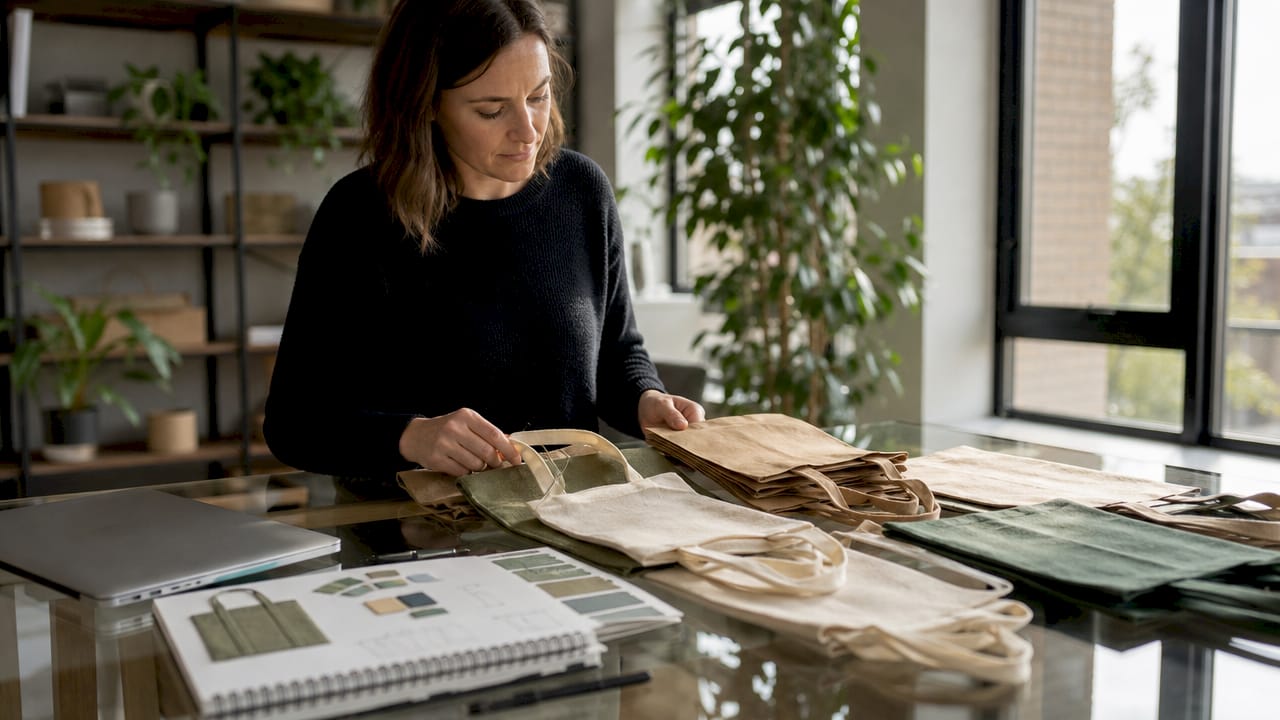
Shopping bag branding for distributors is the practice of applying logos, colors, and print techniques to bags that clients use as mobile advertising tools. A single branded bag generates an average of 1,940 lifetime impressions at roughly $0.005 per impression. That cost efficiency makes branded bags one of the strongest promotional products a distributor can offer. The challenge is knowing which materials, logo placements, and printing methods actually deliver results for each client’s budget and goals. This guide covers the most effective shopping bag branding ideas for distributors, from material selection and logo strategy to printing techniques and client positioning.
1. How to select the right materials for branded shopping bags
Material choice is the single biggest factor in how a branded bag performs in the field. The material determines print quality, durability, sustainability credentials, and the price point you can charge clients.
Kraft paper is the top choice for retail and specialty clients who want a clean, natural look with strong print fidelity. Recycled paper offers similar aesthetics with added sustainability messaging built into the product itself. RPET (recycled polyester) suits clients targeting eco-conscious consumers who need a reusable bag with a longer lifespan. Jute and bamboo appeal to premium wellness and gift brands, though they carry higher costs and longer lead times.
Sustainability drives material decisions across the market, with the global tote bag sector valued at $2.75 billion in 2024 and projected to reach $3.94 billion by 2032. That growth signals that clients will increasingly ask for materials with verified eco credentials. FSC-certified paper and water-based inks are now baseline expectations for many retail buyers, not optional upgrades.
| Material | Sustainability | Cost | Durability | Print suitability |
|---|---|---|---|---|
| Kraft paper | High (FSC options) | Low to medium | Medium | Excellent |
| Recycled paper | Very high | Low to medium | Medium | Very good |
| RPET | High | Medium | High | Good |
| Jute | Medium | Medium to high | High | Fair |
| Bamboo | High | High | Medium | Fair |
Pro Tip: Gatherpackaging manufactures FSC-certified kraft paper bags in Toronto, Canada, with 8-color flexo printing and water-based inks. Domestic production means shorter lead times and easier quality checks compared to overseas sourcing.
2. Effective logo placement and size strategies
Logo placement determines whether a bag works as a branding tool or just a carrier. The front panel is the primary real estate. Prints of 2.5–5 inches on the front panel deliver clear visibility at arm’s length. Back panels support bolder statements, with prints in the 10–14 inch range creating strong visual impact when the bag is carried or displayed.
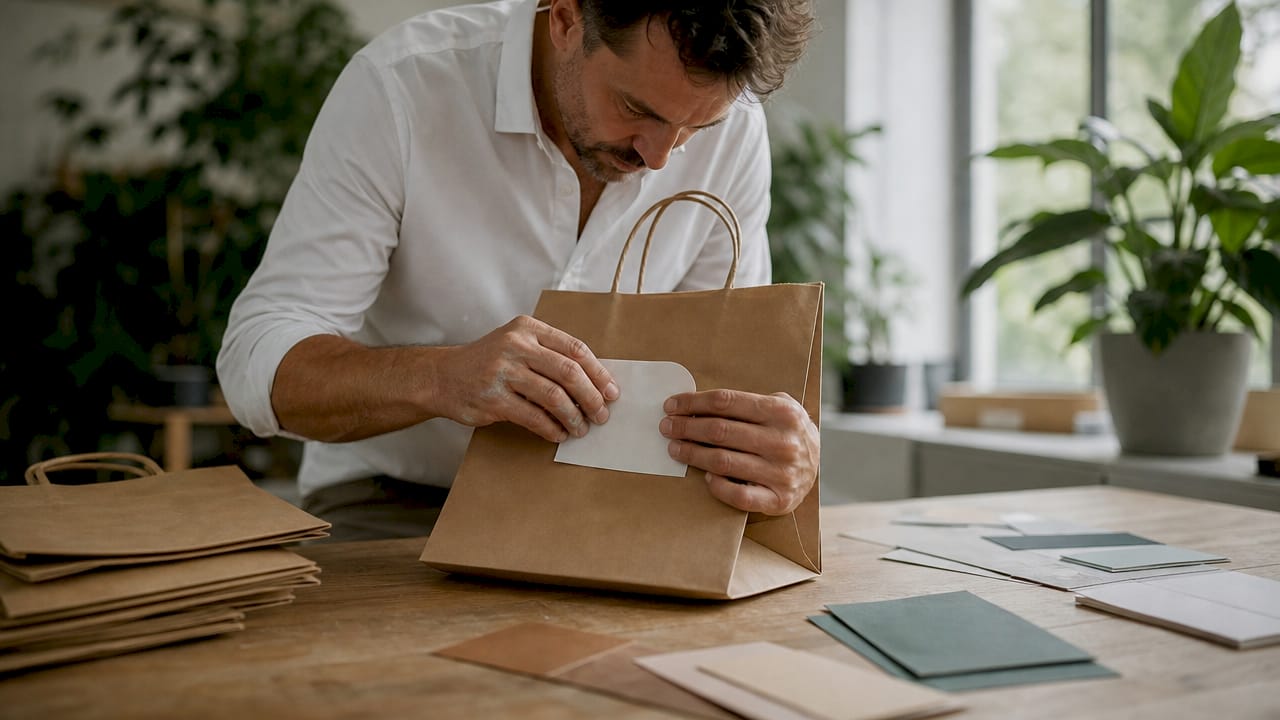
Beyond the main panels, subtle branding on handles or gussets adds visibility without cluttering the design. A small logo on a handle or a repeated pattern on the gusset gives the bag a finished, professional look that clients in apparel and specialty retail appreciate. Testing logo legibility on these smaller surfaces before production is critical. A design that reads clearly at full size can become unrecognizable when scaled down to a zipper pull or side panel.
Simpler logos with negative space perform better on bags than complex multi-color artwork. Clean designs are more memorable, encourage daily reuse, and signal premium quality to the end consumer. Clients who push for overly detailed logos often end up with bags that look cluttered and print inconsistently across production runs.
Key placement options and their marketing impact:
- Front center panel: Maximum visibility, best for primary logo and brand name
- Back panel: Bold statement prints, taglines, or campaign artwork
- Side gussets: Subtle secondary branding, pattern repeats, or website URLs
- Handles or straps: Brand name or icon for visibility when the bag is carried
- Interior lining: Surprise branding that enhances the unboxing experience
Pro Tip: Always request a physical sample or printed proof before approving a full production run. Color and size read differently on paper stock than on a screen.
3. Choosing the right printing and branding techniques
Print method selection affects cost, durability, and the final look of every branded bag. Each technique suits different artwork styles and materials.
Screen printing is the most durable option for cotton and canvas bags and delivers consistent results on bulk orders. It works best with simple, bold designs using two or three colors. Heat transfer printing handles detailed, multi-color logos well and suits polyester and coated paper surfaces. Digital printing offers the widest color range and works for short runs, but costs more per unit at scale.
Debossing creates an indented design without ink or thread, giving upscale paper and leather-like bags a tactile, premium finish. It is the preferred technique for luxury retail and high-end gift brands. Embossing raises the design above the surface and works similarly for premium applications. Both methods add perceived value that clients can charge more for at retail.
Cost premiums vary significantly by method: heat transfer adds 15–25%, full-color digital printing adds 20–30%, and debossing can represent a 30–40% premium depending on the base material. Distributors need to communicate these tradeoffs clearly when quoting clients.
| Print method | Cost level | Durability | Material compatibility | Visual effect |
|---|---|---|---|---|
| Screen printing | Low | Very high | Cotton, canvas, paper | Bold, flat color |
| Heat transfer | Medium | High | Polyester, coated paper | Detailed, multi-color |
| Digital printing | Medium to high | Medium | Most materials | Photo-quality, full color |
| Debossing | High | Permanent | Leather-like, thick paper | Tactile, luxury |
| Embossing | High | Permanent | Thick paper, cardboard | Raised, premium |
Matching the print method to the material prevents premature wear and maintains image quality through repeated use. Embroidery on thin paper tears the substrate. Heat transfer on uncoated kraft paper can peel. Getting this pairing right is what separates a distributor who earns repeat business from one who fields complaints.
4. Innovative branded bag concepts to pitch to retail clients
The most effective custom bag branding strategies go beyond a logo on a front panel. Distributors who pitch creative concepts win more business and command better margins.
Sustainability messaging printed directly on the bag is one of the strongest selling points available right now. A line like “Made from 100% recycled kraft paper” or an FSC certification mark printed on the bag tells the end consumer something meaningful about the brand. Reusable bags build goodwill and loyalty for the brand on the bag, and that association is worth more than the bag’s production cost.
Seasonal and event-specific designs give clients a reason to reorder regularly. A retailer who orders a holiday print in october and a spring design in march doubles their bag volume with you annually. QR codes printed on bags link consumers to loyalty programs, product pages, or campaign landing pages, turning a physical bag into a digital touchpoint. Interior lining prints, patterned gussets, and custom hardware on handles all add perceived value without requiring a complete redesign.
Unique branded bag concepts worth pitching:
- Sustainability certification marks: FSC or recycled content icons printed on the bag
- Seasonal campaign prints: Holiday, spring, or event-specific artwork for repeat orders
- QR code integration: Links to loyalty programs, product launches, or campaign pages
- Interior lining prints: Brand patterns or messaging visible when the bag opens
- Repeating logo patterns: All-over prints that work as both branding and design
- Debossed or foil-stamped logos: Premium finishes for luxury retail and gift clients
- Minimalist single-color designs: Clean, reusable aesthetics that signal quality
5. How distributors can position branded bags across client segments
Distributors who segment clients by budget and campaign goal close more deals and reduce back-and-forth on specs. Not every client needs the same bag, and treating them as if they do wastes time on both sides.
Budget tiers align directly with material and print method: basic promotional bags for mass giveaways fall under $2 per unit, mid-range cotton or RPET bags with screen printing run $2–$6, and premium insulated or debossed bags reach $6–$15 or more. Knowing where a client sits in that range before the first conversation saves multiple revision cycles.
For mass awareness campaigns, high-volume kraft paper bags with a single-color screen print deliver the best cost-per-impression. For premium gifting or retail packaging, a debossed or foil-stamped paper bag with a custom interior print justifies a higher price point and positions the client’s brand as upscale. Sustainability-focused clients need FSC-certified materials and water-based inks documented in the product spec sheet, not just mentioned verbally.
Domestic manufacturing is a real selling point when positioning against overseas suppliers. Shorter lead times, easier quality audits, and no import delays matter to procurement teams managing tight seasonal windows. Clients who have been burned by late shipments from overseas suppliers respond well to a Canadian-made option with a verifiable production timeline.
Pro Tip: Bundle design assistance with your bag orders. Clients who need help adapting their logo for bag printing are more likely to stay with a distributor who solves that problem than one who simply takes the order.
Key takeaways
Effective shopping bag branding combines material choice, logo placement, and print technique to create bags that function as durable, mobile advertising tools for retail clients.
| Point | Details |
|---|---|
| Material drives brand perception | Kraft paper and FSC-certified options signal quality and sustainability to end consumers. |
| Logo size and placement matter | Front panels suit 2.5–5 inch prints; back panels support 10–14 inch bold designs. |
| Print method affects cost and durability | Debossing adds 30–40% cost premium but delivers a permanent, premium finish. |
| Segment clients by budget | Bag tiers range from under $2 for basic promo bags to $6–$15 for premium options. |
| Domestic sourcing is a competitive edge | Canadian-made bags offer shorter lead times and easier quality control for distributors. |
Why branded bags deserve more strategic attention than most distributors give them
The distributors I see winning the most repeat business from retail clients are not the ones with the lowest prices. They are the ones who show up with a point of view on what the bag should do for the brand, not just what it costs per unit.
Most distributors treat bag branding as a spec exercise: logo file in, bag out. That approach leaves real margin on the table. A client who understands that their kraft paper bag will generate nearly 2,000 impressions over its lifetime, and that a debossed logo signals premium quality at the point of sale, will pay more for the right bag. The distributor who frames it that way earns the business.
The shift toward sustainability is not slowing down. Clients who ignored eco credentials three years ago are now asking for FSC certification marks and recycled content documentation as standard. Distributors who built relationships with domestic, sustainable manufacturers early are now in a much stronger position than those scrambling to find compliant overseas suppliers on short timelines.
My honest advice: stop treating the bag as a commodity and start treating it as a branding decision. The clients who see it that way will spend more, reorder more often, and refer you to other buyers.
— Taylor
Gatherpackaging’s custom paper bags for distributors
Gatherpackaging manufactures custom printed kraft paper bags in Toronto, Canada, with FSC-certified materials, water-based inks, and 8-color flexo printing. Distributors working with retail, apparel, and specialty clients get access to a full range of bag styles, including turn top, serrated top, and tamper-resistant options, all customizable in size and print.
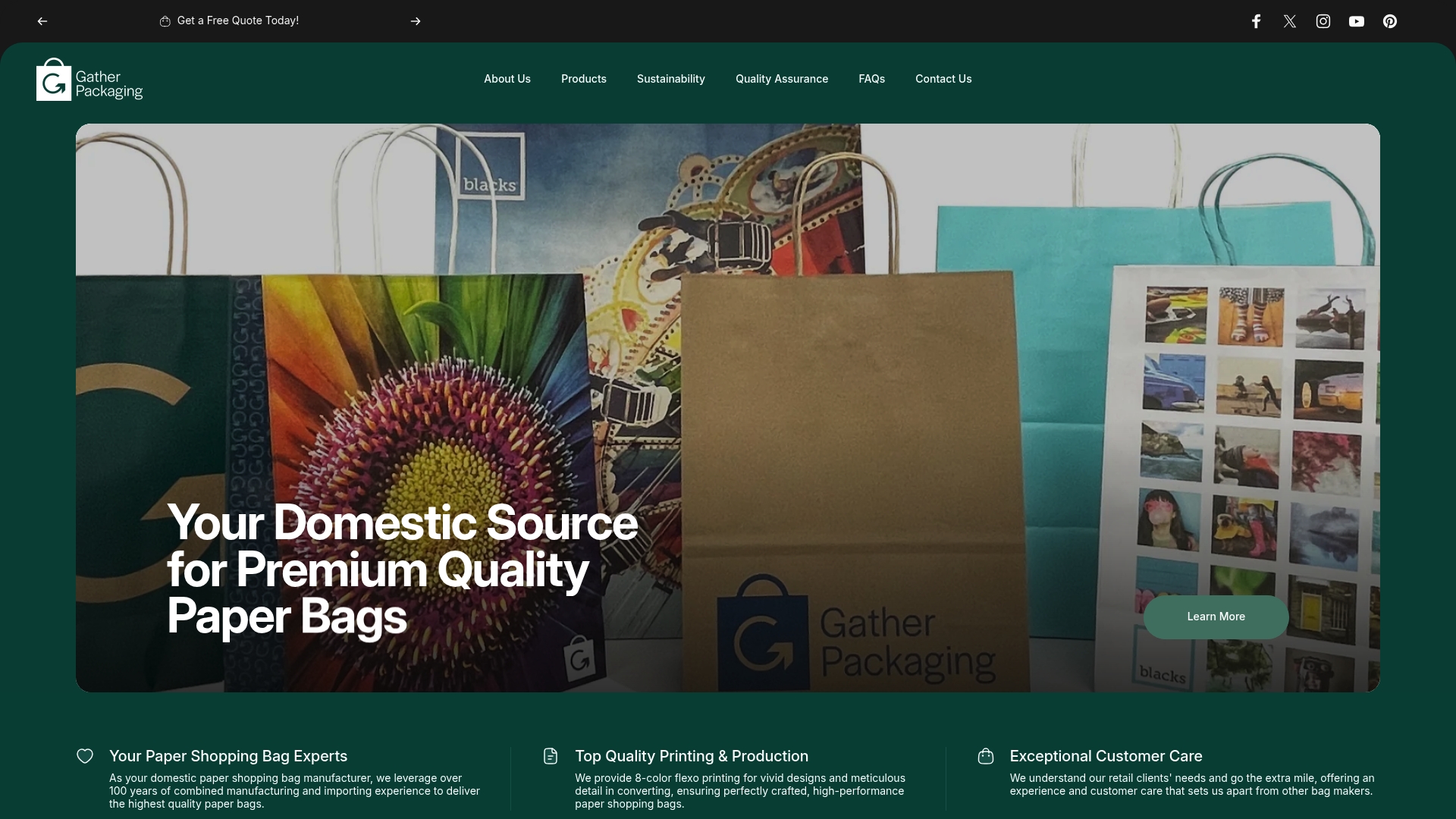
Gatherpackaging’s domestic production means faster turnaround and direct quality oversight at every stage, from prototyping through final delivery. Their eco-friendly paper bag line covers recycled content, biodegradable options, and certified sustainable materials that meet the documentation requirements retail buyers now expect. Contact Gatherpackaging to discuss your next branded bag project and get a quote matched to your clients’ specs and timelines.
FAQ
What printing method works best for paper shopping bags?
Flexo printing and screen printing deliver the best results on paper bags, with flexo suited to high-volume runs and screen printing ideal for bold, single-color logos. Digital printing works for short runs with detailed artwork but costs more per unit at scale.
How many impressions does a branded shopping bag generate?
A branded bag generates an average of 1,940 lifetime impressions at a cost of roughly $0.005 per impression, making it one of the most cost-effective promotional products available.
What logo size works best on a shopping bag front panel?
A print size of 2.5–5 inches on the front panel delivers clear visibility at arm’s length. Back panels support larger prints in the 10–14 inch range for bolder brand impact.
Why should distributors prioritize eco-friendly bag materials?
Reusable, sustainable bags build consumer goodwill and brand loyalty, and retail clients increasingly require FSC-certified or recycled content documentation as a procurement standard.
What is the minimum order quantity for custom printed paper bags?
Minimum order quantities vary by manufacturer and bag style. Gatherpackaging’s MOQ details are available directly through their sales team, as requirements depend on bag size, print complexity, and material selection.
Share:
What Is Specialty Packaging? A Guide for Brand Owners
How to Source Packaging Domestically: A Retail Guide