
TL;DR:
- Choosing domestic packaging providers reduces shipping delays, enables easier quality control, and supports sustainability goals.
- Vetting local suppliers by requesting samples and verifying addresses helps prevent costly errors and delays.
Domestic packaging sourcing is the practice of selecting manufacturers and distributors within your own country or region to supply retail bags, takeout packaging, and branded carry bags. For retailers and foodservice operators, this approach cuts international shipping delays, reduces minimum order pressure, and supports sustainability goals through shorter supply chains. Domestic custom packaging generally requires minimum order quantities between 250 and 1,000 units, compared to 1,000 to 3,000 units from offshore suppliers. That lower floor makes domestic sourcing practical for brands that reorder frequently or test new designs. FSC-certified materials and water-based inks are far easier to verify when your manufacturer is reachable by phone in your own time zone.
How to source packaging domestically: supplier types and what they offer
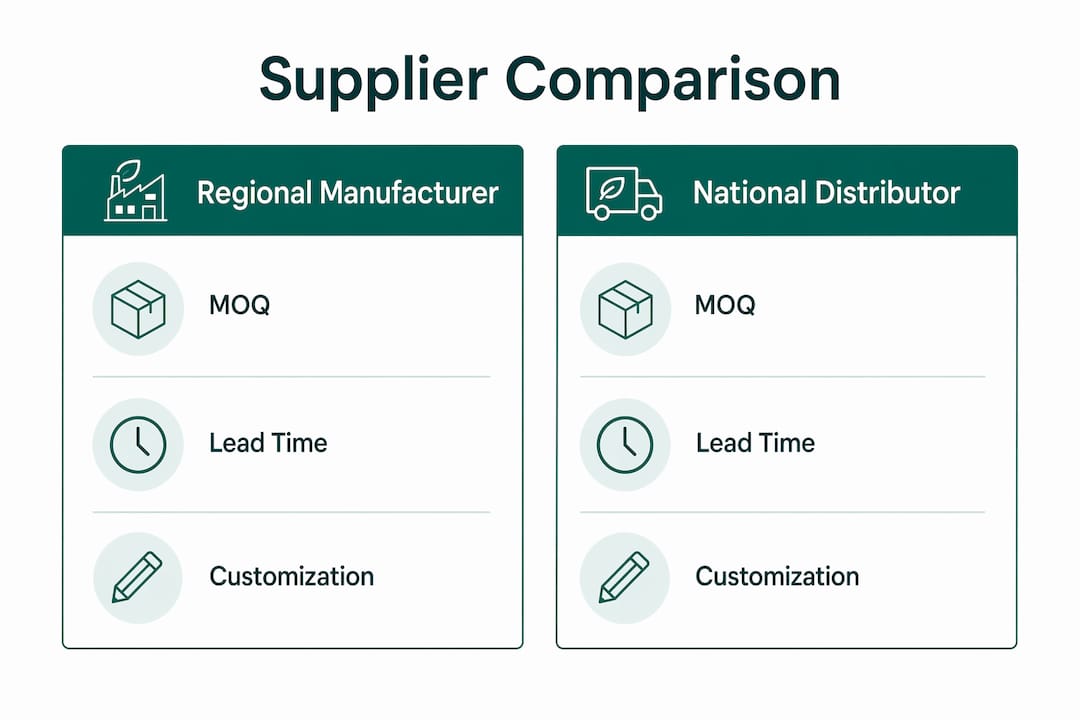
The first decision in domestic packaging sourcing is choosing between a regional manufacturer and a national distributor. Each serves a different need, and picking the wrong one costs you money or flexibility.
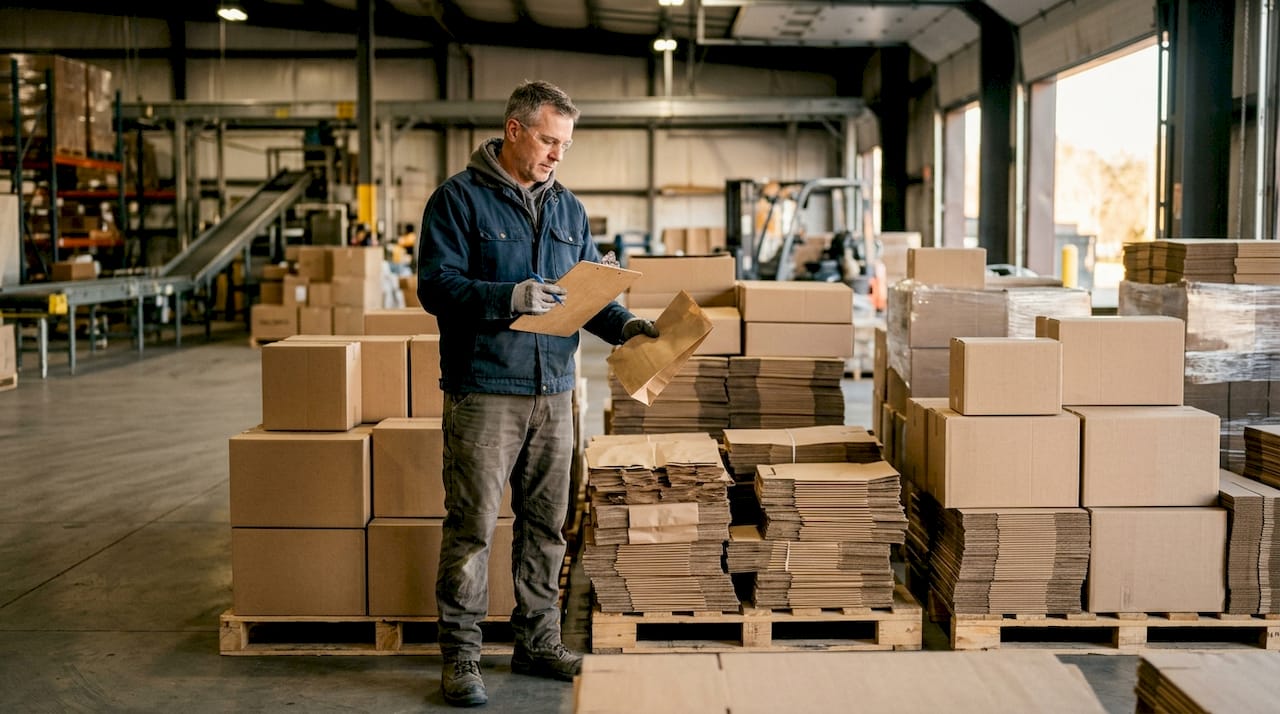
Regional manufacturers produce bags and packaging in their own facilities. They offer the lowest per-unit cost, full customization, and direct quality control. Lead times from domestic printers and manufacturers typically run 7–15 business days. That speed is a genuine advantage when you need to restock before a seasonal rush or respond to a branding update.
National distributors stock standard inventory and ship immediately, with no minimum order quantities. The tradeoff is real: distributors charge a 20–40% unit price premium compared to buying direct from a manufacturer. For a retailer ordering 5,000 paper shopping bags per quarter, that premium adds up fast.
| Supplier type | MOQ | Lead time | Customization | Unit cost |
|---|---|---|---|---|
| Regional manufacturer | 250–1,000 units | 7–15 business days | Full | Lowest |
| National distributor | None | 1–3 business days | Limited | 20–40% higher |
The right choice depends on your order volume, how often you rebrand, and how much cash you want tied up in inventory. Smaller regional manufacturers can produce custom runs at 500 units versus 3,000 units offshore. That flexibility is worth more than the per-unit savings for many retail and foodservice operators.
How do you identify and vet reliable domestic packaging vendors?
Finding a domestic supplier is straightforward. Vetting one properly takes more work, and skipping that step is where most sourcing mistakes happen.
Start with verified industry directories. ThomasNet and Maker’s Row both filter for domestic manufacturers with confirmed physical addresses and customer reviews. A verified address matters because it confirms the supplier actually operates a facility rather than brokering orders overseas.
Once you have a shortlist, follow these steps before placing any order:
- Confirm the physical location. Ask for the facility address and cross-check it on a map. A domestic manufacturer should welcome a visit or at least a video call from the production floor.
- Check references and reviews. Ask for two or three client references in your industry. A paper bag manufacturer that supplies other retailers can speak to print consistency and delivery reliability.
- Request physical samples. Testing samples before bulk orders is the single most effective way to catch print quality issues, weak handles, or material defects before they reach your store floor.
- Evaluate responsiveness. Send a detailed inquiry and measure how quickly and clearly they respond. Slow or vague replies at the quoting stage predict slow or vague replies when you have a production problem.
- Review pricing transparency. A reliable supplier provides itemized quotes covering materials, printing, finishing, and shipping. Vague pricing is a red flag.
Pro Tip: Ask specifically about their quality assurance process for paper shopping bags, including handle pull strength and print registration checks. A supplier with a documented QA checklist is far less likely to ship a defective run.
Avoid suppliers who refuse to send samples, cannot name their material sources, or quote without asking about your specifications. Those patterns signal a broker, not a manufacturer.
How should you adapt packaging designs for domestic manufacturing?
Packaging designed for offshore production often does not transfer directly to domestic manufacturing. Reshoring packaging requires redesigning away from labor-intensive methods toward automation-compatible structures. This is a technical step that most retailers underestimate.
The key design adjustments for domestic paper bag production include:
- Replace film lamination with aqueous coatings. Aqueous coatings run on high-speed domestic equipment and cost less than lamination. They also qualify for recycling streams, which supports your sustainability claims.
- Simplify bag structures. Complex folded bases or multi-layer constructions slow automated lines and raise costs. A cleaner design runs faster and produces fewer defects.
- Specify water-based inks. Domestic manufacturers like Gatherpackaging use water-based inks as standard. They meet environmental standards and produce sharp, consistent color across long print runs.
- Design for flexo printing. Eight-color flexographic printing is the domestic standard for paper shopping bags. Design files built for flexo avoid the color-matching problems that come from converting offset or digital artwork.
- Confirm handle specifications early. Twisted paper, flat ribbon, and die-cut handles each require different tooling. Locking in handle type before production starts prevents costly retooling.
Pro Tip: Bring your domestic manufacturer into the design process before finalizing artwork. Gatherpackaging, for example, offers design assistance and prototyping so you can confirm fit, print, and structure before committing to a full run. That early collaboration cuts revision cycles significantly.
Retailers and foodservice operators who treat design adaptation for domestic production as a one-time engineering project, rather than a quick vendor swap, consistently get better results on cost and quality.
How to manage orders effectively when sourcing locally
Order management is where domestic sourcing either pays off or creates new problems. The structure of your orders determines your per-unit cost, your inventory risk, and your ability to respond to demand changes.
Follow this sequence for reliable domestic order management:
- Start with a small test run. Place an initial order at the low end of the MOQ range, typically 250–500 units for a regional manufacturer. Use that run to verify print accuracy, bag dimensions, handle strength, and delivery timing before scaling.
- Map your production cycle to your reorder point. Domestic lead times run 7–15 business days. Set your reorder trigger so that new stock arrives before your current inventory drops below two weeks of sales.
- Negotiate a blanket order. Many domestic manufacturers accept blanket purchase orders where you commit to a total annual volume but release smaller shipments on a schedule. This locks in pricing without requiring you to hold excess inventory.
- Scale order size as confidence builds. Once you have confirmed quality and timing across two or three runs, increase order size to reduce per-unit cost. The economics improve significantly as you move from 500 units toward 1,000 units per run.
| Order stage | Recommended quantity | Primary goal |
|---|---|---|
| Initial test run | 250–500 units | Verify quality and fit |
| Repeat order | 500–750 units | Confirm consistency |
| Scaled production | 1,000+ units | Reduce per-unit cost |
Domestic sourcing decisions depend on volume, lead time tolerance, and cash flow. Smaller recurring orders benefit from domestic flexibility even when per-unit costs are higher than offshore alternatives. The savings on freight, customs delays, and quality corrections frequently offset the price difference.
Key takeaways
Domestic packaging sourcing works best when you match supplier type to order volume, vet suppliers with physical samples, and adapt designs for automated local manufacturing.
| Point | Details |
|---|---|
| Match supplier type to volume | Regional manufacturers suit custom runs of 250–1,000 units; distributors suit urgent, standard orders. |
| Vet with physical samples | Request samples before any bulk order to catch print, material, and structural defects early. |
| Adapt designs for automation | Replace film lamination with aqueous coatings and simplify structures for domestic production lines. |
| Use directories to find vendors | ThomasNet and Maker’s Row list verified domestic manufacturers with confirmed addresses and reviews. |
| Plan orders around lead times | Domestic production runs 7–15 business days; set reorder points to avoid stockouts. |
Why reshoring packaging is harder than it looks
The conventional advice on domestic sourcing focuses on finding a local vendor and placing an order. That works for standard stock bags. For custom-printed paper shopping bags or branded takeout packaging, the process is more involved, and I think most retailers discover that only after their first failed run.
The core issue is that packaging designed for offshore production is built around cheap labor, not automation. Domestic lines run fast and reward simple, clean designs. A bag with multiple laminated panels, complex die cuts, and four-color process printing will cost far more domestically than the same bag made overseas, not because domestic labor is expensive, but because the design was never built for a high-speed line.
The operators who get domestic sourcing right treat it as a re-engineering project. They work with their domestic manufacturer before finalizing artwork, not after. They ask about coating options, handle tooling, and print registration tolerances at the design stage. That conversation changes what gets built.
Same time zone and shared language also matter more than most buyers expect. When a print proof needs a correction or a shipment has a quality question, a domestic supplier responds in hours, not days. That speed prevents the kind of cascading delays that turn a minor issue into a missed seasonal window.
My honest advice: do not treat domestic sourcing as a cost-cutting move on its own. Treat it as a supply chain decision that trades higher per-unit cost for speed, quality control, and sustainability credibility. For most retail and foodservice operators, that trade is worth making.
— Taylor
Gatherpackaging’s domestic manufacturing for retail and foodservice operators
Retailers and foodservice operators looking for a reliable domestic source for paper shopping bags and takeout delivery bags have a direct option in Gatherpackaging. The company manufactures custom kraft paper bags in Toronto, Canada, using FSC-certified materials, water-based inks, and recycled content. Production runs cover turn top, serrated top, and tamper-resistant styles with 8-color flexo printing and full customization on size and design.
Gatherpackaging’s sustainable paper bag options include compostable and biodegradable materials built for retailers who need to meet environmental commitments without sacrificing print quality or bag strength. The team provides design assistance, prototyping, and quality assurance from the first sample through every production run. Contact Gatherpackaging directly to discuss your paper shopping bag or takeout packaging requirements and get a quote based on your actual volume and specifications.
FAQ
What is the typical MOQ for domestic packaging suppliers?
Domestic custom packaging suppliers generally require minimum order quantities between 250 and 1,000 units. Offshore suppliers typically start at 1,000 to 3,000 units, making domestic options more accessible for smaller or more frequent orders.
How long does domestic packaging production take?
Domestic manufacturers typically deliver custom packaging in 7–15 business days. That lead time is significantly shorter than international production and shipping, which often runs 6–12 weeks.
How do I find verified domestic packaging vendors?
Industry directories like ThomasNet and Maker’s Row list domestic manufacturers with confirmed physical addresses and customer reviews. Always request samples and check references before placing a bulk order.
Do I need to redesign my packaging for domestic manufacturing?
Packaging originally designed for offshore production often requires adjustments for domestic automation. Common changes include replacing film lamination with aqueous coatings and simplifying structural elements to run efficiently on high-speed domestic equipment.
Are domestic packaging suppliers more expensive than overseas options?
Regional manufacturers offer lower per-unit costs than national distributors, who charge a 20–40% premium over direct manufacturing. Offshore suppliers may have lower unit prices but carry higher freight costs, longer lead times, and greater quality control risk.
Share:
Shopping Bag Branding Ideas for Distributors: 2026 Guide
Questions to Ask Packaging Suppliers: A Buyer's Guide