
TL;DR:
- High-volume bag production uses automated systems to manufacture large quantities of bags efficiently. The choice between FFS and pre-made systems depends on monthly volume, costs, and format flexibility. Operational practices, automation features, and line balancing are crucial for maximizing throughput and ROI.
High-volume bag production is the automated process of manufacturing large quantities of bags at high speeds using integrated machinery and coordinated packaging systems. Consumer-grade lines typically run at 150–300+ bags per minute, while industrial systems handling 50kg bags reach 15–18 bags per minute, or 900–2,400 bags per hour. The industry term for this discipline is high-speed bagging or high-capacity bag making. Understanding the technology, economics, and operational requirements behind these systems is the foundation for any manufacturer or packaging engineer evaluating a production upgrade.
What is high-volume bag production and how does it work?
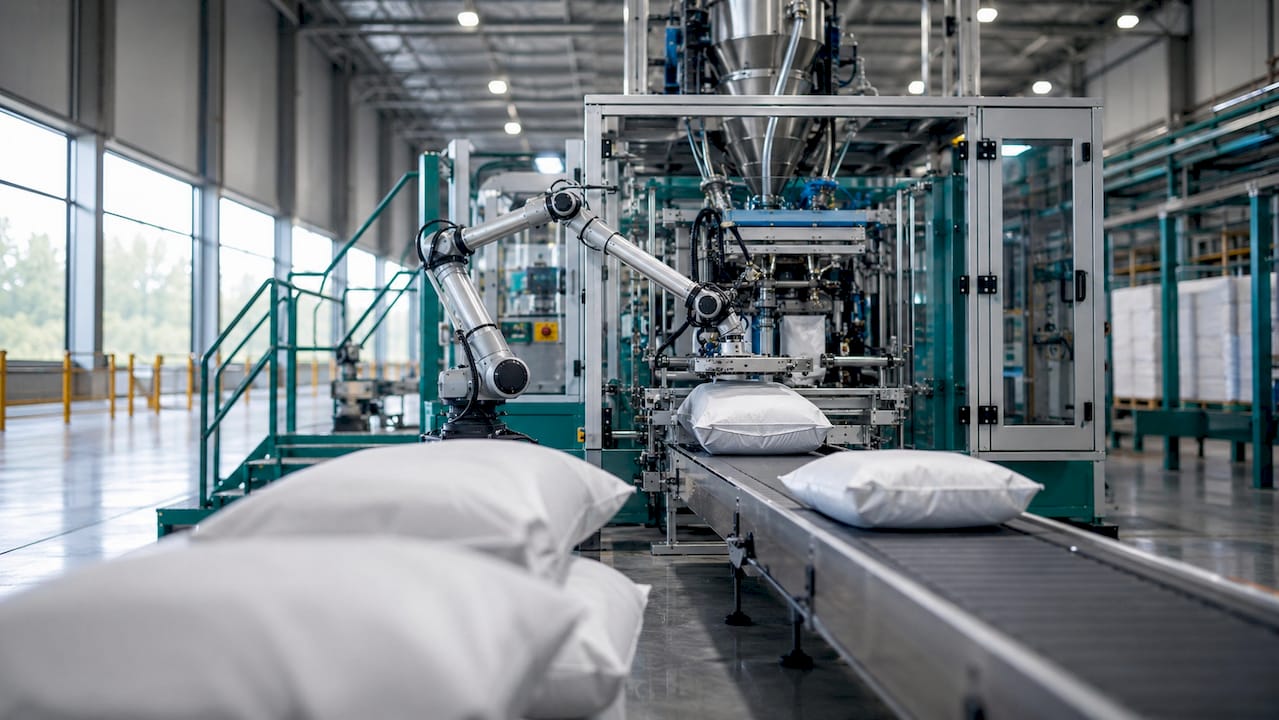
High-volume bag production is defined as any manufacturing process that uses automated systems to produce bags at throughput rates that manual or semi-automated methods cannot match. The process integrates film or material feeding, forming, filling, sealing, and palletizing into a single coordinated line. Each station must operate in sync, because a delay at any point limits the output of the entire system.
The two primary production models are Form-Fill-Seal (FFS) and pre-made bagging. FFS systems form the bag from a roll of film, fill it, and seal it in one continuous operation. Pre-made bagging systems use bags manufactured in advance, then fill and seal them on a separate line. Both approaches serve high-volume manufacturing, but they suit different volume thresholds, capital budgets, and material strategies.
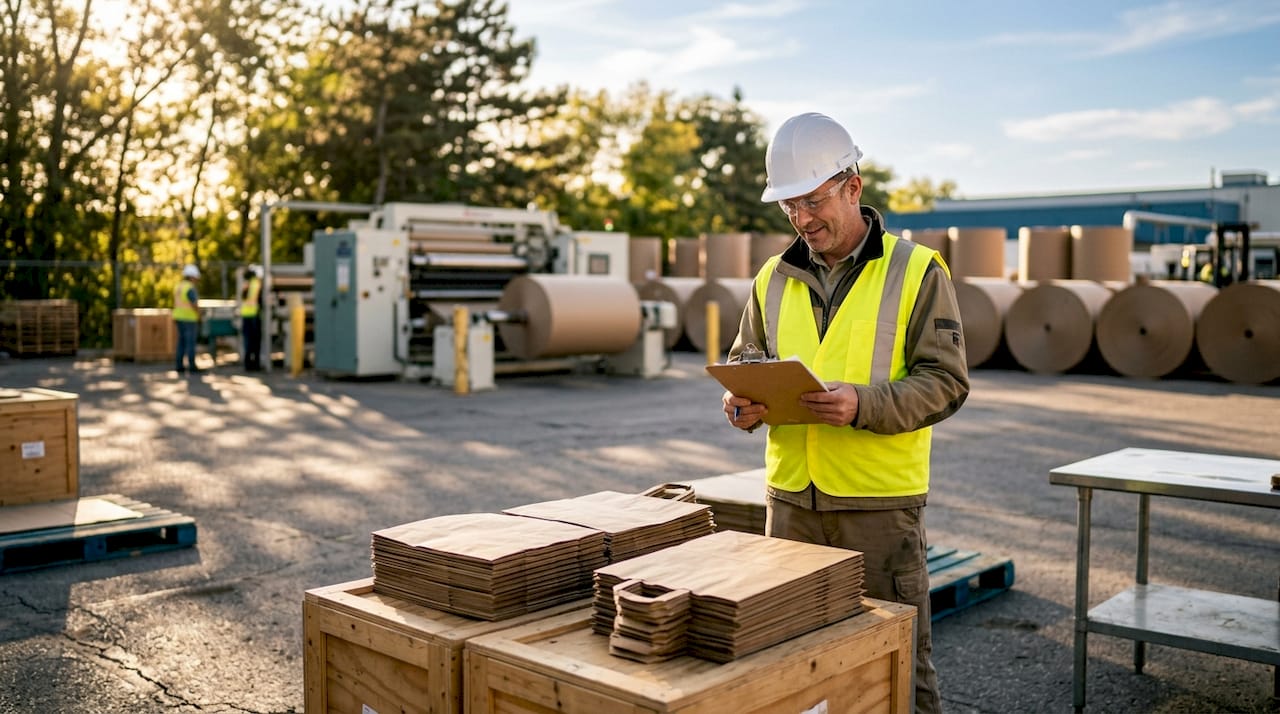
Paper shopping bags, like those produced by Gatherpackaging in Toronto, follow a related but distinct process. They are formed from kraft or recycled paper stock, printed using flexographic methods, and assembled with handles and reinforced bases. The paper bag production steps differ from film-based FFS lines, but the same principles of synchronized throughput and quality control apply.
What automated technologies drive high-volume bag production?
Form-Fill-Seal systems are the dominant technology for high-capacity bag making at scale. They use roll film, which costs 30–50% less per unit than pre-made pouches. That material cost advantage compounds quickly at volumes above 500,000 units per month.
Pre-made bagging systems carry lower upfront equipment costs and work well for operations running under 200,000 units per month. They also offer more flexibility when bag formats change frequently, since no tooling changeover is required. The tradeoff is higher per-unit material cost and more warehouse space consumed by pre-formed bag inventory.
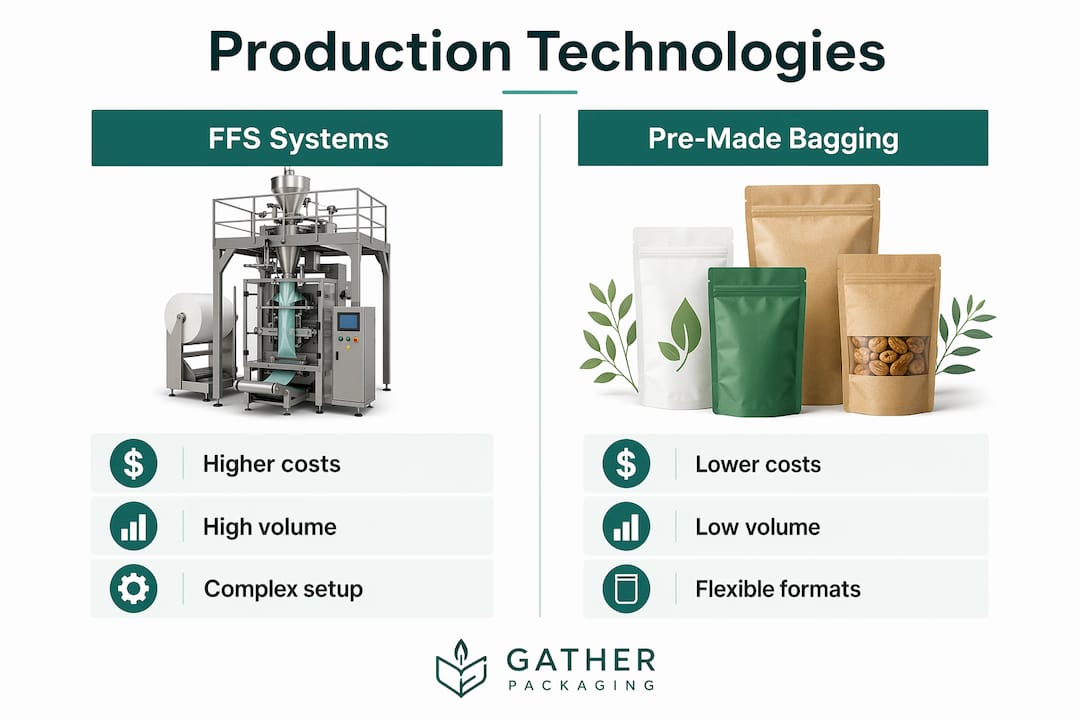
The table below compares the two systems across key decision metrics:
| Metric | FFS systems | Pre-made bagging |
|---|---|---|
| Equipment cost | Higher upfront | Lower upfront |
| Material cost per unit | Lower (roll film) | Higher (pre-made pouches) |
| Best volume threshold | 500,000+ units/month | Under 200,000 units/month |
| ROI timeline | 12–18 months at high volume | 24–36 months at lower volume |
| Format flexibility | Lower (tooling required) | Higher (no tooling change) |
| Warehouse footprint | Smaller (roll stock) | Larger (pre-formed bags) |
The right choice depends on your monthly volume, capital availability, and how often your bag format changes. Manufacturers scaling toward retail or foodservice distribution at high volumes consistently find FFS systems deliver better total cost of ownership over a three-year horizon.
Pro Tip: Before committing to an FFS line, audit your monthly volume over the past 12 months. If you are consistently above 400,000 units and trending upward, the material savings alone will justify the equipment investment within two years.
How do machinery features affect production efficiency?
Advanced machinery engineering is what separates a line running at 200 bags per minute from one hitting 500. Multi-servo motor synchronous drive technology and optimized cam linkages allow high-speed lines to reach up to 500 pieces per minute. Servo-driven systems provide precise control over each motion cycle, which reduces mechanical wear and improves seal consistency at speed.
For heavy industrial bags, precision weighing is equally critical. Three-sensor measuring combined with dual-scale setups stabilizes tare weight in milliseconds, enabling 1,000–1,200 bags per hour on 50kg bags without sacrificing fill accuracy. Losing even a small amount of product per bag across millions of cycles represents significant cost, so this engineering detail has direct financial impact.
Automation features that reduce operator intervention include:
- Automatic film splicing: Connects a new film roll without stopping the line, eliminating the most common cause of unplanned downtime.
- Dual-bagging spouts: Allow simultaneous filling on two lanes, effectively doubling throughput on a single machine frame.
- Remote diagnostics: Enable technicians to identify faults and adjust parameters without being physically present at the machine.
- Dual-station bag magazines: Provide several hours of continuous operation without requiring an operator to reload bag stock.
These features have moved from optional upgrades to standard specifications on high-capacity equipment. The automated bag manufacturing model now assumes these capabilities as baseline, not premium additions.
What operational practices sustain high-volume bag production?
Preventive maintenance and operator training are the two factors most likely to determine whether a high-speed line meets its throughput targets over time. Rigorous daily maintenance and skilled operators separate high-efficiency assets from lines that suffer frequent, costly downtime. High-speed equipment runs under greater mechanical stress than standard machinery, so wear on sealing jaws, drive belts, and sensors accumulates faster.
A structured maintenance program covers daily inspection of sealing elements, weekly lubrication of drive components, and monthly calibration of weighing systems. Skipping any of these steps does not save time. It transfers the cost to unplanned repairs and lost production hours, which are always more expensive.
Operator training must go beyond basic machine operation. Operators on high-speed lines need to:
- Recognize early warning signs of seal quality degradation before rejects accumulate.
- Perform film splicing and bag magazine reloads without slowing line speed.
- Troubleshoot sensor faults and reset parameters without waiting for a technician.
- Understand how their station affects downstream throughput on the full line.
Line integration is the third operational pillar. Balanced throughput across infeed, sealing, conveyors, and palletizing prevents bottlenecks from forming at peripheral stations. A bag making machine running at 300 BPM delivers no value if the palletizer downstream can only handle 200 BPM. Every component in the line must be specified to support peak machine output.
Pro Tip: Map your full line throughput capacity before purchasing new bag making equipment. The bottleneck is almost never the bag maker itself. It is usually the infeed system or the palletizer.
What factors influence ROI in high-volume bag production?
The financial case for high-volume manufacturing bags depends on four variables: monthly unit volume, material cost structure, available floor space, and growth trajectory. Facilities producing over 500,000 units monthly achieve FFS ROI within 12–18 months. Below 200,000 units, pre-made bagging typically delivers better returns because the lower equipment cost offsets the higher material spend.
Floor space is an underrated cost factor. Pre-made bags require significant warehouse space for inventory buffers. Roll stock for FFS systems occupies a fraction of that space. For manufacturers operating in urban facilities or leased warehouses, the space savings from FFS can represent real monthly cost reduction.
Growth trajectory matters more than current volume. A manufacturer at 300,000 units per month growing at a consistent rate should size equipment for where the business will be in 18 months, not where it is today. Undersizing a line and then retrofitting it costs more than specifying correctly at the outset.
The table below summarizes the key financial and operational factors by production scenario:
| Factor | Low volume (under 200k/month) | High volume (500k+/month) |
|---|---|---|
| Preferred technology | Pre-made bagging | FFS systems |
| Material cost per unit | Higher | Lower |
| Equipment investment | Lower | Higher |
| ROI timeline | Longer | 12–18 months |
| Space requirement | Higher (bag inventory) | Lower (roll stock) |
| Scalability | Limited | High |
For paper shopping bags specifically, the calculus includes print quality requirements. Gatherpackaging’s 8-color flexo printing process demands precise registration and consistent substrate tension across high-volume runs. Reviewing custom bag printing options alongside production volume planning helps manufacturers align print specifications with line capabilities from the start.
Key Takeaways
High-volume bag production delivers its best results when technology selection, line integration, and maintenance practices are treated as a single system rather than separate decisions.
| Point | Details |
|---|---|
| Define your volume threshold | FFS systems pay off above 500,000 units per month; pre-made bagging suits lower volumes. |
| Match line components to peak speed | Infeed, sealing, and palletizing must all support the bag maker’s maximum throughput. |
| Invest in operator training | Trained operators prevent seal failures and reduce unplanned downtime on high-speed lines. |
| Use automation to reduce interventions | Automatic film splicing and dual-station magazines sustain output without adding labor. |
| Factor in space and material costs | FFS roll stock reduces warehouse footprint and cuts per-unit material cost by 30–50%. |
Why I think most manufacturers underestimate the system, not the machine
The most common mistake I see in high-volume bag production evaluations is treating the bag making machine as the unit of analysis. Manufacturers compare speeds, seal types, and price tags. They sign a purchase order. Then they spend the next six months discovering that their existing conveyor cannot keep pace, their palletizer creates a queue every 40 minutes, and their operators are not trained to splice film under production pressure.
The machine is rarely the constraint. The line is. Every high-speed bagging project I have seen succeed started with a full line audit, not a machine spec sheet. The teams that got it right mapped every station from raw material infeed to finished pallet, identified the slowest link, and upgraded that first.
The second thing most manufacturers underestimate is the role of paper as a substrate. Film-based FFS lines are engineered for consistent, predictable material behavior. Paper is different. It responds to humidity, tension variation, and print registration demands in ways that require tighter process control and more experienced operators. For retail paper shopping bags, where brand presentation is as important as production speed, that control is not optional.
Gatherpackaging’s domestic manufacturing model in Toronto addresses this directly. Short supply chains, in-house quality assurance, and FSC®-certified materials mean that high-volume paper bag runs maintain consistency that offshore production often cannot. That is not a marketing claim. It is a function of proximity, process ownership, and accountability.
If you are evaluating a high-volume paper bag program, start with your line, train your operators, and choose a manufacturer who treats quality control as a production input, not an afterthought.
— Taylor
Gatherpackaging’s paper bag production for large-scale retail orders
Gatherpackaging manufactures custom paper shopping bags in Toronto, Canada, with the capacity to support large-scale retail and foodservice orders with reliable lead times. Their production covers turn top, serrated top, and tamper-resistant styles, all printed with 8-color flexo and built from FSC®-certified or recycled materials.
For procurement teams and packaging engineers sourcing high-volume paper bags with consistent quality and sustainable credentials, Gatherpackaging’s eco-friendly paper bag line covers both requirements. Their Canadian-made kraft paper bags are available in custom sizes and finishes, with design assistance and prototyping included. Contact Gatherpackaging directly to discuss volume requirements, lead times, and custom specifications for your retail packaging program.
FAQ
What is high-volume bag production?
High-volume bag production is the automated manufacturing of large quantities of bags using integrated systems such as Form-Fill-Seal or pre-made bagging lines. Consumer-grade systems run at 150–300+ bags per minute, while industrial lines handle 15–18 heavy bags per minute.
When does an FFS system make financial sense?
FFS systems deliver ROI within 12–18 months for facilities producing over 500,000 units per month. Below 200,000 units per month, pre-made bagging typically offers a better return due to lower equipment costs.
What causes bottlenecks on high-speed bagging lines?
Bottlenecks most often occur at peripheral stations like infeed systems and palletizers, not at the bag maker itself. Balanced throughput across every line component is required to sustain peak production speed.
How does automation reduce downtime in bag production?
Features like automatic film splicing, dual-station bag magazines, and remote diagnostics minimize operator interventions. Dual-station magazines alone can provide several hours of continuous operation without a manual reload.
What makes paper bag production different from film-based bagging?
Paper responds to humidity and tension variation in ways that film does not, requiring tighter process control and more experienced operators. Print registration demands for retail paper bags add another layer of quality control that film-based FFS lines do not face.
Share:
Questions to Ask Packaging Suppliers: A Buyer's Guide
What Is a Packaging Audit? A 2026 Guide for Brands