

TL;DR:
- A bag gusset is an expandable panel that creates internal volume in a bag, enabling it to hold more contents. Different gusset types, such as side, bottom, and V-bottom, serve distinct functions based on product density and display needs. Proper sizing, material choice, and engineering ensure strength, stability, and efficient printing in North American manufacturing.
A bag gusset is the folded, expandable panel built into the side or bottom of a bag that creates three-dimensional internal volume when the bag is filled. Without it, a bag stays flat. With it, the same sheet of paper becomes a structured container.
The quick decision rule most packaging teams need:
- Side gussets expand horizontally and create a brick-like profile when filled. Use them when stacking efficiency, dense contents (coffee, powders), or packing-line throughput are the priority.
- Bottom gussets (SOS/square-bottom) form a flat, structural base. Use them when stand-up shelf display, premium retail presentation, or heavy-duty load-bearing matter most.
- V-bottom gussets suit lightweight goods where a formed base is useful but structural load is low.
Gatherpackaging manufactures custom gusseted paper shopping bags in Toronto using FSC®-certified materials and 8-color flexo printing. The sizing rules, QA checks, and manufacturing constraints below reflect what actually works in North American paper-bag production.
Table of Contents
- What are the main types of bag gussets?
- Why does gusset design matter for retail and logistics?
- Core engineering principles that determine gusset performance
- How do you size a gusset correctly?
- How material choice affects gusset form and durability
- Prototype and QA checklist for gusseted bags
- Which gusset works best for common product categories?
- How Gatherpackaging applies these principles in production
- Key Takeaways
- The gusset decision most teams get wrong
- Custom gusseted paper bags from Gatherpackaging
- Useful sources
What are the main types of bag gussets?
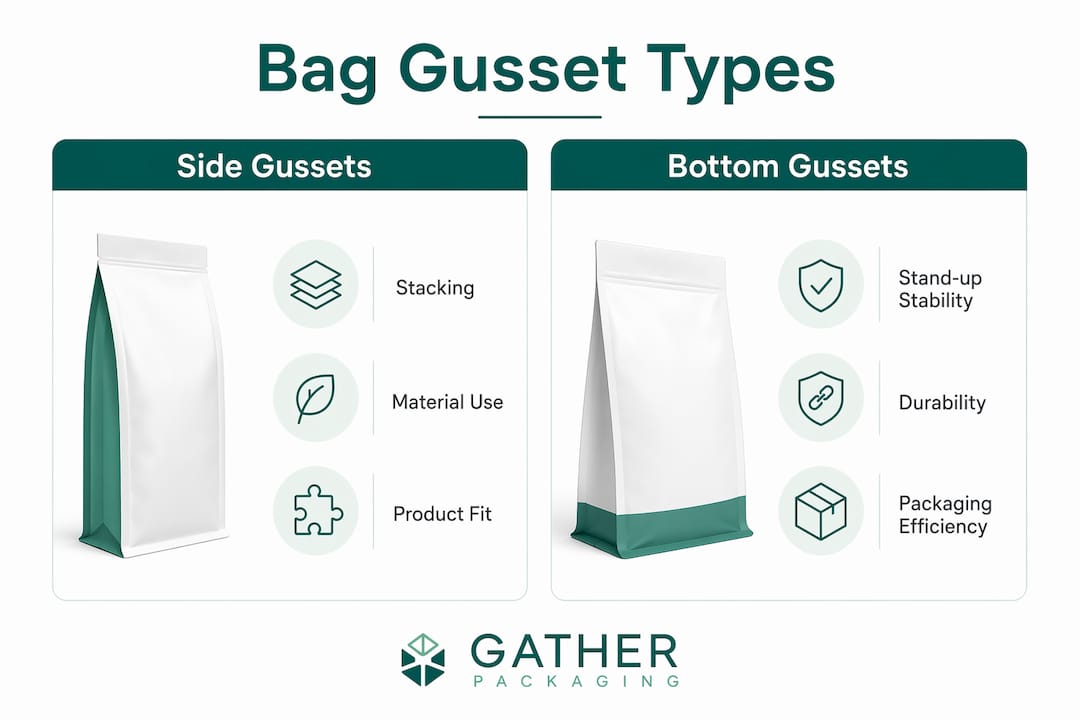
Gusset design starts with understanding the fold geometry. Each type expands differently and forms a different base, which determines what product it can hold and how it performs on a shelf or packing line.
- Side gusset: Folds run vertically along both sides of the bag. When filled, the bag expands outward and takes on a rectangular, brick-like shape suited to dense products. A single seal spans the full bag width at the bottom.
- Square-bottom (SOS): The bottom panel folds out into a flat plate. SOS bags act as a structural support surface and are the right call for heavy-duty applications where the bag must stand independently and distribute weight evenly.
- V-bottom (plow bottom): A simpler fold that forms a shallow V at the base. No seal at the bottom. V-bottom designs are sufficient for lightweight goods but lack the load-bearing capacity of SOS.
- K-seal: A variant of the bottom gusset where seals run diagonally along the base walls. Provides a clean front panel and is common in retail pouches.
- Three-side gusset: Gussets on both sides plus the bottom. Maximizes volume but creates manufacturing complexity and is rarely used in standard paper shopping bags.
| Gusset type | Stand-up stability | Stacking efficiency | Material use | Best product fit |
|---|---|---|---|---|
| Side gusset | Low | High | Efficient | Coffee, powders, dense retail goods |
| Square-bottom (SOS) | High | Moderate | Higher | Apparel, gifts, heavy retail |
| V-bottom (plow) | Moderate | Moderate | Efficient | Lightweight goods, bakery |
| K-seal | Moderate | Moderate | Moderate | Retail pouches, snacks |
| Three-side | High | Low | Highest | Specialty, low-volume |
Why does gusset design matter for retail and logistics?
A gusset is not a cosmetic detail. It determines how much a bag holds, whether it stands on a shelf, and how efficiently it moves through a packing line or shipping carton.
The functional benefits break down clearly:
- Usable volume: A gusseted bag holds significantly more than a flat bag of the same footprint. The fold converts dead surface area into working depth.
- Stand-up stability: SOS and bottom-gusseted bags stand independently on a counter or shelf, which matters for retail display and foodservice takeout.
- Stackability: Side-gusseted bags compress into a consistent rectangular profile when filled, making them easier to stack in shipping cartons and reducing wasted space.
- Branding surface: A structured bag presents a flat, tensioned front panel that holds print registration better than a bag that sags or wrinkles.
The contrast with flat bags is sharpest in retail. A flat bag collapses around irregular contents and tips over. A gusseted bag holds its shape, which protects the product and presents the brand consistently at point of sale. For packaging teams managing retail bag supply, that consistency translates directly to fewer complaints and cleaner shelf sets.
Real-world examples: coffee brands use side gussets because the brick profile fits neatly into display bins and ships efficiently. Apparel retailers use square-bottom bags for the premium, structured look at checkout. Snack brands use bottom gussets so the bag stands on a shelf without a display fixture. Bakery takeout relies on paper gussets with a grease barrier so the bag holds its shape even when warm contents soften the paper.
Core engineering principles that determine gusset performance
Getting the gusset geometry right is one thing. Getting it to hold under load, open cleanly on a packing line, and print consistently is another.
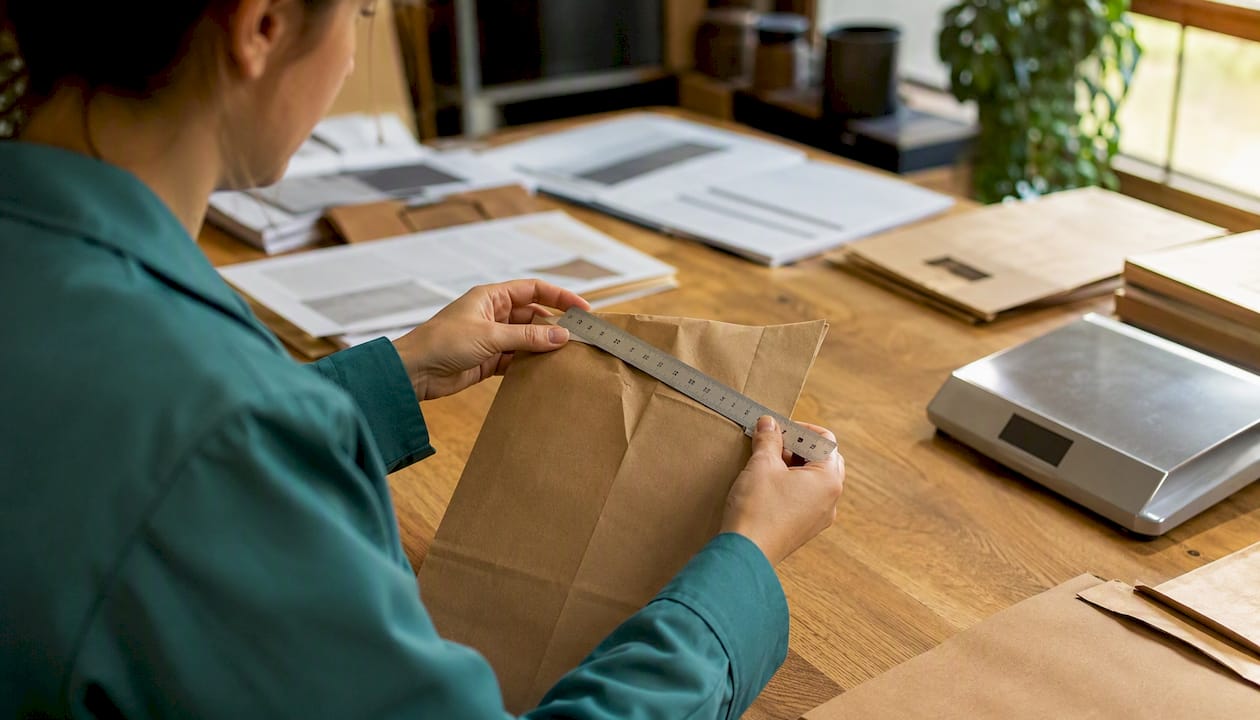
Footprint and insertion tolerance. The gusset depth must match the product footprint closely. A gusset that is too shallow forces the bag to stretch at the fold; one that is too deep wastes material and creates loose, unsupported volume. Brands often under-engineer gussets, which either inflates material cost or forces a larger bag size than the product actually needs.
Tri-point stress. The tri-point is where the side seam, bottom fold, and gusset fold intersect. This is the highest-stress location in any gusseted bag. Increasing gusset depth increases tension at the tri-point, so glue specification and paper basis weight must be matched to gusset depth. A mismatch causes center tearing under load, usually at the worst possible moment: when a customer is carrying a full bag.
Tapered gussets and center of gravity. A tapered gusset shifts the center of gravity toward the base of the bag, which reduces stress on the handles and improves carrying stability. This is worth specifying for bags carrying dense or heavy contents.
Crease memory. The fold lines pressed into the paper during manufacturing determine how the bag opens and how it looks after repeated handling. Tight crease pressure produces a clean, consistent fold. Too little pressure and the bag opens unevenly or the gusset panel springs back, distorting the front face.
Pro Tip: When specifying crease pressure for a new dieline, request a sample run at two crease settings before committing to a full production run. The difference in openability and panel flatness is visible immediately, and correcting it after a full run is expensive.
The interaction of material flexibility, crease pressure, and seal structure determines whether a gusseted bag meets both aesthetic and load-bearing requirements. These three factors must be validated together, not in isolation.
How do you size a gusset correctly?
Sizing a gusset starts with the product, not the bag. Measure the product footprint first, then work outward.
Step-by-step sizing:
- Measure the product’s width, depth, and height at its widest point.
- Add an insertion allowance (typically 5–10 mm per side) so the product slides in without forcing the bag open.
- Add top clearance (15–25 mm above the product height) for handle attachment or closure.
- Set bag width = product width + (2 × insertion allowance).
- Set gusset depth ≥ product depth + insertion allowance.
Gusset width rules-of-thumb: A side gusset is commonly 10%–25% of total bag width. A bottom gusset is typically 15%–30% of total bag height. Ratios outside these ranges cause deformation or produce excess volume that adds material cost without adding function.
Example calculations:
| Product type | Product W × D × H | Bag width | Gusset depth | Notes |
|---|---|---|---|---|
| Dense retail (coffee) | 90 × 60 × 160 mm | 100–110 mm | 65–70 mm | Side gusset; tight ratio for stacking |
| Lightweight (scarves, folded) | 200 × 20 × 300 mm | 210–220 mm | 25–30 mm | Side gusset; shallow depth sufficient |
| Apparel/gift (folded shirt) | 280 × 40 × 380 mm | 295–305 mm | 50–60 mm | SOS bottom; structured base for shelf |
Machine and handling tolerances run ±2–5 mm depending on the equipment. Build that tolerance into the dieline before sending to print, or print registration will shift at the fold. For flexo cylinders, confirm the repeat length accommodates the full bag height plus gusset depth before finalizing artwork.
Pro Tip: Always confirm gusset dimensions against the machine envelope at your manufacturer before finalizing a dieline. A gusset depth that works on one machine may exceed the adjustment range on another, requiring a full dieline revision.
How material choice affects gusset form and durability
Paper weight, adhesive type, and surface finish all affect how a gusset folds, holds its shape, and accepts ink. Getting the material wrong means the gusset either cracks at the fold or refuses to crease cleanly.
- Kraft paper (60–90 lb basis weight): The standard for retail shopping bags. Heavier weights (80–90 lb) handle deeper gussets and heavier loads without tearing at the tri-point. Lighter weights (60–70 lb) are fine for shallow gussets on lightweight goods.
- Coated papers: Better print quality on the front panel, but coating reduces flexibility at the fold. Specify a score line at the gusset fold to prevent cracking, especially in cold or dry conditions.
- Laminated constructions: Add tear resistance and moisture barrier, which matters for bakery takeout or food-adjacent retail. Lamination also increases stiffness, so gusset fold radii need to be wider to avoid delamination.
High-quality gusseted bags use thicker paper or laminated constructions to maintain form. Heavy-duty designs add an extra Kraft reinforcement layer at the base to prevent sagging and center tearing under sustained load.
Glue seam alignment is critical at the gusset fold. The seam overlap at the fold point creates a thickness step that, if misaligned, produces a visible ridge and a weak bond. Specify that seams land at least 5 mm away from the fold centerline. For sealing lines on laminated bags, avoid placing the seal directly over a heavy fold. Sealing temperature and pressure must be calibrated for the increased film thickness at gusset overlaps, or the seal will be inconsistent.
Manufacturing constraints to confirm with your supplier before finalizing specs:
- Minimum gusset depth: typically 20–25 mm on standard paper-bag machines.
- Maximum gusset depth: varies by machine, commonly 80–120 mm; confirm before specifying deep gussets.
- Flexo cylinder repeat length: must accommodate bag height plus gusset depth or artwork will not register correctly at the fold.
- Automated bag manufacturing lines have fixed gusset-adjustment ranges; a gusset outside that range requires a machine changeover or a different production line.
Prototype and QA checklist for gusseted bags
Every combination of width, depth, paper weight, and finish requires physical sampling. Machine envelopes vary, and a spec that looks correct on paper can fail at the fold under real production conditions.
Prototype checks (in order):
- Dimensional check: Measure bag width, height, and gusset depth against the approved dieline. Tolerance: ±2–3 mm.
- Openability test: Open and close the bag 10 times. The gusset should expand fully and return to flat without creasing or tearing.
- Load test: Fill the bag to rated capacity and carry it for 60 seconds. Inspect the tri-point fold, handle attachment, and base for stress marks or deformation.
- Tri-point tear inspection: After the load test, inspect the tri-point under good light. Any whitening of the paper fiber at the fold indicates stress concentration that will cause failure in the field.
- Seal strength: For laminated or coated bags, peel-test the bottom seal. The paper should tear before the seal separates.
- Crease durability: Fold and unfold the gusset 20 times. No cracking or delamination at the fold line.
- Print registration on folds: Check that artwork aligns correctly across the gusset fold. Misregistration of more than 1–2 mm is visible to the end customer.
A well-engineered SOS bag opens reliably and quickly on a packing line. Operational differences in opening speed between bag types are real and worth testing in your specific packing environment before committing to a format.
Pro Tip: Sample your highest-risk combination first: the widest gusset depth, heaviest paper weight, and most complex finish (e.g., laminated with full-bleed print). If that combination passes, lighter specs almost certainly will too. This cuts prototype rounds significantly.
Which gusset works best for common product categories?
The right gusset type follows directly from the product’s density, shape, and how it will be displayed or shipped.
- Coffee beans (side gusset): Dense, granular product that fills a bag uniformly. The side gusset creates a brick profile that stacks efficiently in display bins and ships without wasted space. Leave room in the dieline for a degassing valve if the product is freshly roasted. Print the front panel with the full brand story; the gusset panels can carry secondary information or a repeat pattern.
- Snack packs (bottom gusset/SOS): Lightweight but irregular. The SOS base lets the bag stand on a shelf without a fixture, which is the whole point for retail snack displays. Front panel is large and flat, ideal for bold graphics. Specify a lighter Kraft weight since load-bearing is not the priority.
- Apparel and gift bags (square-bottom SOS): The structured base and clean front panel signal premium quality at checkout. Bag customization for retail branding is most effective on SOS bags because the front panel stays flat and tensioned. Use heavier Kraft (80–90 lb) for apparel loads; add a reinforcement layer at the base for gift sets with hard-edged contents.
- Bakery takeout (paper gusset with grease barrier): The bag needs to hold its shape when warm, moist contents soften the paper. Specify a grease-resistant liner or lamination on the interior. A side gusset works for tall items (baguettes, boxed pastries); a bottom gusset works for items that need to sit flat (cake slices, sandwiches). Print considerations: avoid heavy ink coverage on interior-facing panels where moisture migration could cause ink transfer.
How Gatherpackaging applies these principles in production
Gatherpackaging manufactures gusseted paper shopping bags in Toronto, which means shorter lead times and direct communication with the production team throughout the prototyping process. That matters when a gusset spec needs adjustment after the first sample run.
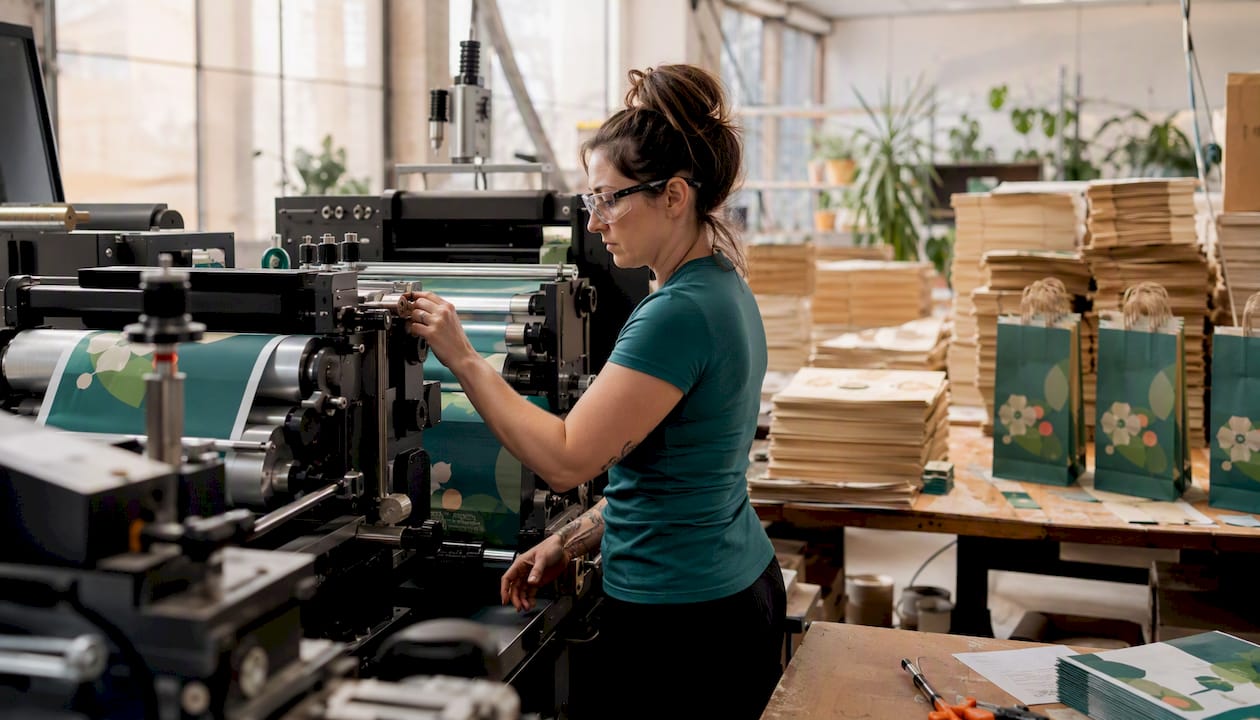
The production setup includes 8-color flexo printing, which handles print registration across gusset folds with enough color range to reproduce brand graphics accurately on both the front panel and the gusset face. FSC®-certified Kraft paper and water-based inks are standard, covering sustainability requirements without a special-order premium.
For QA, Gatherpackaging targets the failure points that matter most in paper shopping bags: tri-point seal integrity, handle attachment strength, and crease consistency across a production run. Prototype rounds are structured to catch material-gusset mismatches before full production, not after.
Contact Gatherpackaging to request a sample run for custom gusseted bags or to discuss your dieline requirements.
Key Takeaways
Gusset design is a structural decision: match the gusset type to the product’s density and retail strategy, size it to the actual footprint, and validate it physically before committing to full production.
| Point | Details |
|---|---|
| Choose gusset type by function | Side gussets for stacking and dense goods; SOS bottom gussets for stand-up stability and premium retail display. |
| Size to the product footprint | Side gusset: 10%–25% of bag width; bottom gusset: 15%–30% of bag height. Ratios outside these ranges waste material or cause deformation. |
| Validate tri-point integrity | Match paper basis weight and glue spec to gusset depth; the tri-point fold is the highest-stress location and the most common failure point. |
| Sample before full production | Every combination of width, depth, paper weight, and finish requires physical prototyping; machine envelopes vary and cannot be assumed. |
| Gatherpackaging for North American production | Domestic manufacturing in Toronto with FSC® materials, 8-color flexo printing, and structured QA targeting tri-point and seal integrity. |
The gusset decision most teams get wrong
The most common mistake is treating gusset depth as a rough estimate rather than an engineered dimension. Teams measure the product, add a comfortable margin, and call it done. What they miss is the interaction between gusset depth and tri-point stress. A gusset that is 10 mm deeper than necessary does not just waste paper. It increases tension at the fold, which means the glue spec and paper weight that worked on the shallower version may no longer be adequate. The bag passes the prototype load test, goes into production, and then fails in the field when a customer carries a full load.
The second mistake is sampling only the “average” configuration. The widest gusset, heaviest paper weight, and most complex finish should be the first prototype, not the last. If that combination holds, the rest of the range almost certainly will. Reversing that order is how teams end up doing four prototype rounds instead of two.
Gusset design rewards precision. The brands that get it right are the ones that treat the gusset dimension as seriously as they treat the print spec.
Custom gusseted paper bags from Gatherpackaging
Gatherpackaging manufactures custom gusseted paper shopping bags for retail brands, apparel retailers, and specialty operators across North America. The concrete advantage over offshore sourcing is lead time and direct access to the production team: when a gusset spec needs adjustment, it gets corrected in the next sample run, not after weeks of back-and-forth.
The service covers custom dielines, physical prototyping, QA testing against tri-point and seal integrity standards, and full production in Toronto using FSC®-certified Kraft paper and water-based inks. 8-color flexo printing handles brand graphics across the front panel and gusset faces without compromising registration.
Contact Gatherpackaging to discuss your gusseted paper bag requirements, request a prototype run, or get a quote for your next retail bag order.
Useful sources
- Engineering Durable Paper Bags: A Technical Guide for Heavy-Duty Design — Packifyme: tri-point stress, footprint engineering, and SOS vs V-bottom structural differences.
- What Is A Gusset on Paper Bag? Meaning & Measurement Guide — LeelinePackage: gusset sizing discipline, operational efficiency, and material matching.
- What Is A Gusset Bag? Side vs Bottom: Which Packaging Fits Your Brand? — MTPak: side vs bottom gusset comparison for brand strategy.
- What Is A Gusset On A Pouch? A Complete Guide for Buyers — Stanley Package: gusset width ratios and sealing parameters.
- Gusseted Bags: A Simple Design that Solves a Big Problem — NPF Packaging: material reinforcement and retail strategy by gusset type.
- Step-by-step paper bag design guide for retail — Gatherpackaging: detailed design and print registration guidance for retail paper bags.
- Parcel Packaging Best Practices — Simply Parcel: practical guidance on matching gusset dimensions to product requirements for shipping efficiency.
Share:
Turn Top Bag Design Tutorial for Retail Brands
Best Benecopackaging.com Alternatives for Retail Buyers