

Tamper-evident packaging is the practical, specifiable standard for retail and foodservice buyers. It shows a package was opened, which is something a supplier can engineer, test, and guarantee in writing. “Tamper-proof” isn’t a credible engineering claim for consumer packaging. Skip it in your specs and focus on the definitions, examples, and QA checklist below.
TL;DR:
- Tamper-evident packaging reveals access through irreversible mechanisms like destructible labels, security printing, and serialized seals, but it does not prevent opening.
- “Tamper-proof” claims are marketing phrases instead of engineering standards; actual prevention relies on operational controls such as locked storage and custody procedures.
- Different tamper-evident solutions suit various products, with shrink bands and induction seals best for bottles, and destructible labels ideal for cartons and bags.
- Effective specification requires testing on actual substrates for fracture torques and adhesion, with validation focusing on material behavior and line-fit conditions.
- Cost varies by mechanism, from labels and tape to serialized seals, with domestic sourcing and comprehensive testing significantly reducing risks of failure.
Table of Contents
- Tamper Proof vs Tamper Evident: What Tamper-Evident Actually Means
- Why “Tamper-Proof” Is a Misleading Label
- Common Tamper-Evident Solutions and Where Each One Fits
- When Should You Specify Tamper-Evident Features Instead of Prevention?
- How to Specify and Validate Tamper-Evident Features
- What Tamper-Evident Features Actually Cost to Implement
- How Gather Packaging Designs and Validates Tamper-Evident Paper Bags
- Why Manufacturer-Forward Specs Beat Marketing Claims
- Talk to Gather Packaging About Your Tamper-Evident Bag Specs
- Sources
Tamper Proof vs Tamper Evident: What Tamper-Evident Actually Means
Tamper-evident packaging reveals access. It doesn’t stop someone from opening a package, and it isn’t supposed to. Its job is to make that access visible and, ideally, irreversible, so anyone downstream (a cashier, a customer, a quality inspector) can see it happened.
That distinction is why tamper-evident, not tamper-proof, is the term regulators and standards bodies use when they describe consumer packaging requirements.
The evidence comes from a handful of engineered mechanisms:
- VOID or destructible labels that leave a permanent pattern or message behind if peeled
- Residue-based adhesives that transfer material to the substrate, so a re-applied label looks different
- Security printing (holograms, void patterns, sequential numbering) that’s hard to reproduce
- Serialized seals tied to a specific batch or shipment for traceability
- Directional fracture design, where a bridge or perforation is built to break cleanly in one direction only
Statistic Callout: Engineering specs for tamper-evident closures often separate two forces on purpose: capping axial forces around 80–150 N·cm versus bridge fracture torque around 15–25 N·cm. The bridge is built strong enough to survive assembly and weak enough to snap the first time someone opens it.
Why “Tamper-Proof” Is a Misleading Label
No consumer packaging is immune to a determined person with the right tools and enough time. That’s the practical reason “tamper-proof” doesn’t belong in a spec sheet. It’s a marketing phrase, not an engineering standard, and treating it as one sets buyers up for disputes when a claim can’t be verified.
Actual prevention (stopping access outright rather than revealing it) comes from operational controls, not packaging materials:
- Locked or bonded storage during transit and warehousing
- Chain-of-custody procedures with signed handoffs at each transfer point
- Restricted access to loading docks, staging areas, and stockrooms
- Physical security like cages, seals on trailers, or GPS-tracked shipments
Pro Tip: Write prevention requirements and tamper-evidence requirements into separate line items on your spec sheet. Conflating them is how buyers end up paying for security theater instead of a testable feature.
Common Tamper-Evident Solutions and Where Each One Fits
Different formats solve different problems, and matching the mechanism to the product category matters more than picking the “strongest” one on paper.
- Shrink bands and induction seals work best on bottles and jars where you need a barrier across the closure itself, catching anyone who unscrews a cap before purchase.
- VOID or destructible labels suit boxes, cartons, and bags where the seam or flap is the vulnerable point.
- Tamper-evident tape secures carton flaps and pallet seams during shipping, and custom tamper-evident tape consistently outperforms generic packing tape because it’s engineered to fail visibly rather than just hold.
- Tamper-evident caps rely on bridge rings engineered for directional fracture: strong in the axial direction during capping, weak in torsion when someone tries to twist it open.
- Serialized security seals add traceability on top of visual evidence, useful for high-value shipments or recall investigations.
Layering matters. A dual approach, tape at the carton level plus a label at the product level, gives you two independent points of evidence instead of one, which is worth the marginal cost on higher-risk shipments. Our guide to tamper-resistant bag features covers how these principles translate to paper shopping bags specifically.
When Should You Specify Tamper-Evident Features Instead of Prevention?
Start by tiering products by risk, not by budget. That order gets reversed more often than it should.
- Low-value, low-risk goods (apparel, gift items, general retail) usually need a single tamper-evident layer, mainly to deter casual opening and support returns policies.
- Regulated or ingestible items (foodservice takeout, over-the-counter goods) need documented tamper-evidence plus a clear consumer-facing warning that the seal indicates safety, not just packaging integrity.
- High-value or chain-of-custody shipments (pharma samples, serialized electronics, controlled documents) need tamper-evidence layered with actual prevention: locked transport, restricted handling, and signed custody logs.
Before you sign off on a vendor, run through this list:
- Does the seal leave visible, irreversible evidence, or can it be reset?
- Who inspects the seal at each handoff, and is that check documented?
- What’s the material’s break torque or fracture behavior, and has it been tested on your actual substrate?
- Does the supplier offer serialization, and does it integrate with your existing tracking?
- Uninspected seals add no security value no matter how well engineered they are, so ask who owns the inspection step before you finalize anything.
A red flag: any vendor who describes their product as “tamper-proof” without qualifying what that means under testing. That phrasing alone tells you they haven’t thought through the difference.
How to Specify and Validate Tamper-Evident Features
Material choice has to match the real environment, not just the lab. Polypropylene tends to fracture more reliably than polyethylene for bridge-style closures, but adhesive performance on chilled, wet, or curved surfaces varies enough that testing on the actual substrate and in the intended environment is non-negotiable.
Ask suppliers for concrete numbers before signoff:
- Bridge fracture torque range and how it was measured
- Sample size and pass/fail criteria for batch testing (batches of multiple caps are common for this kind of validation)
- Line-fit data: placement tolerance, adhesive dwell time, and pressure settings
- Vision-system or manual inspection specs, including lighting conditions
Pro Tip: Most tamper-evident failures aren’t a materials problem. They’re operational, added late in the production line, using the wrong adhesive for the substrate, or checked under lighting too poor for a vision system to catch a fracture. Our tamper-evident paper bags buyer’s guide walks through the sampling questions we get most often from procurement teams.
What Tamper-Evident Features Actually Cost to Implement
Unit cost climbs roughly in this order: adhesive labels and printed void tape sit at the low end, shrink bands and induction seals in the middle, and serialized seals with tracking integration at the top. Cost scales with the amount of custom engineering and data capture involved.
- Labels and tape need minimal line changes if your existing equipment can handle web-fed materials.
- Shrink bands and induction sealing usually require dedicated equipment: a heat tunnel or induction sealer, plus operator training.
- Serialization adds integration work with your inventory or ERP system but pays off fastest on higher-value shipments where traceability matters.
Lead times and material sourcing deserve equal weight. A domestic supplier with FSC-certified stock on hand avoids the freight delays and customs uncertainty that come with importing niche substrates for a one-off tamper-evident run. Our tamper resistant packaging guide breaks down how sustainability and tamper features intersect without one compromising the other. Some packaging teams also pull best practices from adjacent categories, like parcel packaging and shipping standards, when adapting seals for e-commerce fulfillment.
How Gather Packaging Designs and Validates Tamper-Evident Paper Bags
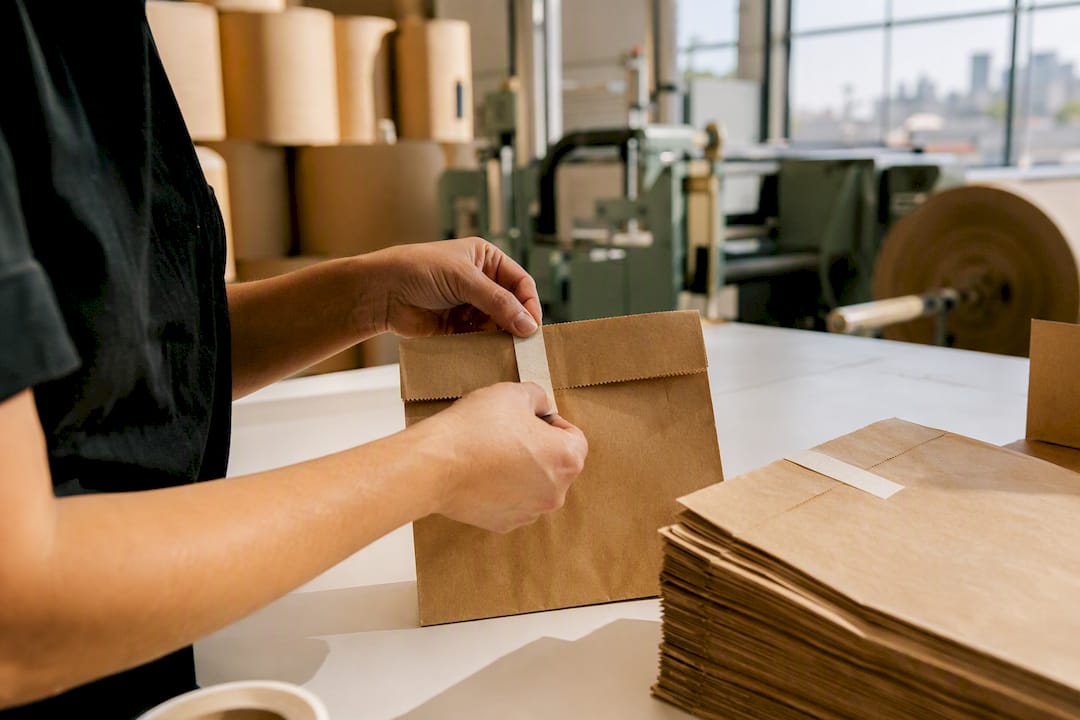
We manufacture tamper-resistant and tamper-evident paper bag constructions domestically in Toronto, which means faster prototyping cycles and direct oversight of every production run. When you request samples, we build them against documented specs (adhesive performance, seal placement, fracture behavior) and test on your actual bag substrate before we quote volume. Turnaround for prototype rounds is measured in days, not the weeks typical of overseas sourcing.
Why Manufacturer-Forward Specs Beat Marketing Claims
The biggest mistake buyers make on this topic isn’t choosing the wrong seal. It’s writing specs that describe an outcome (“tamper-proof packaging”) instead of a testable mechanism (“bridge fracture torque within X to Y N·cm, verified on 30-unit batch samples”). Vendors can promise the outcome cheaply. Verifying the mechanism is what actually protects you.
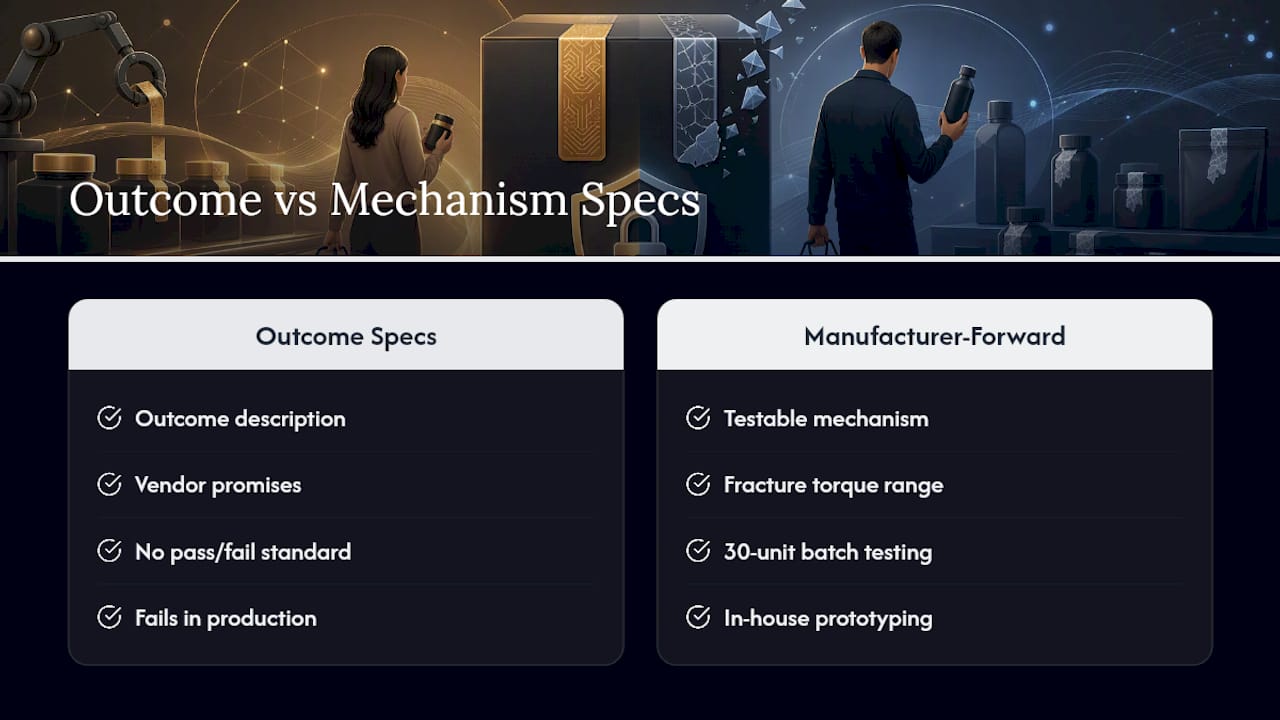
Conventional procurement advice treats tamper-evidence as a checkbox: pick a label, move on. That undersells how much the failure mode lives in production integration, not material selection. A seal engineered correctly in a lab still fails on your line if the adhesive was chosen for the wrong substrate or if nobody documented a pass/fail standard for the inspection team.
If you buy from a manufacturer who runs both the material engineering and the line trials in-house, you shrink the number of handoffs where those failures creep in. That’s the real argument for working with a domestic partner who prototypes and tests under one roof rather than coordinating between a label converter, a bag manufacturer, and a separate QA vendor. Prioritize documented fracture and adhesion testing before you ever look at price per unit. Everything else on the spec sheet is negotiable; the test data isn’t.
— Taylor
Talk to Gather Packaging About Your Tamper-Evident Bag Specs
Gather Packaging builds custom tamper-evident and tamper-resistant paper bags with the same domestic production line that handles prototyping, printing, and QA, so you’re not coordinating between three vendors to get one tested seal.
We work in FSC-certified and recycled paper stocks, print up to eight colors with water-based flexo inks, and validate every tamper-evident construction against the material and line-fit questions covered above before it goes to full production. Because manufacturing happens in Toronto, sample turnaround and lead times run faster than sourcing overseas, and you get domestic production backing every order.
If you’re specifying tamper-evident bags for retail, apparel, or takeout delivery, request a sample and share your specs with our team, and we’ll walk you through prototyping and testing before you commit to volume.
Sources
For engineering ranges and specs, NSF’s tamper-evident packaging guidance is a solid technical anchor. For implementation pitfalls, Systems Graphics’ label implementation guide covers the operational failures QA teams miss most often.
Share:
FSC Chain of Custody: What Packaging Buyers Need to Know
Pick the Right 2–3 Sizes: Bag Size Chart for Packaging Buyers