
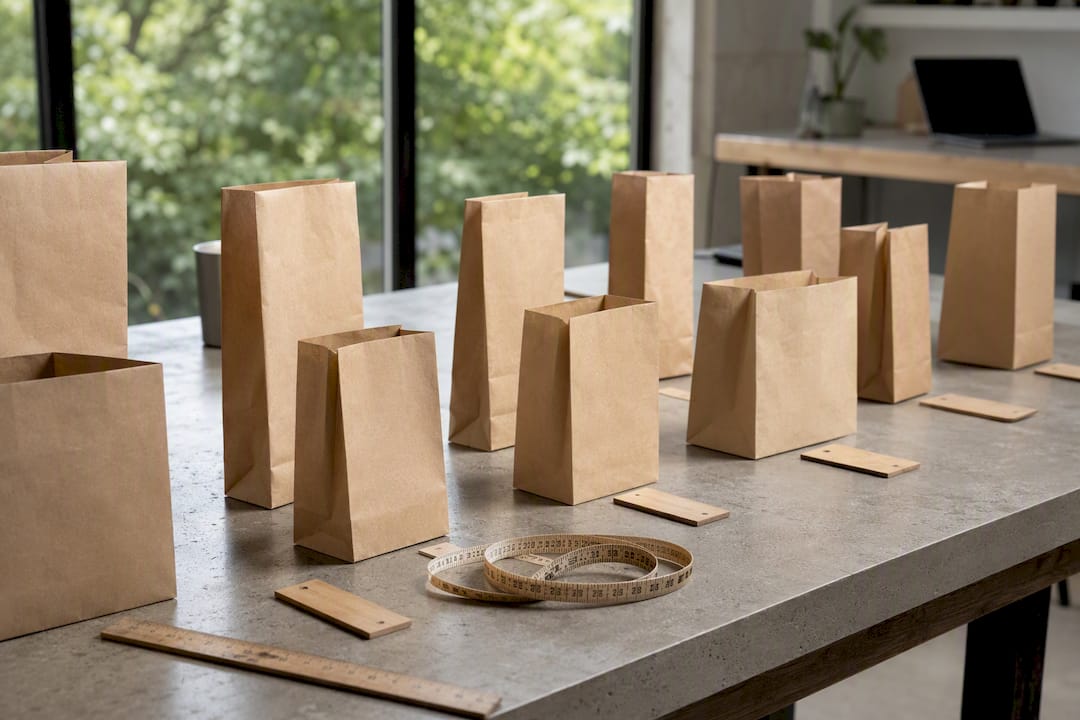
A bag size chart lists paper shopping bag dimensions as Width × Gusset × Height for gusseted styles, or Width × Height for flat merchandise bags. Before ordering, measure your product’s finished pack-out, including tissue or a gift box, then confirm fit with a loaded sample before committing to a production run. That single step, checked against the measurement conventions and quality checks below, prevents most sizing mistakes procurement teams make on bulk paper bag orders.
TL;DR:
- Measuring finished pack-out of your products, including tissue or boxes, is essential to selecting the correct bag size and avoiding sizing mistakes.
- Ordering 2 to 3 sizes based on your most common SKUs reduces waste and ensures a better fit for various product categories.
- Conducting load, handle, and base strength tests on sample bags helps verify durability before full production, preventing costly errors.
- Providing detailed specifications including dimensions, handle type, paper weight, and artwork safe areas ensures manufacturers produce accurate, high-quality bags.
- Working with a domestic manufacturer that offers quick prototyping and pre-production samples minimizes sizing risks and speeds up the order process.
Table of Contents
- What Does a Bag Size Chart Actually Show You?
- How Do You Choose the Right Bag Sizes for Your Product Mix?
- How Do You Test Bag Strength Before a Full Production Run?
- What Belongs on a Spec Sheet Before You Order?
- What Should Your First Sample Pack Include?
- Why the Right Manufacturing Partner Lowers Sizing Risk
- Ready to Get Your Sizing Right the First Time?
- Sources
What Does a Bag Size Chart Actually Show You?
Every gusseted retail bag is measured in the same order: Width first, then Gusset (the depth), then Height. A bag listed as 16 × 6 × 12 is 16 inches wide, 6 inches deep, and 12 inches tall. Flat merchandise bags, the kind used for apparel or paper goods with no depth, drop the middle number and list only Width × Height, according to the Bag Size Guide from Packaging Source.
That three-number order matters more than it looks. Mix up gusset and height on a purchase order, and you can end up with a bag that’s too shallow for a boxed candle set or too tall and floppy for a folded sweater. Confirming units and measurement order with your supplier in writing is worth the extra email, since misread dimensions are a common cause of size drift on paper bag orders, per Allen Paper Products.
Retailers and foodservice operators have used trade names for decades as shorthand, but the names alone are not a spec. Here’s how the common ones translate into actual dimensions:
These figures come from the Packaging Source bag size chart and match the naming convention used industry-wide, though exact fractions can shift slightly by manufacturer.
A few things worth knowing before you order off this chart:
- Case pack counts typically run 250 to 500 per case for smaller sizes and drop lower for jumbo and magnum styles due to bulk.
- Cub and Wine sizes work best for boutique add-ons and single-item gifting.
- Bistro and Take Out sizes suit bakery and takeout counters that need to fit boxed goods plus napkins or utensils.
- Vogue and Jumbo sizes carry folded apparel without excess crushing room.
How Do You Choose the Right Bag Sizes for Your Product Mix?
Ordering one bag size for every product is the most expensive mistake procurement teams make. It either wastes paper on small items or fails to fit your bigger sellers. Building a short list of 2 to 3 sizes that actually cover your catalog takes a few deliberate steps.
- Measure your finished pack-out, not just the product. Include the gift box, tissue paper, or takeout container it ships in, and record packed width, depth, and height for your top-selling SKUs.
- Add clearance. A bag sized exactly to the product is hard to pack and even harder for a customer to pull items out of without tearing.
- Scale handle drop to bag height. A tall bag with a short handle drop is awkward to carry; taller bags need proportionally longer drop.
- Group your SKUs into 2 to 3 dimension clusters and pick the closest chart size for each cluster instead of ordering a custom size for every product line.
- Weigh print panel space, lead time, and storage footprint before finalizing. Fewer sizes means simpler reordering and less warehouse space tied up in packaging.
A boutique apparel shop typically lands on Cub, Vogue, and Jumbo. A gift shop leans on Wine, King, and Queen. A bakery or takeout counter usually needs only Bistro and Take Out. A bookstore does well with Cub and Vogue alone. Running two or three sizes instead of one-size-fits-all cuts waste and gives every product a cleaner presentation at checkout, as explained in this retail owner’s guide to storefront window graphics, highlighting the importance of matching in-store presentation to packaging choices. For a deeper breakdown by category, see how to select bag sizes for retail and foodservice.
Pro Tip: Order your top three product SKUs by unit volume, not by margin. The sizing decision should follow what moves through checkout most often, not what you wish sold best.
How Do You Test Bag Strength Before a Full Production Run?
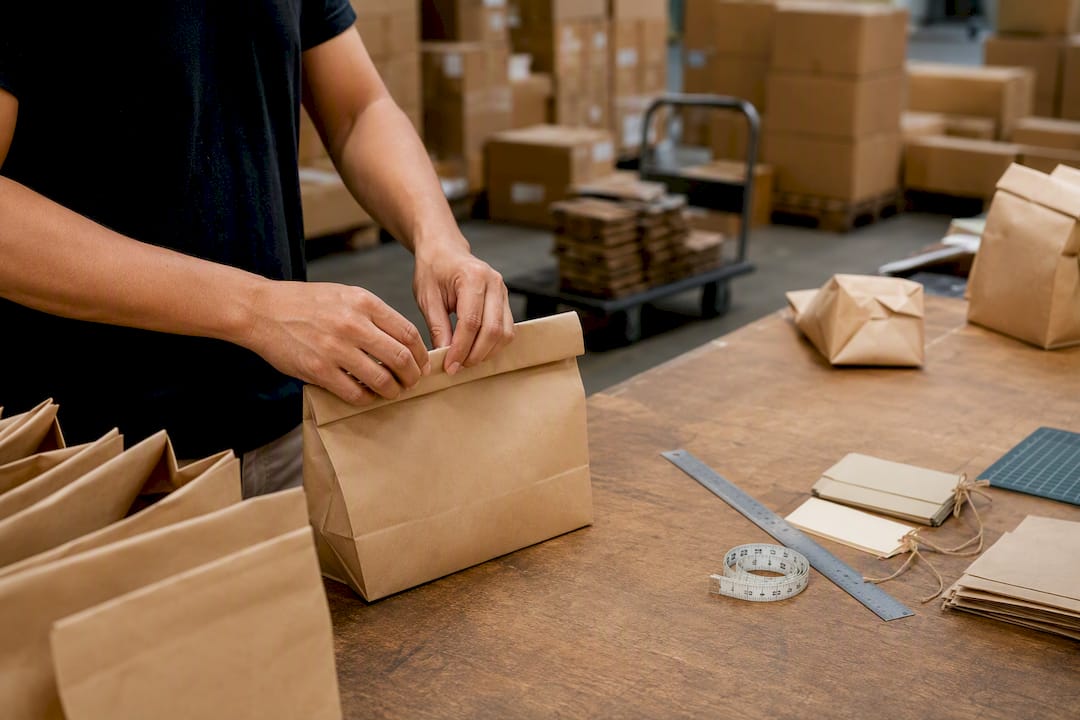
A size chart tells you dimensions. It says nothing about whether a bag will hold up once it’s loaded. Procurement should run three checks before signing off on any size: a loaded dummy test, a handle-pull test, and a base deflection check.
- Loaded dummy test: fill a sample bag with the actual product weight and observe how the base and side seams behave under real load.
- Handle-pull test: lift the loaded bag by the handles and hold for a sustained period to check for handle separation or tearing at the attachment point.
- Base deflection check: watch for sagging or bowing at the bottom seam, especially with heavier or wider items.
Bag weight tier generally dictates minimum paper stock. Small bags like Pup or Cub can run lighter GSM stock, while King, Queen, and Jumbo sizes carrying heavier merchandise need higher GSM paper and reinforced handle attachment, a pattern confirmed in Allen Paper Products’ sizing and GSM guidance. Concentrated point loads, like a single wine bottle or a jar of sauce, put more stress on a small base area than the same weight spread across several lighter items, so bottle bags and multi-item takeout bags need different reinforcement even at similar weight totals. Grocery and takeout bags carrying several boxed items also benefit from a wider gusset and flat-bottom construction, which spreads load more evenly than a narrow gusset design, according to RichPack’s packaging guide. For GSM recommendations mapped by use case, see this paper bag weight capacity guide.
What Belongs on a Spec Sheet Before You Order?
A trade name and a rough dimension are not enough for a manufacturer to quote or produce accurately. Your spec sheet or tech pack needs specific fields, and skipping any of them is how size drift and print errors happen.
- Finished internal Width × Gusset × Height, stated in both millimeters and inches to avoid unit confusion.
- Handle drop length, measured from the bag opening to the top of the handle loop.
- Paper weight in GSM.
- Handle type (twisted paper, flat paper, ribbon) and exact placement.
- Baseboard requirement, if the bag needs a stiff insert for structure.
- Artwork safe area and bleed measurements for your logo and any full-panel print.
These are the same fields outlined in RichPack’s custom paper bag guide, and leaving any of them off your RFQ is one of the most common reasons a production run comes back wrong.
- Insist on a pre-production sample with finished print and handle attachment before full production.
- Get written sign-off on that sample, not a verbal approval.
- Attach acceptable tolerances (typically a few millimeters on width and height) directly to your purchase order.
Critical logo elements belong inside the safe area, not tight against the trim edge, and a printed swatch is the only reliable way to confirm color before a full run. For dieline references and panel layout guidance, see Gatherpackaging’s step-by-step paper bag design guide.
What Should Your First Sample Pack Include?
Before committing to a bulk order, most buyers land on one of three starter sets:
- Boutique apparel: Cub, Vogue, and Jumbo cover small accessories through folded sweaters without ordering a fourth size for edge cases.
- Gift shop: Wine, King, and Queen handle bottles, boxed gifts, and taller framed items in one compact lineup.
- Bakery or takeout counter: Bistro and Take Out alone usually cover boxed pastries and multi-item orders without excess bag inventory.
A useful sample pack includes empty bags in each proposed size, a loaded dummy for each, a handle demo, and a print swatch showing your actual logo color and placement, following the sampling practice outlined by CustomPackly. Ask your manufacturer for minimum sample quantities and turnaround timing up front. Sample lead times and full production lead times are rarely the same, and knowing both before you plan a launch date saves a scramble later.
Why the Right Manufacturing Partner Lowers Sizing Risk
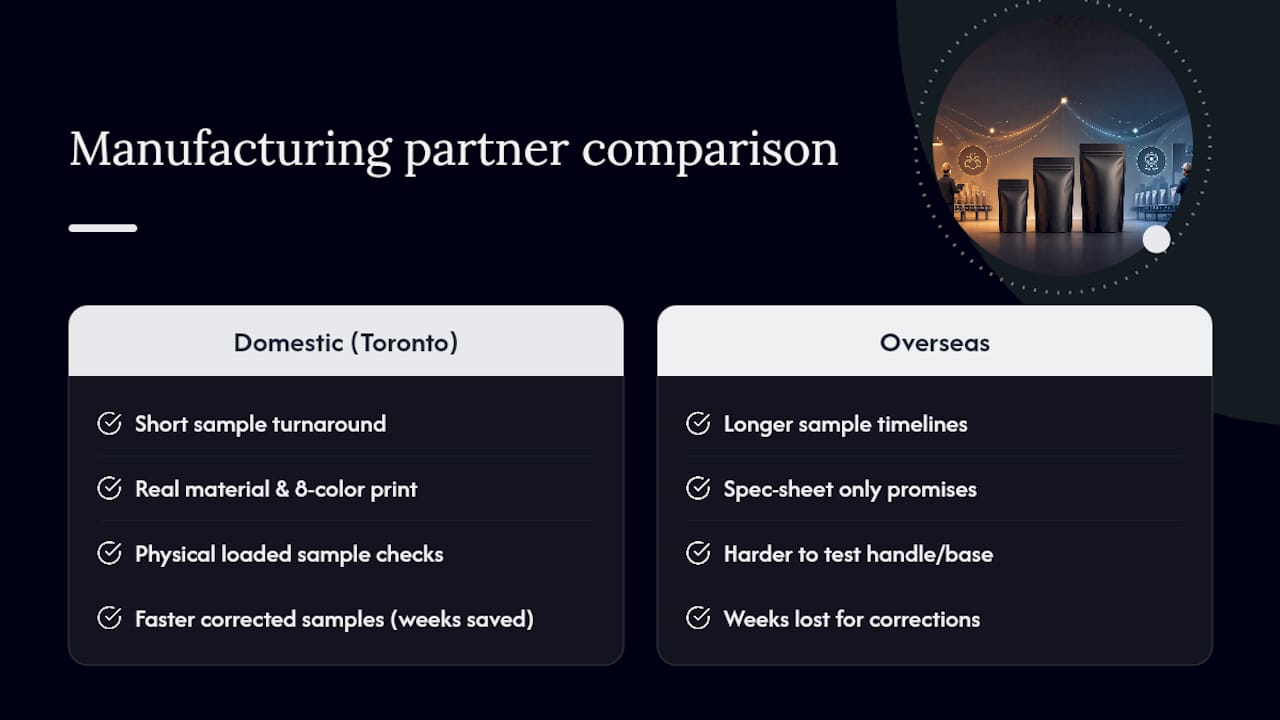
A chart tells you the numbers. A manufacturer that can actually build to them, prototype fast, and catch problems before a full run is what keeps that chart from becoming a costly guess. Gatherpackaging manufactures domestically in Toronto, which shortens the loop between a sample request and a physical bag in your hands compared to overseas production timelines.
That matters most during prototyping. FSC®-certified paper stock and 8-color flexo printing give buyers real material and print options to test, not just a spec sheet promise. A physical loaded sample, checked for handle integrity, base strength, and packing ease before committing to production, remains the most reliable way to confirm a chart size actually works for your product. Domestic production means fewer weeks lost between catching a sizing issue and getting a corrected sample back in hand.
— Taylor
Ready to Get Your Sizing Right the First Time?
Skip the trial-and-error and get a real sample in hand. Gatherpackaging manufactures paper shopping bags domestically in Toronto, which means sample turnaround and production corrections move faster than waiting on overseas freight schedules.
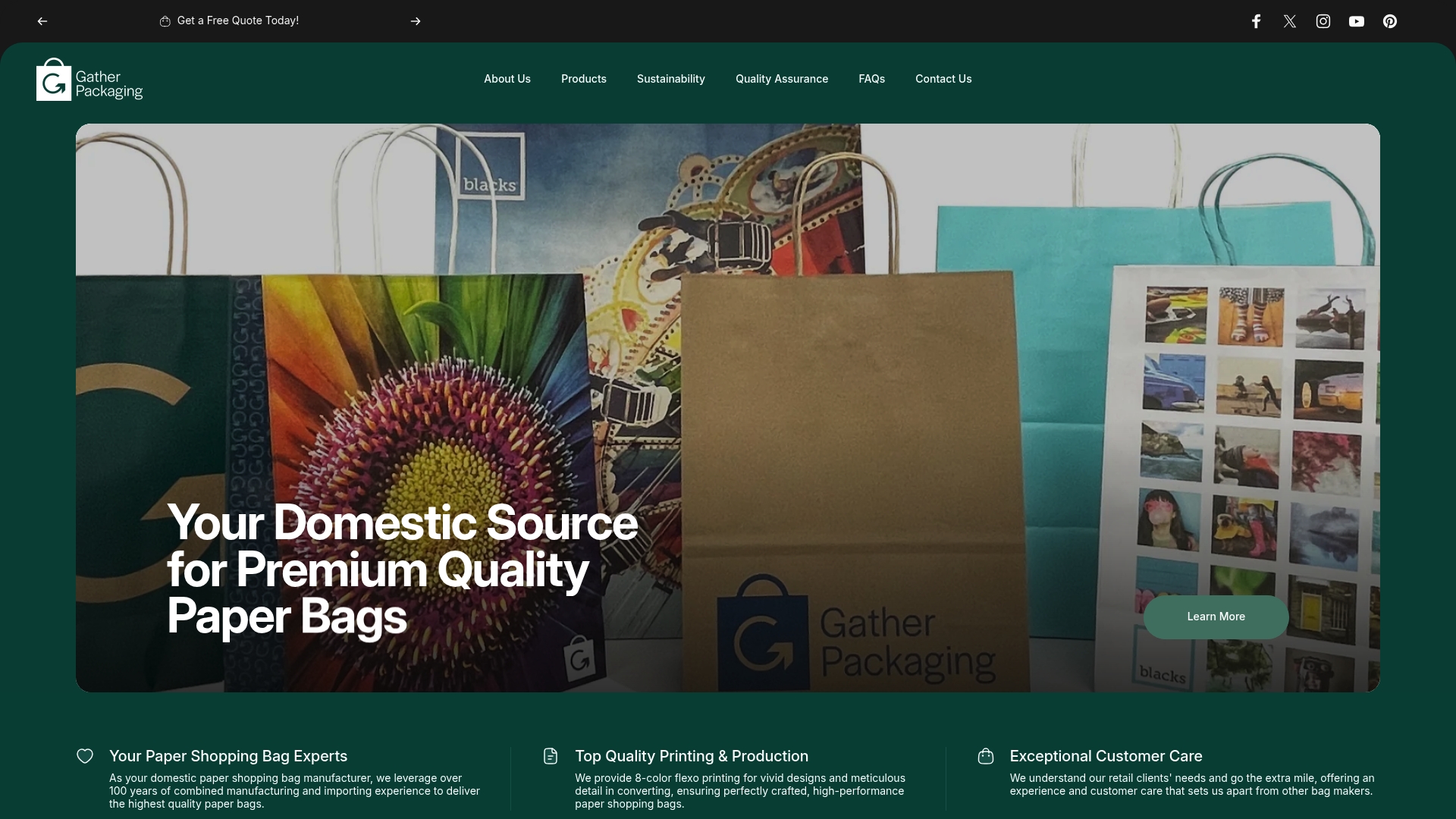
Contact Gatherpackaging with your finished product pack-out dimensions, expected loaded weight, and desired print coverage, and the team will help you narrow down the right 2 to 3 sizes instead of guessing from a chart alone. Browse the custom printed kraft paper bag options to see available styles, or check the FSC®-certified and recycled material options if sustainability requirements are part of your spec. Whichever size set you’re leaning toward, request a pre-production sample before you commit to a full order. It’s the one step that catches a sizing problem while it still costs nothing but a few days’ wait.
Share:
Manufacturer Forward Tamper Proof vs Tamper Evident for Retail Buyers
Lock Compliant Paper Bags in 16 Weeks After Canada's Plastic Ban