
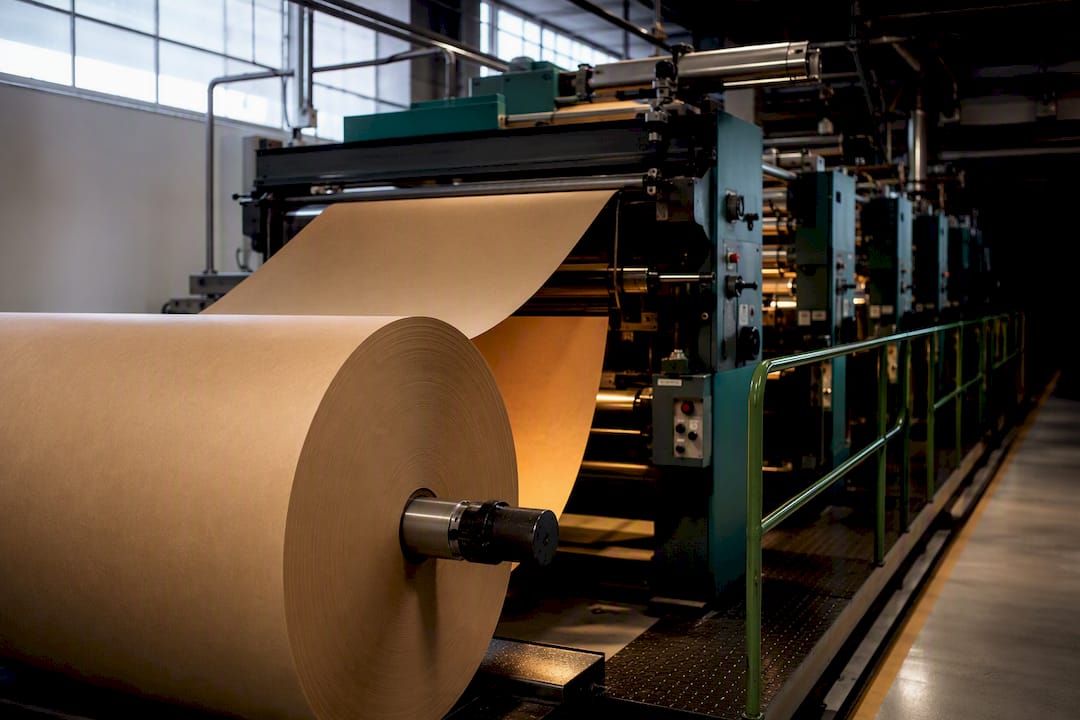
The federal ban on single-use plastic checkout bags is in force and stayed that way after a Federal Court of Appeal ruling on January 30, 2026. The Single-use Plastics Prohibition Regulations still prohibit manufacture, import, and sale of multiple product categories, with the export ban now active since December 20, 2025. Procurement teams should stop waiting for legal clarity and start locking in compliant, domestically produced alternatives.
TL;DR:
- Manufacturers and retailers must immediately stop holding inventory of the six regulated plastic categories to avoid non-compliance.
- The December 2025 export ban ended the possibility of manufacturing for export markets, increasing pressure on domestic production.
- Confirm reusable claims with lab tests and verify supplier compliance before finalizing packaging, especially for imported items.
- Domestic suppliers offering FSC-certified, water-based ink, and tested reusable paper bags simplify compliance and reduce documentation risks.
- The legal validation from the January 2026 FCA ruling confirms the regulations are durable, encouraging procurement teams to act swiftly.
Table of Contents
- What the Plastic Bag Ban in Canada Actually Prohibits
- Did the Courts Overturn the Ban? What the 2026 FCA Ruling Means
- How the Ban Changes Obligations for Manufacturers, Retailers, and Exporters
- Choosing Compliant Alternatives: What Procurement Teams Should Actually Check
- Gather Packaging’s Approach to Compliant, Domestic Paper Bags
- A Compliance Checklist: What to Do in the Next 16 Weeks
- A Buyer’s Take: Treat the Ban as a Supply Chain Decision, Not Just a Legal One
- Source Compliant Paper Shopping Bags from a Canadian Manufacturer
- Where to Verify the Regulations and Rulings Yourself
- Sources
What the Plastic Bag Ban in Canada Actually Prohibits
The Single-use Plastics Prohibition Regulations target six specific categories of plastic manufactured items, not plastic packaging broadly. Getting the definitions right matters, because the rules hinge on function, not just material.
- Checkout bags: plastic bags designed to carry purchased goods from a point of sale, including those made partly of plastic.
- Cutlery: single-use plastic forks, knives, and spoons intended for food service use.
- Foodservice ware: plastic containers, cups, lids, and plates that don’t meet the reusable performance criteria.
- Stir sticks: plastic sticks used to stir or mix beverages.
- Ring carriers: plastic rings used to hold multiple beverage containers together.
- Straws: most single-use plastic straws, with a narrow exception for flexible straws packaged with beverage containers for accessibility purposes.
The consolidated regulation text (SOR/2022-138) lays out the phased timeline: manufacture and import of these items became prohibited on December 20, 2022, sale followed on December 20, 2023, and the export prohibition took effect December 20, 2025. Ring carriers and flexible straws carried separate transition timelines tied to their exceptions. Waste materials and items genuinely in transit through Canada carry narrow exemptions, and any item marketed as “reusable” needs lab-tested proof, not just a label claim.
Did the Courts Overturn the Ban? What the 2026 FCA Ruling Means
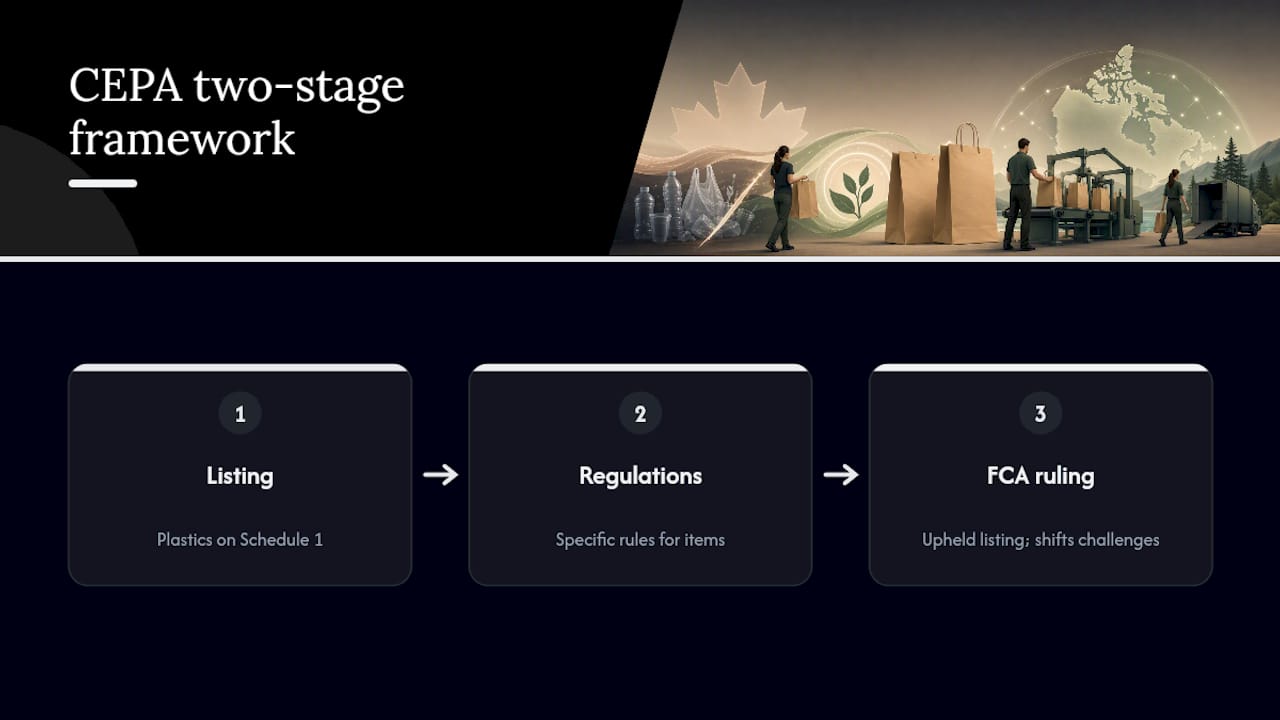
No. The Federal Court of Appeal ruling, issued January 30, 2026, upheld the government’s Order listing plastic manufactured items on Schedule 1 of the Canadian Environmental Protection Act. That listing is what gives Ottawa authority to regulate these items as toxic substances, and the Court confirmed it stands.
Legal analysts describe this as a “two-stage” framework under CEPA: one stage lists a substance category as subject to regulation, a separate stage writes the actual regulations governing it. Industry challenges had targeted the listing itself, arguing plastics broadly shouldn’t be classified as toxic. The FCA’s reasoning means future legal fights will more likely aim at specific regulatory provisions rather than the foundational listing. For procurement purposes, that’s the practical takeaway: the regulatory basis is now stronger, not weaker, so packaging decisions can proceed on the assumption the ban is durable.
How the Ban Changes Obligations for Manufacturers, Retailers, and Exporters
If your business manufactures, imports, sells, or distributes any of the six regulated categories, the obligation is straightforward: stop. That includes retailers still holding old inventory of plastic checkout bags. Selling through existing stock isn’t a workaround the regulations recognize.
The December 20, 2025 export prohibition changed the calculus for manufacturers who had been producing banned items for markets outside Canada. Before that date, a Canadian plastic bag producer could legally manufacture checkout bags for export even while domestic sale was banned. That option closed. Government commentary tied to the amendment notes this put real pressure on manufacturers who had structured production lines around export markets, forcing a pivot toward compliant materials or exit from that product line entirely.
For procurement and operations teams, three actions matter right now. First, run an inventory audit across every location to identify remaining stock of prohibited items. Second, freeze any open purchase orders for checkout bags, stir sticks, or foodservice ware that don’t meet the reusable performance standard. Third, verify supplier compliance in writing, particularly for any vendor that previously shipped internationally.
Working with a domestic supplier removes a layer of risk here; learn more about sustainable packaging materials that support circularity and compliance. Import shipments face border inspection uncertainty, and any business that previously exported now-banned items must retain export evidence for at least five years under the regulations. A Canadian manufacturer with domestic production simply doesn’t generate that paperwork burden.
Choosing Compliant Alternatives: What Procurement Teams Should Actually Check
Paper shopping bags, reusable plastic bags that pass performance testing, and certain durable materials all remain lawful options. But “compliant” isn’t a marketing term, it’s a testing outcome. ECCC guidance is explicit that a “compostable” label doesn’t automatically exempt a product from the ban, and a supplier’s claim that a bag is “reusable” means nothing without accredited lab testing behind it.
Before signing off on any packaging switch, request the following from a supplier:
- Lab test reports proving reusable claims meet ECCC’s performance criteria, not marketing copy.
- FSC certification documentation for paper materials, verifying responsible forestry sourcing.
- Material specifications, including paper weight, coating, and handle construction.
- Lead time commitments in writing, especially for custom print runs.
- Print capability details, since multi-color branding requires specific press setups like 8-color flexo.
Run a short checklist against every candidate bag: does it hold the weight your product line requires, does the handle style survive real customer use, does the print reproduce your brand colors accurately, and can the supplier prototype before a full production run? A domestic paper-bag partner that can answer all four without a subcontractor in the mix simplifies both compliance and logistics considerably.
Gather Packaging’s Approach to Compliant, Domestic Paper Bags
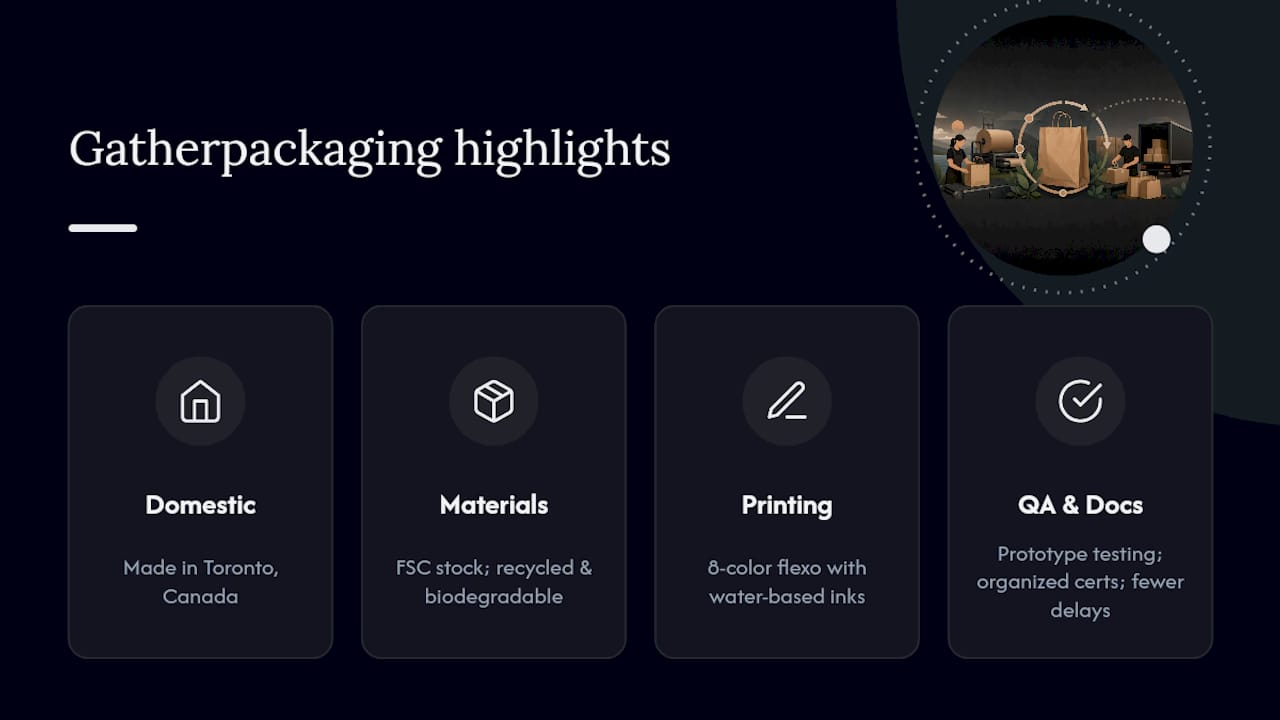
Gatherpackaging manufactures paper shopping bags domestically in Toronto, which matters more than it used to now that export and import documentation carry legal weight under the SUPPR. Bags are available in FSC-certified stock, with recycled-content and biodegradable options for retailers building sustainability claims into their packaging strategy.
Printing runs on water-based inks with 8-color flexo capability, which covers most brand color requirements without the muddy reproduction that lower-color-count presses produce. Styles include turn top, serrated top, and tamper-resistant construction, each suited to different retail use cases.
Prototyping and quality assurance testing happen before full production, so buyers can verify handle strength, print fidelity, and bag durability before committing to volume. Because manufacturing happens in Canada, documentation for certifications and testing stays organized and accessible, and lead times aren’t subject to the same customs delays that import-dependent suppliers face.
A Compliance Checklist: What to Do in the Next 16 Weeks
Days 0 to 14: Confirm your current bag and foodservice packaging inventory against the six prohibited categories. Freeze purchase orders for anything that matches a banned item. Pull your supplier contracts and check for export language tied to the December 2025 deadline.
- Weeks 2 to 8: Shortlist domestic suppliers first. Request lab test reports for any reusable claims and FSC documentation for paper stock. Order prototypes and run a small pilot with store staff before committing to volume.
- Weeks 8 to 16: Train frontline staff on the material change and update point-of-sale signage. Communicate the switch to customers if your brand messaging references bag material. Schedule stock rotation so old inventory clears before new stock arrives.
- Ongoing: Keep test reports, certifications, and supplier correspondence on file. If your business exported any prohibited item before the ban, retain that export evidence for five years as required.
Pro Tip: Don’t wait for a supplier to offer test documentation. Ask for it in writing before the first purchase order, not after a shipment arrives at your dock.
A Buyer’s Take: Treat the Ban as a Supply Chain Decision, Not Just a Legal One
The FCA ruling removed the excuse to wait. Procurement teams that treat this as settled law, not a pending appeal, get first pick of reliable domestic suppliers before everyone else scrambles in Q1. Working with a Canadian manufacturer means faster documentation, tighter QA, and no customs delay eating into your lead time. Tell customers about the material switch plainly. Nobody minds paper if the bag actually holds up.
— Taylor
Source Compliant Paper Shopping Bags from a Canadian Manufacturer
Gatherpackaging is the domestic alternative to import-dependent suppliers still exposed to export documentation risk and customs delays under the SUPPR. Buyers get FSC-certified paper stock, 8-color flexo printing, prototyping, and quality assurance testing, all produced in Toronto rather than shipped across a border.
If your team is auditing inventory against the six banned categories, now is the time to move. Browse sustainable paper bag options built with recycled and biodegradable materials, or check the full product catalog for turn top, serrated top, and tamper-resistant styles. Contact Gatherpackaging directly to discuss specifications, lead times, and the compliance documentation your procurement team needs on file.
Where to Verify the Regulations and Rulings Yourself
Don’t take secondhand summaries as the final word on dates or definitions. Check the primary sources directly:
- Single-use Plastics Prohibition Regulations Overview for the full category list and timeline.
- SOR/2022-138 consolidated text for exact legal definitions.
- Canada Gazette amendment notice for the export prohibition effective date.
- Ministerial statement on the FCA decision for the January 2026 ruling’s implications.
Share:
Pick the Right 2–3 Sizes: Bag Size Chart for Packaging Buyers
Retail Brands: Domestic Prototyping for a Safer Plastic to Paper Switch