

FSC Chain of Custody (CoC) is the certification system that tracks forest-based materials, like the paper in your shopping bags, through every stage of processing until they reach a finished product. It runs on a single core standard, FSC-STD-40-004, and if you want to print the FSC label on a finished bag or claim it as FSC certified anywhere in your sales documents, your facility needs this certification. Skipping it isn’t an option if a retail customer requires proof.
If you manufacture, print, repackage, or relabel forest-based products, here’s what to do next:
- Contact an accredited Certification Body (CB) for a scope estimate
- Or run an internal readiness review first if you’re not sure your records can support an audit
TL;DR:
- Certification requires an external audit by an accredited Certification Body to ensure compliance with FSC-STD-40-004, with most delays occurring during the application process.
- Proper record-keeping linking purchase orders, receipts, and supplier certificates is critical to passing audits and demonstrating traceability of FSC-certified materials.
- Small businesses handling pre-certified products can often avoid full CoC certification by using group certification or promotional licenses, depending on scope.
- The chosen control system—transfer, percentage, or credit—must match actual production practices to prevent nonconformities during audits.
- Maintaining a documented management system and conducting pre-audit internal checks significantly reduces the risk of nonconformities and ensures audit readiness.
Table of Contents
- What Does the FSC Chain of Custody Standard Actually Require?
- Who Actually Needs CoC Certification?
- How Do the Transfer, Percentage, and Credit Systems Differ?
- What Does the Certification Process and Timeline Look Like?
- What Records Do Auditors Expect to See?
- How Do You Choose the Right Certification Body?
- What Business Value Does CoC Certification Actually Deliver?
- What Goes Wrong During CoC Audits and How Do You Prevent It?
- Where Do You Find the Standard and Start the Process?
- Key Takeaways
- Sources
What Does the FSC Chain of Custody Standard Actually Require?
One detail trips up a lot of new applicants: the Forest Stewardship Council itself doesn’t hand out certificates. It writes the standard and sets the rules, but independent, accredited Certification Bodies conduct the actual audits and make the certification decision. That separation exists so the audit stays impartial, which matters more than it sounds like once you’re the one being reviewed.
FSC-STD-40-004 covers a specific set of obligations once you’re certified:
- Maintain a documented management system covering purchasing, production, and sales records tied to FSC claims.
- Assign responsibility internally for who tracks eligible inputs and who signs off on outgoing claims.
- Keep records that let an auditor trace a finished product back to its certified or controlled source.
- Use the correct trademark and labeling rules any time the FSC name or logo appears on packaging or paperwork.
Certificate types vary too. A single-site certificate covers one facility, a multi-site certificate covers multiple locations under shared management, and group certification lets several smaller operations share one certificate and one CB relationship.
Who Actually Needs CoC Certification?
Scope confusion costs businesses time and money, so it’s worth being precise about who this applies to.
- Manufacturers, printers, repackagers, and relabelers that physically handle or transform forest-based material need CoC certification, full stop.
- Retailers that resell finished FSC-labeled products as-is, without altering packaging or claims, usually only need a promotional licence, not CoC.
- Distributors that take physical custody and relabel or repack products typically fall under CoC requirements, even if they don’t manufacture anything themselves.
- Small operations don’t need to go it alone. Group certification lets smaller packaging shops share a CB and split costs, with eligibility usually tied to employee count and revenue.
If your business only touches a finished, already-labeled product without altering it, don’t assume you need full CoC. Ask your CB candidate to confirm scope before you pay for an audit you don’t need.
How Do the Transfer, Percentage, and Credit Systems Differ?
The control system you use determines what claim ends up on the finished bag, and picking the wrong one for your operation creates headaches at audit time.
- Transfer system: the simplest option, common among traders and smaller printers who move certified material through without blending it with other inputs.
- Percentage system: tracks the proportion of certified material in a product over a defined period, and it’s where most manufacturers land when certified and non-certified inputs mix in the same production run.
- Credit system: certified inputs generate credits that get “spent” against outputs later, useful for mills and manufacturers running continuous or high-volume operations.
There are three CoC control systems in total, and the one you choose depends on how your production actually works, not which one sounds more official. Manufacturers running mixed-material batches often prefer percentage or credit because they allow aggregated input tracking, while a small printer moving pre-certified stock through unchanged usually has no reason to complicate things with anything beyond transfer.
Pro Tip: Match your control system to your actual production flow before you apply, not after. Switching systems mid-certification usually means redoing your documentation from scratch.
Get this wrong and your label doesn’t match your paperwork, which is one of the fastest ways to fail an audit.
What Does the Certification Process and Timeline Look Like?
The process itself follows a predictable sequence, and knowing where delays typically happen helps you budget both time and money.
- Contact one or more CBs for a quote. Scope, facility count, and product complexity all affect price.
- Submit your formal application, including details on your management system and intended control system.
- Complete an on-site audit. The auditor reviews your documentation, walks your facility, and traces sample batches from purchase order to finished product.
- Receive a certification decision. Minor nonconformities usually come with corrective action requests rather than an outright denial.
- Undergo annual surveillance audits. Your certificate is valid for five years, with a surveillance audit required every year to keep it active.
Most delays happen at the application stage, when businesses haven’t yet built the documentation trail an auditor expects. During the on-site visit, expect the auditor to pull real purchase orders, delivery receipts, and invoices, then check whether your product-group definitions and claim language actually match.
Pro Tip: Run a mock internal audit two to three weeks before the real one. Pull three representative production batches and trace each one back to a supplier certificate. If you can’t do that cleanly, your auditor won’t be able to either.

What Records Do Auditors Expect to See?
This is where certification either sticks or falls apart six months in. Auditors aren’t just checking whether you have a certificate on the wall. They want to see that your daily operations actually generate the paperwork trail your claims depend on, and this is an area where traceability practices built into daily operations matter more than the certificate itself.
- Link every purchase order and delivery receipt directly to the production batch it supplied.
- Tie each production batch to the specific invoice and FSC claim it generated.
- Keep supplier certificates on file and cross-check their claim types against what you’re buying.
For mass-balance accounting, short production runs typically work best with batch-level tracking, allocating eligible input percentages before invoicing. Continuous operations often use a rolling average instead. Either way, your documentation should organize around three things: product groups, credit or percentage accounts, and supplier certificate files, because that’s the exact structure an auditor will ask to see.
Pro Tip: Build your record-keeping system around the audit before you’re audited. Retrofitting documentation after the fact takes far longer than setting it up correctly from day one.

How Do You Choose the Right Certification Body?
Not every CB has real experience with packaging manufacturing, and that gap shows up during the audit in ways that cost you time.
- Confirm the CB’s accreditation status and ask specifically for references from other packaging or manufacturing clients, not just any FSC-certified business.
- Request a sample audit scope document along with a fee estimate and a realistic timeline before signing anything.
- Ask how the CB handles corrective actions and what their surveillance audit process looks like once you’re certified, not just the first-year audit.
Leaning on a CB experienced with packaging SMEs specifically reduces friction, since they already know what mass-balance documentation for printed goods should look like instead of learning it during your audit.
What Business Value Does CoC Certification Actually Deliver?
Certification isn’t just a compliance box. It changes what you can say and prove to customers.
- You can apply the FSC logo to finished packaging and back that claim up on invoices and sales documents.
- Certification gives procurement and ESG teams verifiable evidence, which often speeds up entry onto a customer’s approved supplier list.
- CoC doesn’t replace broader supplier due diligence. It’s one credible data point your customers can check, not the whole picture.
What Goes Wrong During CoC Audits and How Do You Prevent It?
Most nonconformities trace back to the same handful of gaps, and they’re avoidable if you check for them before the CB arrives.
- Incomplete records are the most common finding, usually a broken link between a batch and its source documentation.
- Incorrect claim use happens when a label says “FSC Mix” but the paperwork behind it doesn’t support that claim.
- Mixing non-eligible inputs without proper segregation or percentage tracking undermines the whole claim chain.
Run a pre-audit check on supplier certificates, batch traceability, and label-claim alignment before your CB shows up. Address corrective actions quickly and specifically, since vague fixes tend to trigger follow-up requests that stretch your timeline further.
Pro Tip: Pull your product-group definitions and label text during your internal review. A mismatch between what’s printed and what’s documented is one of the easiest findings for an auditor to catch, and one of the easiest for you to fix in advance.
Where Do You Find the Standard and Start the Process?
- Download FSC-STD-40-004 from Connect.FSC.
- Use FSC Check to verify certificate holders before starting a trademark licence request.
- Request CB quotes and run your internal readiness review now.
A packaging manufacturer’s take on getting this right
Traceability only works when your daily paperwork matches your printed claims. That’s the practical piece most guides skip. If you’re weighing certification, contact Gatherpackaging to talk through what your production setup actually needs.
— Taylor
Where Gather Packaging Fits Into Your FSC-Certified Packaging Plans
Sourcing FSC-certified stock is one thing. Getting a manufacturing partner who can actually document that material correctly through print production is another, and that’s the gap Gatherpackaging closes for retail and foodservice packaging buyers.
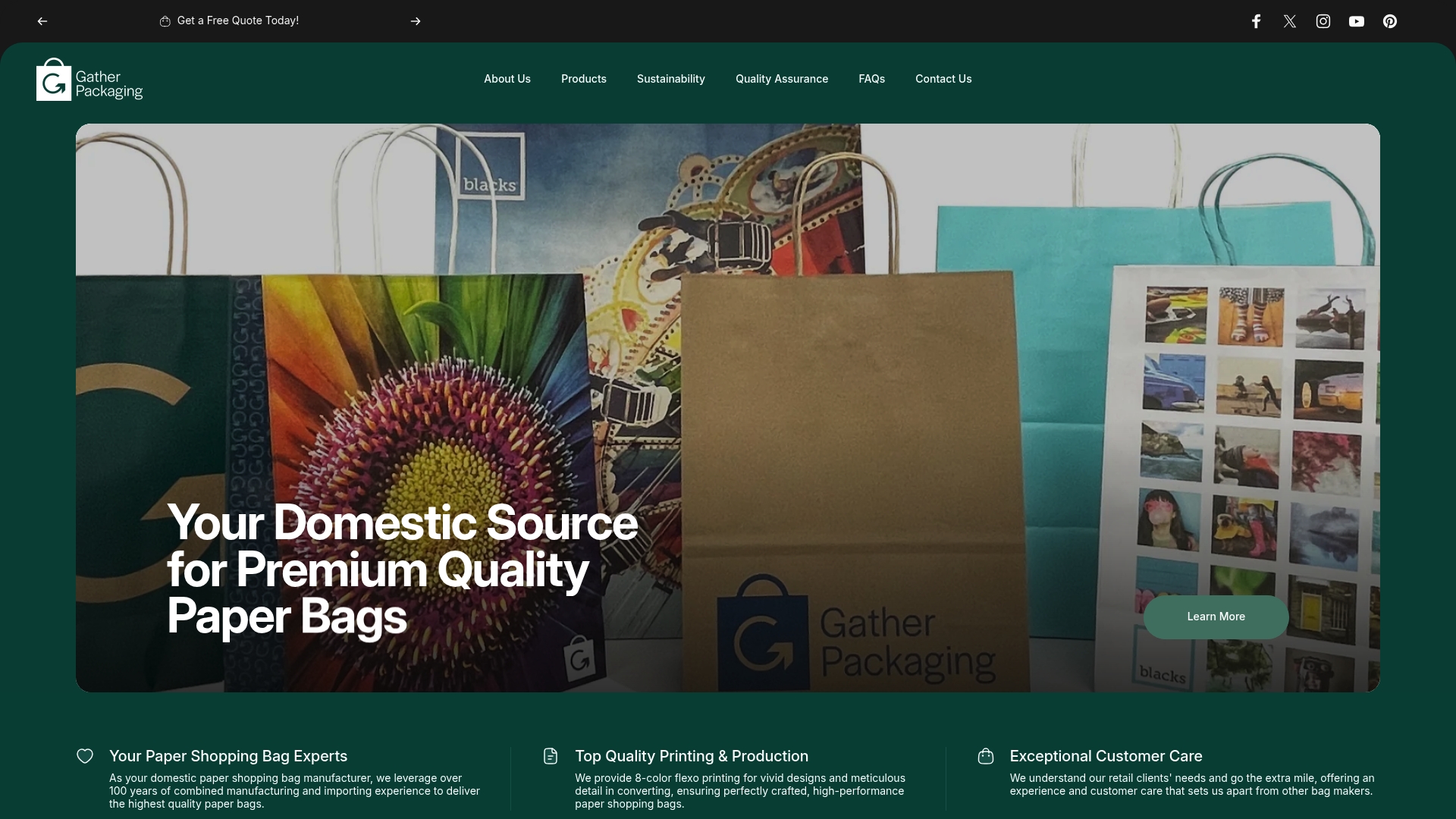
Gatherpackaging manufactures paper shopping bags domestically in Toronto using FSC-certified and recycled materials, with 8-color flexo printing, prototyping, and quality assurance built into every production run. Because everything happens in one facility, we can generate the batch-level documentation your CoC compliance actually depends on, tying material sourcing to your finished product without gaps in the paper trail. For businesses further along their sustainability planning, our partners at Expleco also cover broader sustainable packaging material options worth knowing about.
Browse our sustainability practices to see how we source and document certified materials, or go straight to our custom paper bag options and contact us to discuss your specifications and timeline.
Key Takeaways
FSC Chain of Custody certification requires an accredited third-party audit against FSC-STD-40-004, and only certified facilities can legally apply FSC claims to finished packaging.
| Point | Details |
|---|---|
| Certification comes from CBs, not FSC | FSC sets the standard, but independent accredited Certification Bodies conduct audits and issue certificates. |
| Certificates last five years | Annual surveillance audits keep the certificate active between full recertification cycles. |
| Control system shapes your claim | Transfer, percentage, and credit systems each determine what FSC label you can put on a finished bag. |
| Records make or break audits | Auditors trace batches back through purchase orders, receipts, and supplier certificates. |
| Gatherpackaging supports certified production | Domestic manufacturing with FSC-certified materials and documented traceability for audit-ready paper bags. |
Official Documents and Search Tools Worth Bookmarking
- Download FSC-STD-40-004 directly from Connect.FSC.
- Review how the FSC certification system works before contacting a CB.
Share:
What Perforations in Paper Bags Actually Do (And When to Use Them)
Manufacturer Forward Tamper Proof vs Tamper Evident for Retail Buyers