
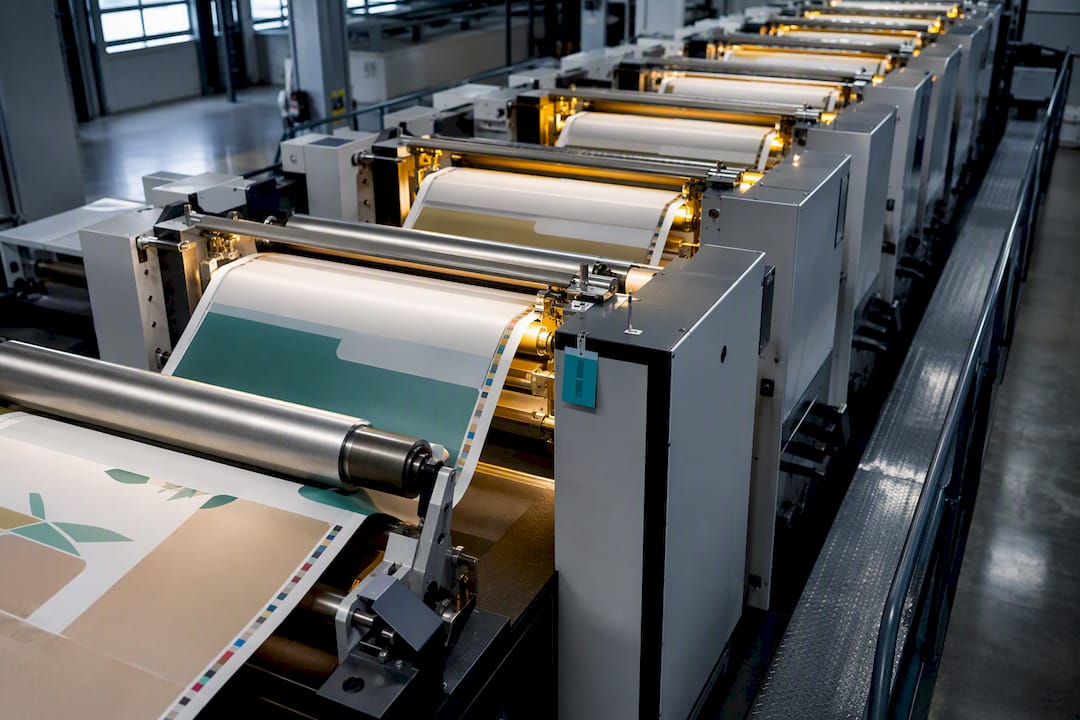
Eight-color flexo is the right choice for brands that need vibrant multi-spot-color graphics, a white underbase, or in-line varnish and coating, all produced in a single pass. The main operational payoff is fewer changeovers and tighter registration across complex artwork, which cuts waste and keeps unit costs predictable. This process is run domestically for retail bag programs requiring premium color with efficient supply chains. Simple one-color or two-color logo bags typically do not require this level of complexity.
TL;DR:
- Eight-color flexo is essential for complex designs with multiple Pantone spot colors, white underbases, or inline coatings, especially when production needs to be in a single pass.
- It offers the advantage of fewer changeovers and tighter registration, reducing waste and unit costs for high-end retail bag programs.
- Proper artwork preparation, including early decisions on spot versus process colors and minimum line widths, is crucial to prevent costly press issues.
- Consistent ink formulation, substrate choices, and regular press maintenance ensure color accuracy across long runs and repeat orders.
- Domestic manufacturing and integrated prototyping help minimize lead times and supply-chain risks, especially for brands prioritizing sustainability and quality.
Table of Contents
- Who needs 8-color flexographic printing for paper shopping bags?
- What can 8-color flexo actually do on a shopping bag?
- What design and artwork rules apply to 8-color flexo?
- Which paper stocks and finishes work best with 8-color flexo?
- How do lead times, minimums, and pricing work for 8-color orders?
- What sustainability options come with 8-color flexo printing?
- What common problems show up on 8-color flexo runs, and how are they fixed?
- How does 8-color flexo compare with rotogravure and digital printing?
- How should an 8-color flexo press be maintained and calibrated?
- How do you manage color consistency across an 8-color ink formulation?
- How Gather Packaging delivers consistent color on every run
- Ready to start your 8-color flexo bag order?
- Sources
Who needs 8-color flexographic printing for paper shopping bags?
Not every bag program needs eight print stations. The decision comes down to how complex your artwork is and how many finishing effects you want baked into a single production run.
You likely need 8-color flexographic printing if your design includes several distinct Pantone spot colors, a white underbase to make colors pop on kraft stock, or an in-line varnish that highlights a logo against a matte background. Multi-panel designs with gradients, layered brand elements, or seasonal graphics that change often also justify the extra stations.
- Multiple spot colors beyond standard CMYK, especially brand-specific Pantone shades
- A white ink layer needed to print bright colors over natural or brown kraft
- In-line varnish, gloss, or matte coating as part of the design, not an afterthought
- Complex multi-panel or wraparound artwork with fine detail
If your bag design uses one or two flat colors on a simple mark, four or six stations will do the job and cost less to run. Procurement teams planning a multi-year retail rollout should weigh capacity against a five-year product and marketing roadmap rather than just the next purchase order, since locking into a lower-color press now can limit design options later.
What can 8-color flexo actually do on a shopping bag?
Eight stations mean CMYK process color plus up to four additional stations for spot inks, white, and in-line coatings, all run in a single pass through the press. That single-pass setup is the core advantage: instead of running a bag through separate coating or spot-color operations, everything happens on one machine, one time.
This matters most for two things. First, opaque white ink can go down on kraft stock before other colors print, so bright graphics don’t look muddy on brown paper. Second, aqueous varnish or matte/gloss coating can be applied in-line, which protects print and adds a finish without a separate off-line pass.
An 8-color stack flexo press lets converters combine CMYK, multiple spot colors, and finishing stations like white and varnish without stopping to swap plates or run the stock through a second machine, which is exactly what reduces both changeovers and material waste on longer runs.
8-color flexo, at a glance:
- CMYK process color for photographic or blended imagery
- Up to four additional stations for spot colors, white, or coatings
- Single-pass production, resulting in fewer machine stops and reduced material waste
- Print speeds of 100 to 350 meters per minute on stack-type presses, depending on substrate and ink system
There are trade-offs worth knowing before you spec a job this way. Adding more stations lengthens the press, which means dryer capacity is needed, especially with water-based inks that dry slower than solvent systems. Anilox roller selection also matters: the wrong cell volume on a given station can starve or flood an ink, throwing off color match. A converter who understands flexo versus offset tradeoffs will flag these constraints before your artwork goes to plate, not after.
What design and artwork rules apply to 8-color flexo?
Flexo printing has its own physics. Ink transfers through a raised plate image, which means fine details and tight registration behave differently than they do in offset or digital printing. Getting the art file right before it reaches the press saves both money and time.
- Specify Pantone uncoated colors for spot inks. Uncoated references match how ink lays down on kraft and uncoated bag stock far better than coated swatches.
- Decide spot versus CMYK early. Mixing build methods late in the design process is one of the most common causes of color mismatches on press.
- Respect minimum line widths. Positive lines should meet a minimum width standard suitable for clear reproduction, typically about a few points wide, with reverse (knockout) type kept slightly larger to avoid filling in.
- Use appropriate screen ruling. Industrial bag flexo work typically runs between 45 and 55 LPI for clean dot reproduction at normal viewing distance.
- Build in trap and registration tolerance. Tight overprinting without traps is a frequent cause of visible white gaps or color shifts at the edges of shapes.
Digital proofs work fine for early design review, but they don’t show true ink behavior on the actual substrate. Before production, ask for a physical hand-folded proof or an ink drawdown. Bag converters commonly rely on hand-folded proofs for position checks and drawdowns to confirm actual ink shade, since screen colors and printed kraft rarely match exactly.
Understanding how Pantone and CMYK behave differently on press also helps avoid surprises before a job ever reaches production, a topic covered well in this comparison of Pantone versus CMYK printing.
Pro Tip: Send your artwork to your converter’s production team before final approval, not after. Converters unfamiliar with your file can request last-minute changes that add cost, but early art direction from an experienced flexo shop usually catches these issues before they become expensive.
Which paper stocks and finishes work best with 8-color flexo?
Stock choice affects color reproduction as much as the press setup does. Most retail shopping bags run in the 60 to 120 gsm range, with heavier stock favored for larger bags or higher-end retail programs where the bag itself is part of the unboxing experience.
Kraft stock (natural brown) gives designs a warm, earthy look, but it absorbs and shifts color compared to bleached white stock. If your brand colors need to print true, a white ink underbase is often necessary on kraft to keep colors bright and accurate rather than muddy. Bleached white stock skips that requirement in most cases, since colors sit on a neutral base.
- Aqueous varnish for scuff protection and subtle sheen without a separate coating step
- Matte and gloss contrast within the same design for a two-finish look
- Anti-slip or textured coatings for bags that need extra grip in retail settings
- Spot UV or foil, which usually require off-line finishing rather than in-line application
Most standard finishes run in-line on an 8-color press without adding a separate production step. Specialty effects like foil stamping or spot UV coating typically need a separate off-line pass, which affects both lead time and per-unit cost. Ask your converter which finishes are in-line capable before finalizing a design that depends on a specific look.
How do lead times, minimums, and pricing work for 8-color orders?
Ordering an 8-color flexo bag run involves more moving parts than a simple one-color job, and knowing the sequence helps avoid delays.
- Submit final artwork in vector format with fonts outlined and Pantone colors clearly called out.
- Review a digital proof for layout, copy, and color breakdown accuracy.
- Approve a physical proof (hand-folded sample or drawdown) before plates are made.
- Confirm plate and tooling requirements, since more colors mean more plates, which adds to setup time and cost.
- Release to production only after every color, dimension, and finish is signed off in writing.
Tooling and plate work are the biggest lead-time factors on a new 8-color design. Each color station needs its own plate, and color matching across all eight stations takes longer to dial in than a simpler four-color job. Domestic production shortens this cycle considerably compared to overseas manufacturing, since there’s no ocean freight or extended customs clearance sitting between proof approval and delivery.
- Confirm minimum order quantities upfront, since they vary by bag style and complexity
- Ask how samples are packaged and shipped for approval before full production
- Verify your target delivery window against the converter’s current plate and press schedule
- Get final quantity and finish sign-off in writing before release to avoid mid-run changes
What sustainability options come with 8-color flexo printing?
Vibrant color and environmental responsibility aren’t mutually exclusive on a flexo press. Most of the sustainability decisions happen at the material and ink level, not the printing technology itself.
Ask your converter for FSC® certification and proof of recycled content if your brand’s sourcing policy requires it. These credentials should come with documentation, not just a verbal claim.
- Request FSC®-certified paper stock and ask what percentage of recycled content it contains
- Specify water-based inks, which lower solvent emissions during production and support easier recyclability of the finished bag
- Clarify compostable or biodegradable claims carefully, since these terms apply to specific material combinations, not every paper bag automatically
- Confirm whether coatings or laminates affect recyclability before finalizing a finish
Water-based ink systems do run slightly slower through the dryer than solvent-based systems, but that trade-off is worth it for most retail brands prioritizing sustainable packaging credentials.
What common problems show up on 8-color flexo runs, and how are they fixed?
More print stations mean more variables, and most 8-color troubleshooting comes down to catching small issues before they compound across a long run.
Color drift across a run is one of the most common complaints. Ink viscosity changes as it sits in the pan, especially with water-based systems, which can shift a spot color’s shade over a few thousand feet of stock. Regular viscosity checks and anilox cleaning between jobs keep ink laying down consistently from start to finish.
Registration slip on complex multi-panel art shows up as colors that don’t quite line up, creating a blurry or doubled look at color edges. This is usually a tension or plate-mounting issue rather than a design flaw, and it’s why servo-driven register control on modern presses matters so much for eight-station jobs where even a small shift multiplies across stations.
White underbase inconsistency happens when the white station doesn’t lay down evenly under other colors, leaving spots where kraft shows through and dulls the top color. Anilox selection and ink viscosity control on that specific station usually solve it.
Dryer bottlenecks occur when press speed outpaces the dryer’s ability to cure ink between stations, causing smearing or set-off when bags stack. This is a common issue on presses running water-based inks at high speed and is typically solved by adjusting line speed or dryer temperature rather than reformulating ink.
Most of these issues get caught during proofing, which is exactly why a physical proof stage matters more on an 8-color job than on a simple two-color run.
How does 8-color flexo compare with rotogravure and digital printing?
Each print method serves a different volume and complexity profile, and the right choice depends on run length, color count, and turnaround needs.
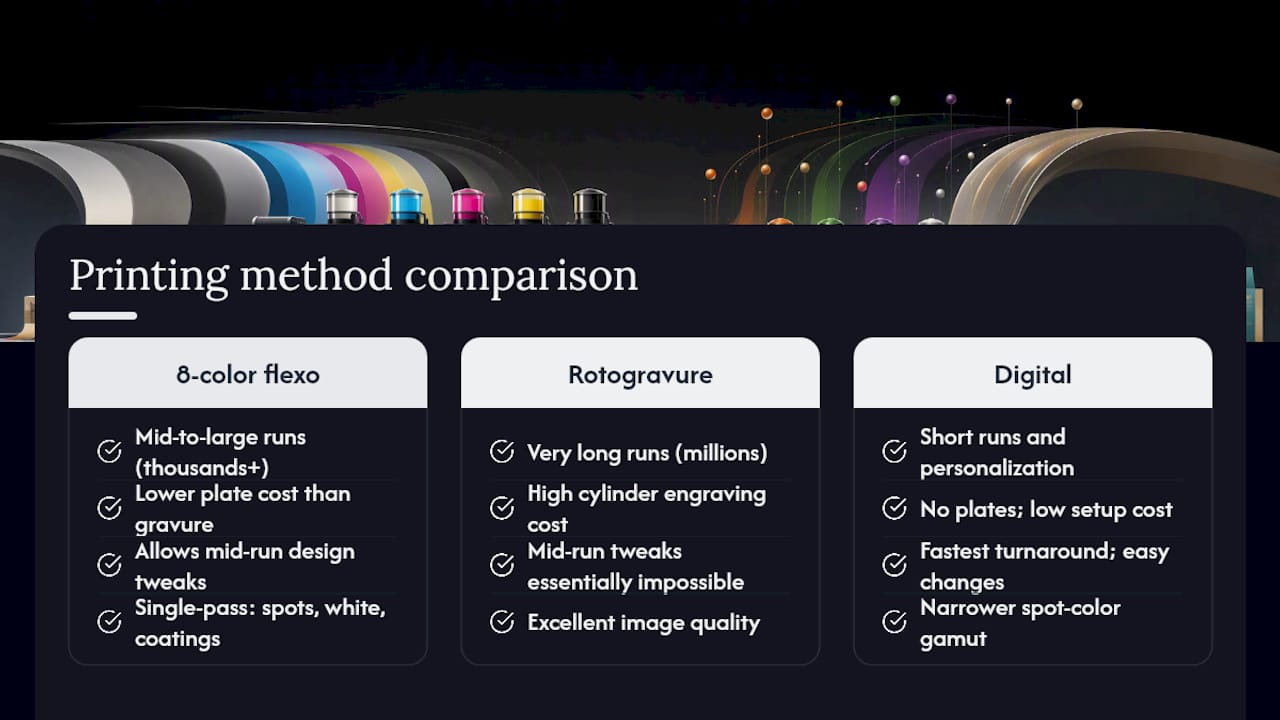
Rotogravure produces excellent image quality and is well suited to very long runs, often in the millions of units, because its engraved cylinders hold up over extended production. But cylinder engraving is expensive and slow to prepare, making rotogravure impractical for shorter runs or designs that change seasonally. It also makes mid-run design tweaks essentially impossible without new cylinders.
Digital printing shines for short runs, personalization, and fast turnaround since there are no plates to make at all. The trade-off is cost per unit at higher volumes and, in many cases, a narrower color gamut for solid spot colors compared to a well-matched flexo ink. Digital also struggles to match certain in-line finishing effects, like heavy varnish or textured coatings, that flexo handles as part of the same pass.
Eight-color flexo sits in a practical middle ground. Plate costs are lower than gravure cylinders, making it viable for mid-to-large retail runs, and the ability to combine spot colors, white, and coatings in a single pass gives it a finishing flexibility digital can’t match at scale. For a retail brand ordering repeat runs of a shopping bag program with several spot colors, 8-color flexo generally beats both alternatives on cost-per-unit and finish quality once volume climbs past a few thousand units. A closer look at these tradeoffs lives in this flexo versus offset comparison, which covers similar decision points buyers face with offset as well.
How should an 8-color flexo press be maintained and calibrated?
Consistent color across a production run, and across repeat orders months apart, depends on disciplined press maintenance more than any single piece of equipment.
Anilox rollers need regular inspection and cleaning, since dried ink or damage to the cell structure changes how much ink transfers to the plate. A roller that’s gradually losing cell volume to buildup will quietly shift color density without an obvious cause, which is why many converters schedule anilox checks between jobs rather than waiting for a visible problem.
Plate condition matters just as much. Photopolymer plates wear over repeated runs, and a plate nearing the end of its useful life can lose fine detail or produce inconsistent ink lay down on reverse type and small text. Tracking plate usage against a replacement schedule avoids mid-run surprises.
Register control systems need periodic calibration checks, particularly on presses running eight stations where even a slight drift multiplies across the width of a complex design. Servo-driven register control helps hold tight tolerances at speed, but the sensors and feedback loops still need routine verification to keep performing at that level.
Dryer systems, especially on presses running water-based inks, need regular checks on temperature consistency and airflow. A dryer that’s underperforming on one zone can leave ink slightly tacky on part of a run, causing set-off issues that only show up after bags are stacked and shipped.
How do you manage color consistency across an 8-color ink formulation?
Color management on an 8-color press starts before ink ever touches the plate. Building a formulation strategy around measurable standards, rather than visual matching alone, is what keeps repeat orders looking identical to the first run.
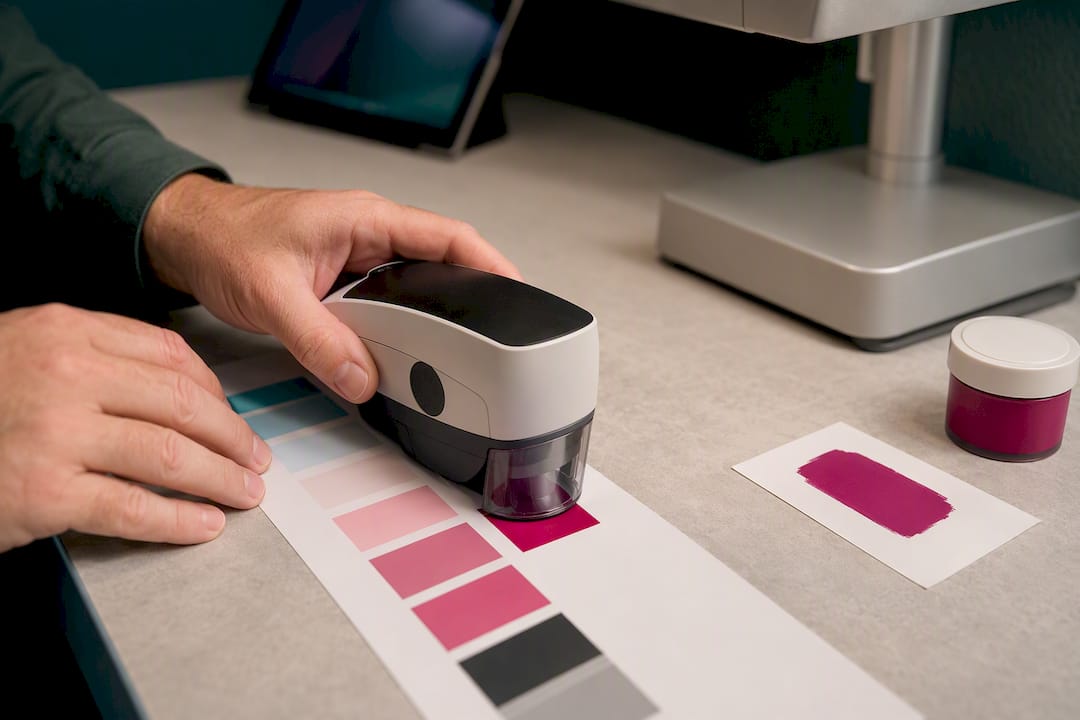
Spectrophotometer readings against a Pantone standard give an objective baseline for each ink batch, rather than relying on eye-matching under shop lighting that can vary from one day to the next. Ink suppliers can formulate to a target Delta E tolerance, giving your converter a numeric standard to hold every batch against instead of a subjective judgment call.
Batch record keeping matters more than most buyers realize. A converter who logs the exact ink formulation, viscosity, and anilox setup used on your first run can replicate those conditions almost exactly on a reorder, months or even years later. Without that record, a reorder becomes a fresh color match attempt, and small differences tend to creep in.
Substrate consistency plays a role too. Kraft paper from different pulp batches can carry slightly different base tones, which shifts how ink colors read once printed. A converter that sources consistent stock and monitors incoming paper batches reduces one more variable in the color chain before ink formulation even enters the picture.
For brands running the same bag design across multiple production cycles per year, this kind of disciplined color management is what separates a bag that looks “close enough” from one that matches the original approved proof every time.
How Gather Packaging delivers consistent color on every run
Gather Packaging manufactures custom paper shopping bags domestically, which keeps quality checks close to production rather than several time zones and a shipping container away. We offer design assistance and prototyping before your artwork reaches the press, so color builds and trap issues get caught early instead of on a live run.
Our proofing process includes physical hand-folded proofs for position and layout, giving buyers a real sample to approve rather than a screen rendering. We work with FSC®-certified stock, recycled content options, and water-based inks for brands that need documented sustainability credentials alongside vibrant, accurate color.
— Taylor
Ready to start your 8-color flexo bag order?
Gather Packaging manufactures custom paper shopping bags domestically in Toronto, which means shorter lead times and fewer supply-chain surprises compared to overseas production runs that depend on ocean freight schedules.
Before reaching out, gather your artwork files (vector format, Pantone colors called out), rough bag dimensions, your preferred substrate and finish, an estimated order quantity, and a target delivery window. Our team offers design assistance and prototyping to work through trap, registration, and color build questions before anything goes to plate, and we’ll walk you through sample approval so you see a physical proof before committing to a full run. Explore our custom paper bag options or visit Gather Packaging directly to start the conversation about your next shopping bag order.
Sources
For deeper technical reading, see how print registration works for operators, how the bag printing process integrates forming and printing, and how flexo compares to offset for packaging buyers weighing print technologies.
Share:
Cut Migration Risk: Water Based Inks for Packaging Buyers
Prevent Reprints: Flexo Plate Thickness Specs for Packaging Buyers