
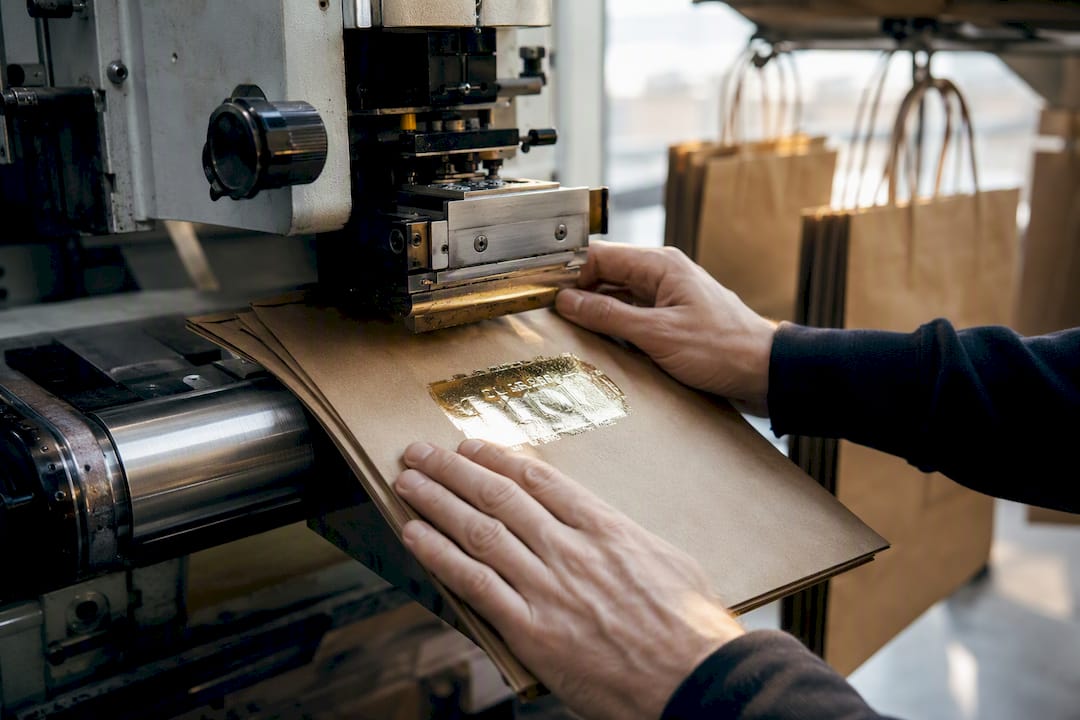
Custom bag pricing runs from roughly $0.15 to $0.50 per unit for promotional paper and non-woven bags, $1 to $4 for cotton or canvas totes, and $2 to $8+ for premium paper bags with foil, ribbon handles, or heavy stock. Leather bags sit in an entirely different tier, often starting at several hundred CAD per piece for custom leather goods. The fastest way to get a real number: send suppliers a finished dieline, target quantity, and print color count before you ask for a quote.
Here’s how the ranges typically break down by category:
- Promotional paper/non-woven bags: $0.15 to $0.50 CAD per unit, MOQ usually 500 to 2,500
- Mid-range cotton/canvas totes: $1.00 to $4.00 CAD per unit, MOQ usually 250 to 1,000
- Premium paper bags or leather goods: $2.00 to $8.00+ CAD per unit for premium paper; leather starts much higher
Key number: Material alone can account for the largest single line item in a bag’s cost, with total unit prices spanning $0.05 to $0.50 or more once printing, handles, and finish are added.
Pro Tip: Ask every supplier to quote three quantity tiers on the same spec sheet. That’s the only way to see how fast your setup fees amortize as volume climbs.
Key Takeaways
Custom bag pricing depends most on material, print complexity, and order volume, and getting a comparable quote requires a finished dieline with target quantity attached.
| Point | Details |
|---|---|
| Ballpark by category | Promotional paper runs $0.15 to $0.50 CAD, totes $1 to $4, premium finishes $2 to $8+. |
| Setup fees amortize fast | A $400 plate fee adds $0.40 per unit at 1,000 pieces but only $0.04 at 10,000. |
| One finish beats three | Stacking foil, embossing, and varnish multiplies cost quickly; pick one signature finish. |
| Send a finished dieline | Suppliers quote accurately only with dimensions, GSM target, color count, and ship-to address. |
| Domestic cuts risk | Gatherpackaging’s Toronto production, FSC® stock options, and pre-production proofs shorten lead times and simplify QA. |
Table of Contents
- What Determines the Price of a Custom Bag?
- How Much Do Different Bag Types Cost in Bulk?
- How Does Order Quantity Change Your Unit Price?
- What Lead Times and Extra Costs Should You Budget For?
- What Should You Send Suppliers for an Accurate Quote?
- Why Domestic Manufacturing Changes Your Cost Risk
- How Gather Packaging Helps You Get an Accurate Quote
- Sources
What Determines the Price of a Custom Bag?
Material and print method drive most of the swing in a quote, but they’re rarely the only factors that move the number. A supplier pricing your bag is really pricing seven or eight separate decisions you’ve made, sometimes without realizing it.
The primary cost drivers show up on almost every quote:
- Material type and GSM (paper weight): heavier stock costs more per square foot and prints more richly
- Bag size and structure: gussets, flat bottoms, and structured bases add material and labor
- Printing method and color count: flexo, offset, or digital each carry different plate and run costs, and every added color usually means another plate
- Handles and hardware: twisted paper, flat paper, rope, or ribbon handles each carry different unit costs
- Surface finishes: matte or gloss lamination, foil stamping, embossing, and spot varnish stack cost quickly
- Lining or reinforcement: internal lining for takeout delivery bags or structural reinforcement for heavier loads
- Packing style: how bags are bundled, cartoned, and palletized for shipment
Beyond those, secondary drivers separate a good quote from a great one: your minimum order quantity, sampling and setup fees, the quality control standard you require, whether production happens domestically or overseas, and the shipping terms attached to the order. A line-item cost breakdown usually shows that decoration and fixed setup costs, not the base bag itself, create most of the gap between a plain bag and a fully custom one.
Pro Tip: Pick one signature finish, not three. Combining foil, embossing, and spot varnish on the same bag can multiply your cost faster than most buyers expect, and the visual return rarely matches the spend.
How Much Do Different Bag Types Cost in Bulk?
A kraft retail bag with one print color runs cheaper per unit than a structured backpack with metal hardware, and the gap between them can be five to ten times the base price. Here’s how the main categories compare at typical Canadian bulk-order tiers.
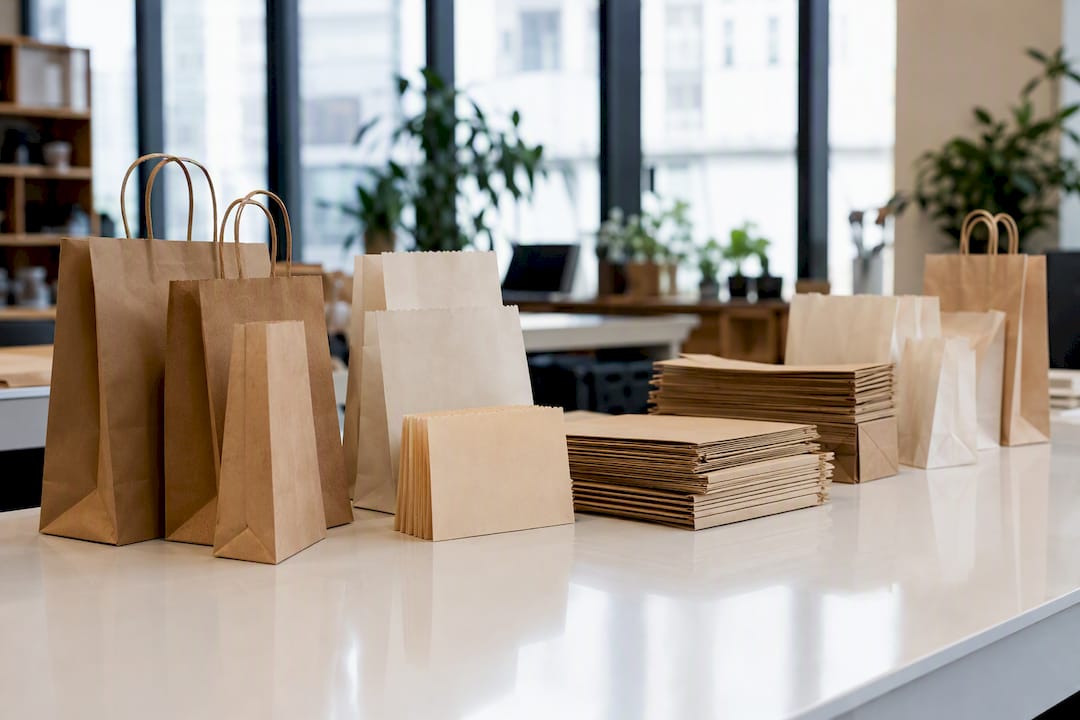
The arithmetic behind those tiers usually comes down to fixed costs spread thinner as volume rises. Say a plate and setup fee runs $400 for a 2-color flexo job. At 1,000 units, that’s $0.40 added to each bag’s unit cost. At 10,000 units, the same $400 adds just $0.04. That single fact explains why suppliers push buyers toward the next quantity break instead of running a small batch twice.
A second example: a premium bag with foil stamping might carry a $600 tooling charge for the foil die on top of standard plates. Spread across 1,500 units, that’s $0.40 per bag. Spread across 6,000, it drops to $0.10. The foil itself doesn’t get cheaper, but its fixed cost does.
Pro Tip: If you’re testing a design at low volume, stick to one print color and a standard bag size. Custom sizing and multi-color runs are exactly where small-batch pricing punishes you most, according to guidance on material and shipping cost drivers.
How Does Order Quantity Change Your Unit Price?
Larger runs lower your per-unit cost because fixed expenses like plates, samples, and setup get divided across more pieces, and factories run more efficiently at scale. The relationship isn’t linear, but the pattern holds across nearly every bag category.
Sample costs deserve a specific callout here. A single prototype often costs more per piece than a bulk unit does, because sample development pulls the same labor and setup as production without the volume to spread it across.
MOQs also apply differently depending on how you structure the order. Many suppliers set MOQs per design or per size, meaning a single order split across three bag sizes might need to hit three separate minimums rather than one combined total. Mixed-case orders sometimes get flexibility once you’re an established account, but expect that flexibility to be earned through repeat volume, not offered on a first order.
What Lead Times and Extra Costs Should You Budget For?
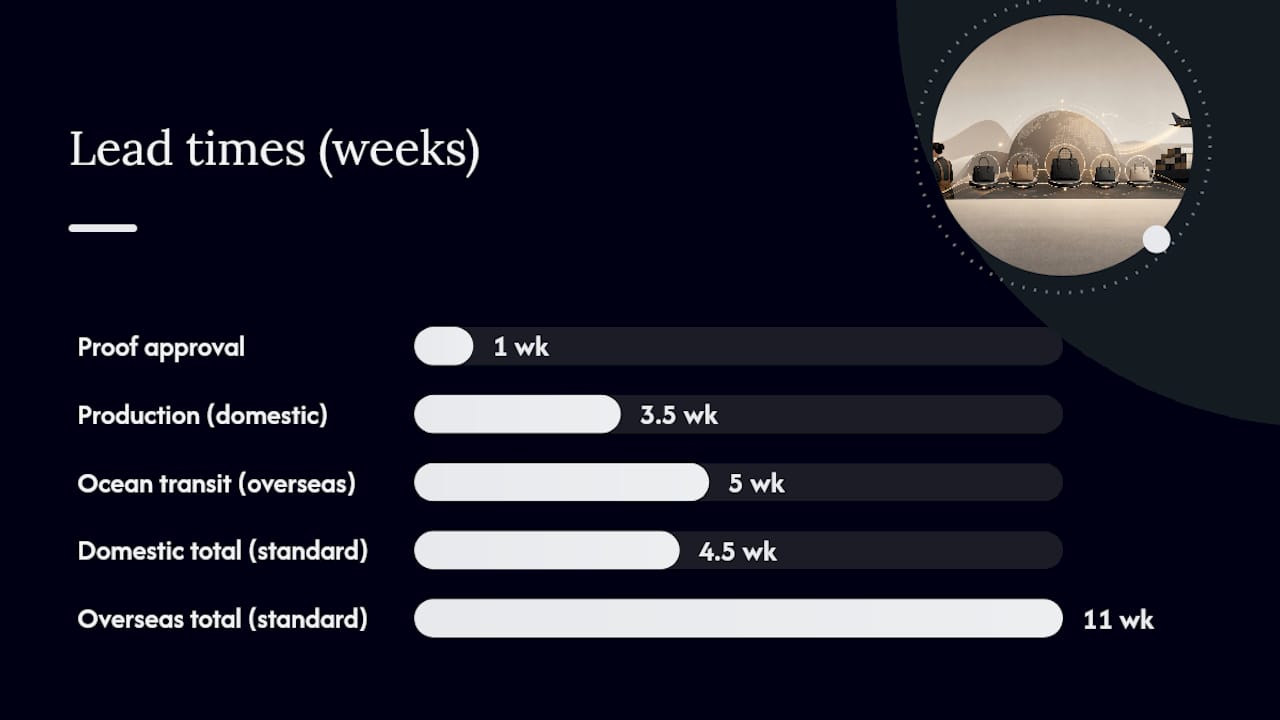
Domestic production typically runs 3 to 6 weeks standard, while overseas orders often stretch to 8 to 14 weeks once ocean freight and customs clearance are added. Rush fees apply almost universally when you compress either timeline, and they tend to hit percentage surcharges on top of unit price rather than flat fees.
Beyond the per-unit price, budget for these episodic costs:
- Sample development: typically $150 to $300 CAD, often applied as credit toward your first bulk order
- Artwork, setup, and plate fees: $200 to $600 CAD depending on color count and print method
- Proof shipping: courier costs for physical proofs before production release
- Packaging and palletizing: carton counts and pallet configuration for freight handling
- QC and inspection fees: third-party inspection if you require it before shipment
- Customs and duties: relevant only when importing from outside Canada
A typical domestic timeline looks like this: one week for proof approval, three to four weeks for production, and a few days for ground freight. Overseas orders add four to six weeks of ocean transit alone before customs clearance even starts.
Pro Tip: Domestic production doesn’t just save time. It cuts the number of places a shipment can stall, which matters most when your bags are tied to a seasonal launch date.
What Should You Send Suppliers for an Accurate Quote?
The most important information to provide suppliers for an accurate quote includes finished dieline, target quantity, and shipping destination. Additional details help refine the estimate but these three are essential.
Your quote request checklist should include:
- Finished dimensions (width, height, gusset depth)
- Material and target GSM
- Handle type (twisted paper, flat, rope, ribbon)
- Print area and total color count
- Desired finishes (matte, gloss, foil, embossing)
- Inside features (lining, pockets, reinforcement)
- Packing count per carton
- Target delivery date and destination
- Estimated annual reorder volume
A short template works well for a first outreach:
“We’re looking for a quote on [bag type], [dimensions], [material/GSM target], [handle type], printed in [X colors] with [finish]. Target quantity is [X] units, packed [X] per carton, delivered to [city/postal code] by [date]. We anticipate reordering [frequency/volume] if this run goes well.”
That last line matters more than it looks. Suppliers price reorder-likely accounts differently than one-off buyers, and mentioning it upfront can shift your first quote before you’ve even placed an order.
Pro Tip: Never send a reference photo alone. Suppliers who quote from vague images end up guessing at GSM and print method, and that guess tends to land on the expensive side.
For buyers deciding how big to make the printed area or how many colors to spec, it helps to review branding ideas for shopping bags before locking a design, since print area decisions made early are hard to walk back once tooling is cut.
Why Domestic Manufacturing Changes Your Cost Risk
Working with a domestic manufacturer shortens lead times, tightens quality control feedback loops, and removes the customs and ocean-freight variables that make overseas landed cost hard to predict. For a Canadian buyer, that difference often shows up less in the unit price and more in how many things can go wrong between order and delivery.
Gatherpackaging manufactures out of Toronto, which gives buyers a few concrete advantages worth checking for in any supplier you’re evaluating:
- Domestic production in Toronto, reducing transit time and customs exposure
- FSC®-certified and recycled paper stock options for sustainability-focused programs
- 8-color flexo printing capability for detailed, vibrant branding
- Design assistance and prototyping before you commit to a full production run
- Pre-production proofs and quality assurance checkpoints before bags leave the facility
A domestic supplier that can show you a physical pre-production proof, a material certificate, and production photos before your order ships gives you far more control over quality than a quote sheet alone ever can.
When you’re vetting any supplier, ask to see those three things directly. A quality-focused production process that includes a proofing stage catches print and material issues before they become a container full of unusable bags.
How Gather Packaging Helps You Get an Accurate Quote
If you’ve made it this far, you already have the spec checklist and the ballpark ranges. The next move is getting a real number from a manufacturer who builds bags domestically instead of managing an overseas supply chain on your behalf.
Gatherpackaging manufactures paper shopping bags in Toronto, which means your quote reflects actual production capacity, not a broker’s markup on someone else’s factory time. Here’s what to do next:
- Send your spec sheet (dimensions, material target, color count, handle type) for a direct quote
- Request a physical sample before committing to a full production run
- Ask for a combined lead-time and landed-cost estimate so you’re comparing apples to apples against other bids
- Flag if you need FSC®-certified or recycled stock, since that changes material sourcing and should be priced upfront
Explore sustainable paper bag options if certified or recycled content matters to your program, or head straight to the custom paper bag product page to start a quote request with your specs in hand.
Author’s View: Negotiation Levers That Actually Move the Number
Consolidating print colors, standardizing bag size across SKUs, and committing to staggered multi-order delivery are the three levers that move price most in practice. A standard handle instead of a specialty one helps too. Each trades some brand flexibility for cost control, so weigh which one matters less to your specific program before you negotiate.
Sources
For deeper cost breakdowns, the Huahao paper bag cost guide covers per-feature pricing in detail, while Baijia’s buyer guide explains hidden cost line items like sampling and QC. For MOQ examples across common specs, see the wholesale pricing and MOQ breakdown.
Share:
Tamper Seals for Bags: A Procurement Guide for Retail Buyers
Domestic vs Offshore Packaging: How to Choose the Right Fit