
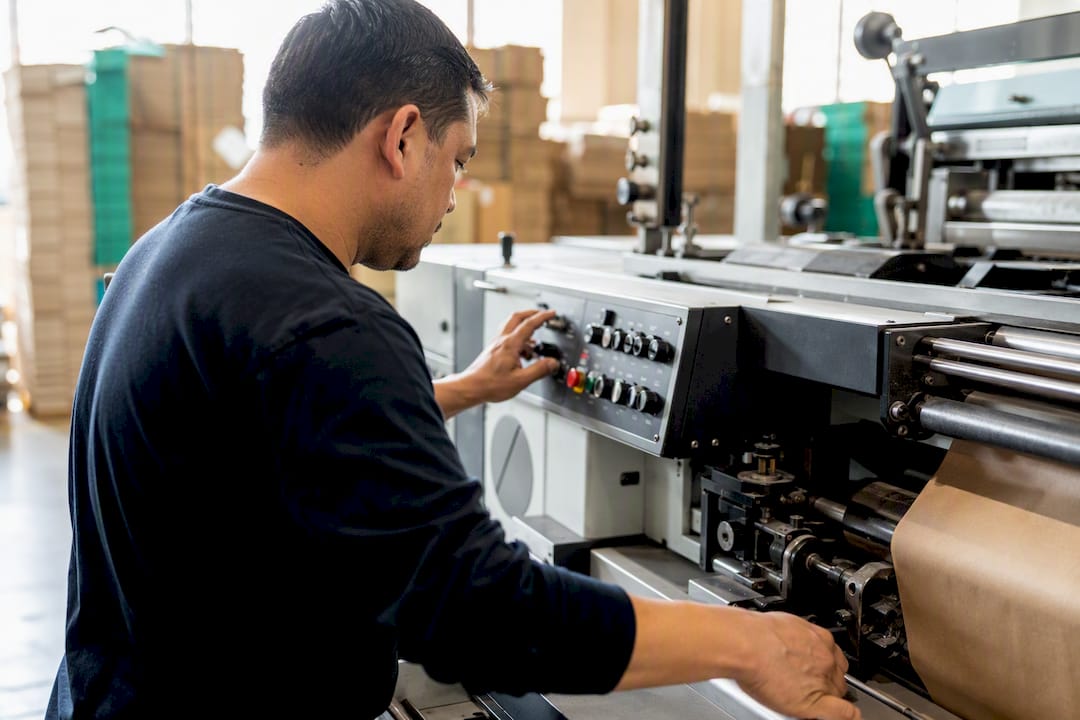
If you’re launching a limited run, working against a tight retail calendar, or need tight quality control on printed paper bags, choose a domestic supplier. If you’re locking in a large, stable-volume order months ahead and can absorb longer lead times, offshore sourcing usually wins on unit price. Everything else is detail. Before you commit either way, run through three checkpoints:
- Run size: Under a few thousand units favors domestic; large stable volumes shift the math offshore.
- Launch deadline: Tight or seasonal windows favor domestic; a deadline months out gives offshore room to work.
- Supply-chain priority: If resilience and quality oversight matter more than the lowest possible unit price, stay domestic.
The rest of this guide breaks down why, with real cost and lead-time tradeoffs.
Key Takeaways
Domestic sourcing wins on speed, quality oversight, and total landed cost for small-to-mid runs, while offshore sourcing wins on unit price only at high, stable volumes.
| Point | Details |
|---|---|
| Compare landed cost, not unit price | Add freight, duty, brokerage, inspection, and carrying cost before ranking any quote. |
| Match lead time to your calendar | Offshore runs 12 to 16 weeks including transit; domestic ships in weeks, protecting tight launch windows. |
| Require documented QA sign-offs | Ask for AQL sampling referencing ANSI/ASQ Z1.4, FSC certificates, and staged inspection approvals. |
| Protect IP before sharing artwork | Sign an NDA and confirm tooling ownership before sending dielines to any supplier. |
| Gatherpackaging fits fast, print-heavy runs | Domestic Toronto production, FSC-certified stock, and 8-color flexo printing suit small-to-mid, quick-turn paper bag orders. |
Table of Contents
- Domestic vs Offshore Packaging: The Side-by-Side Breakdown
- Why Brands Choose Domestic Packaging Manufacturing
- When Offshore Sourcing Makes Sense
- What Does Total Landed Cost Actually Include?
- What Should You Require for Quality Control?
- How Long Do Lead Times and MOQs Really Run?
- How Do Sustainability and IP Protection Compare?
- How Do You Decide Between Domestic and Offshore Suppliers?
- How Gatherpackaging Solves These Tradeoffs
- Frequently Asked Questions
- Sources
Domestic vs Offshore Packaging: The Side-by-Side Breakdown
Here’s how the two options stack up on the factors that actually move a procurement decision:
- Unit cost vs. total landed cost: Offshore often wins on sticker price; domestic frequently wins once freight, duties, and inspection are added in.
- Lead time: Domestic typically ships in weeks; offshore runs 12 to 16 weeks including ocean transit; this compressed schedule is similar to advantages seen in custom shoe manufacturing where domestic production supports tight deadlines.
- MOQ: Domestic suppliers generally offer smaller minimums; offshore mills often require large minimums to justify setup.
- Quality control: Domestic allows in-person visits and faster corrections; offshore relies more heavily on remote inspection.
- Supply-chain risk: Tariffs, port congestion, and geopolitical shifts hit offshore harder.
- Sustainability and certification: Both can offer FSC-certified stock, but domestic paperwork is easier to verify.
- IP protection: Domestic contracts are easier to enforce than cross-border agreements.
Nearshore suppliers sit in between on most of these axes, trading some cost savings for shorter transit and easier communication.
Why Brands Choose Domestic Packaging Manufacturing
For paper shopping bags specifically, domestic manufacturing solves problems offshore mills can’t touch quickly. A supplier down the road (or a short flight away) means:
- Shorter lead times, so a delayed art file doesn’t blow your launch date.
- Lower safety stock requirements, since reorders don’t sit on a boat for a month.
- Easier plant visits and quality checks before a full production run ships.
- Smaller minimum order quantities for testing new SKUs or seasonal designs.
- Faster art and print cycles, especially for detailed 8-color flexo work on kraft or coated stock.
Picture a retailer needing a limited-edition holiday bag redesigned in late Q4. An offshore order placed in September might not clear customs before the promotion ends. A domestic supplier can turn prototypes, adjust the die line, and ship finished bags inside a few weeks. Gatherpackaging builds its production around exactly this scenario: FSC-certified materials, in-house 8-color flexo printing, and domestic prototyping that keeps design iterations fast instead of stuck in transit.
When Offshore Sourcing Makes Sense
Offshore isn’t wrong, it’s just built for a different job. High-volume, stable-design orders are where offshore mills earn their reputation, because domestic flexible packaging manufacturing trades some of that scale economy for responsiveness. Offshore strengths include:
- Lower per-unit pricing once volumes climb into the hundreds of thousands.
- Access to large finishing ecosystems for specialty coatings, foils, or complex structural work.
- Integrated kitting and assembly options that reduce per-piece handling costs.
The tradeoffs are real: longer lead times, higher MOQs, tariff exposure, and cash tied up in deposits months before product arrives. Nearshoring in regions like Mexico often splits the difference, cutting transit time and carbon footprint versus a transpacific shipment while keeping some cost advantage over fully domestic production.
What Does Total Landed Cost Actually Include?
A quoted unit price rarely reflects what a shipment costs by the time it reaches your warehouse. Procurement teams that compare headline prices alone are comparing the wrong number. Add these line items before you decide:
- Ocean or air freight, which fluctuates with fuel prices and container availability.
- Tariffs and duties, which have narrowed the offshore price gap considerably in recent years.
- Customs brokerage and drayage fees.
- Third-party pre-shipment inspection costs.
- Rework or return costs when a shipment fails inspection after it’s already landed.
- Inventory carrying costs on stock that sits for weeks awaiting ocean transit.
Payment timing matters too. Offshore orders typically require a deposit up front and the balance at bill of lading, tying up working capital for months before product ships. Domestic suppliers often offer standard net terms, which eases cash flow considerably. Build an RFP checklist that forces every quote to include freight, duty, brokerage, inspection, and carrying cost. Total cost of ownership, not unit price, is what should drive the final call.
What Should You Require for Quality Control?
Quality control on printed paper bags comes down to documentation and timing, not luck. Before production starts, require:
- A signed sample approval on file.
- Incoming material certificates, including FSC chain-of-custody documentation.
- A production inspection report tied to an AQL sampling plan referencing the ANSI/ASQ Z1.4 standard.
Third-party pre-shipment inspections typically run $300 to $800 per shipment, a small cost against the risk of a rejected container.
Pro Tip: Require a four-step sign-off: prototype, pre-production sample, first-article inspection, and final inspection before the run ships. On every printed bag, check color match against your Pantone reference, conversion accuracy, handle bond strength, and seal and crease integrity.
Offshore QA adds a layer of difficulty. Cross-cultural communication breakdowns between buyer and factory staff can delay corrections by days when a defect surfaces mid-run, a gap domestic suppliers close simply by being reachable in the same working hours.
How Long Do Lead Times and MOQs Really Run?
Domestic paper bag orders commonly ship in a matter of weeks. Offshore orders typically run 12 to 16 weeks once you include ocean transit, a timeline that can wreck a Q4 retail launch if the purchase order goes out even a few weeks late. MOQ floors follow a similar pattern: domestic suppliers often accommodate smaller test runs, while offshore mills tend to require larger commitments to justify setup costs.
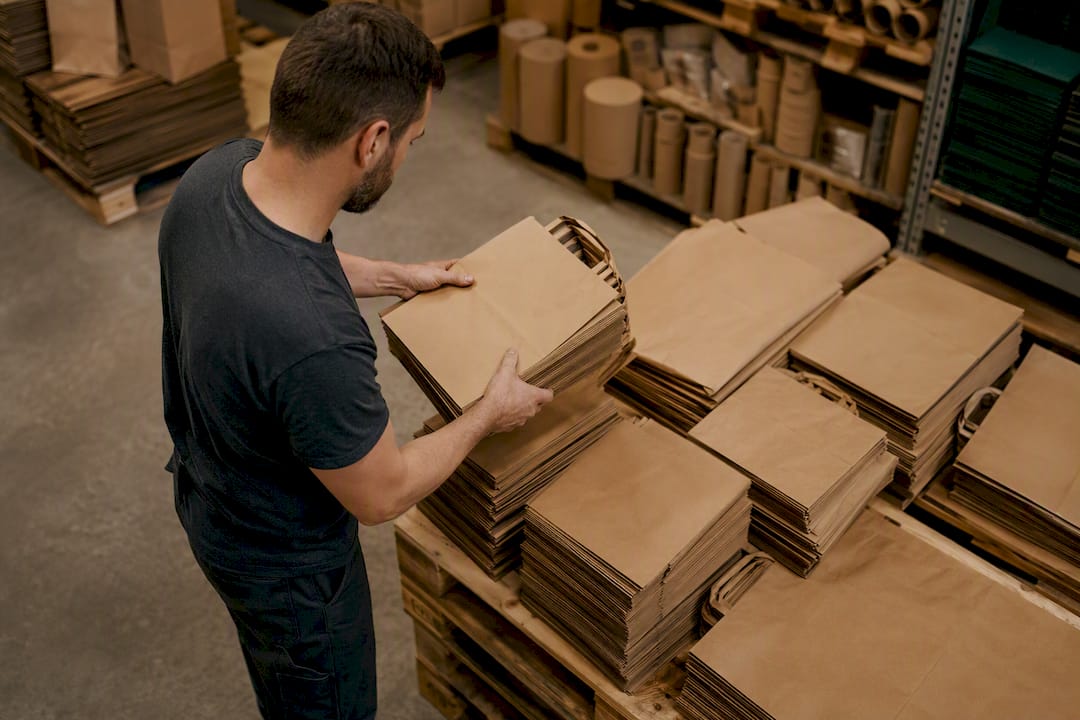
A hybrid approach works well for most retail brands: keep a domestic supplier for fast-moving or seasonal SKUs, and reserve offshore capacity for stable, high-volume baseloads where the lead time is predictable and the design won’t change.
How Do Sustainability and IP Protection Compare?
If sustainability claims appear on your packaging or in your marketing, verify them before you print. Request FSC certificates, material specs, recycled-content documentation, and ink or substrate test results, particularly for water-based ink claims.
On the IP side, get an NDA signed before sharing dielines or artwork, and confirm in writing who owns tooling and prototypes once the relationship ends. WIPO offers useful background on protecting proprietary designs across borders. Domestic sourcing simplifies both problems: certificates are easier to verify, and contracts are easier to enforce when your supplier is a phone call away instead of a time zone away.
How Do You Decide Between Domestic and Offshore Suppliers?
Run your decision through a short checklist:
- Where does your run size fall relative to typical domestic and offshore MOQ floors?
- How firm is your launch deadline, and does it leave room for 12 to 16 weeks of offshore transit?
- Can your cash flow absorb an offshore deposit-and-balance payment structure?
- Does the job require finishing capabilities only available at scale?
- How much does sustainability documentation and IP protection matter for this SKU?
Then ask every supplier on your shortlist:
- What’s your typical sample turnaround time?
- What’s your MOQ, and is it flexible for a test run?
- What are your standard payment terms?
- What QA documentation do you provide as standard, and what costs extra?
- Can you provide FSC certificates and material specs on request?
Walk away from evasive answers on QA, suppliers with no formal sample approval step, vague lead-time ranges, MOQ promises that seem too flexible to be real, or any supplier unwilling to sign an NDA before sharing your artwork.
How Gatherpackaging Solves These Tradeoffs
Gatherpackaging was built around the exact criteria this guide walks through. Domestic production out of Toronto keeps lead times short, FSC-certified materials and recycled content cover sustainability documentation, and in-house 8-color flexo printing handles detailed retail branding without waiting on an offshore print queue.
- Sample and prototype requests move through a documented approval process before full production starts.
- Turn top, serrated top, and tamper-resistant bag styles are all customizable in size and print.
- Small-to-mid runs and quick-turn seasonal orders are where domestic production earns its keep.
If you’re weighing a landed-cost worksheet against a domestic quote, that comparison is worth running before you commit to either path.
A Procurement Perspective on Sourcing Decisions
Most sourcing regrets I’ve seen trace back to comparing unit price alone. Brands that build freight, duty, and inventory carrying cost into the decision upfront end up with fewer launch delays and steadier inventory.
If You Want Domestic Paper Shopping Bags, Here’s Where to Start
Comparing quotes side by side only works once you have real domestic numbers to weigh against an offshore estimate. Gatherpackaging gives brand owners and procurement teams that comparison directly: a Toronto-based production line, FSC-certified paper stock, and 8-color flexo printing that turns around test runs in weeks rather than months.
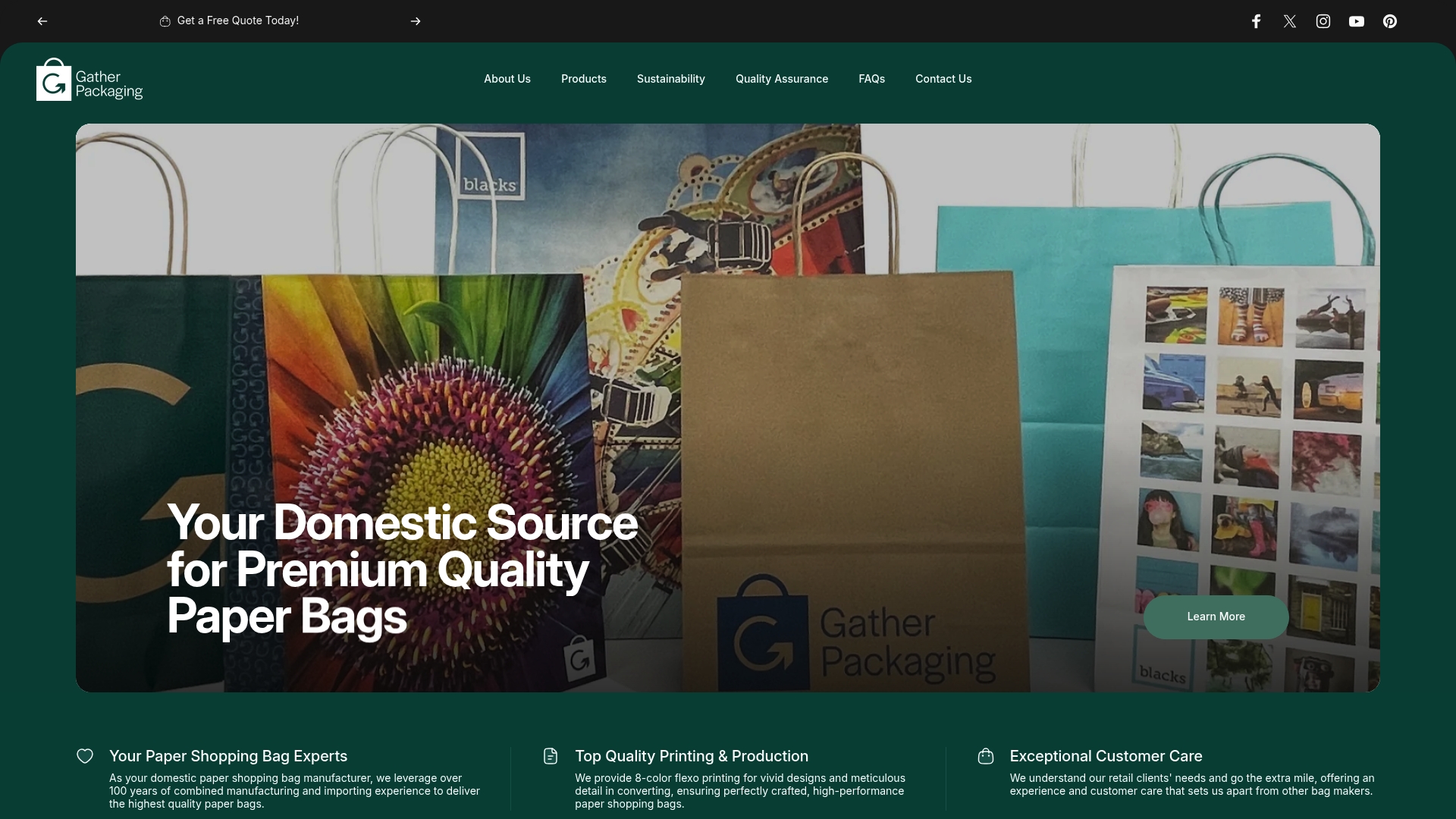
If a seasonal launch, a limited-edition SKU, or a print-heavy retail bag is on your calendar, request samples or a quote through Gatherpackaging’s domestic paper bag manufacturing page and ask for a landed-cost worksheet alongside it. Comparing that worksheet against an offshore quote, line by line, is usually the fastest way to see which option actually wins for your next order.
Frequently Asked Questions
Is domestic packaging always more expensive than offshore? Not once you factor in total landed cost. Offshore often wins on headline unit price, but freight, tariffs, inspection, and inventory carrying costs frequently close or reverse that gap, especially on smaller runs.
What MOQ should I expect from a domestic paper bag supplier? Domestic suppliers like Gatherpackaging generally offer lower minimums than offshore mills, making them a better fit for test SKUs, seasonal designs, or limited-edition retail runs.
How much does a third-party inspection cost for an offshore shipment? Typical pre-shipment inspections run $300 to $800 per shipment, a cost worth budgeting into any offshore quote before you compare it against a domestic price.
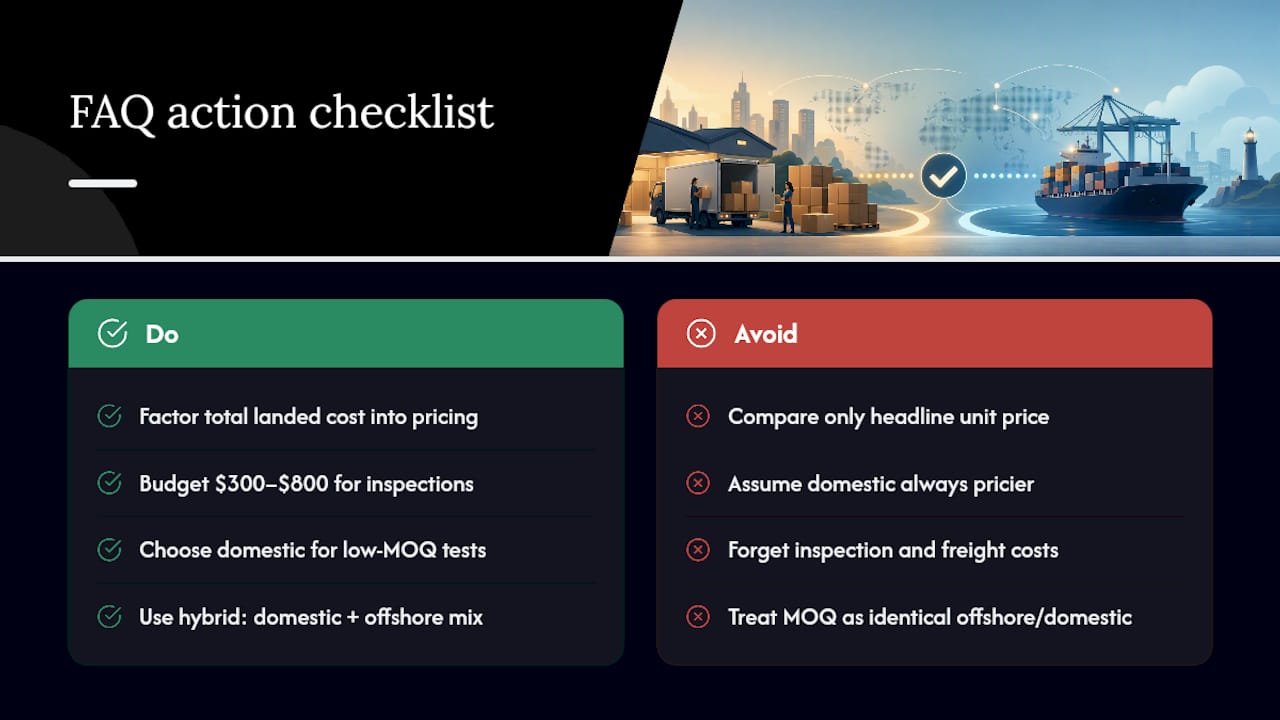
Can I mix domestic and offshore suppliers? Yes. A hybrid approach, domestic for fast-moving or seasonal SKUs and offshore for stable, high-volume baseloads, is a common way to balance cost against flexibility.
Sources
- Domestic vs Offshore Packaging: 2026 Tariff Math at Each MOQ | PackOasis Blog
- Why Domestic Flexible Packaging Manufacturing Is a Supply Chain Decision, Not Just a Sourcing One - Interstate Packaging
- Nearshoring vs Offshoring Packaging: Which Is Better? | Pactap
- Packaging Procurement Strategy: Steps, Risks, and Sourcing | Arkay Packaging
Share:
Custom Bag Pricing for Buyers: CAD Ranges and Quote Checklist
Choosing the Right Paper Bag Handles for Retail Packaging