
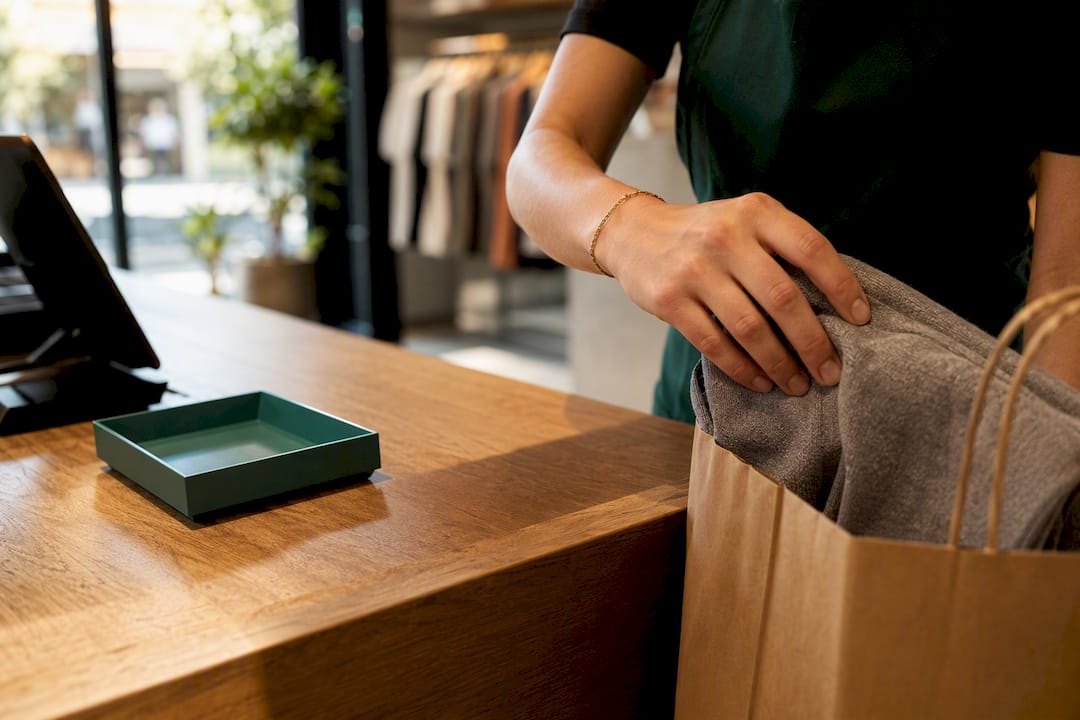
For most brand led retailers, checkout counters, and gift shops, the switch to paper bags is the right call now, especially for dry goods where print quality and shelf appeal matter. Keep plastic or heavier poly alternatives only where wet strength, extreme load weight, or razor-thin margins make paper impractical. Canada’s federal ban on single use plastic checkout bags has already pushed many retailers past the decision point. The sections below cover the benefits, the environmental trade offs, and the operational steps to get it right.
TL;DR:
- Reusing thicker paper bags with sturdy handles can significantly improve lifecycle climate impacts over single-use plastic options.
- Local recycling access and proper reuse practices make paper bags more environmentally advantageous than plastic in many retail environments.
- For dry retail products, mid-weight kraft paper with appropriate handle styles offers a cost-effective, visually appealing alternative to plastic bags.
- Foodservice bags require food-safe, grease-resistant coatings, and testing samples ensures they meet safety and quality standards before large orders.
- Clear operational planning and early testing help retailers avoid disruptions, with domestic manufacturers providing faster lead times and quality control.
Table of Contents
- Top Business Benefits of Switching to Paper Bags
- What Does the Environmental Research Actually Show?
- Operational Considerations: Cost, Strength, and Foodservice Rules
- How to Switch to Paper Bags Without Disrupting Operations
- How Gather Packaging Makes the Switch Low-Risk
- Why the Switch to Paper Bags Isn’t a One-Size Decision
- Ready to Switch? Talk to Gather Packaging About Custom Paper Bags
- Sources
- FAQ
Top Business Benefits of Switching to Paper Bags
A printed kraft bag does something a plastic bag never will: it turns your checkout counter into a walking billboard. Retailers who move to paper often see the switch pay for itself in brand perception alone, because an 8-color flexo print with a clean logo reads as premium in a way that thin plastic film simply cannot match.
There’s also a compliance angle that’s no longer optional for many businesses. The Single-use Plastics Prohibition Regulations prohibit the manufacture, import, and sale of single-use plastic checkout bags under SOR/2022-138. Retailers still relying on plastic checkout bags in categories covered by the regulation are operating in a shrinking window, and paper sidesteps that legal exposure entirely.
Beyond compliance, the customer facing benefits stack up:
- Perceived value: shoppers associate a sturdy paper bag with a higher quality retail experience, even when the product inside is identical.
- CSR signaling: eco-conscious shoppers notice packaging choices, and a visible switch away from plastic supports your public sustainability messaging.
- Curbside recyclability: paper bags fit into standard municipal recycling streams far more easily than mixed plastic film.
- Lower litter liability: fewer complaints from neighboring businesses and municipalities about wind-blown bags snagging on fences and storm drains.
The honest trade off is unit cost and moisture sensitivity. Paper generally costs more per bag than thin plastic, and it doesn’t hold up to standing water or condensation the way poly does. Both problems have practical fixes, covered in the operational section below.
Pro Tip: Run a side-by-side cost comparison using your actual average basket size, not a generic per-unit price. A heavier grade paper bag that survives one trip often replaces two flimsy plastic bags, which changes the real math.
What Does the Environmental Research Actually Show?
Paper is not automatically the greener choice in every category, and pretending otherwise does a disservice to procurement teams trying to make a defensible decision. Lifecycle assessment work is clear on one point: production footprint and end of life impact pull in opposite directions, and which one matters more depends on your waste infrastructure and how the bag gets used.
A meta-analysis from the Lifecycle Initiative found that single-use plastic bags generally carry lower manufacturing climate impacts than paper, but paper contributes substantially less to litter and marine pollution. The outcome shifts based on reuse rates and how the bag is disposed of at end of life.
That same body of research points to a related finding worth taking seriously: some comparative LCA work shows paper bags can register higher climate impacts than certain plastic alternatives unless they’re reused multiple times or manufactured using low-carbon energy. A paper bag used once and thrown away doesn’t automatically beat plastic on every metric.
Here’s what actually moves the needle for most retailers:
- Local recycling access matters more than the material itself. If your municipality recycles fiber well, paper’s end-of-life advantage is real and immediate.
- Reuse changes everything. A sturdy handle bag customers reuse for shopping trips or storage shifts the lifecycle math in paper’s favor fast.
- Litter and marine impact are where paper consistently wins, and that’s the impact most visible to your customers and local community.
For a retailer weighing reputational risk against a modest production footprint difference, the end-of-life and litter advantages of paper typically carry more practical weight than the manufacturing numbers alone.
Operational Considerations: Cost, Strength, and Foodservice Rules
Unit cost on a custom paper bag comes down to four levers: paper grade (measured in gsm), handle style, number of print colors, and order volume. Heavier gsm stock and multi-color printing raise the per-unit price, but bulk orders bring that cost down fast, and most manufacturers offer tiered pricing once you clear a minimum order quantity.
Strength and moisture resistance are where a lot of switches go wrong. A bag that tears at the till or turns to mush from a wet produce bag destroys the customer experience faster than any plastic alternative would. Match the spec to the job:
- Standard dry retail: mid-weight kraft with twisted paper or flat handles handles most apparel, gift, and general merchandise loads.
- Heavier or bulkier items: step up gsm and consider reinforced bottoms or rope handles rated for higher weight capacity.
- Moisture exposure: laminated or coated interiors resist grease and condensation without sacrificing recyclability in most cases.
- High-security retail: tamper-resistant closures matter for pharmacy, cannabis, or high-value goods.
If you’re evaluating kraft paper grades for the first time, grammage and print surface finish are the two specs worth understanding before you request quotes.
Foodservice is the one category where paper bags need extra scrutiny. Takeout delivery bags require food-safe, grease-resistant coatings, and not every coating is compostable or recyclable, so confirm both compliance and end-of-life claims before committing to a supplier.
Pro Tip: Order physical samples before committing to a production run. A bag that looks fine in a spec sheet can still fail a real-world handle-pull test.
Domestic manufacturers cut weeks off lead times compared with overseas sourcing, and shorter supply chains make it easier to catch a quality issue before it reaches ten thousand units.
How to Switch to Paper Bags Without Disrupting Operations
- Pilot with one high-visibility SKU. Pick a product line where customers will notice the new bag, and order a modest sample run before committing to full inventory.
- Test under real conditions. Run wet-load and heavy-load tests, check how the bags handle at the till, and confirm they store flat without crushing.
- Train staff and prep signage. Give cashiers a short script explaining the change, and post simple signage so customers understand why the bag looks different.
- Build a transition inventory plan. Phase out remaining plastic stock rather than discarding it, and set a reorder cadence that accounts for your new supplier’s lead time.
- Track results for the first 60 to 90 days. Watch for bag failure rates, customer comments, and whether actual cost per bag matches what you budgeted.
How Gather Packaging Makes the Switch Low-Risk
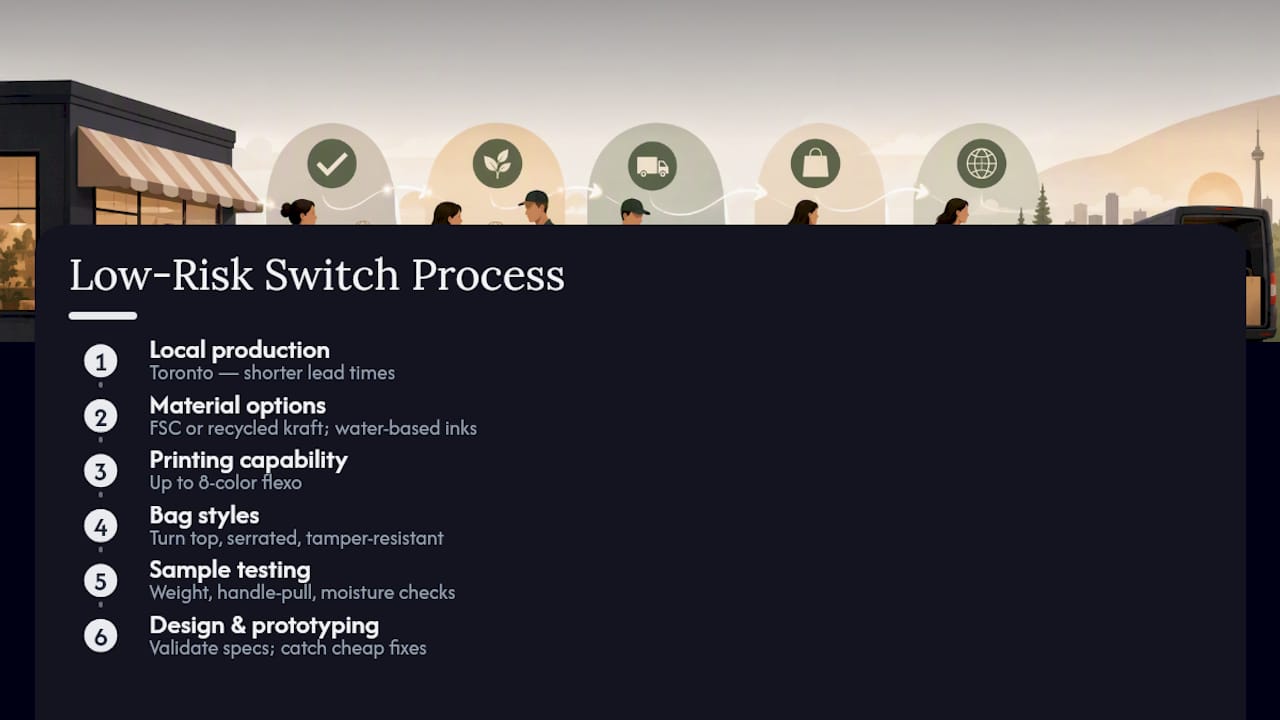
Gatherpackaging manufactures paper shopping bags domestically in Toronto, which keeps lead times shorter and quality control tighter than sourcing overseas. Retailers can choose FSC-certified kraft, recycled-content papers, water-based inks, and up to 8-color flexo printing, with turn top, serrated top, and tamper-resistant styles available.
Before finalizing an order, request a weight-capacity test, a handle-pull test, and a moisture exposure check on your sample run. Gatherpackaging’s design assistance and prototyping process helps procurement teams validate specs before committing to production volume, catching problems while they’re still cheap to fix.
Why the Switch to Paper Bags Isn’t a One-Size Decision
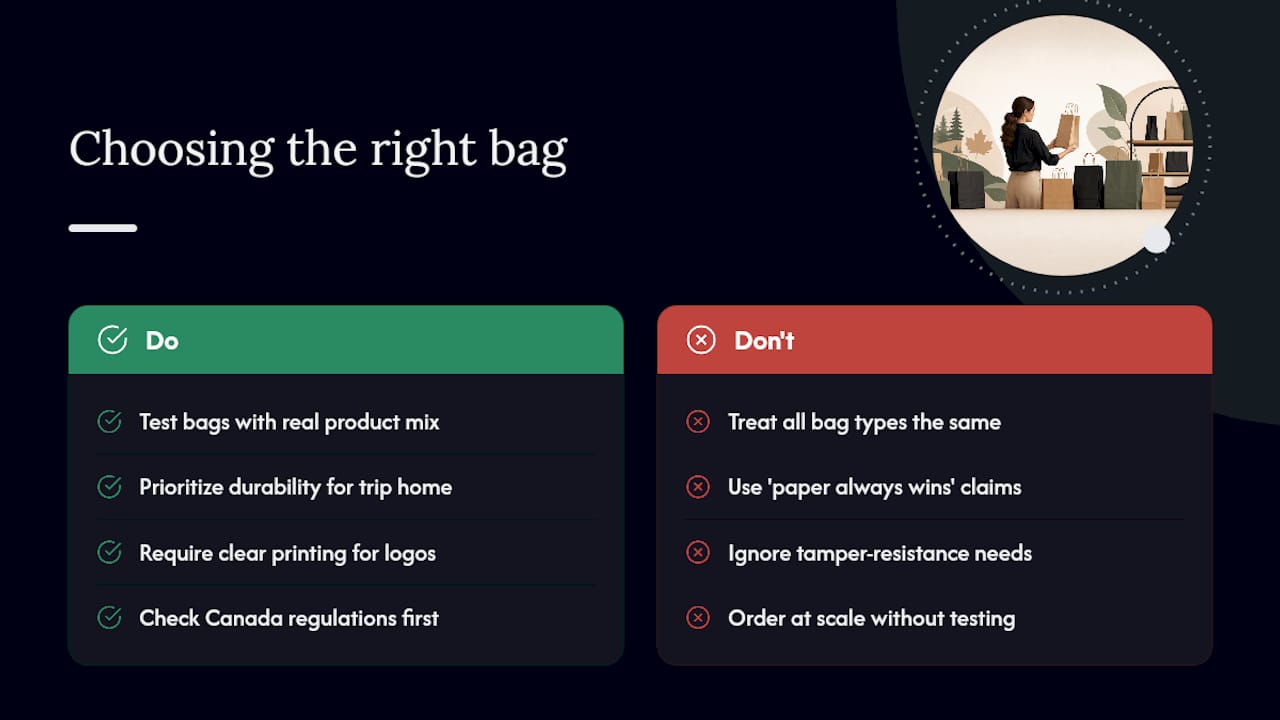
The research doesn’t support a blanket “paper always wins” claim, and any guide that tells you otherwise is oversimplifying lifecycle science to sell a product. What it does support is a narrower, more useful conclusion: for dry, brand-forward retail, paper’s litter reduction, recyclability, and print value stack up in its favor, and Canada’s regulatory direction makes the decision easier by removing plastic checkout bags from the table for many categories.
Where conventional advice falls short is treating this as an environmental purity test instead of an operational one. Procurement teams don’t need a perfect bag. They need one that survives the trip home, prints their logo cleanly, and doesn’t trigger a compliance headache. Prioritize testing your actual product mix against real bag specs before you order at scale. A tamper-resistant bag for a boutique and a takeout bag for hot food have almost nothing in common, and treating them the same is how switches go wrong.
— Taylor
Ready to Switch? Talk to Gather Packaging About Custom Paper Bags
Gatherpackaging manufactures custom paper shopping bags domestically, which means shorter lead times and closer quality control than most overseas suppliers can offer. Product lines include turn top, serrated top, and tamper-resistant styles, built with FSC-certified kraft, recycled content, and water-based inks for retailers who need compliance-friendly packaging without sacrificing print quality.
Starting the switch is straightforward: request a sample run, review handle and grammage options with our team, and get pricing based on your order volume and timeline. If sustainability certifications and material sourcing are the deciding factor for your business, review the sustainable paper bag options available now. For teams ready to move on specs and quantities, browse custom printed kraft paper bags and request a quote directly.
Sources
- Canada
- Single-use Plastics Prohibition Regulations (SOR/2022-138) - Justice Laws Website
- Single-use plastic bags and their alternatives — Lifecycle Initiative (meta-analysis)
- Comparative LCA study — Clemson / CUDP
FAQ
Why Is Everyone Switching to Paper Bags?
Regulatory pressure is the biggest driver. Canada’s Single-use Plastics Prohibition Regulations prohibit plastic checkout bags in many categories, and paper offers recyclability and lower litter impact that customers notice and respond to.
When Did Canada Get Rid of Plastic Bags?
The Single-use Plastics Prohibition Regulations were published on June 22, 2022, with the sale of many listed items, including checkout bags, prohibited starting December 20, 2023.
What Are the Disadvantages of Using Paper Bags?
Paper bags typically cost more per unit than plastic and lose strength quickly when wet. Some comparative studies also find paper carries a higher production climate impact than certain plastic alternatives unless reused multiple times.
Why Don’t Grocery Stores Use Paper Bags Anymore?
Many grocery retailers shifted to plastic decades ago for lower unit cost and better wet-load performance with items like produce and frozen goods. That’s changing again as plastic checkout bag bans expand and grocers reassess paper with reinforced bottoms and coated interiors for wet resistance.
How Do I Choose the Right Paper Bag Specs for My Store?
Match paper grade, handle type, and any coating to your product weight and moisture exposure. Retailers can request weight-capacity and handle-pull testing on sample runs before committing to a full production order.
Share:
From $900 to $0.018 Per Bag: Print Coverage Cost for Packaging Buyers
Buyers: Win Sustainable Packaging RFPs With 3 Mandatory Evidence Packs