
TL;DR:
- Reusing paper shopping bags extends their environmental benefit and reduces waste. High-quality bags with reinforced handles can last up to 43 reuse cycles. Creative applications include organization, art, and gift wrapping, maximizing each bag’s lifecycle.
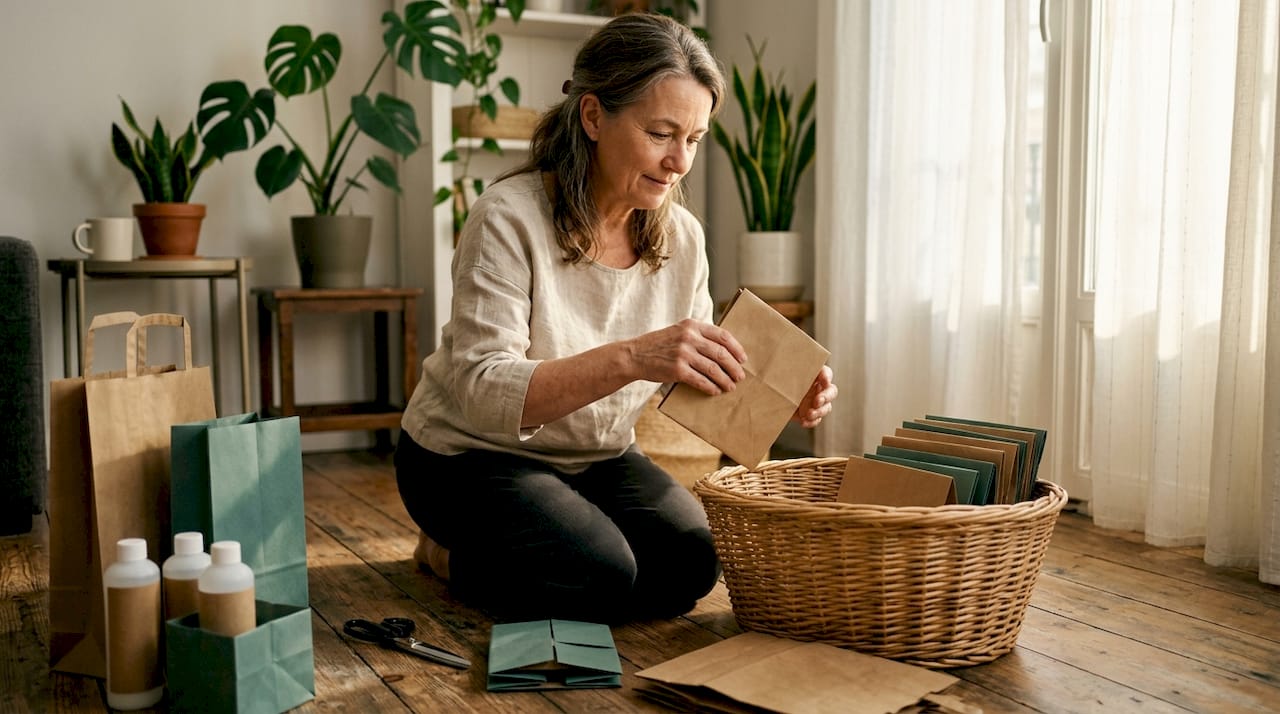
Paper shopping bags are one of the most underused sustainable materials in any home or office. Most people recycle them after a single trip, but that single use barely scratches the surface of what these bags can do. Creative shopper bag uses range from drawer organizers and wall art to gift wrap and garden weed barriers, and each additional use extends the bag’s lifecycle and reduces its environmental footprint. Gatherpackaging manufactures paper shopping bags in Toronto, Canada, using FSC®-certified kraft paper and water-based inks, which makes them well suited for repurposing without releasing harmful residues.
1. Creative shopper bag uses for home organization
Paper bags make surprisingly effective organizers. The kraft fiber structure holds its shape under moderate weight, and the flat panels fold cleanly into dividers, bins, and document holders.
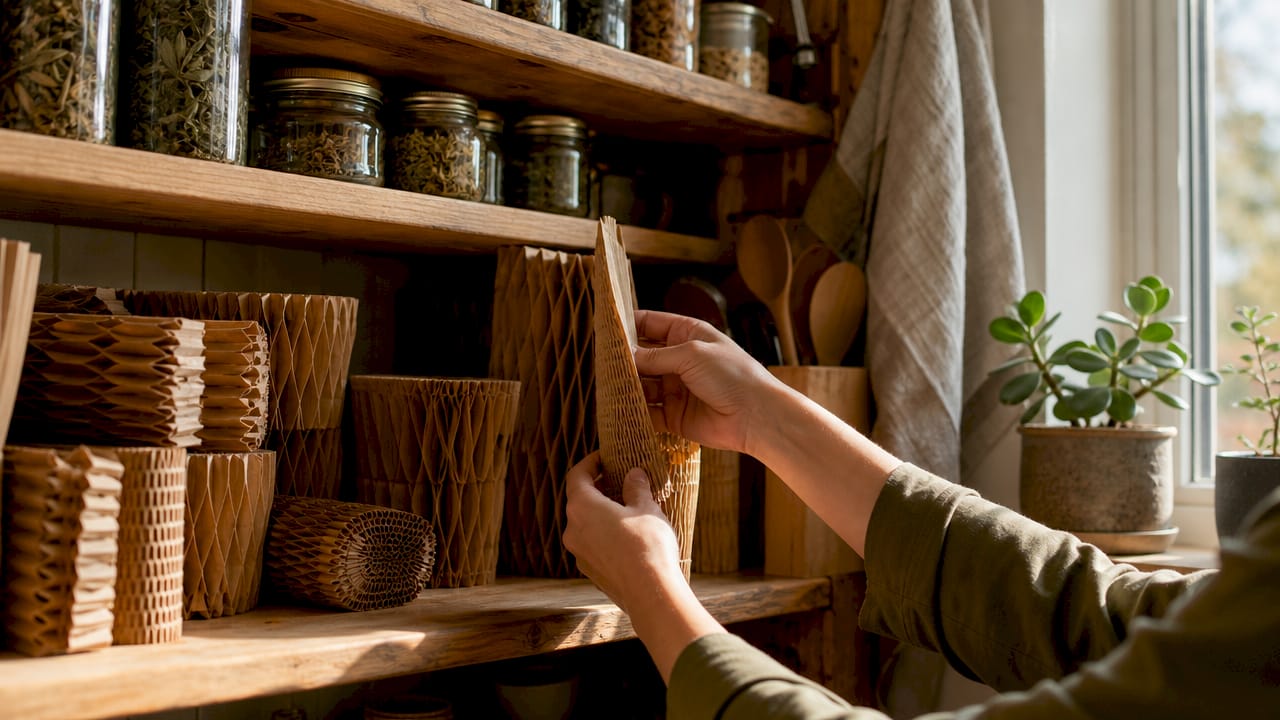
Drawer dividers: Fold a paper bag panel accordion-style, then cut it to fit your drawer width. A single bag yields two to three dividers in 15–30 minutes. Secure the folds with a glue stick and the divider stays put without any hardware.
Storage bins: Stack two or three bag layers together and coat them with decoupage medium or fabric stiffener. Layering and coating paper bag sheets creates a composite that resists collapse far better than a single layer. Let each coat dry fully before adding the next, and the finished bin holds pens, cables, or small tools without buckling.
Desk organizers: Cut the top third off a bag, fold the cut edge down twice to create a reinforced rim, and you have a document holder. Stand two or three side by side on a shelf for a tidy, free-standing filing system.
Pro Tip: Apply two coats of fabric stiffener to any paper bag organizer and let it dry overnight. The result is rigid enough to hold a full stack of letter-size documents without sagging.
Repurposing before recycling also matters environmentally. Every additional use delays the bag’s entry into the recycling stream, which conserves the energy that processing requires.
2. Wall art and decorative crafts from paper bags
Paper bags produce a textured, earthy material that works well for wall art, journaling, and decorative panels. The technique requires almost no supplies and costs next to nothing.
Start by dampening the bag with water, then scrunch it firmly into a ball. Smooth it back out and repeat two or three times. Applying hair conditioner to the damp, scrunched paper relaxes the fibers and produces a supple, leather-like texture. That texture holds paint, ink, and collage elements far better than flat paper does.
Key craft applications include:
- Textured wall panels: Paint the treated paper with acrylics, layer torn pieces onto a canvas with matte medium, and seal with a clear coat. The result looks like aged leather or handmade paper.
- Handmade journals: Cut treated sheets to size, stack them, and bind with a simple pamphlet stitch using waxed thread. The conditioned fiber is durable enough to withstand daily handling.
- Gift tags and cards: Cut small rectangles, stamp or draw on them, and punch a hole for ribbon. A single bag yields dozens of tags at zero cost.
- Collage backgrounds: Tear the bag into irregular pieces and layer them onto poster board with gel medium for a mixed-media base.
Pro Tip: After scrunching and conditioning, press the paper flat under a heavy book for two hours before painting. The surface becomes more even and accepts watercolor washes without warping.
The cost of supplies for this type of project runs $0–$5, which makes it one of the most accessible upcycled bag uses available.
3. Eco-friendly gift wrapping and basket filling
Standard gift wrap is single-use by design. Paper bags offer a reusable, recyclable alternative that often looks more considered than off-the-shelf wrapping paper.
Cut a bag along its seams to produce a large flat sheet. The kraft surface takes rubber stamps, watercolor washes, and marker drawings well. Fold it around a gift box the same way you would standard wrap, and finish with twine or a fabric ribbon. The result is both personal and plastic-free.
For gift baskets, hand shredding produces the best filler material. Hand shredding paper bags yields thicker, more resilient strips than a machine shredder does. The thicker strips hold their volume in a basket and create the layered, boutique look that tissue paper often fails to achieve.
Personalized gift tags cut from the bag’s flat panels complete the presentation. Write directly on the kraft surface with a fine-tip marker or stamp with an ink pad. The natural brown color pairs well with greenery, dried flowers, or wax seals.
4. Multifunctional uses for everyday carry and travel
A well-made paper shopping bag handles more than groceries. Reinforced kraft bags with twisted paper or flat ribbon handles carry lunch boxes, gym gear, craft supplies, and beach items without tearing under normal load.
Practical everyday uses include:
- Lunch carrier: A medium-sized bag with a flat bottom holds a standard lunch container, a water bottle, and a snack. Fold the top down twice to close it securely.
- Craft supply tote: Sort materials by project into separate bags. Label each bag with a marker and stack them on a shelf for easy access.
- Travel organizer: Pack shoes, toiletries, or electronics accessories into separate bags inside a suitcase. The bags compress flat when empty and add almost no weight.
- Plant bed weed barrier: Lay flattened bags between garden rows, overlap the edges by several inches, and cover with mulch. The paper suppresses weeds and breaks down into the soil over one growing season.
The key variable is bag construction. A bag made from heavy kraft paper with reinforced handles and a glued flat bottom survives repeated loading far better than a lightweight single-ply bag. Gatherpackaging’s premium shopping bag features include reinforced handles and multi-ply kraft construction, which directly supports multiple reuse cycles.
Pro Tip: Store a folded paper bag inside your car or backpack as a backup carrier. A quality kraft bag folds flat to the size of a paperback book and weighs almost nothing.
5. Environmental impact: why reuse frequency matters
The environmental case for reusing paper bags rests on a specific number. An unbleached paper shopping bag needs 43 uses to reach environmental parity with a low-density polyethylene plastic bag across all impact indicators. That benchmark reflects the energy and water used in paper bag production.
That number is not a reason to avoid paper bags. It is a reason to reuse them as many times as possible before recycling. Each creative or practical reuse counts toward that total and improves the bag’s overall environmental performance.
Lifecycle assessments confirm that paper bags have a lower climate impact than bio-based and fossil-based plastics when reused adequately. The critical variable is reuse frequency, not the material itself.
Bag construction quality determines how many reuse cycles are realistic. Kraft paper bags made from strong fibers can last up to 43 cycles, equivalent to 860 lifts at 16 kg each. That durability potential makes high-quality bags a genuinely better environmental choice, provided customers actually reuse them.
Printing method also affects end-of-life options. Water-based and soy-based inks on paper bags do not prevent recycling. Bags printed with these inks can enter standard paper recycling streams after their useful life ends. Gatherpackaging uses water-based inks across its product line, which keeps disposal options open for every bag it produces. For a deeper look at how paper compares to plastic across the full production cycle, the paper vs. plastic emissions breakdown on Gatherpackaging’s site covers the lifecycle data in detail.
Retailers can support better reuse behavior by printing care and reuse guidance directly on the bag. A simple printed message reminding customers to reuse the bag before recycling costs nothing extra and measurably extends average bag life.
Key Takeaways
The most effective way to reduce a paper bag’s environmental footprint is to reuse it as many times as possible before recycling, with quality construction making that goal achievable.
| Point | Details |
|---|---|
| Reuse frequency is the key metric | A paper bag needs 43 uses to reach environmental parity with a plastic bag. |
| Structural reinforcement extends life | Decoupage or fabric stiffener turns single-layer paper into a durable composite organizer. |
| Fiber treatment unlocks craft uses | Dampening, scrunching, and conditioning paper creates a leather-like texture for art projects. |
| Hand shredding beats machine shredding | Hand-torn strips are thicker and hold more volume in gift baskets than machine-cut filler. |
| Bag quality determines reuse potential | Heavy kraft construction with reinforced handles supports the most reuse cycles per bag. |
What I’ve learned from watching bags get thrown away too soon
The 43-use benchmark surprised me the first time I read it. Most people I know recycle a paper bag after one or two uses and feel good about it. The math says that habit barely moves the needle environmentally. The real gain comes from treating each bag as a material with a long useful life, not as a disposable container that happens to be recyclable.
What I find most useful is separating bags by construction quality the moment they come into the house. A heavy kraft bag with a flat bottom and twisted handles goes into a dedicated reuse pile. A thin single-ply bag with a simple cut handle goes directly into the recycling bin, because it will not survive enough reuse cycles to justify storing it. That one habit changes how many bags actually earn their environmental keep.
The craft applications are more practical than they sound. A conditioned paper bag panel genuinely looks and feels different from flat kraft paper. The scrunched texture holds paint in a way that produces results you cannot fake with standard materials. I have seen people spend money on specialty art papers that perform no better than a treated grocery bag.
The organizing uses are where I see the most skepticism, and the most converts. People assume paper will collapse under the weight of office supplies or kitchen tools. A two-coat decoupage treatment changes that assumption fast. The finished organizer is rigid, wipe-clean, and costs nothing. That combination is hard to argue with.
The broader point is that creative reuse is not a compromise. It is the behavior that makes paper bags actually deliver on their environmental promise.
— Taylor
Gatherpackaging’s paper bags are built for more than one trip
Gatherpackaging manufactures custom kraft paper bags in Toronto, Canada, using FSC®-certified materials, recycled content, and water-based inks. Every bag is built for repeated use, with reinforced handles and multi-ply kraft construction that holds up through multiple reuse cycles. Custom 8-color flexo printing lets brands add messaging, care instructions, or reuse prompts directly to the bag surface. If you are sourcing paper shopping bags for retail or foodservice and want bags that customers will actually reuse, contact Gatherpackaging to discuss your specifications and production requirements.
FAQ
How many times should you reuse a paper bag?
An unbleached paper bag needs at least 43 uses to match the environmental performance of a plastic bag. Reusing it for organization, carrying, or crafts before recycling counts toward that total.
Can you recycle paper bags printed with colored ink?
Paper bags printed with water-based or soy-based inks are fully recyclable in standard paper streams. The ink type does not contaminate the recycling process.
What is the best way to make a paper bag more durable for reuse?
Coating paper bag panels with decoupage medium or fabric stiffener creates a layered composite that resists tearing and collapse. Two coats applied and dried overnight produce the most durable result.
Are paper bags better for the environment than plastic bags?
Lifecycle assessments show paper bags have a lower climate impact than plastic bags when reused adequately. The environmental advantage depends on reuse frequency, not the material alone.
What paper bag crafts work best for beginners?
Gift tags, drawer dividers, and hand-shredded basket filler are the easiest starting points. Each requires only scissors, a marker, and the bag itself, with no special tools or skills needed.
Share:
Packaging Prototyping Process: A Step-by-Step Guide
Why Choose Fast Packaging Solutions for Retail